Submission + - Amid K-12 AI Pushback, OpenAI Named Lead Partner of 'Hour of AI' for Kids
theodp writes: On the heels of announced AI moratoriums by the nation's two largest K-12 school districts (NYC, LA), tech-backed nonprofit CodeAI (aka Code.org) this week named OpenAI 'Lead Partner' for the 2026 Hour of AI, which has replaced the Hour of Code (RIP, 2013-2024) as the premier event for the nation's K-12 schoolchildren during December's CS Education Week. OpenAI investor and partner Microsoft was named as one of two 'Supporters' for the event/infomercial (the other being U.S. defense contractor Northrop Grumman).
In August, as it launched ChatGPT for Teens, OpenAI announced a new signature partnership with Code.org to 'prepare the first AI generation', explaining that 'through the Hour of AI, OpenAI and CodeAI will introduce millions of students to the basics of using AI thoughtfully and responsibly.' OpenAI and Microsoft last year teamed up with the American Federation of Teachers to 'bring AI into the classroom', but that honeymoon is over. For more on the inside story of how Big Tech is applying the same playbook it used to scale coding lessons nationwide to now mainstream their AI tools in schools, check out Coding Kids: Big Tech's Battle to Remake Public Schools.
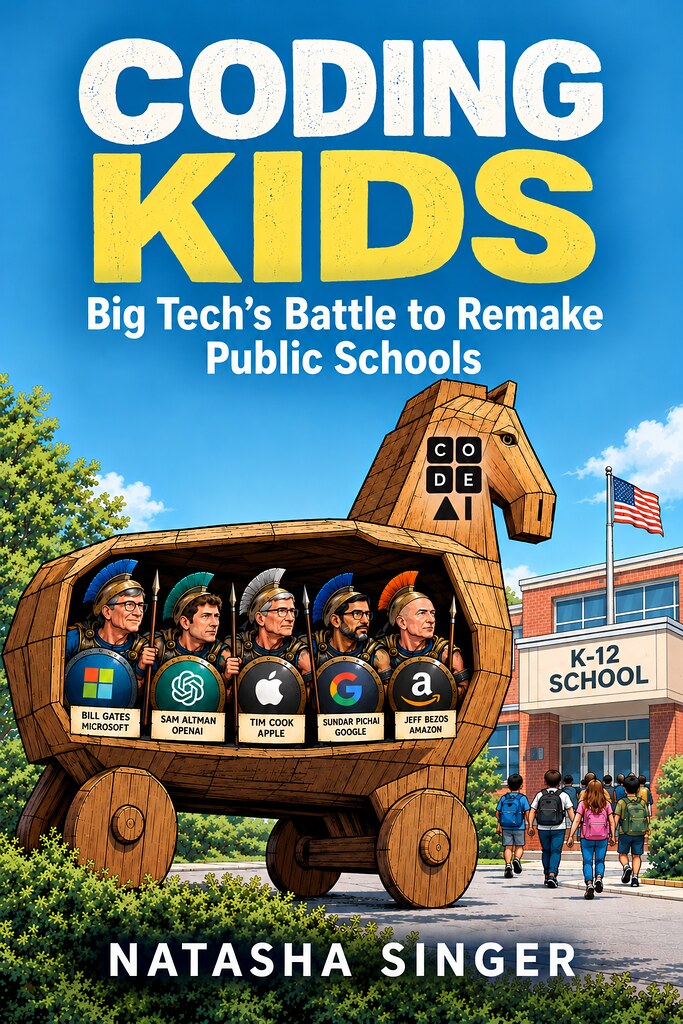
So, much like the Hour of Code that preceded it, will the Hour of AI serve as tech's 'Trojan Horse' (ChatGPT-generated parody cover) in its 'Odyssey' to push its agenda and curriculum into schools?
In August, as it launched ChatGPT for Teens, OpenAI announced a new signature partnership with Code.org to 'prepare the first AI generation', explaining that 'through the Hour of AI, OpenAI and CodeAI will introduce millions of students to the basics of using AI thoughtfully and responsibly.' OpenAI and Microsoft last year teamed up with the American Federation of Teachers to 'bring AI into the classroom', but that honeymoon is over. For more on the inside story of how Big Tech is applying the same playbook it used to scale coding lessons nationwide to now mainstream their AI tools in schools, check out Coding Kids: Big Tech's Battle to Remake Public Schools.
So, much like the Hour of Code that preceded it, will the Hour of AI serve as tech's 'Trojan Horse' (ChatGPT-generated parody cover) in its 'Odyssey' to push its agenda and curriculum into schools?