Forgot your password?
typodupeerror

Comment Re:I want to see inexpensive plugin hybrids but .. (Score 1) 135

You might want to read up on how current hybrid vehicles actually work, 'cause it seems you have more than one misconception going on.

I have. For instance, my latest vehicle is the Ford F-159 XLT,, the full-hybrid model of the F-series pickup truck line. Power train is:
  - 6 cylinder dual-turbo engine. (runs low power but approoximately doubles output when a lot is needed.)
  - 47 HP motor-generator "pancake" on the engine side of the ttransmission, to scavenge / return power to./from a 1.5 kWhr lithium battery.
  - 10-speed automatic transmission, working with the lithium battery;s main alternator to fine-tune match the engine/mogen to the current driving situation. Max power of engine plus hybrid mogen; 430 hp.
  - full four wheel drive.

So it's primarily a gas-engine power train with an electric-car motor mechanically coupled to the engine shaft. Many other hybrids, from the venerable prius onward, are similar, with plug-in variants having a big scavaging/peaking battery good for pure electric operation of tens of miles rather than a minute or so and a wall-powered charger added.

What I'm looking for is essentially a pure electric - totally electronic "transmission" consisting of alternator(s) between the batteries and the motor(s), plus a tiny engine-generator able to burn gas and feed some teens of KW of charging power into the batteries when running down the road or parked near it.
 

Comment cobalt chemistry, not so nice. (Score 1) 113

Do the Waymo batteries use one of the lithium chemistries including cobalt, or a non-cobalt chemistry such as lithium iron phosphate?

Cobalt chemistries have a higher power/weight and energy/weight ratio, which made them the go-to chemistries for vehicle batteries. But they also produce oxygen when the cells overheat, leading to an unextinguishable runaway fire hazard: A burning cell makes enough heat to ignite the adjacent cells, so the whole assembly of them goes. Bad enough when it's a car's worth, but a disaster if it's a shipping-container sized module of a utility energy storage site. (And even worse when the site is a building full of racks, which someone had "protected" from fire with water-spraying, equipment-shorting system, so the whole site burns up, as happened recently with one in California creating a toxic mess.)

That's why purpose-built stationary lithium energy systems use non-cobalt chemistries - heavier, but a shorted cell just kills itself without getting hot enough to light off its neighbors.

Comment I want to see inexpensive plugin hybrids but ... (Score 1) 135

I want to see inexpensive plugin hybrids.

But not like the current ones, which are primarily an engine/tranny powertrain with a motor/generator + small battery for scavenging downhill/braking energy for later accelleration/uphill/cruise/power-boost.

I want ones that are primarily a battery-electric with a small aux engine-generator (say 15-20 HP range), big enough to power crusing with a bit left over for gradually charging. That would let you range-extend by the size of your gas tank plus fillups (i.e. indefinitely if only gas is available) or go from battery empty to back on the road in a couple tens of minutes.

The backup engine would only run at max-efficiency speed and could use an atkins-like cycle (see "liquid piston engine") to get the max power out of the fuel. Most operation would use power-grid charging (when available and cheaper than fuel).

Comment Re:Think of the school children (Score 1) 141

DST works by tricking people to wake up and get to their daily activities an hour earlier than they normally would. And it is sold as "giving" people an hour extra in the evening. They could do that without changing their clocks by just waking up at 5 instead of 6 and working 7-4 instead of 8-5, but most people don't want to wake up earlier. So we use DST to trick them into doing it.

Doing DST as a whole society also helps for people who don't have flexible hours for their daytime activities.

But i realized a while ago that the twice a year time change is the PRIMARY reason why DST even works. Because without the constant change, people would just adapt to the new timezone. Daily activities (like school and work) would shift to starting an hour later. Lunch would start being eaten from 1-2 instead of 12-1, as the new time would be when the sun is at its highest. Dinner would be 6-7 instead of 5-6, because that is closer to when the sun is setting. It would take several years, but eventually, society would shift its schedule to closer match the sun. And the way that DST "tricks" people into getting up an hour earlier would stop.

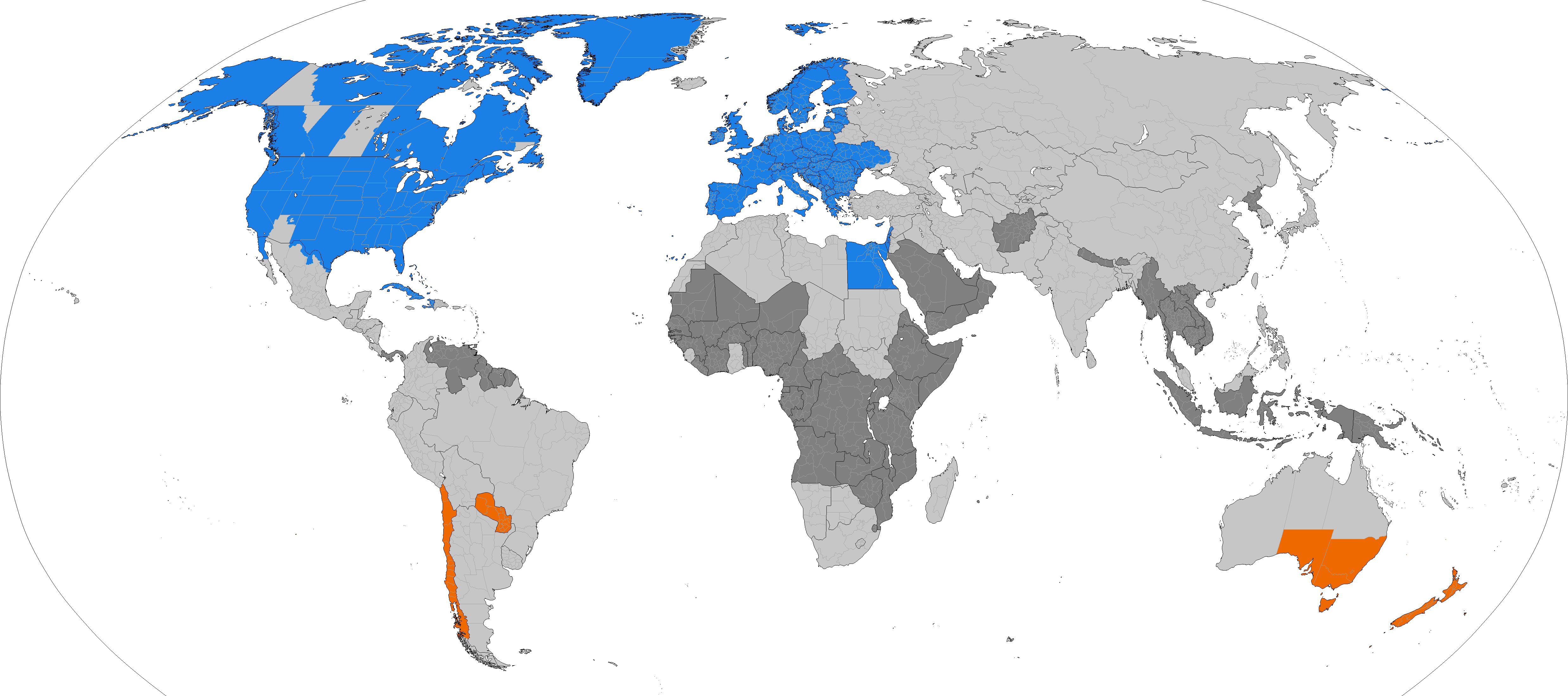
btw, your preference (and mine) for year standard time is the way most of the world works. Gray countries in that map do not do DST. It's really only US, Canada, Europe and a few other places. And I'll never understand DST in Alaska, which is already entirely in the wrong time zone.

Comment The dirty secret of how the protein guidelines are (Score 1) 197

The history of protein guidelines is a story of institutional convenience overriding biological reality.

It started deeply flawed (1970sâ"1980s)

1. Global standards were built on short-term nitrogen balance studies. They assumed that if a subject stopped excreting nitrogen, their body was stable. In reality, at low protein intakes (0.57 g/kg), the human body enters a survival shutdown. It ceases skin cell renewal, down-regulates muscle synthesis, and wastes lean tissue to make do with insufficient protein.

Then they Ignored the warnings (1980sâ"2000s)

2. Dr. Nevin Scrimshaw ran long-term studies proving that men fed these "safe" baselines suffered progressive lean tissue loss and elevated liver enzymes. The committees knew this, but ignored the data. Acknowledging it meant admitting that their mathematical framework for the Estimated Average Requirement (EAR) was fundamentally broken.

The sketchy committees (2003â"2005)

3. When updating these guidelines, committees settled on a median baseline of **0.66 g/kg**. They openly acknowledged in the fine print that this "apparent equilibrium" did not mean optimal health. However, raising the baseline would have triggered global chaos: international aid food supplies would instantly become legally inadequate, and national agricultural budgets would skyrocket. They applied a generic +25% buffer to reach the famous **0.8 g/kg** RDA to mask an insufficient baseline.

4. The truth comes out (2007â"Present)

4. In 2007, researchers using advanced isotopic tracers bypassed the old nitrogen math entirely. They proved that the true baseline requirement is **0.93 g/kg** and the actual safe intake is **1.2 g/kg**. The official guidelines remain an open secretâ"a bureaucratic fiction frozen in place to protect policy, not human health.

With 1.2 g/kg you see that most Americans are below the true requirement. With a mean of 0.98 g/kg it makes sense why so many Americans need to eat more meat.

Comment Re: People lack sufficient protein so we need mor (Score 1) 197

Phillips, Chevalier, & Leidy (2016): https://pubmed.ncbi.nlm.nih.go... Fulgoni (2008): https://pmc.ncbi.nlm.nih.gov/a... (Note: Abstract text overview is indexed under PMC5347101)

The average amount of protein eaten:

1.07 g / kg / day for men.
0.89 g/kg / day for women.

Average: 0.89 g / kg / day

The Scientific Case for a Higher RDA
The traditional protein Recommended Dietary Allowance (RDA) of 0.8 g/kg/day is increasingly viewed by nutritional scientists as an outdated metric. The core evidence for raising this baseline includes:
Flawed Methodology: The 0.8 g/kg standard was built on nitrogen balance studies, which only measure the absolute minimum amount of protein required to prevent lean tissue wasting and clinical deficiency.
Modern Metabolic Tracing: Utilizing the Indicator Amino Acid Oxidation (IAAO) method—which tracks breath markers to find when the body's amino acid pathways are genuinely saturated—studies show that metabolic requirements for healthy, sedentary young adults plateau closer to 1.2 g/kg/day.
Functional Outcomes: Massive clinical reviews show that a range of 1.2 to 1.6 g/kg/day is required to optimize actual health outcomes, including triggering satiety hormones, managing weight, and preserving skeletal muscle mass.
Consumption Patterns vs. the Optimal Range
When evaluated against how people actually eat, the current 0.8 g/kg/day guideline creates a false sense of dietary adequacy.
[Deficiency Minimum] 0.8 g/kg/day (Current RDA)

[Actual Intake] 0.89 g/kg/day (Average American Consumption)

[Optimal Function] 1.2 – 1.6 g/kg/day (Modern Scientific Consensus)

Data from the National Health and Nutrition Examination Survey (NHANES) shows that the average American adult consumes roughly 0.89 g/kg/day. Because this number clears the official 0.8 g/kg baseline, public health dashboards register the population as "adequate" in protein intake.
However, because 0.89 g/kg/day sits completely below the 1.2 to 1.6 g/kg/day optimal range, the typical consumption pattern leaves the majority of Americans in a functional deficit—meeting the bare survival minimum while missing the threshold needed for metabolic health and muscle preservation.

In addition men have more proportional muscle mass and higher metabolisms.

A back of the envelope calculation:

1. Variables (Percentage Beyond Average)
        Metabolism Advantage: +3.75% (Multiplier: 1.0375)
        Lean Mass Advantage: +8.75% (Multiplier: 1.0875)

2. Compounding the Advantages
      1.0375 × 1.0875 = 1.12828125 (+12.83% Total Scaling Factor)

3. Applying the Scaling Factor to Baselines
        At a Survival Baseline (0.8 g/kg average):
          0.80 g/kg × 1.1283 = 0.9026 g/kg (Minimum for Men)

        At an Optimal Baseline (1.3 g/kg average):
          1.30 g/kg × 1.1283 = 1.467 g/kg (Optimal for Men)

This supports the contention that broadly speaking we need more not less protein ergo meat. Especially men.

Comment Re: People lack sufficient protein so we need more (Score 1) 197

Here are your requested sources.

  1. Houston DK et al. “Low Dietary Protein Intakes and Associated Functional Limitations in an Aging Population.”
    Cross-sectional analysis linking lower protein intake in older adults with more functional limitations and poorer strength.
  2. Hess JM et al. “Low Protein Intakes and Poor Diet Quality Associate with Functional Limitations among US Adults.”
    US adults with lower protein intake had poorer diet quality and more self-reported functional limitations.
  3. Phillips SM et al. “Protein Requirements and Recommendations for Older People: A Review.”
    Review arguing that older adults likely need more protein than the standard RDA to preserve muscle and function.
  4. Low protein intake, physical activity, and physical function in European and North American community-dwelling older adults: a pooled analysis of four longitudinal aging cohorts
    Higher protein intake was associated with slower physical function decline and lower likelihood of mobility limitation in older adults.
  5. Low Protein Intake Is Associated with Frailty in Older Adults
    Meta-analysis finding that higher protein intake was inversely associated with frailty in older adults.
  6. Low Protein Intake Is Associated with the Risk of Functional Impairment in Older Adults in an Age- and Gender-Specific Manner: A SHARE-Based Study
    Large observational study reporting age- and sex-specific links between low protein intake and later functional impairment.
  7. Low protein intake, physical activity, and physical function in European and North American community-dwelling older adults: a pooled analysis of four longitudinal aging cohorts
    Pooled longitudinal cohorts showing higher protein intake was associated with slower physical function decline in older adults.
  8. Poor Dietary Protein Intake in Elderly Population with Sarcopenia ...
    Study describing low protein intake as common in older adults with sarcopenia and related muscle-health concerns.
  9. Impact of increased protein intake in older adults: a 12-week double ...
    Intervention study examining whether increasing protein intake improves outcomes in older adults over a short follow-up period.

Comment People lack sufficient protein so we need more mea (Score 1) 197

Not only is mental health ignored but meat per se is good for you. Most people lack enough protein. It's processed carbs that are the problem.

Replacing meat with carbs often drops total LDL weight, which bureaucrats count as a wim. However, excess carbohydrates force the liver to produce triglycerides, transforming your cholesterol into an army of **small, dense LDL particles**. This lowers your test score but increases actual arterial plaque risk, making your cardiovascular environment far more dangerous.

**The Institutional Hypocrisy**
"People lack discipline for veggies, so cut meat" $\rightarrow$ Expect people to resist cheap carbs $\rightarrow$ People binge on Pringles $\rightarrow$ Obesity explodes. Officials mandate a restriction based on behavioral failure, then build their entire alternative policy on the delusion of behavioral perfection. It is a deadly contradiction.

---

**The Institutional Hypocrisy**
"People lack discipline for veggies, so cut meat" -> Expect people to resist cheap carbs -> People binge on Pringles -> Obesity explodes. Officials mandate a restriction based on behavioral failure, then build their entire alternative policy on the delusion of behavioral perfection. It is a deadly contradiction.

**The Real-World Solution**
Accept that people lack self-control -> Encourage burgers and fries over pure starches -> Heavy protein and fat trigger actual fullness -> Eating stops sooner. Leveraging the heavy satiety of fast-food meat creates a caloric ceiling, forcing a lower overall weight and preventing the worst metabolic disaster.

**The Ideal Scenario**
Eat unprocessed, lean animal proteins alongside high volumes of fresh fruits and vegetables to maximize nutrient density and perfectly maintain a healthy BMI.

Comment Look up "human shields" (Score 1) 255

And a douche bag of a president who drops bombs next to schools and kills 135 kids . Should resign on the spot for that.

Look up "human shields", the practice of siting military targets among (or in or under) large collections of non-military civilians, in order to deter strikes against them or produce propaganda claims of atrocities when they're attacked anyhow.

In such situations the fault for the "collateral damage" is assigned to the side that set up the arrangement, not the side that hit it.

Nevertheless, it should be noted that the US has been trying very hard to use precision munitions and extreme military intelligence to take out military targets with as little harm to the innocents they're embedded among as possible, with impressive success. Compare the amount of collateral damage in this war to any of those conducted in the 20th century.

Comment Comparing your accent to claimed residence history (Score 1) 255

He's doing the bare minimum sniff test of verifying that *you* are the guy whose name is on the bookings and not someone sneaking in on someone else's name who can't even pronounce the name on your fake id.

At least in the case of people claiming to be returning citizens I've been told that they're comparing your accent to your claimed residence (or residence history).

Different words are acquired at different ages, and many are pronounced with regional variations. An expert can talk to you for a few minutes and come up with a pretty good age-map of where you lived as you grew up. An agent with a modicum of training can detect a mismatch between how you pronounce certain words and your claimed residence and pass you through quickly or keep you around and drill more deeply. (If you now live in an area with a regional accent wildly different from where you grew up it can help to answer a where-do-you-reside question with "Footown, but I grew up in Barstate".)

I presume they are doing something similar, though no doubt with lower resolution, on the world-wide level for visitors from other countries.

Comment Re:Why ? (Score 1) 114

I'm inclined to agree, but thinking about it there might be some things that an "agentic" AI could help with. Like "fill out my timecard for today" or "every time Outlook web logs me out, log back in with my credentials." You know, the things that would give the bureaucrats a heart attack if they knew I could do them instead of wasting my time.

Assuming I trusted the AI enough, of course.

Comment What I've seen from personal experience (Score 3, Informative) 237

As a long time editor I've seen how the bias works. It's frustrating because I remember when, broadly speaking, it was neutral. It starts at the top where the Wikimedia Foundation funds left wing groups and does not fund right wing groups. It runs fundraisers but people don't realize that it is swimming in money and diverting it to Art +Feminism, Black Lunch Table and Whose Knowledge.

These organizations publicly admit that they aim is to edit Wikipedia pages with leftist ideologies. Art + Feminism has an instructional guide showing how to create Wikipedia content about transgender and LGBTQ+ individuals.

Wikipedia has removed conservative news organizations as acceptable sources for news articles. The problem with that act of censorship, is that to construct a neutral article you frequently need balancing sources to achieve neutrality. Often there are facts that only a right or a left wing source will say. Given that mainstream new organizations are left wing, certain facts become impossible to source on the site.

You won't find the same treatment for conservative leaning people as you would for progressives. Often a few dog whistle words are added prominently by editors to a conservative's profile to signal that they are outside of Wikipedia's own Overton Window. And they will not uncommonly coordinate privately off-site, despite that being a violation of Wikipedia's rules.

Ironically, I remember completely different times before 2012 when I got into an edit war with conservatives that didn't want inconvenient facts mentioned about an anti-immigration organization. I spent significant time expanding a stub-like article into something comprehensive, only to be viscously attacked.

Now it's the other way round. It's progressives doing the attacking and edit warring. I was drawn to Wikipedia in part because of it's neutral point of view but it's now a progressive point of view hidden behind a few figleaf phrases here and there to deceive a superficial reader.

Comment Re:Terrible timing, Disney. (Score 3, Interesting) 84

You think it is bad timing because it will increase the number of people leaving Disney services. But I think it will muddy the waters so no one will be able to definitively say why people left. Did they leave over Kimmel? Did they leave because the price went up? Who can say? This way, no one can be blamed for falling subscriber numbers.

It may be bad for the company, but it is good for executives who don't want to be blamed.

Of course, the most likely explanation is that this had been planned and the timing was just a coincidence. But that explanation is boring.

Slashdot Top Deals

1000 pains = 1 Megahertz

Working...