Comment Re:Not great news for Anthropic (Score 1) 45
They'll probably postpone is US share prices start dropping.
They'll probably postpone is US share prices start dropping.
Oh, you want me to google Köppen classification maps? Here you go. Gee, what a shock, they're exactly what I described!
As for your paper's offhanded sloppy remark (California contains a lot of Mediterranean climate, but not the specific pistachio growing centres), your paper says:
Fig. 1. Pistachio cultivation in California (year 2022) , showing counties with the largest planted area: Kern, Kings, Tulare, Fresno, Madera, and Merced. Own elaboration with data from: DWR (2023).
Gee, I wonder, what's the typical annual precipitation in the lowlands in Kern, Kings, Tulare, Fresno, Madera, and Merced counties? Let's just start with Kern, which alone produces 1/3rd of the state's entire crop: Hey Google, what's the typical annual precipitation in Kern Country? Let's see your top hit
Water sources in Kern County
Precipitation in Bakersfield averages 6.49 inches per year. It’s a very dry climate.
6.49 inches per year. That's a desert (sub-10 inches). Do I need to walk you through the rest? Oh wait, I already fucking did that.
Here, let's sum up the whole thread: Hey AI, who's right in this thread?
Rei is overwhelmingly correct.
While Rei made one minor typographical error regarding Köppen climate codes, their factual claims regarding California geography, pistachio cultivation, precipitation levels, climate classification rules, and water usage are scientifically sound. Conversely, DamnOregonian’s rebuttals rely on fundamental misunderstandings of how climate classifications work, California's geography, and where pistachio agriculture takes place.
1. Where Pistachios Are Grown & Whether It Is a Desert
DamnOregonian’s claim: Pistachios are not grown in the desert, and the San Joaquin Valley is a Mediterranean climate where crops get "ample water."
Rei’s claim: Pistachios are overwhelmingly grown in the Tulare Basin lowlands (southern San Joaquin Valley), which receives 5–8 inches of rain annually—well within the standard definition of a desert.
The Facts:
California produces over 95% of U.S. pistachios[1][2][3]. The vast majority of production is concentrated in Kern, Fresno, Tulare, Kings, and Madera counties[3][4][5]. Kern County alone produces over a third of the state’s total crop.
These lowlands receive between 5 and 8 inches of precipitation per year[6] (Bakersfield averages ~6.5 inches[7], Lost Hills ~6.6 inches, and Kettleman City ~7.5 inches). For comparison, Phoenix, Arizona receives ~7.2 inches.
In biology and geography, this region is formally recognized as the San Joaquin Desert (established by Germano et al., 2011, and recognized by the USGS and conservation agencies)[8][9][10].
Without massive state and federal irrigation projects (the Central Valley Project, State Water Project, and groundwater pumping)[6][11][12], these orchards could not survive on local precipitation.
2. The Köppen Climate Classification Blunder
DamnOregonian's central argument relies on a flawed reading of the Köppen climate classification system:
DamnOregonian quoted Wikipedia’s description of Csa:
"Regions with this form of a Mediterranean climate experience average monthly temperatures in excess of 22.0 C... Point out where they mention rainfall."Why DamnOregonian is wrong:
Köppen classifications are hierarchical, and Group B (Dry/Arid climates) takes precedence over Group C (Temperate/Mediterranean climates)[13].
To even consider whether a region belongs in Group C (Csa), the region must first fail the Group B aridity test[13].
The aridity threshold (P th) is calculated using mean annual temperature and the seasonality of precipitation[13][14]. Because the Central Valley gets most of its precipitation during winter, Köppen’s threshold formula is: P th =20×T Celsius
For Bakersfield (mean annual temperature ~18.5 C / 65.3 F), the threshold for aridity is 370 mm370 mm (~14.6 inches). Under Köppen, if an area receives less than half of the aridity threshold (P3. Native Range of Pistachios
Rei’s point: Pistachios (Pistacia vera) are native to the arid plateaus and steppes of Central Asia, northeastern Iran, and northern Afghanistan.
The Facts: Rei is correct. The modern commercial cultivar used throughout California (the "Kerman" cultivar) was collected in 1929 from the desert-adjacent Iranian Plateau by USDA botanist William E. Whitehouse[4][21]. The tree naturally adapted to thrive in hot, dry, rainless summers and survive on deep taproots in arid soils[4][21].
4. Rei's Only Minor Mistake
Rei wrote:
"southern San Joaquin Valley lowlands are a mix of BWh (Hot desert climate) and CWh (Cold desert climate)."
In the Köppen system, a cold desert climate is abbreviated BWk, not CWh[15][22]. Cwa and Cwb are temperate monsoon climates[14][22]. This was clearly a slip of the keyboard, as Rei correctly provided the definition ("Cold desert climate") in parentheses.
Conclusion
Rei is correct. The heart of California’s pistachio belt lies in the Tulare Basin / southern San Joaquin Valley, an arid desert and steppe landscape receiving only 5–8 inches of rain per year[6]. DamnOregonian's claim that this region is "not a desert" and that Köppen Mediterranean climates do not depend on rainfall criteria represents a complete misunderstanding of both climatology and local geography.
Sources
help
americanpistachios.org
agmrc.org
agwestfc.com
ca.gov
farmonaut.com
wikipedia.org
encountertravel.com.au
figshare.com
scienceforconservation.org
kglmeridian.com
nature.org
capitolweekly.net
climatezonemap.com
hardymaps.com
oregonstate.education
wikipedia.org
plantmaps.com
figshare.com
wikipedia.org
noaa.gov
californiacurated.com
worldbank.org
"Get fucked" yourself. Facts will continue to remain facts whether you like them or not. Pistachios are grown in the desert, specifically, the San Joaquin Desert, in the Tulare basin lowlands, in the southern end of the San Joaquin Valley.
I mean, it's not irreplaceable (despite the fact that atmospheric helium, sourced from radioactive decay, "leaks" to space from the planet). But there is a risk of significant cost increases if we just burn the super helium-rich NG deposits without separation. Helium is still recoverable from poorer NG deposits, non-NG deposits (anywhere that volcanic heat melts old basement rock - for example, the Rukwa Basin), and even as a byproduct of atmospheric air liquefaction (for separation to extract N2, O2, and noble gases). But you risk costs rising significantly faster than tech advancement can offset them.
We're still going to have helium, but it'll affect our usage priorities of we're not smart about how we handle the resources. We got too used to, for too long, treating it as a cheap disposable.
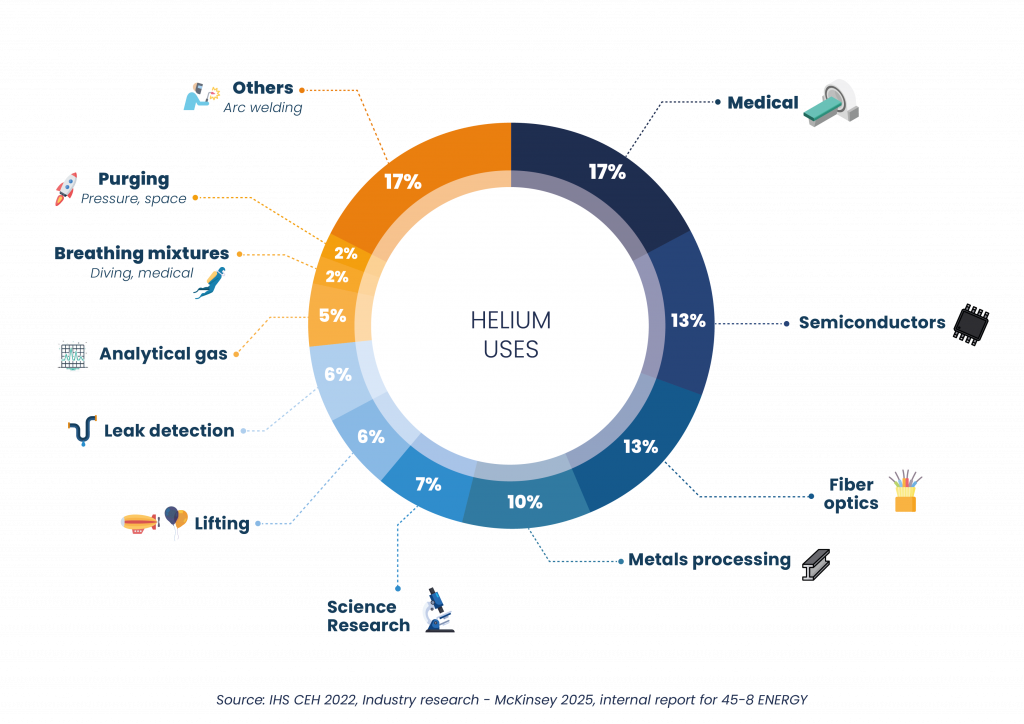
(If anyone is curious where it goes: 2/3rds to arc welding, medical imaging (cryogenics), semiconductors, and fibre optics; 3/4ths if you add in metals processing. "As a lifting gas" is only 6%. It's industrial use that's the problem. At least medical imaging has gotten a lot better over the past couple decades)
So, if you care about the actual history, TL/DR, it was your typical "Government Waste!" panic (an earlier version of DOGE-ism).
The first person to really push for getting rid of it was Rep. Christopher Cox (R-CA), who thought it was a stupid government boondoggle. He and his allies in the '80s and early '90s mocked it as an absurd relic of the '20s intended to supply military blimps and dirigibles and pointed out that it had racked up $1,4B in government debt. In 1984 Reagan, launched the Grace Commission (the President's Private Sector Survey on Cost Control), which was the late 80s equivalent of DOGE (he literally used the phrase "drain the swamp"!), and based on its recommendations, Reagan proposed selling off the reserve in both his FY 1989 and FY 1990 budgets. Then in 1993, under Clinton, VP Gore did his own DOGE (the National Performance Review (NPR)). Once again, privatizing the helium reserve was featured as an objective (Clinton would later, in his 1995 State of the Union, refer to it as one of "over 100 programs we do not need"), but it they decided not to push on it in '93 because Clinton needed the support of Rep. Bill Sarpalius (D-TX), whose district housed the reserve in Amarillo. In congress, Republicans took the lead (Democrats were initially more skeptical, though most still supported elimination); after Republicans won control in 1994, they focused on eliminating "obsolete" federal programs as a policy keystone (Rep. John Kasich and Newt Gingrich in particular). By 1996, there was broad bipartisan support, and congress drafted and passed the Helium Privatization Act (H.R. 4168) with near-unanimous support.
The TL/DR is, elected officials LOVE the idea of "cutting government waste". Their track record of determining what actually is "waste", however, is not nearly so great. It's a lot easier for ignorant elected officials to rail against something to an ignorant public with soundbites ("Lol, we're wasting money preparing for zeppelin-warfare, HAR HAR HAR!") than it is to take the time to understand the full consequences of what you're proposing to eliminate.
Another one of those counterintuitive things (on the algal oil) line for me was creatine. Clearly more athletic power and performance is unambiguously evolutionarily advantagenous - if it were good and safe for us to have more, why wouldn't we just produce more?
It turns out that the answer is: it's massively costly to us to produce. We can't just produce and attach methyl groups (part of the creatine synthesis pathway) out of thin air. Creatine alone consumes half of our transmethylation flux from SAMe -> SAH -> homocysteine! We have to utilize the essential amino acid methionine (which is low in most plant matter, which makes up the majority of most hunter-gatherer calories). And the process is actively harmful to us. The intermediary SAH inhibits almost all transmethylation enzymes. Homocysteine is toxic (endothelial damage, oxidative stress, protein misfolding, etc). Clearing homocysteine is expensive, SAMe does double duty with epigenetic regulation and as a metabolic sensor, etc. High methionine metabolism is directly linked to accelerated aging, and methionine restriction leads to significant increases in lifespan in animal models.
Since consumption of dietary creatine downregulates the production of innate creatine and thus its transmethylation requirements, it's arguably outright healthy to consume more dietary creatine.
The entire selling point of plastics is essentially that they are not very biologically active.
Gold, on macroscopic scales, is yellow, inert, melts at 1064C, and is a conductor.
Gold, on nanoscales, is wine-red, purple, blue, brown, or clear, is a catalyst, melts at ~400C, and behaves like a quantized semiconductor.
Scale matters greatly when it comes to material properties. And one thing to clear up here: while people commonly talk about "microplastics", for clarity, some scientists divide it up between microplastics and nanoplastics. Microplastics (such as from abrasion, fine fibres, etc) are not harmless (inhalation is similar to other inhaled particle matter, for example - not great for your lungs), but they're not the primary area of concern. Nanoplastics are where the concern is. These come from for example hot liquids in plastic containers close to their glass transition temperatures and the like.
When a nanoparticle enters a biological fluid, it becomes coated in proteins and lipds on its surface (a "protein corona"). The core particle becomes masked and begins to interact with cells and bypasses cellular defense mechanisms (nanoparticles are often used for drug delivery). Microplastics largely pass through the digestive tract uneffected, but nanoplastics cross straight through the intestinal epithelium, and even the blood-brain barrier and the placental barrier.
The evidence of harm is no longer "limited"; this is unfortunately not a factual statement, unfortunately. I would recommend reading for just one example Marfella et al., N Engl J Med. Cartoid plaques of patients were analyzed and studied for microplastics; there were significant accumulations in 58.4% of patients. This in itself is not meaningful, but the consequences were: the patients with microplastics had a massive 4,5x higher risk of heart attack, stroke, or all-cause death. And it appears directly causal: as previous research had suggested that nanoplastics are pro-inflammatory, they studied this, and found that the plastic-positive plaques had dramatically higher inflammatory biomarkers.
The inflammatory problem is what's called "frustrated phagocytosis". When macrophages encounter persistent non-biodegradable particles, they respond by engulfing them. But their enzymes cannot break down plastics. Like a gull that has consumed plastic-laden food in its diet and dies with a gut full of plastics, it will eventually kill them. Because enzymatic degradation fails, they churn out ever-increasing quantities of reactive oxygen species and pro-inflammatory cytokines (to call for help) until they end up destroying themselves - undergoing apoptosis and spilling these toxins into the surrounding tissue. It drives chronic sterile inflammation.
A good analogy is asbestos. The entire commercial selling point was that it was a miracle mineral: completely non-combustible, chemically inert, and basically indestructable. The problem is that those properties carry over into the human body as well: macrophages attempt to engulf and destroy asbestos particles, fail, and undergo an oncogenic inflammatory cascade.
Another example is fine particulate matter. Macroscale carbon is extremely inert. Grind it into PM2.5 particles and inhale that, however, and it's horrible for your lungs, and causes systemic vascular inflammation. A chunk of quartz could not be less harmful to you. Grind it into nanoparticles, breathe enough in, and congrats, you have silicosis.
Also, you have to understand that plastics are not pure; they're loaded with a whole zoo of additives in significant quantities (often even the catalysts used in their production - plastic catalysts are commonly lost in the process of producing their respective plastics). There's colorants, plasticizers, flame retardants, UV stabilizers, and on and on and on, at percentages ranging from a couple percent into double digits. At macroscales, these remain embedded firmly within the polymers. At nanoscales, leaching is trivial; the nanoparticles effective become delivery vehicles for them into cells.
I focused just on one study above, but there are tons now. Parkinsons. Brain penetration and accumulation. Inflammatory bowel. 100% presence in testicular tissue, with higher levels associated with lower sperm counts. Presence in semen, and quantity associated with abnormalities and lower motility. Deep alveolar accumulation from airborne MPs, with foreign-body reactions similar to low-grade silicosis. Hepatotoxicity and DNA damage, with the latter triggering fibrosis via the cGAS/STING pathway. On and on.
Of course, none of these should be surprising, because once you establish that something is (1) pro-inflammatory, (2) breakdown-resistant, and (3) capable of easily penetrating everywhere in the body, you can expect impacts on pretty much every system. To be clear, ingesting pro-inflammatory particles does not mean "you die tomorrow". But low-level chronic systemic inflammation is not good for your long-term health.
From a personal note, I get where you're coming from. I commonly resist taking action that's recommended if it doesn't make sense to me, until I look into it. For an example, as a vegetarian, you'd commonly see things about how vegetarians and esp. vegans should take a marine EPA/DHA supplement (cold-saltwater algal oil, as equivalent to cold-saltwater fatty fish oil). How does that make sense? Humans evolved first as fructivores in the African jungles, then as scavengers on the savannah. Where we ate fish at all it was geographically-specific, freshwater, and warmwater. If EPA/DHA were important, we'd just upregulate our genes. There's an entire subcontinent of vegetarians in south asia, and they seem perfectly healthy. Where's the logic?
And then, eventually, I actually looked into the logic. Our scavenger ancestors also ate bone marrow and brains, which are rich in EPA and DHA. Low EPA and DHA impacts are minor during the reproductive years, they mainly effect you in your later life, so they're not very evolutionarily selective. And actually there is upregulation of ALA to EPA (and to a small extent, DHA) conversion in south asian populations! So? Now I take algal oil.
Getting rid of most of your nanoplastic flux doesn't require massive changes. The main thing is very simple: don't have plastic or plastic-lined containers or teabags touching hot liquids / hot food. Cold is fine; it's heat that leaches nanoplastic particles. Or if you are going to use plastic for hot liquids, use a plastic with significantly higher heat tolerance, as they shed dramatically fewer nanoplastics. Honestly, I think we shot ourselves in the foot with the polycarbonate phaseouts (over bisphenol-A concerns). The bisphenol-A threat picture seems far lower than the nanoplastic threat picture (human exposures are much weaker than dietary phytoestrogens, its estrogenic profile is matched or less concerning than a number of dietary phytoestrogens, and the evidence linking it to actual harm is pretty weak in most cases... possibly PCOS, but breast cancer does not seem to stand up. Dietary phyotestrogens have a great PR agent, while bisphenol-A has a lousy one). Polycarbonate is not immune from shedding nanoplastics in hot liquids, but it sheds orders of magnitude fewer than e.g. polyethylene, polypropylene, etc, so the precautionary phaseouts seem ill-advised.
"overstating the degree to which genAI helped them"
You actually legitimately believe this, don't you?
I literally linked a map of where pistachios are grown in California. They are overwhelmingly in the Tulare Basin lowlands (not merely "the San Juaquin Valley" as a whole - specifically the Tulare Basin (the southern half of the San Joaquin Valley). Bakersfield to Merced, mostly Bakersfield to Fresno, is where almost all California pistachio cultivation is located. We're not talking e.g. Stockton.
The southern end of the San Joaquin valley - the Tulare Basin - gets 5-8 inches per year in the lowlands. Bakersfield gets 7 (same as Phoenix and Reno). That's desert (defined less than 10 inches per year). Fresno is borderline-desert (10-11 inches per year). Merced is 12. Stockton gets 14-18 inches per year, but that's not relevant because that's not where the concentration of pistachio cultivation is.
7 inches of rain per year is NOT Mediterranean. Even the northern end of the San Joaquin Valley (where only a very small % of California's pistachio cultivation is conducted) is at best marginally Mediterreanean. Compare Stockton's 14-18 inches to famously "Mediterranean" cities:
Athens: 15.7 in
Tunis: 18.7 in
Málaga: 19.7 in
Marseille: 20.7 in
Tel Aviv: 21.5 in
Barcelona: 24 in
Algiers: 23.6 in
Nice: 31.1 in
Beirut: 32.3 in
Naples: 39.6 in
Antalya: 41.3 in
Dubrovnik: 41.7 in
Stockton, the NORTHERN end, is up there with the absolute driest of famous Mediterranean cities. The San Joaquin Valley is not Mediterreanean. It ranges from desert in the south, borderline desert in the middle, and arid in the north. It is coastal California that is famously Mediterranean.
Specifically, Mediterrean climates are Köppen classification (Cs). Coastal California, from Los Angeles through San Francisco, is clasified as "Hot-summer Mediterranean" (Csa) to "Warm-summer Mediterreanean" (Csb). But southern San Joaquin Valley lowlands are a mix of BWh (Hot desert climate) and CWh (Cold desert climate). Most of the rest is BSk (Cold semi-arid). The northern end around Stockton just barely qualifies as Csb (Warm-summer Mediterranean). The coasts are solidly in Csa and Csb.
These are the facts, and you need to come to accept them. California's pistachio cultivation is overwhemingly in the SOUTHERN San Joaquin Valley, which is desert and borderline desert, NOT in the north, which is arid to borderline Mediterranean.
By the way, do you even know where pistachios are native to? They're native to Iran. Specifically, the high deserts and arid steppes of northeastern Iran (the Iranian Plateau, not the Caspian coast), extending into western Afghanistan. Typical rainfall in their native range is 6-16 inches per year. Their native summers are hot (~38C / 100F), highly dry and they cannot tolerate significant rainfall during the growing season. They develop a very long taproot to search for deep sources of water, so despite being adapted to dry climates, they thrive on access to water. They have high salt tolerance because they're commonly found around the edges of endorheic basins. Their native terrain looks like this. They are not a mediterranean tree.
California pistachios grown overwhelmingly in the Tulare Basin lowlands. The Tulare Basin lowlands get only 5-8 inches of precipitation per year (for comparison, Phoenix and Reno both get about 7 inches). As a desert is a region with less than 10 inches of rain per year, yes, pistachios are grown in the desert. Without irrigation projects the pistachio lands would be barren desert scrub. They get the water from deep wells (causing land subsidence, because they're not getting replenished), mountain rivers (which are overdrawn and under seasonal threat from diminishing winter snowpack accumulation), and water channeled all the way from the Oregon border. So much water has been channeled from rivers in the region that Tulare Lake, once the largest US lake west of the Mississippi, is usually largely dry.
Outside the San Joaquin valley, the other main ag centures are the Imperial Valley, Palo Verde Valley, Coachella Valley, and the Yuma Project, which are fed via Colorado River water which was overallocated by the Colorado River Compact. These are in the Colorado Desert, part off the Sonora Desert system.
No browser is going to bring back the good old days.
Stop blaming washing machines for water scarcity and start blaming your decision to buy, say, pistachios grown in a friggin' desert. A one pound bag of pistachios requires ~1200 gallons of water and contains the calories to feed a family of 4 for a single day. A modern front-loader washer uses about 10 gallons and said family probably runs it about once per day. That's a 120-to-1 ratio. Other desert crops are even worse - beef raised on alfalfa (a major crop in the desert southwest) is orders of magnitude worse. And the wastewater from the washing machine gets reclaimed for other purposes after treatment, while the irrigation water is completely lost to evaporation.
I'll repeat: your washing machine is a tiny blip on the radar. It's your choice to buy food grown in the desert southwest that is your actual water consumption. And it's a perverse historic water-rights system that leads to growing all those crops in the desert using unsustainable amounts of water. Without these historic granted water rights, if water were just an open market relative to how much were actually sustainably available, it would be basically limitless to households, and agriculture would shift to areas where water is more sustainably available.
To be clear, and despite the bad reporting, this "$80 billion loss" is a paper loss. For example, $72B of it is convertible notes. They became a liability because the valuation of the company skyrocketed. They have nothing to do with the company's operations.
If you stopped irrigating crops in the US desert southwest, there would be no water issues at all, either for households or for industry.
I'll repeat, it is agriculture that consumes meaningful amounts of water, not homes and businesses. Farms by water by the acre foot - an acre of land flooded to a depth of one foot. Water is not abundant on the scale of "farms buying it by the acre foot", but it absolutely is on the scale of "what you need for your house".
"I'm sure if I cared enough to go looking".
So you just made a weird, false assumption in order to justify to yourself something you already wanted to do.
I used to have your viewpoint, by the way. The reality eventually became undeniable. Musk is a unique threat to western democracy.
How much energy does it take to drive to a laundromat and back?
Freshwater is cheap for a reason: it's abundant. It's agriculture that uses the overwhelming majority (70% of withdrawals and 80-90% of consumptive water use. Industry next (20% of withdrawals). Residential usage is way, way down the list, and washing machines are only 17% of that (well below for example lawn watering at about 30% overall, but which in some regions is over half of all consumption, and in the summer and times of water scarcity can be the vast majority). An early 1950s top-loader washing machine would use about 40-55 gal plus 0,3-0,5 kWh of electricity for the machine itself, and if your water wasn't municipally heated, heat would cost about 4,5-6,5kWh / 16-23 MJ (about 1/2 to 2/3rds of a litre of gasoline / 0,13-0,19 gallons). At the then-standard 14-15 MPG in the US, that laundromat better not be more than 2-3 miles away if you're trying to save energy (just ignoring the energy they use to heat their water!)
A holding company is a thing where you hand an accomplice the goods while the policeman searches you.