Forgot your password?
typodupeerror

Comment Re:I don't think it would matter (Score 2) 25

I disagree. It actually needs less regulation.

The siloing of knowledge and duties is why it was always somebody else's problem. So you simply take out all the regulations that obligate siloing and replace all of that kerfufle with a single rule: "If it's on your plate and nobody else has published that they've done the work so far, it's your responsibility, silos be damned, and failure leaves you liable".

That's it.

That's all we need. A removal of siloed thinking and a duty to complete all of the scheduled work regardless of whose toes it tramples.

That would have solved the problem. But, because departments never like to give up powers they obtain, a side-effect would be that departments would be proactive. They wouldn't walk down piers, looking for strange things. Rather, if they heard of strange things that are their department, if they don't want to be shamed, then they need to ask the company for more information. Because then it's on their plate and not that of a rival department.

The other benefit of using this approach is that it isn't about the special cases, it's about the general problem that underlies all of the special cases of this sort: nobody takes responsibility until it's already a disaster.

If a department is liable for pretending the problems aren't there, then the department wil CYA. If the only way to do so is to do all the outstanding work, regardless of title, then that work will get done. If the only way to get it done right IS to give it to the right department, and they're on the hook until that has happened, you're damned right it'll happen.

I've worked in the public sector, I've seen the paranoia and closed-mindedness first-hand. That's not going to go away. So you solve the issue by exploiting those traits, since you can't eliminate them.

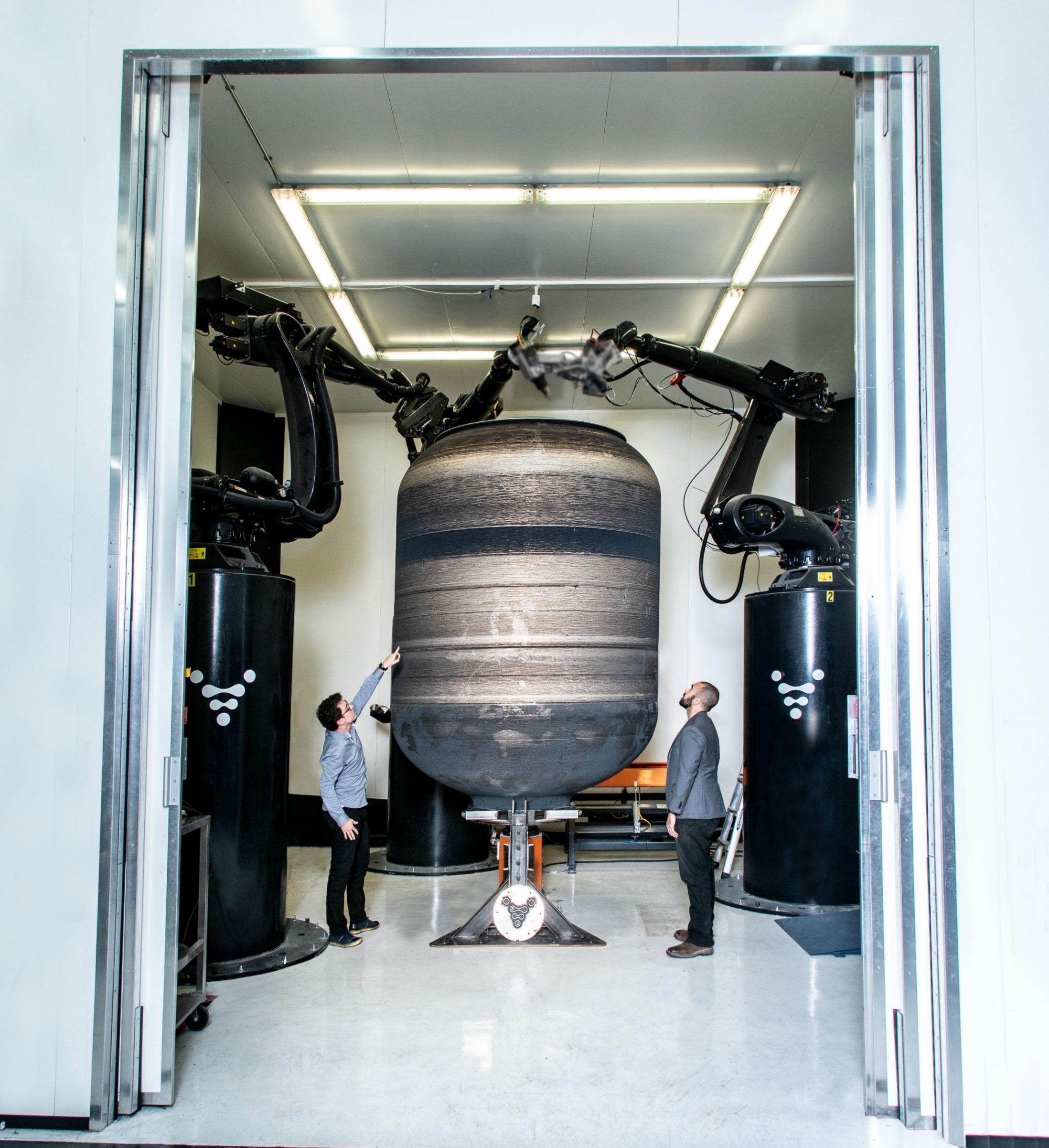
Comment 3D printing whole rockets was such a dumb idea. (Score 1) 44

Don't get me wrong, there's a lot to say about printing small rocket parts, such as for the engines. But they were printing basically sheet metal cylinders, which is such an immensely slow and inefficient way to go about it, and it left them with parts that were heavier and less aerodynamic (rougher surface). Crazy that idea ever got any funding.

Comment Re:Anyway SpaceX is a huge scam so I suspect (Score 2) 44

"SapceX has got to be a huge scam too" - SpaceX launches the vast majority of the world's commercial cargo to orbit. The Falcon 9 FT has the highest success rate of any rocket with a statistically significant number of launches under its belt, and is dirt cheap. SpaceX's core operations are roughly breakeven, but that's including subsidizing the development of Starship. Starlink is a money printer.

There are lots of things sketchy about the SpaceX IPO, to say the least, but SpaceX, as a company, has been extremely successful with rocketry.

Comment Re: Inner monologue (Score 1) 63

The funny thing was that I knew him for like six months online before I realized he was fully paralyzed. He's been covered in the Finnish press a number of times. Amazing guy. Up until recently he was living in a house he built himself before ALS struck, but the medical service decided he was too far away and he had to move closer. You lose a lot of control over your life with ALS.

He wrote a book about nuclear safety engineering recently, which is a fascinating read, and which I strongly recommend.

Comment Re:The Eagle (Score 1) 50

I suppose one could argue that you want the more dselicate computers behind the pilot, since then it has the greatest achievable shielding on all sides without having excessive distance from the flight controls and without becoming inaccessible if the pod that is loaded into the middle is not traversible. Similar reasoning is used in Formula 1 - delicate bits of the car (such as the fuel tank) are placed between the driver and the engine, to keep them as safe as possible without creating a burden. This would necessitate there being a step down to get to the pilot's chair. It's not a particularly good piece of "lore repair" but it's the best I can do.

Comment Re:The Eagle (Score 1) 50

The landing pads are also vertical thrusters (which is how they can skim), so you need space for the nozzle, engine, and fuel. The size of the landing pads would seem fine, given everything that needs to be in them.

I'm calculating mass in terms of filled volume. The entire mid-section of the Eagle was a mesh of girders, rather than a solid hull. Since the total space filled is 1/Nth that of a solid hull that has to be able to handle the same rotational forces, the total mass is reduced. The cross-hatch patterning is likely to be good there, as it's strong along those lines. We don't need to specifically know what the material is, or the specific mass, as long as we can use engineering techniques to figure out the percentage of material we need relative to having a solid hull.

Comment Re:The Eagle (Score 2) 50

That's true of all sci-fi, by nature. The challenge, though, is to make it as plausible as possible. The "traditional" rule (variously ascribed to Arthur C Clarke and Isaac Asimov) was that good sci-fi was allowed to violate one law of physics (although this had to be justified and explained) but everything else shoud be as plausible as possible. S:1999, as a whole, certainly did not comply with that, but if we restrict ourselves to the Eagle, then I'd say that it would just about pass muster there.

Comment Re: Inner monologue (Score 1) 63

Motor neurons dying != brain control of motor neurons dies.

Anyway, you don't need a brain-computer interface for an ALS patient to work. I have a friend in Finland with ALS who works as a consultant on safety for a nuclear reactor startup (he was a nuclear safety engineer before becoming paralyzed). All it takes is an eye tracker.

The biggest problem is the typically short and unpredictable lives of ALS patients. He has lived abnormally long (I think something like 13 years now), but a large part of that is due to him thinking like a nuclear safety engineer (backup on backup on backup, training his nurses to have zero tolerance for error, etc), and still has a close call like once per year or so, and I regularly worry when I don't see him online in a while that something happened that killed him. A tube comes off a life support system. A nurse forgetting to reconnect something. A mucus plug in his airways. Etc. ALS patients' lives are fragile. He does CAD design for parts on his computer (it's too hard to do it with the mouse using the eye tracker, so he designs the shapes programmatically) and orders them 3d printed to correct any deficiencies he finds in his support systems.

ALS patients also have to constantly fight the medical system. Even in a place like Finland that will actually do long-term care for ALS patients (which is very expensive), it shows that it would be much more convenient for them if those danged ALS patients would choose to die (and there's often pressure put on them to do so). One of my friend's goals is to outlive a doctor who told him he would only live a year or two put a lot of effort into getting him to choose death. It was a battle to get long-term ventilator care. It was an even bigger battle to get to use a cough machine and to be able to control the settings on it; without regular, meaningful cough support, your lungs fill with mucus, and you'll probably eventually die of a mucus plug, pneumonia, or whatnot.

By contrast, ALS patients today can actually live a decent life using eye trackers. It's not like before when you had to tediously spell out things one character at a time to a helper holding an E-tran frame. Given that 1 in 500 people will get ALS at some point in their life, we really should be allocating a lot more money toward researching cures, even if purely from a cost-saving perspective.

(One final note: if anyone here starts getting peripheral weakness and worries its ALS: your instinct will be to exercise more. Do just the opposite. If your peripheral neurons are dying, the last thing they need is more work. ALS overwhelmingly strikes active people - one researcher I was reading noted that in her entire career, she's never met a couch potato who got ALS. Take it easy, see a doctor immediately, and if it is ALS, start preparing early, but know that you do not have to be forced to choose to die, so long as you can get care. You can live a decent, productive life if you choose to).

Slashdot Top Deals

The clash of ideas is the sound of freedom.

Working...