Forgot your password?
typodupeerror

Submission + - Universal basic income doesn't work (theguardian.com)

An anonymous reader writes: A study published this week sheds doubt on ambitious claims made for universal basic income (UBI), the scheme that would give everyone regular, unconditional cash payments that are enough to live on. Its advocates claim it would help to reduce poverty, narrow inequalities and tackle the effects of automation on jobs and income. Research conducted for Public Services International, a global trade union federation, reviewed for the first time 16 practical projects that have tested different ways of distributing regular cash payments to individuals across a range of poor, middle-income and rich countries, as well as copious literature on the topic.

It could find no evidence to suggest that such a scheme could be sustained for all individuals in any country in the short, medium or longer term – or that this approach could achieve lasting improvements in wellbeing or equality. The research confirms the importance of generous, non-stigmatising income support, but everything turns on how much money is paid, under what conditions and with what consequences for the welfare system as a whole.

Software

Software Can Model How a Wildfire Will Spread (economist.com) 32

The rapid flames that roached densely populated areas in Mati, a seaside resort near Athens on July 23, could have been avoided. Gavriil Xanthopoulos, a wildfire expert at Greece's Ministry of Rural Development and Food, believes the unfortunate incident could have been averted if proper use had been made in advance of fire-simulation software [Editor's note: the link may be paywalled]. From a report: Fed with data on the area's vegetation, building materials, paved surfaces, paths to the sea and weather patterns, such software would have suggested, he says, those places where trees and brush should have been removed, roads widened and evacuation paths built -- not to mention how zoning laws could have been better devised in the face of fire risk. Greece, Dr Xanthopoulos laments, has been slow to adopt such software. Others are not so dilatory. America's Forest Service, for instance, uses a model developed by Esri, a geographic-information firm in Redlands, California, to assess fire risk. This model feeds on data on the distribution and types of trees, bushes and other vegetable ground cover, and on construction materials used in an area.

These data are collected mainly by satellites and aircraft, but rangers and crews of firefighters contribute detail from the ground. According to Chris Ferner, a wildland-fire technology specialist at Esri, even entering the diameters of tree trunks and the sites of clogged culverts (which alter patterns of water flow) is grist to the software's accuracy. Once a piece of fire-forecasting software such as Esri's knows how much inflammable stuff there is on the land, it can bring in data on rainfall, snowfall, sunshine, temperature and the like, to work out how this might change in the future, as well as how much moisture the vegetation holds. It can also take into account past fires and the lie of the land.

Submission + - Supreme Court Rules States May Tax, Rules You Will Pay More. (npr.org)

zippo01 writes: Supreme Court overturned decades old ruling allowing you not to pay tax for purchase made over state lines. Now business will/could be required to collect tax for the purchase made no matter where it was ordered from and or if they have a presence in that state.. This will add complications to e-commerce, as many states have different and complex tax codes.
The Military

Russia Is Attacking US Forces With Electronic Weapons In Syria, General Says (yahoo.com) 249

john of sparta shares a report from Yahoo: American forces in Syria are increasingly facing attacks from Russian and Syrian electronic warfare weapons, as Moscow uses the conflict to test its future arsenal. General Raymond Thomas, head of the U.S. Special Operations Command, said that Syria has become "the most aggressive electronic warfare environment on the planet," Breakingdefense.com reported. Speaking at a geospatial intelligence conference in Florida, Gen. Thomas said that Russian and Syrian regime forces "are testing us everyday, knocking our communications down, disabling our [EC-130 aircraft]."

The Lockheed Martin EC-130 Compass Call is one of America's most advanced electronic warfare weapons. Based on the C-130 Hercules, the plane was developed to disrupt enemy communications, radar and command operations. The craft's presence in Syrian skies gives Russia the chance to test its weapons against the best the U.S. has to offer, whether directly or through its Syrian allies. Earlier this month, four anonymous officials told NBC News that Russia has also been regularly targeting smaller U.S. surveillance drones. One of those quoted said Russian operations were having a significant impact on U.S. capabilities. The sophisticated attacks were even successful against encrypted signals and anti-jamming devices, the official said.
Slashdot reader john of sparta adds, "Well, it's war; not a surprise..."
Social Networks

US To Seek Social Media Details From All Visa Applicants (bloomberg.com) 287

According to Bloomberg, the State Department wants to require all U.S. visa applicants to submit their social media usernames, previous email addresses and phone numbers. From the report: In documents to be published in Friday's Federal Register, the department said it wants the public to comment on the proposed new requirements, which will affect nearly 15 million foreigners who apply for visas to enter the U.S. each year. The new rules would apply to virtually all applicants for immigrant and non-immigrant visas. The department estimates it would affect 710,000 immigrant visa applicants and 14 million non-immigrant visa applicants, including those who want to come to the U.S. for business or education, according to the documents. If the requirements are approved by the Office of Management and Budget, applications for all visa types would list a number of social media platforms and require the applicant to provide any account names they may have had on them over the previous five years. It would also give the applicant the option to volunteer information about social media accounts on platforms not listed in the application. In addition to their social media histories, visa applicants will be asked for five years of previously used telephone numbers, email addresses, international travel and deportation status, as well as whether any family members have been involved in terrorist activities. Only applicants for certain diplomatic and official visa types may be exempted from the requirements, the documents said.
Books

Amazon is Burying Sexy Books, Sending Erotic Novel Authors to the 'No-Rank Dungeon' (vice.com) 163

Samantha Cole, reporting for Motherboard: In the last few days, word has spread among independent erotica authors on social media that Amazon was quietly changing its policies for erotic novels. Five authors I spoke to, and several more on social media, have reported that their books were stripped of their best seller rankings -- essentially hiding them from casual browsing on the site, and separating them from more mainstream, safe-for-work titles.

[...] Most people browsing Amazon books might not notice or care about the best seller rank -- a number that's based on how well the title is selling on Amazon.com -- but it's part of an algorithm that influences how the book appears in search, and whether it shows up in advertisements, including suggestions from one product to the next ("If you like this book, you might like this book"). For independent authors and booksellers, this ranking is hugely important for visibility.

AI

Do Neural Nets Dream of Electric Sheep? (aiweirdness.com) 201

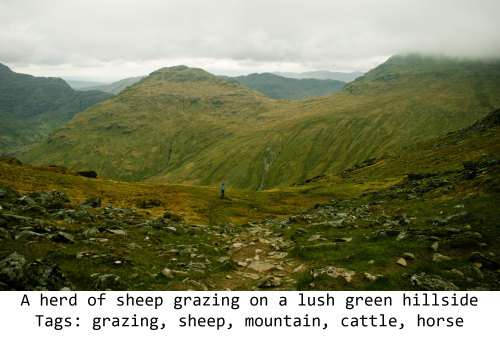
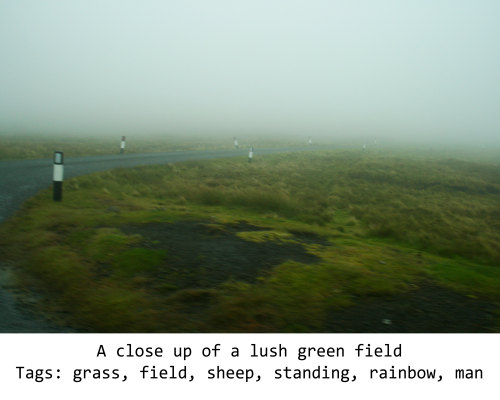
An anonymous reader shares a post: If you've been on the internet today, you've probably interacted with a neural network. They're a type of machine learning algorithm that's used for everything from language translation to finance modeling. One of their specialties is image recognition. Several companies -- including Google, Microsoft, IBM, and Facebook -- have their own algorithms for labeling photos. But image recognition algorithms can make really bizarre mistakes. Microsoft Azure's computer vision API added the above caption and tags. But there are no sheep in the image. None. I zoomed all the way in and inspected every speck. It also tagged sheep in this image. I happen to know there were sheep nearby. But none actually present. Here's one more example. In fact, the neural network hallucinated sheep every time it saw a landscape of this type. What's going on here?

Are neural networks just hyper-vigilant, finding sheep everywhere? No, as it turns out. They only see sheep where they expect to see them. They can find sheep easily in fields and mountainsides, but as soon as sheep start showing up in weird places, it becomes obvious how much the algorithms rely on guessing and probabilities. Bring sheep indoors, and they're labeled as cats. Pick up a sheep (or a goat) in your arms, and they're labeled as dogs.

Submission + - SPAM: The College Board Pushes for Compulsory High School Computer Science

theodp writes: Education Week reports that The College Board wants high schools to make it mandatory for students to take computer science before they graduate. The call came as The College Board touted the astonishing growth in its Advanced Placement (AP) computer science courses, which was attributed to the success of its new AP Computer Science Principles (AP CSP) class, a "lite" alternative to the Java-based AP CS A course. "The College Board is willing to invest serious resources in making this viable-much more so than is in our economic interest to do so," said College Board President David Coleman. "To governors, legislators, to others-if you will help us make this part of the life of schools, we will help fund it." Just two days before Coleman's funds-for-compulsory-CS offer, EdWeek cast a skeptical eye at the tech sector's role in creating a tremendous surge of enthusiasm for K-12 CS education. Last spring, The College Board struck a partnership with the Chan Zuckerberg Initiative with a goal of making AP CSP available in every U.S. school district. Also contributing to the success of The College Board's high school AP CS programs over the years has been tech-bankrolled Code.org, as well as tech giants Microsoft and Google. The idea of a national computer programming language requirement for high school students was prominently floated in a Google-curated Q&A session with President Obama (video) following the 2013 State of the Union address.
Earth

Ancient DNA Reveals a Completely Unknown Population of Native Americans (sciencealert.com) 111

schwit1 shares the findings of a new study of 11,500-year-old bones: Sunrise girl-child ("Xach'itee'aanenh T'eede Gaay") lived some 11,500 years ago in what is now called Alaska, and her ancient DNA reveals not only the origins of Native American society, but reminds the world of a whole population of people forgotten by history millennia ago. "We didn't know this population existed," says anthropologist Ben Potter from the University of Alaska Fairbanks. "It would be difficult to overstate the importance of this newly revealed people to our understanding of how ancient populations came to inhabit the Americas." In a new study published this week, the team reports that a genetic analysis of sunrise girl-child's DNA shows she belonged to a forgotten people called the Ancient Beringians, unknown to science until now. Before now, there were only two recognized branches of early Native Americans (referred to as Northern and Southern). But when the researchers sequenced sunrise girl-child's genome -- the earliest complete genetic profile of a New World human to date -- to their surprise it matched neither.

Given the nature of this field of research -- and the scope of the new findings -- it's unlikely the new hypotheses will remain uncontested for long. But in the light of all the new evidence researchers are uncovering, it's clear the first settlers of America carried a more diverse lineage than we ever realized. "[This is] the first direct evidence of the initial founding Native American population," Potter says. "It is markedly more complex than we thought." The findings are reported in the journal Nature.

Bitcoin

Estimates of Bitcoin's Soaring Energy Use Are Likely Overstating the Electric Power Required To Mine the Cryptocurrency (cnbc.com) 115

From a report: The computer process that generates each coin is said to be on pace to require more electricity than the United States consumes in a year. This bitcoin "mining" allegedly consumes more power than most countries use each year, and its electricity usage is roughly equivalent to Bulgaria's consumption. But here's another thing you might want to know: All of that analysis is based on a single estimate of bitcoin's power consumption that is highly questionable, according to some long-time energy and IT researchers. Despite their skepticism, this power-consumption estimate from the website Digiconomist has quickly been accepted as gospel by many journalists, research analysts and even billionaire investors. That model is also the basis for forecasts of bitcoin's future energy use that remind some experts of wild projections about internet data traffic in the mid-1990s that contributed back then to companies spending far too much for capacity they would eventually not need. "Doing these wild extrapolations can have real-world consequences," said Jonathan Koomey, a Stanford University lecturer who pioneered studies of electricity usage from IT equipment and helped debunk faulty forecasts in the 1990s. "I would not bet anything on the bitcoin thing driving total electricity demand. It is a tiny, tiny part of all data center electricity use."

Slashdot Top Deals

Make it myself? But I'm a physical organic chemist!

Working...