Medicine

America's Top Three Insurers Reaped $7.3 Billion From Their Drug-Middlemen's Markups, FTC Says (nbcnews.com) 87

America's Federal Trade Commission has been "raising antitrust concerns" about them for years, reports NBC News.

The latest? America's three largest drug middlemen "inflated the costs of numerous life-saving medications by billions of dollars over the past few years, the FTC said in a report Tuesday." The top pharmacy benefit managers (PBMs) — CVS Health's Caremark Rx, Cigna's Express Scripts and UnitedHealth Group's OptumRx — generated roughly $7.3 billion through price hikes over about five years starting in 2017, the FTC said. The "excess" price hikes affected generic drugs used to treat heart disease, HIV and cancer, among other conditions, with some increases more than 1,000% of the national average costs of acquiring the medications, the commission said. The FTC also said these so-called Big Three health care companies — which it estimates administer 80% of all prescriptions in the U.S. — are inflating drug prices "at an alarming rate, which means there is an urgent need for policymakers to address it...."

Some of the steepest drug markups were "hundreds and thousands of percent," according to Tuesday's report, which highlights just how profitable specialty drugs have become for the three leading PBMs. Cancer drugs alone made up nearly half of the $7.3 billion, the commission wrote, with multiple sclerosis medications accounting for another 25%. Dispensing highly marked-up specialty drugs was a massive income stream for the companies in 2021, the FTC found. Out of tens of thousands of drugs dispensed, the top 10 specialty generics alone made up nearly 11% of the companies' pharmacy-related operating income that year, the agency estimated. Across the 51 drugs the agency analyzed, the Big Three's price-markup revenue surged from $522 million in 2017 to $2.1 billion in 2021, the report said.

"The FTC found that 22 percent of specialty drugs dispensed by PBM-affiliated pharmacies were marked up by more than 1,000 percent," reports The Hill, "while 41 percent were marked up between 100 and 1,000 percent. Among those drugs marked up by more than 1,000 percent, half of them were marked up by more than 2,000 percent."

And the nonprofit site progressive news site Common Dreams shares some examples from the FTC's 60-page report: "For the pulmonary hypertension drug tadalafil (generic Adcirca), for example, pharmacies purchased the drug at an average of $27 in 2022, yet the Big Three PBMs marked up the drug by $2,079 and paid their affiliated pharmacies $2,106, on average, for a 30-day supply of the medication on commercial claims," the publication notes. That's a staggering average markup of 7,736%... The new analysis follows a July 2024 report that revealed Big Three PBM-affiliated pharmacies received 68% of the dispensing revenue generated by specialty drugs in 2023, a 14% increase from 2016...

Responding to the FTC report, Emma Freer, senior policy analyst for healthcare at the American Economic Liberties Project — a corporate accountability and antitrust advocacy group — said in a statement Tuesday that "the FTC's second interim report lays bare the blatant profiteering by PBM giants, which are marking up lifesaving drugs like cancer, HIV, and multiple sclerosis treatments by thousands of percent and forcing patients to pay the price."

Medicine

FDA Expands Probe of Ecstasy-Based Drug Studies (arstechnica.com) 32

ole_timer shares a report from Ars Technica, written by Beth Mole There's more bad news for the company behind an experimental MDMA therapy for post-traumatic stress disorder, which the Food and Drug Administration roundly rejected earlier this month. According to a report from The Wall Street Journal, the FDA is now expanding an investigation into clinical trials behind the experimental psychedelic therapy -- even though the agency has already rejected it. Agency investigators reportedly interviewed four additional people last week, asking questions regarding whether the trials underreported side effects.

People involved in the trial have previously alleged, among other things, that ill effects, such as suicidal thoughts, went undocumented, and trial participants were discouraged from reporting them to bolster the chances of FDA approval. Overall, the MDMA trials faced crushing criticism amid the FDA's review, with outside experts and agency advisers calling out allegations of sexual misconduct at one trial site, as well as flaws in overall trial designs, multiple sources of biases, and claims that the company behind the therapy, Lykos, fostered a cult-like belief in psychedelics.

According to the Journal, the recent interviews were being conducted by the FDA's Office of Regulatory Affairs, which oversees inspections, and a subdivision of that office called Biomedical Research Monitoring Program, which works to ensure the quality and integrity of data submitted to FDA. Notably, when the agency rejected MDMA, it advised Lykos to conduct a new trial. While the FDA's rejection and expanded investigation are bad enough for Lykos, the company announced this month that it's laying off 75 percent of its staff and overhauling its leadership. The moves were in response to the FDA's rejections, the company said. Additionally, a scientific journal retracted three of the company's MDMA studies, citing "protocol violations amounting to unethical conduct" in its trials, echoing claims raised amid the FDA review.

Movies

Founder of Fandango Dies After Plunge From Manhattan Hotel (nytimes.com) 39

J. Michael Cline, the co-founder of Fandango, died from suicide this week after falling from the twentieth floor of a Manhattan hotel. The New York Times reports: Mr. Cline, who was 64, co-founded Fandango in 2000 and left the company in 2011, according to his LinkedIn profile. The company -- familiar to many from its splashy logo, an orange "F" in the shape of a ticket stub -- was later acquired by Comcast and is currently owned by NBCUniversal and Warner Bros. For years, the company dominated movie-ticket sales, handling ticketing for several major theater chains and making money by charging a processing fee for online ticket sales and by selling advertising on its site.

At the time of its launch, Mr. Cline offered a pithy explanation for the company's name: "A Fandango is fast and fun," he told Variety. "Fandango is the perfect match to a service designed to make going to the movies easier and more enjoyable than ever before." Art Levitt, the co-founder and former chief operating officer and president of Fandango, remembered Mr. Cline as brilliant, creative and loyal, sticking it out even in "tough" times.
TechCrunch provides additional information about Mr. Cline: He left the company in 2011, roughly four years after the company was acquired by Comcast. Some early investors in the online ticketing service were General Atlantic and TCV. Cline was also managing partner of Accretive, a venture capital firm he founded in 1999. He built startups throughout his career, including R1 RCM, Accumen, Accolade, Everspring, Dresr and Insureon. Starting in 2018, Cline served as the executive chairman at the venture firm Juxtapose, which invests in technology businesses. During his time there, Cline enjoyed investing in healthcare companies, according to his staff page. Some of Juxtapose's portfolio companies include Tend, Nectar and Great Jones.
Security

Services Disrupted as London Hospitals Hit By Cyber-attack (theguardian.com) 18

jd writes: There aren't many details yet, but a private company used by the National Health Service in London was hit by a ransomware attack today, leading to cancelled operations and cancelled tests. The provider has been hit multiple times this year and is obviously not bothering with making any improvements in cybersecurity. There really should be legal requirements when it comes to maintaining what is de-facto critical infrastructure.

From the article:

"Major NHS hospitals in London have been hit by a cyber-attack, which is seriously disrupting their services, including blood tests and transfusions. The ransomware attack is having a "major impact" on the care provided by Guy's and St Thomas' NHS trust, its chief executive has told staff in a letter. The attack is understood to affect other hospitals, including King's College hospital, and has left them unable to connect to the servers of the private firm that provides their pathology services.

Synnovis, an outsourced provider of lab services to NHS trusts across south-east London, was the target of the attack, believed to be a form of ransomware, a piece of software which locks up a computer system to extort a payment for restoring access. According to one healthcare worker, the labs were still functional, but communication with them was limited to paper only, imposing a huge bottleneck and forcing cancellation or reassignment of all but the most urgent bloodwork. Direct connections with Synnovis' servers were cut to limit the risk of the infection spreading. ...
This is the third attack in the last year to hit part of the Synlab group, a German medical services provider with subsidiaries across Europe. In June 2023, ransomware gang Clop hacked and stole data from the French branch of the company just days after it hit headlines for bringing down a payroll provider for companies including BA, Boots and the BBC. Clop published the stolen data later that summer."

Medicine

Ascension Cyberattack Continues To Disrupt Care At Hospitals (npr.org) 43

An anonymous reader quotes a report from NPR: Hospital staff are forced to write notes by hand and deliver orders for tests and prescriptions in person in the ongoing fallout from a recent ransomware attack at the national health system Ascension. Ascension is one of the largest health systems in the United States, with some 140 hospitals located across 19 states and D.C. A spokesperson said in a statement that "unusual activity" was first detected on multiple technology network systems Ascension uses on Wednesday, May 8. Later, representatives confirmed that some of Ascension's electronic health records systems had been affected, along with systems used "to order certain tests, procedures and medications."

Some phone capabilities have also been offline, and patients have been unable to access portals used to view medical records and get in touch with their doctors. Due to these interruptions, hospital staff had to shift to "manual and paper based" processes. "Our care teams are trained for these kinds of disruptions and have initiated procedures to ensure patient care delivery continues to be safe and as minimally impacted as possible," an Ascension spokesperson said in a May 8 statement. Kris Fuentes, who works in the neonatal intensive care unit at Ascension Seton Medical Center in Austin, said she remembers when paper charting was the norm. But after so many years of relying on digital systems, she said her hospital wasn't ready to make such an abrupt shift. "It's kind of like we went back 20 years, but not even with the tools we had then," Fuentes said. "Our workflow has just been really unorganized, chaotic and at times, scary."

Fuentes said orders for medication, labs and imaging are being handwritten and then distributed by hand to various departments, whereas typically these requests are quickly accessed via computer. A lack of safety checks with these backup methods has introduced errors, she said, and every task is taking longer to complete. "Medications are taking longer to get to patients, lab results are taking longer to get back," she said. "Doctors need the lab results, often, to decide the next treatment plan, but if there's a delay in access to the labs, there's a delay in access to the care that they order." As of Tuesday, Ascension still had no timeline for when the issues might be resolved, and reported that it continued to work with "industry-leading cybersecurity experts" to investigate the ransomware attack and restore affected systems. The FBI and Cybersecurity and Infrastructure Security Agency are also involved in the investigation.
"While Ascension facilities remain open, a health system representative said on May 9 that in some cases, emergency patients were being triaged to different hospitals, and some non-emergent appointments and procedures were postponed," reports NPR. "Certain Ascension pharmacies are not operational, and patients are being asked to bring in prescription bottles or numbers."

"Individuals who are enrolled in Ascension health insurance plans are being directed to mail in monthly payments while the electronic payment system is down."
Businesses

23andMe's Fall From $6 Billion To Nearly $0 (wsj.com) 77

The once-hot DNA-testing company is struggling to profit. From a report: Five years ago, 23andMe was one of the hottest startups in the world. Millions of people were spitting into its test tubes to learn about their ancestry. Oprah had named its kit one of her favorite things; Lizzo dressed up as one for Halloween; Eddie Murphy name-checked the company on "Saturday Night Live." 23andMe went public in 2021 and its valuation briefly topped $6 billion. Forbes anointed Anne Wojcicki, 23andMe's chief executive and a Silicon Valley celebrity, as the "newest self-made billionaire." Now Wojcicki's self-made billions have vanished.

23andMe's valuation has crashed 98% from its peak and Nasdaq has threatened to delist its sub-$1 stock. Wojcicki reduced staff by a quarter last year through three rounds of layoffs and a subsidiary sale. The company has never made a profit and is burning cash so quickly it could run out by 2025. Silicon Valley's fortunes were built on the lofty ambitions of entrepreneurs swinging for the fences -- even if most of them strike out. Wojcicki, for her part, isn't giving up. She's sticking to her goal to transform 23andMe from a supplier of basic ancestry and health data into a comprehensive healthcare company that develops drugs, offers medical care and sells subscription health reports. She still has to prove the business can sustain itself. She's raised about $1.4 billion for 23andMe, and spent roughly 80% of it.

Known for her quirky charm and informal style -- she typically wears workout gear to the office -- Wojcicki, 50, has been searching for fresh capital. But with 23andMe's stock trading at just 74 cents, the company likely can't raise money by selling more shares. And the company's early-stage drug programs are so expensive, she has sought investor partners for some of them, so far unsuccessfully, and given up stakes in others. She could also plug the hole with her own cash. At the center of 23andMe's DNA-testing business are two fundamental challenges. Customers only need to take the test once, and few test-takers get life-altering health results.

Medicine

Hospitals Owned By Private Equity Are Harming Patients, Reports Find (arstechnica.com) 199

Private equity firms are increasingly buying hospitals across the US, and when they do, patients suffer, according to two separate reports. Specifically, the equity firms cut corners, slash services, lay off staff, lower quality of care, take on substantial debt, and reduce charity care, leading to lower ratings and more medical errors, the reports collectively find. ArsTechnica: Last week, the financial watchdog organization Private Equity Stakeholder Project (PESP) released a report delving into the state of two of the nation's largest hospital systems, Lifepoint and ScionHealth -- both owned by private equity firm Apollo Global Management. Through those two systems, Apollo runs 220 hospitals in 36 states, employing around 75,000 people. The report found that some of Apollo's hospitals were among the worst in their respective states, based on a ranking by The Lown Institute Hospital Index. The index ranks hospitals and health systems based on health equity, value, and outcomes, PESP notes. The hospitals also have dismal readmission rates and government rankings.

The Center for Medicare and Medicaid Services (CMS) ranks hospitals on a one- to five-star system, with the national average of 3.2 stars overall and about 30 percent of hospitals at two stars or below. Apollo's overall average is 2.8 stars, with nearly 40 percent of hospitals at two stars or below. The other report, a study published in JAMA late last month, found that the rate of serious medical errors and health complications increases among patients in the first few years after private equity firms take over. The study examined Medicare claims from 51 private equity-run hospitals and 259 matched control hospitals. Specifically, the study, led by researchers at Harvard University, found that patients admitted to private equity-owned hospitals had a 25 percent increase in developing hospital-acquired conditions compared with patients in the control hospitals. In private equity hospitals, patients experienced a 27 percent increase in falls, a 38 percent increase in central-line bloodstream infections (despite placing 16 percent fewer central lines than control hospitals), and surgical site infections doubled.

Security

US Healthcare Giant Norton Says Hackers Stole Millions of Patients' Data During Ransomware Attack (techcrunch.com) 27

An anonymous reader quotes a report from TechCrunch: Kentucky-based nonprofit healthcare system Norton Healthcare has confirmed that hackers accessed the personal data of millions of patients and employees during an earlier ransomware attack. Norton operates more than 40 clinics and hospitals in and around Louisville, Kentucky, and is the city's third-largest private employer. The organization has more than 20,000 employees, and more than 3,000 total providers on its medical staff, according to its website. In a filing with Maine's attorney general on Friday, Norton said that the sensitive data of approximately 2.5 million patients, as well as employees and their dependents, was accessed during its May ransomware attack.

In a letter sent to those affected, the nonprofit said that hackers had access to "certain network storage devices between May 7 and May 9," but did not access Norton Healthcare's medical record system or Norton MyChart, its electronic medical record system. But Norton admitted that following a "time-consuming" internal investigation, which the organization completed in November, Norton found that hackers accessed a "wide range of sensitive information," including names, dates of birth, Social Security numbers, health and insurance information and medical identification numbers. Norton Healthcare says that, for some individuals, the exposed data may have also included financial account numbers, driver licenses or other government ID numbers, as well as digital signatures. It's not known if any of the accessed data was encrypted.

Norton says it notified law enforcement about the attack and confirmed it did not pay any ransom payment. The organization did not name the hackers responsible for the cyberattack, but the incident was claimed by the notorious ALPHV/BlackCat ransomware gang in May, according to data breach news site DataBreaches.net, which reported that the group claimed it exfiltrated almost five terabytes of data. TechCrunch could not confirm this, as the ALPHV website was inaccessible at the time of writing.

Security

New York Plans Cyber Rules for Hospitals (wsj.com) 24

New York regulators Monday plan to issue cybersecurity regulations for hospitals, after a series of attacks crippled operations at medical facilities. From a report: Under draft rules reviewed by The Wall Street Journal, New York will require general hospitals to develop and test incident response plans, assess their cybersecurity risks and install security technologies such as multifactor authentication. Hospitals must also develop secure software design practices for in-house applications, and processes for testing the security of software from vendors. Hacking "is a threat to every hospital, and my firm belief is if we protect the hospital, we're protecting the patients," said James McDonald, health commissioner for New York state.

Healthcare facilities are popular targets for cybercriminals, particularly ransomware operators hoping for quick ransom payments from administrators worried about risks to patients if technology goes down. Hospitals also hold large amounts of sensitive personal information on their staff and patients, including health and financial data. In August, the largest healthcare accreditation body in the U.S. issued cybersecurity guidelines calling for hospitals to prepare for cyberattacks that could take down critical systems for a month or longer -- measures that will require significant investment. Hospitals need to put in place tools and processes that anticipate technology critical for life and safety could be down, and find alternative ways to work without those systems, the nonprofit Joint Commission said.

AI

Healthcare Org With Over 100 Clinics Uses OpenAI's GPT-4 To Write Medical Records (theregister.com) 111

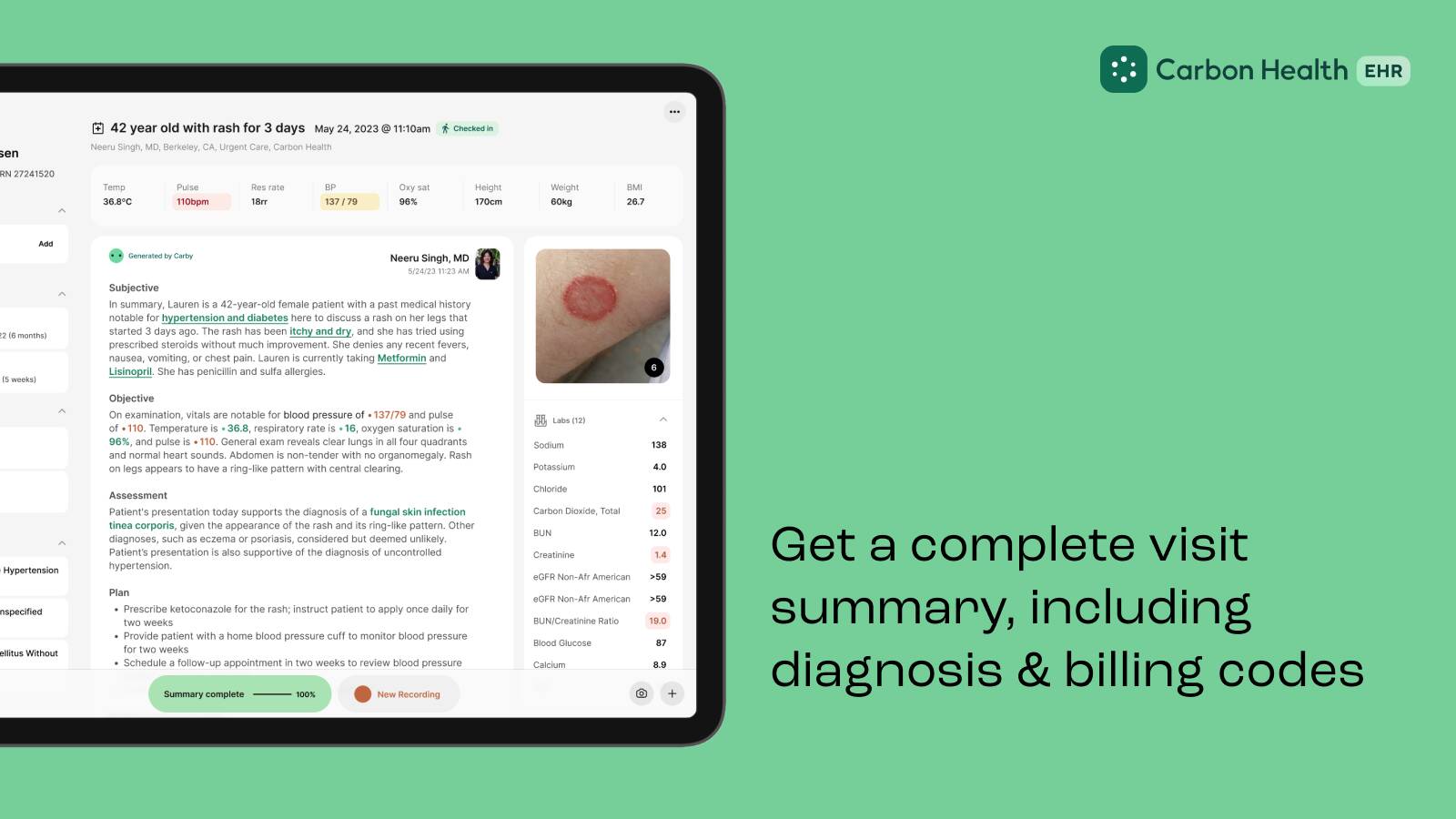
US healthcare chain Carbon Health has implemented an AI tool named Carby, powered by OpenAI's GPT-4 language model, to automatically generate medical records from conversations between physicians and patients. The Register reports: If a patient consents to having their meeting recorded and transcribed, the audio recording is passed to Amazon's AWS Transcribe Medical cloud service, which converts the speech to text. The transcript -- along with data from the patient's medical records, including recent test results -- is passed to an ML model that produces notes summarizing important information gathered in the consultation. The screenshot of an example medical chart below shows what type of text the software, nicknamed Carby, generates. The hypothetical patient's information and vital measurements are included, as well as a summaries of medical records and diagnoses.

Carbon Health CEO Eren Bali said the software is directly integrated into the firm's electronic health records (EHR) system, and is powered by OpenAI's latest language model, GPT-4. Carbon Health said the tool produces consultation summaries in four minutes, compared to the 16 consumed by a flesh and blood doctor working alone. Clinics can therefore see more patients [...] Generative AI models aren't perfect, and often produce errors. Physicians therefore need to verify the AI-generated text. Carbon Health claims 88 percent of the verbiage can be accepted without edits. Carbon Health said the model is already supporting over 130 clinics, where over 600 staff have access to the tool. A clinic testing the tool in San Francisco reportedly saw a 30 percent increase in the number of patients it could treat.

AI

ChatGPT Will See You Now: Doctors Using AI To Answer Patient Questions (wsj.com) 54

Pilot program aims to see if AI will cut time that medical staff spend replying to online inquiries. From a report: Behind every physician's medical advice is a wealth of knowledge, but soon, patients across the country might get advice from a different source: artificial intelligence. In California and Wisconsin, OpenAI's "GPT" generative artificial intelligence is reading patient messages and drafting responses from their doctors. The operation is part of a pilot program in which three health systems test if the AI will cut the time that medical staff spend replying to patients' online inquiries. UC San Diego Health and UW Health began testing the tool in April. Stanford Health Care aims to join the rollout early next week. Altogether, about two dozen healthcare staff are piloting this tool.

Marlene Millen, a primary care physician at UC San Diego Health who is helping lead the AI test, has been testing GPT in her inbox for about a week. Early AI-generated responses needed heavy editing, she said, and her team has been working to improve the replies. They are also adding a kind of bedside manner: If a patient mentioned returning from a trip, the draft could include a line that asked if their travels went well. "It gives the human touch that we would," Dr. Millen said. There is preliminary data that suggests AI could add value. ChatGPT scored better than real doctors at responding to patient queries posted online, according to a study published Friday in the journal JAMA Internal Medicine, in which a panel of doctors did blind evaluations of posts.

Microsoft

Microsoft Suggests Businesses Buy Fewer PCs (theregister.com) 66

In early April with the start of previews for "Windows Frontline" -- a service that provides a single license for frontline employees to use up to three Cloud PCs, Microsoft floated the idea that businesses should buy fewer PCs. The Register reports: The "Frontline" name hints at its purpose: Microsoft thinks this license will benefit organizations that employ shift workers in roles like customer support or healthcare. Microsoft imagines shift workers will log on for eight hours, then the next worker on duty will do likewise, and advances this as a fairer way to charge than assuming cloud PCs are used 24x7. To burnish that argument, Microsoft's launch material for Windows Frontline included research (PDF) by tech sustainability consultancy Px3 that tries to answer the question "Can modern work applications and endpoints abate end user computing greenhouse gas emissions and drive climate action?" The answer is "Yes," when one considers cloudy PCs to be "modern endpoints."

The research reaches that conclusion with analysis of the energy consumption of desktop computers, laptops, tablets, and thin clients, compared to the impact of running a Cloud PC. The research also considers bring your own PC plans that see business fund the acquisition of PCs that their staff use for personal and employment purposes, meaning fewer devices need to be summoned into existence and fewer resources are consumed because users operate one machine instead of two. Px3 instead imagines that end users and their sole device to access a Windows365 Cloud PC when they're on the clock. Doing so would mean corporate PC replacement cycles could stretch to eight years!

Readers will not be surprised that the research found the combination of Windows365 and a bring your own PC plan has significantly lower environmental impact and is therefore a jolly good idea. The research's concluding paragraph states "it is reasonable to state that modern work applications and endpoint computers not only abate GHG emissions, they are perhaps critical to securing a sustainable future." That's perhaps a little overblown but the point is made: slowing consumption is a good idea and it's now possible to turn down the speed of the PC upgrade treadmill.

Businesses

PagerDuty CEO Quotes MLK Jr. In Worst Layoff Email Ever (gizmodo.com) 54

Jody Serrano writes via Gizmodo: In a 1,669-word email to employees, [PagerDuty CEO Jennifer Tejada] echoed the script many tech CEOs have recited in recent months, stating that today's "volatile economy requires additional transformation" by the company. As a result, PagerDuty would be "refining" its operating model by cutting about 7% of its staff globally. That wasn't the only "refinement" the company would undertake, though. According to Tejada, PagerDuty will reduce its discretionary spend, negotiate "more favorable commercial agreements with key vendors," and "rationalize [its] real estate footprint." Up to this point, Tejada's email, while overly complex, weird, and tone deaf, still was not that bad. She goes on to acknowledge employees and their contributions to PagerDuty and announces a decent severance pay of 11 weeks, with extended healthcare coverage and job support.

Nonetheless, it all starts to go downhill when she decides to use the same email where she announces layoffs to celebrate recent employee promotions, reveal good financial results for the fourth quarter of last year, and state that the company expects to end the year strong. As if she couldn't do so in another email where people weren't told they were possibly losing their jobs. "We expect to finish the year strong -- in fact, we have reaffirmed our guidance for FY23 today -- and those results, combined with the refinements outlined above, put PagerDuty in a position of strength to successfully execute on our platform strategy regardless of what the market and the macroenvironment bring," Tejada said.

While it's clearly a CEO's job to cheer on their company, Tejada makes things sound so good that it's perplexing to think the company has to lay off any people to begin with. Alas, the PagerDuty CEO was not done sticking her foot in her mouth and ended her note with a reference a quote from King's sermons published in The Measure of a Man in 1959. She used brackets to change the quote slightly to accommodate her message. "I am reminded in moments like this, of something Martin Luther King said, that 'the ultimate measure of a [leader] is not where [they] stand in the moments of comfort and convenience, but where [they] stand in times of challenge and controversy,'" Tejada said.
"It doesn't seem to have been written with ill intent, but rather with the goal to save time (by announcing layoffs, promotions, and predictions for a solid year) and save face (by refusing to say the word layoffs)," adds Serrano. "In these difficult situations, though, it's just better to be upfront."
Medicine

Patients Wrongly Told They've Got Cancer In SMS Snafu 27

An anonymous reader quotes a report from The Register: Askern Medical Practice, a general practitioner surgery based in Doncaster, UK, managed to muddle its Christmas holiday message to patients by texting them they'd been diagnosed with "aggressive lung cancer with metastases." The message went out to patients of the medical facility -- there are reportedly about 8,000 of them -- on December 23, 2022. It asked patients to fill out a DS1500 form, which is used to help terminal patients expedite access to benefits because they may not have time for the usual bureaucratic delay.

About an hour after thoroughly alarming recipients of the not-so-glad tidings, the medical facility reportedly apologized in a follow-up text message. "Please accept our sincere apologies for the previous text message sent," the message reads, as reported by the BBC. "This has been sent in error. Our message to you should have read, 'We wish you a very merry Christmas and a Happy New Year.' In case of emergency please contact NHS 111." On Tuesday, the surgery took its apology public via its Facebook page. The surgery characterized the errant text message as both an administrative error and a computer-related error, without clarifying just how the mistake occurred.
"While no data was breached, we can confirm an admin staff error was made, for which we apologized immediately upon becoming aware," Askern Medical Practice said in its post. "We would like to once again apologize sincerely to all patients for the distress caused. We take patient communication, confidentiality and data protection very seriously."

"We also pride in looking after our patients," the medical facility's apology continued. "We would like to reassure all our patients that the text message was a mistake (it was an internal patient supportive task amongst admin staff to act upon) and not related to you as a patient in any way. This was an isolated computer-related error for which we are extremely regretful, and steps are being taken to prevent a reoccurrence."
United States

In Its Battle With Big Tech, the CFPB is Building an Army of Engineers (protocol.com) 6

An anonymous reader shares a report: One of Rohit Chopra's first moves as director of the Consumer Financial Protection Bureau was launching a major investigation into Big Tech payment platforms. Soon after, it put out a call to tech whistleblowers, asking them to report misconduct at fintech companies. Now, the CFPB says it's hiring 25 technologists over the next year to help its staff of mainly economists and lawyers actually probe these new leads. The move is as sure a sign as any that the bureau's ongoing efforts to investigate and hold tech companies accountable for financial wrongdoing are only accelerating.

Leading the recruiting push is Erie Meyer, a longtime Chopra aide and the first chief technologist of the CFPB. Meyer previously co-founded the United States Digital Service, the technical team that launched under President Obama after the disastrous rollout of HealthCare.gov. Like USDS, the new tech team at CFPB will recruit technologists from both the private sector and other parts of government for two-year tours of duty. But unlike USDS and its offshoots at the Department of Defense and other agencies, the goal of this team isn't to fix broken government tech, Meyer told Protocol. Instead, it's to help the government cut through tech companies' smoke screens.

AI

The First IBM Mainframe For AI Arrives (zdnet.com) 24

An anonymous reader quotes a report from ZDNet, written by Steven Vaughan-Nichols: Mainframes and AI? Isn't that something like a Model-T Ford with a Tesla motor? Actually, no. Mainframes are as relevant in 2022 as they were in the 1960s. IBM's new IBM z16, with its integrated on-chip Telum AI accelerator, is ready to analyze real-time transactions, at scale. This makes it perfect for mainframe mission-critical workloads such as healthcare and financial transactions. This 21st century Big Iron AI accelerator is built onto its core Telum processor. With this new dual-processor 5.2 GHz chip and its 16 cores, it can perform 300 billion deep-learning inferences per day with one-millisecond latency. Can you say fast? IBM can.

Anthony Saporito, a senior technical staff member for IBM Z hardware development, said "One of the Telum design's key innovations is we built an AI accelerator right onto the silicon of the chip and we directly connected all of the cores and built an ecosystem up the stack. Through the hardware design, firmware, the operating systems, and the software, deep learning is built into all of the transactions." According to Patrick Moorhead, Moor Insights & Strategy's chief analyst, "The AI accelerator is a game-changer. The z16 with z/OS has a 20x response time with 19x higher throughput when inferencing compared to a comparable x86 cloud server with 60ms average network latency."

The new model z16 also includes a so-called quantum-safe system to protect organizations from near-future threats that might crack today's encrypted files. This is done with the z16's support of the Crypto Express8S adapter. Built around a CCA cryptographic coprocessor and a PKCS #11 cryptographic coprocessor, it enables users to develop quantum-safe cryptography. It also works with classical cryptography. If you want your data and transactions to be safe both today and tomorrow, this deserves your attention.

Medicine

Amazon Brings Alexa To Hospitals and Senior Living Centers (techcrunch.com) 51

An anonymous reader quotes a report from TechCrunch: After already targeting verticals like hotels and apartment complexes, Amazon announced today it's now rolling out new solutions for healthcare providers and senior living centers. The solutions, which are a part of Alexa Smart Properties, are designed specifically to meet the needs of deploying Alexa devices at scale and will allow the facility's administrators to create customized experiences for their residents or patients. In senior living centers, the residents would be able to use Alexa devices to call their family members and other loved ones, as well as keep up with the goings-on at their community and other community news. The devices could also be used to make announcements, allow the residents to communicate with each other through direct audio messages and make voice and video calls, and they can streamline other center activities -- like check-ins, maintenance requests and various administrative tasks. Amazon believes this could help make facilities more efficient and productive. Amazon says senior living communities include Atria and Eskaton will integrate with its new solution.

With Amazon's new solution for hospitals, patients will be able to use Alexa to communicate with care staff, control the devices in their room, and stay entertained with news and music. Healthcare providers can also communicate with their patients using Alexa features like calling and Drop-In, without having to enter the patient rooms. This could also help hospitals be more productive and conserve their medical supplies and protective equipment like gloves, masks and gowns, notes Amazon. (PPE shortages had been an ongoing issue in some locations as COVID spiked during the pandemic.) Though Amazon has struggled with privacy issues related to its use of voice recordings and transcriptions, the healthcare and senior living center solutions will not save the voice recordings and don't require users to share personal info with Alexa to use the device, the company explains. Users can also mute the Echo's microphone at any time with the button on top. Amazon also claims it safeguards protected health information received through HIPAA-eligible Alexa skill interactions. Both of the new Alexa Smart Properties solutions will roll out in the U.S. starting next month, Amazon says.

Security

Healthcare Provider Expected To Lose $106.8 Million Following Ransomware Attack (therecord.media) 45

An anonymous reader quotes a report from The Record: Scripps Health, a California-based nonprofit healthcare provider that runs five hospitals and 19 outpatient facilities, said it expects to lose an estimated $106.8 million following a ransomware attack that hit the organization in May 2021. The bulk of the losses, representing $91.6 million, came from lost revenues during the four weeks the organization needed to recover from the May ransomware attack. Scripps also lost $21.1 million in costs associated with response and recovery. While the company said it recovered $5.9 million through its insurance policy, the healthcare provider said it expects to lose an estimated $106.8 million by the end of the year. The losses stemming from the ransomware attack do not include potential losses due to litigation.

Following the attack, several patient groups also filed class-action lawsuits against the organization for failing to protect their data after the organization revealed that the hackers also stole data on roughly 150,000 patients before they encrypted the healthcare provider's servers. The attack, while it did not get the same national coverage in the US as the ones on Colonial Pipeline, JBS Foods, and Kaseya, was one of the most impactful of the year, with Scripps being unable to access its web portal, patient medical records, and provide some patient services for four weeks, during which time staff had to redirect patients to other hospitals, which eventually resulted in the $91.6 million in lost revenue.

Medicine

Does Private Equity Investment in Healthcare Benefit Patients? Evidence from Nursing Homes (nber.org) 243

The summary of a study by National Bureau of Economic Research: The past two decades have seen a rapid increase in Private Equity (PE) investment in healthcare, a sector in which intensive government subsidy and market frictions could lead high-powered for-profit incentives to be misaligned with the social goal of affordable, quality care. This paper studies [PDF] the effects of PE ownership on patient welfare at nursing homes. With administrative patient-level data, we use a within-facility differences-in-differences design to address non-random targeting of facilities. We use an instrumental variables strategy to control for the selection of patients into nursing homes.

Our estimates show that PE ownership increases the short-term mortality of Medicare patients by 10%, implying 20,150 lives lost due to PE ownership over our twelve-year sample period. This is accompanied by declines in other measures of patient well-being, such as lower mobility, while taxpayer spending per patient episode increases by 11%. We observe operational changes that help to explain these effects, including declines in nursing staff and compliance with standards. Finally, we document a systematic shift in operating costs post-acquisition toward non-patient care items such as monitoring fees, interest, and lease payments.

Medicine

With the Most Deaths In 150 Years, Sweden Reveals New COVID-19 Test-and-Trace Strategy (theguardian.com) 249

AleRunner writes: In the first half of 2020, Sweden has recorded its highest death total in 150 years. "In total, 51,405 Swedes died in the six-month period, a higher number than in any year since 1869, when 55,431 people died, partly as a result of a famine," reports The Guardian. In what may be a reaction to this failure, which makes Sweden the worst coronavirus country in Scandinavia, Sweden has announced a change to their new contact-tracing policy. The Local explains: "If you test positive for the coronavirus you may now be given instructions to call people with whom you have been in contact and may have infected, instead of healthcare staff doing the job for you, or it not being done at all."

In early June, Sweden switched from its failed "herd immunity" strategy to a contact-tracing strategy and has since seen a strong fall in new infections, though with a recent slight increase. The new contact-tracing strategy will be critical for the return of the Swedish economy with Sweden currently facing travel restrictions from Scandinavian neighbors such as Finland, whilst other Scandinavian and Baltic countries are already open for trade and tourism. Swedes will be hoping that the adjustment of their new coronavirus strategy will be a signpost for other countries rather than the warning of their old strategy.

Not so long ago, in June, we discussed how Sweden's old strategy had made Sweden a Pariah state and in May we had discussed how Sweden's old strategy caused many deaths whilst failing to deliver immunity.

Slashdot Top Deals