Science

Researchers Develop VR Goggles For Mice (phys.org) 25

Researchers at Cornell University have developed a set of low-cost VR goggles for lab mice. Called MouseGoggles, the VR headsets will allows scientists to provide immersive virtual environments for the mice while capturing fluorescent images of the rodents' brain activity. Phys.Org reports: The goggles -- which dwarf the tiny mice in size -- were built using low-cost, off-the-shelf components like smartwatch displays and tiny lenses, researchers said. [...] About a decade ago, researchers began rigging up clunky projector screens for mice as a means of creating virtual reality environments, but these devices frequently created so much light and noise that they spoiled experiments, researchers said. "The more immersive we can make that behavioral task, the more naturalistic of a brain function we're going to be studying," senior researcher Chris Schaffer, a professor of biomedical engineering at Cornell, said in a news release.

The new VR setup, called MouseGoggles, requires a mouse to stand on a ball-shaped treadmill with its head fixed in place. The headset is attached to its head and held in place with a rod while the mouse skitters about on the treadmill. To see if the headset worked, researchers projected the image of an expanding dark blotch that appeared to be approaching the mice. "When we tried this kind of a test in the typical VR setup with big screens, the mice did not react at all," Isaacson said. "But almost every single mouse, the first time they see it with the goggles, they jump. They have a huge startle reaction. They really did seem to think they were getting attacked by a looming predator."

The researchers also examined two key brain regions to make sure the VR images were working properly. Results from the primary visual cortex confirmed that the goggles form sharp, high-contrast images that mice can see, and readings from the hippocampus confirmed that mice are successfully mapping the virtual environment provided them. These VR goggles could be used to help study brain activity that occurs as mammals -- be they mice or men -- move around their environment, potentially giving researchers new insights into disorders like Alzheimer's disease, the study's authors said.
The research has been published in the journal Nature Methods.
Science

Scientists Explore Longevity Drugs For Dogs That Could Also 'Extend Human Life' (theguardian.com) 80

U.S. biotech startup Loyal plans to launch a lifespan-extending drug for dogs in early 2025, potentially offering insights into human longevity. The San Francisco-based company has secured $125 million in funding for LOY-002, a beef-flavored daily pill designed to extend canine lifespans by at least one year. The drug works by targeting age-related metabolic changes and insulin regulation, according to Loyal CEO Celine Halioua.

Simultaneously, the Dog Aging Project is studying rapamycin, an immunosuppressant drug, which preliminary research suggests could add three years to dogs' lives. Researchers believe these canine studies could accelerate human longevity research, though experts note the lack of standardized aging biomarkers remains a significant hurdle for human trials.
Education

Legal Language Is Deliberately Arcane To Signal Power, Study Finds (mit.edu) 133

A new MIT study reveals why legal documents are so hard to read: Both lawyers and non-lawyers instinctively use complex language to signal authority, similar to how magic spells use archaic terms. The research, published in PNAS, found that even laypeople default to convoluted "center-embedded" clauses when writing laws, but switch to plain language for other tasks. From a report: [Edward] Gibson's [an MIT professor of brain and cognitive sciences] research group has been studying the unique characteristics of legalese since 2020, when Martinez came to MIT after earning a law degree from Harvard Law School. In a 2022 study, Gibson, Martinez, and Mollica analyzed legal contracts totaling about 3.5 million words, comparing them with other types of writing, including movie scripts, newspaper articles, and academic papers.

That analysis revealed that legal documents frequently have long definitions inserted in the middle of sentences -- a feature known as "center-embedding." Linguists have previously found that this kind of structure can make text much more difficult to understand. "Legalese somehow has developed this tendency to put structures inside other structures, in a way which is not typical of human languages," Gibson says.

In a follow-up study published in 2023, the researchers found that legalese also makes documents more difficult for lawyers to understand. Lawyers tended to prefer plain English versions of documents, and they rated those versions to be just as enforceable as traditional legal documents. "Lawyers also find legalese to be unwieldy and complicated," Gibson says. "Lawyers don't like it, laypeople don't like it, so the point of this current paper was to try and figure out why they write documents this way."

Science

Wuhan Lab Researcher Fully Sequences Genomes of Coronavirus Samples From 2004 to 2021, Finds No Close Relatives to SARS-CoV-2 (nature.com) 234

60-year-old Chinese virologist Shi Zhengli led the Wuhan Institute of Virology's group studying bat coronaviruses (prompting Science magazine to call her "Bat Woman"). In June of 2020 Scientific American described Zhengli as "distressed because stories from the Internet and major media have repeated a tenuous suggestion that SARS-CoV-2 accidentally leaked from her lab — despite the fact that its genetic sequence does not match any her lab had previously studied."

More than four years later, Nature writes Friday that Zhengli "reported that none of the viruses stored in her freezers are the most recent ancestors of the virus SARS-CoV-2," presenting data at a conference in Japan "on dozens of new coronaviruses collected from bats in southern China." Shi has consistently said that SARS-CoV-2 was never seen or studied in her lab. But some commentators have continued to ask whether one of the many bat coronaviruses her team collected in southern China over decades was closely related to it. Shi promised to sequence the genomes of the coronaviruses and release the data. The latest analysis, which has not been peer reviewed, includes data from the whole genomes of 56 new betacoronaviruses, the broad group to which SARS-CoV-2 belongs, as well as some partial sequences. All the viruses were collected between 2004 and 2021.

"We didn't find any new sequences which are more closely related to SARS-CoV-1 and SARS-CoV-2," said Shi, in a pre-recorded presentation at the conference... The results support her assertion that the WIV lab did not have any bat-derived sequences from viruses that were more closely related to SARS-CoV-2 than were any already described in scientific papers, says Jonathan Pekar, an evolutionary biologist at the University of Edinburgh, UK. "This just validates what she was saying: that she did not have anything extremely closely related, as we've seen in the years since," he says.

"Earlier this year, Shi moved from the WIV to the Guangzhou Laboratory, a newly established national research institute for infectious diseases."
Power

Utilities Are Trying Enormous 'Flow' Batteries Big Enough to Oust Coal Power Plants (yahoo.com) 143

To help replace power plants, Japan's northernmost island, Hokkaido, "is turning to a new generation of batteries designed to stockpile massive amounts of energy," reports the Washington Post.

"The Hokkaido Electric Power Network (HEPCO Network) is deploying flow batteries, an emerging kind of battery that stores energy in hulking tanks of metallic liquid." [F]low batteries are making their debut in big real-world projects. Sumitomo Electric, the company that built the Hokkaido plant, has also built flow batteries in Taiwan, Belgium, Australia, Morocco and California. Hokkaido's flow battery farm was the biggest in the world when it opened in April 2022 — a record that lasted just a month before China built one that is eight times bigger and can deliver as much energy as an average U.S. natural gas plant. "It looks like flow batteries are finally about to take off with interest from China," said Michael Taylor, an energy analyst at the International Renewable Energy Agency, an international group that studies and promotes green energy. "When China starts to get comfortable with a technology and sees it working, then they will very quickly scale their manufacturing base if they think they can drive down the costs, which they usually can...."

Lithium-ion batteries are perfect for smartphones because they're lightweight and fit in small spaces, even if they don't last long and have to be replaced frequently. Utilities have a different set of priorities: They need to store millions of times more energy, and they have much more room to work with. "If you think about utility-scale stationary applications, maybe you don't need lithium-ion batteries. You can use another one that is cheaper and can provide the services that you want like, for example, vanadium flow batteries," said Francisco Boshell, a researcher at the International Renewable Energy Agency...

Flow batteries are designed to tap giant tanks that can store a lot of energy for a long time. To boost their storage capacity, all you have to do is build a bigger tank and add more vanadium. That's a big advantage: By contrast, there's no easy way to adjust the storage capacity of a lithium-ion battery — if you want more storage, you have to build a whole new battery... One major barrier to building more of these battery farms is finding enough vanadium. Three-quarters of the world's supply comes as a by-product from 10 steel mills in China and Russia, according to Kara Rodby [a battery analyst at the investment firm Volta Energy Technologies] who got her PhD at the Massachusetts Institute of Technology studying the design and market for flow batteries. Australia, South Africa and the United States also produce vanadium, but in much smaller quantities. Mines that have been proposed could boost supply. And some flow battery start-ups are trying to sidestep the vanadium problem entirely by using different materials that are easier to buy.

The other hurdle is their up-front cost. Vanadium flow batteries are at least twice as expensive to build as lithium-ion batteries, Rodby said, and banks are hesitant to lend money to fund an unfamiliar technology. But experts say flow batteries can be cheaper in the long run because they're easier to maintain and last longer. A lithium-ion battery might have to be replaced after 10 years, but Rodby says flow batteries can last much longer. "There really is no finite lifetime for a flow battery in the way there is for lithium-ion," Rodby said.

Here's an interesting statistic from the article. "Over the next six years, utilities will have to build 35 times as many batteries as there are today to soak up all extra renewable energy that will come online, according to the International Energy Agency."
Google

Will AI Kill Google? (yahoo.com) 71

"The past 15 years were unique in ways that might be a bad predictor of our future," writes the Washington Post, with a surge in the number of internet users since 2010, and everyone spending more time online.

But today, "lots of smart people believe that artificial intelligence will upend how you find information. Googling is so yesterday." Sam Altman, the top executive overseeing ChatGPT, has said that AI has a good shot at shoving aside Google search. Bill Gates predicted that emerging AI will do tasks like researching your ideal running shoes and automatically placing an order so you'll "never go to a search site again." In defending itself from a judge's decision that it runs an illegal monopoly, Google says the company might be roadkill as AI and other new technologies change how you find information. (On Wednesday, the U.S. government asked the judge to overhaul Google to undo its monopoly.)

But predictions of Google's looming obsolescence have been wrong before, which calls for humility in fortune-telling our collective technology habits. We're devilishly unpredictable.... Maybe it's right to extrapolate from how people are starting to use AI today. Or maybe that's the mistake that Jobs made when he said no one was searching on iPhones. It wasn't wrong in 2010, but it was within a few years. Or what if AI upends how billions of us find information and we still keep on Googling? "The notion that we can predict how these new technologies are going to evolve is silly," said David B. Yoffie, a Harvard Business School professor who has spent decades studying the technology industry.

Amit Mehta, the judge overseeing the Google monopoly case, formed his own view on AI moving us away from searching Google. "AI may someday fundamentally alter search, but not anytime soon," he said.

Space

Stephen Hawking Was Wrong - Extremal Black Holes Are Possible (quantamagazine.org) 44

"Even black holes have edge cases," writes Astronomy magazine contributing editor Steve Nadis, in an article in Quanta magazine (republished today by Wired): Black holes rotate in space. As matter falls into them, they start to spin faster; if that matter has charge, they also become electrically charged. In principle, a black hole can reach a point where it has as much charge or spin as it possibly can, given its mass. Such a black hole is called "extremal" — the extreme of the extremes. These black holes have some bizarre properties. In particular, the so-called surface gravity at the boundary, or event horizon, of such a black hole is zero. "It is a black hole whose surface doesn't attract things anymore," said Carsten Gundlach, a mathematical physicist at the University of Southampton. But if you were to nudge a particle slightly toward the black hole's center, it would be unable to escape.

In 1973, the prominent physicists Stephen Hawking, James Bardeen and Brandon Carter asserted that extremal black holes can't exist in the real world — that there is simply no plausible way that they can form. Nevertheless, for the past 50 years, extremal black holes have served as useful models in theoretical physics. "They have nice symmetries that make it easier to calculate things," said Gaurav Khanna of the University of Rhode Island, and this allows physicists to test theories about the mysterious relationship between quantum mechanics and gravity. Now two mathematicians have proved Hawking and his colleagues wrong. The new work — contained in a pair of recent papers by Christoph Kehle of the Massachusetts Institute of Technology and Ryan Unger of Stanford University and the University of California, Berkeley — demonstrates that there is nothing in our known laws of physics to prevent the formation of an extremal black hole.

Their mathematical proof is "beautiful, technically innovative and physically surprising," said Mihalis Dafermos, a mathematician at Princeton University (and Kehle's and Unger's doctoral adviser). It hints at a potentially richer and more varied universe in which "extremal black holes could be out there astrophysically," he added. That doesn't mean they are. "Just because a mathematical solution exists that has nice properties doesn't necessarily mean that nature will make use of it," Khanna said. "But if we somehow find one, that would really [make] us think about what we are missing." Such a discovery, he noted, has the potential to raise "some pretty radical kinds of questions." Before Kehle and Unger's proof, there was good reason to believe that extremal black holes couldn't exist.

Hawking, Bardeen, and Carter believed there was no way an extremal black hole could form, according to the article, and "in 1986, a physicist named Werner Israel seemed to put the issue to rest."

But the two mathematicians, studying the formation of electrically charged black holes, stumbled into a counterexample — and along the way "also constructed two other solutions to Einstein's equations of general relativity that involved different ways of adding charge to a black hole. Having disproved Bardeen, Carter and Hawking's hypothesis in three different contexts, the work should leave no doubt, Unger said... "This is a beautiful example of math giving back to physics," said Elena Giorgi, a mathematician at Columbia University....

In the meantime, a better understanding of extremal black holes can provide further insights into near-extremal black holes, which are thought to be plentiful in the universe. "Einstein didn't think that black holes could be real [because] they're just too weird," Khanna said. "But now we know the universe is teeming with black holes."

For similar reasons, he added, "we shouldn't give up on extremal black holes. I just don't want to put limits on nature's creativity."

NASA

Voyager 1 Team Accomplishes Tricky Thruster Swap (nasa.gov) 46

fjo3 shares a report from NASA: Engineers working on NASA's Voyager 1 probe have successfully mitigated an issue with the spacecraft's thrusters, which keep the distant explorer pointed at Earth so that it can receive commands, send engineering data, and provide the unique science data it is gathering. After 47 years, a fuel tube inside the thrusters has become clogged with silicon dioxide, a byproduct that appears with age from a rubber diaphragm in the spacecraft's fuel tank. The clogging reduces how efficiently the thrusters can generate force. After weeks of careful planning, the team switched the spacecraft to a different set of thrusters. [...]

Switching to different thrusters would have been a relatively simple operation for the mission in 1980 or even 2002. But the spacecraft's age has introduced new challenges, primarily related to power supply and temperature. The mission has turned off all non-essential onboard systems, including some heaters, on both spacecraft to conserve their gradually shrinking electrical power supply, which is generated by decaying plutonium. While those steps have worked to reduce power, they have also led to the spacecraft growing colder, an effect compounded by the loss of other non-essential systems that produced heat. Consequently, the attitude propulsion thruster branches have grown cold, and turning them on in that state could damage them, making the thrusters unusable.

The team determined that the best option would be to warm the thrusters before the switch by turning on what had been deemed non-essential heaters. However, as with so many challenges the Voyager team has faced, this presented a puzzle: The spacecraft's power supply is so low that turning on non-essential heaters would require the mission to turn off something else to provide the heaters adequate electricity, and everything that's currently operating is considered essential. Studying the issue, they ruled out turning off one of the still-operating science instruments for a limited time because there's a risk that the instrument would not come back online. After additional study and planning, the engineering team determined they could safely turn off one of the spacecraft's main heaters for up to an hour, freeing up enough power to turn on the thruster heaters. It worked. On Aug. 27, they confirmed that the needed thruster branch was back in action, helping point Voyager 1 toward Earth.

Earth

Solar Farms Look to Produce Something Apart From Power: Friendly Habitats for Wildlife (msn.com) 62

"Solar farms could blanket millions of acres in the United States over the coming decades," writes the New York Times.

But "the sites that capture that energy take up land that wildlife needs to survive and thrive." "We have to address both challenges at the same exact time," said Rebecca Hernandez, a professor of ecology at the University of California, Davis, whose research focuses on how to do just that. Insects, those small animals that play a mighty role in supporting life on Earth, are facing alarming declines. Solar farms can offer them food and shelter by providing a diverse mix of native plants. Such plants can also decrease erosion, nourish the soil and store planet-warming carbon. They can also attract insects that improve pollination of nearby crops...

On a recent morning at the solar meadow in Ramsey, it was time to count insects... In solar pollinator habitat, Minnesota was an early leader among states. Since 2017, funded by the Department of Energy, Lee Walston [a landscape ecologist at Argonne National Laboratory] has been studying sites there and throughout the Midwest. "If you build it, will they come?" he asks in his research. So far, the answer is a resounding yes, if you grow the right plants. In a study published late last year, his team found that insect abundance had tripled over five years on test plots at two other Minnesota solar sites. The abundance of native bees grew twentyfold. The results come amid a global decline of wildlife that leaders are struggling to address.

Some of the most well-known insect species are in trouble: Later this year, the federal government is expected to rule on whether to place monarch butterflies on the Endangered Species List. North American birds, for their part, are down almost 30% since 1970. But at this site, called Anoka County Solar, acoustic monitoring has documented 73 species of birds, presumably attracted by the buffet of seeds and insects. Some build nests in the structures supporting the panels. Mammals are showing up, too... What makes this meadow possible is the height of the panels. A prairie restoration firm had told ENGIE, the owner and developer, that taller panels would allow for a sharp increase in native vegetation species, providing much more ecological diversity, said John Gantner, the director of engineering and delivery for ENGIE's smaller-scale sites. The price of the additional steel and the native seeds were "insignificant to the overall project cost," Gantner said. Over the life of the project, ENGIE has found, pollinator-friendly landscaping actually saves money because it needs far less mowing...

Nationwide, it's unclear what portion of solar farms include any kind of pollinator habitat. The federal project that Walston is part of has a running rough count of just under 24,000 acres. That's compared with about 600,000 acres of currently operating large-scale sites across the country, according to the Solar Energy Industries Association, with a sharp increase expected over the next couple decades.

The article adds that it also helps develoipers get their projects approved "at a time when communities are increasingly wary of vast solar farms. Developers are taking note..."

Others have also suggested "agrivoltaics" — where farming land is also used for generating renewable energy.
Education

College Grades Have Become a Charade. It's Time To Abolish Them. (msn.com) 234

When most students get As, grading loses all meaning as a way to encourage exceptional work and recognize excellence. From a report: Grade inflation at American universities is out of control. The statistics speak for themselves. In 1950, the average GPA at Harvard was estimated at 2.6 out of 4. By 2003, it had risen to 3.4. Today, it stands at 3.8. The more elite the college, the more lenient the standards. At Yale, for example, 80% of grades awarded in 2023 were As or A minuses. But the problem is also prevalent at less selective colleges. Across all four-year colleges in the U.S., the most commonly awarded grade is now an A. Some professors and departments, especially in STEM disciplines, have managed to uphold more stringent criteria. A few advanced courses attract such a self-selecting cohort of students that virtually all of them deserve recognition for genuinely excellent work. But for the most part, the grading scheme at many institutions has effectively become useless. An A has stopped being a mark of special academic achievement.

If everyone outside hard-core engineering, math or pre-med courses can easily get an A, the whole system loses meaning. It fails to make distinctions between different levels of achievement or to motivate students to work hard on their academic pursuits. All the while, it allows students to pretend -- to themselves and to others -- that they are performing exceptionally well. Worse, this system creates perverse incentives. To name but one, it actively punishes those who take risks by enrolling in truly challenging courses. All of this contributes to the strikingly poor record of American colleges in actually educating their students. As Richard Arum and Josipa Roksa showed in their 2011 book "Academically Adrift," the time that the average full-time college student spent studying dropped by half in the five decades after 1960, falling to about a dozen hours a week. A clear majority of college students "showed no significant progress on tests of critical thinking, complex reasoning and writing," with about half failing to make any improvements at all in their first two years of higher education.

AI

New AI Model 'Learns' How To Simulate Super Mario Bros. From Video Footage (arstechnica.com) 31

An anonymous reader quotes a report from Ars Technica: Last month, Google's GameNGen AI model showed that generalized image diffusion techniques can be used to generate a passable, playable version of Doom. Now, researchers are using some similar techniques with a model called MarioVGG to see if an AI model can generate plausible video of Super Mario Bros. in response to user inputs. The results of the MarioVGG model -- available as a pre-print paper (PDF) published by the crypto-adjacent AI company Virtuals Protocol -- still display a lot of apparent glitches, and it's too slow for anything approaching real-time gameplay at the moment. But the results show how even a limited model can infer some impressive physics and gameplay dynamics just from studying a bit of video and input data. The researchers hope this represents a first step toward "producing and demonstrating a reliable and controllable video game generator," or possibly even "replacing game development and game engines completely using video generation models" in the future.
Earth

Excess Memes and 'Reply All' Emails Are Bad For Climate, Researcher Warns (theguardian.com) 120

An anonymous reader quotes a report from The Guardian: When "I can has cheezburger?" became one of the first internet memes to blow our minds, it's unlikely that anyone worried about how much energy it would use up. But research has now found that the vast majority of data stored in the cloud is "dark data", meaning it is used once then never visited again. That means that all the memes and jokes and films that we love to share with friends and family -- from "All your base are belong to us", through Ryan Gosling saying "Hey Girl", to Tim Walz with a piglet -- are out there somewhere, sitting in a datacenter, using up energy. By 2030, the National Grid anticipates that datacenters will account for just under 6% of the UK's total electricity consumption, so tackling junk data is an important part of tackling the climate crisis.

Ian Hodgkinson, a professor of strategy at Loughborough University has been studying the climate impact of dark data and how it can be reduced. "I really started a couple of years ago, it was about trying to understand the negative environmental impact that digital data might have," he said. "And at the top of it might be quite an easy question to answer, but it turns out actually, it's a whole lot more complex. But absolutely, data does have a negative environmental impact." He discovered that 68% of data used by companies is never used again, and estimates that personal data tells the same story. [...] One funny meme isn't going to destroy the planet, of course, but the millions stored, unused, in people's camera rolls does have an impact, he explained: "The one picture isn't going to make a drastic impact. But of course, if you maybe go into your own phone and you look at all the legacy pictures that you have, cumulatively, that creates quite a big impression in terms of energy consumption."
Since we're paying to store data in the cloud, cloud operators and tech companies have a financial incentive to keep people from deleting junk data, says Hodgkinson. He recommends people send fewer pointless emails and avoid the "dreaded 'reply all' button."

"One [figure] that often does the rounds is that for every standard email, that equates to about 4g of carbon. If we then think about the amount of what we mainly call 'legacy data' that we hold, so if we think about all the digital photos that we have, for instance, there will be a cumulative impact."
Moon

Meteorite Impacts Produce Most of Moon's Thin Atmosphere, Study Reveals (theguardian.com) 4

Scientists studying lunar samples brought back by the Apollo missions have determined that the moon's thin atmosphere is produced largely by meteorite impacts. "Our findings provide a clearer picture of how the moon's surface and atmosphere interact over long timescales, [and] enhance our understanding of space weathering processes," said Dr Nicole Nie, the co-author of the new study based at MIT's department of Earth, atmospheric, and planetary sciences. The Guardian reports: Writing in the journal Science Advances, Nie and her colleagues describe how the lunar atmosphere must be constantly replenished because its atoms are continuously being lost to space, primarily because of the moon's weak gravity, or trapped on the lunar surface. Ultraviolet photons from the sun can rerelease the latter, but the researchers say replenishment of the atmosphere is thought to rely on atoms being released from within lunar minerals -- either via vaporisation by meteorite impacts, or by solar wind sputtering, a process in which charged particles from the sun hit the moon and eject atoms. But which of the two factors dominates had been unclear, with data from Nasa's lunar atmosphere and dust environment explorer, launched in 2013, suggesting both were at play.

Nie and colleagues unpicked the conundrum by studying the different forms, or isotopes, of potassium and rubidium in 10 samples of lunar soil from the Apollo missions. The team say meteorite impacts and solar wind sputtering both favor the release of lighter forms of the elements, but that the actual proportion of heavy to light isotopes that end up in the lunar atmosphere and soil would differ depending on the process. "After measuring the isotopic compositions of lunar soils, we built a mathematical model taking into account various space weathering processes, and solve for the contribution of each of them by matching the measured isotopic compositions," said Nie. The results suggest about 70% of the moon's atmosphere is down to impact vaporization and 30% to solar wind sputtering.

Mars

NASA's Mars Rover Detects 'Building Blocks of Life' in Rock (msn.com) 19

"Scientists working with NASA's Perseverance rover state emphatically that they are not claiming to have discovered life on Mars," writes the New York Times.

"But many would regard a rock that the rover just finished studying as 'Most Likely to Contain Fossilized Microbial Martians'..." The rover has drilled and stashed a piece of the rock, which scientists hope can be brought back to Earth in the coming years for closer analysis and more definitive answers. "What we are saying is that we have a potential biosignature on Mars," said Kathryn Stack Morgan, the mission's deputy project scientist. She describes a biosignature as a structure, composition or texture in a rock that could have a biological origin.

The rock, which scientists named Cheyava Falls, possesses features that are reminiscent of what microbes might have left behind when this area was warm and wet several billion years ago, part of an ancient river delta. The scientists clarified that they did not spot anything that they thought might be actual fossilized organisms... Within the rock, Perseverance's instruments detected organic compounds, which would provide the building blocks for life as we know it. The rover also found veins of calcium sulfate — mineral deposits that appear to have been deposited by flowing water. Liquid water is another key ingredient for life. Perseverance also spotted small off-white splotches, about 1 millimeter in size, that have black rings around them, like miniature leopard spots. The black rings contain iron phosphate.

The chemical reactions that created the leopard spots could also have provided energy for microbes to live on.

"One of the key parts of Perseverance's mission is to drill samples of interesting rocks for a future mission to bring samples back to Earth for scientists to study with state-of-the-art instruments in their laboratories," the article points out. And while exactly how those rocks would be return has yet to be determined, deputy project scientist Morgan tells the Times, "I think this sample comes to the top of the list."
Earth

Mystery Oxygen Source Discovered on the Sea Floor 48

Something is pumping out large amounts of oxygen at the bottom of the Pacific Ocean, at depths where a total lack of sunlight makes photosynthesis impossible. Nature: The phenomenon was discovered in a region strewn with ancient, plum-sized formations called polymetallic nodules, which could play a part in the oxygen production by catalysing the splitting of water molecules, researchers suspect. The findings are published in Nature Geoscience. "We have another source of oxygen on the planet, other than photosynthesis," says study co-author Andrew Sweetman, a sea-floor ecologist at the Scottish Association for Marine Science in Oban, UK -- although the mechanism behind this oxygen production remains a mystery. The findings could also have implications for understanding how life began, he says, as well as for the possible impact of deep-sea mining in the region.

The observation is "fascinating," says Donald Canfield, a biogeochemist at the University of Southern Denmark in Odense. "But I find it frustrating, because it raises a lot of questions and not very many answers." Sweetman and his collaborators first noticed something amiss during field work in 2013. The researchers were studying sea-floor ecosystems in the Clarion-Clipperton Zone, an area between Hawaii and Mexico that is larger than India and a potential target for the mining of metal-rich nodules. During such expeditions, the team releases a module that sinks to the sea floor to perform automated experiments. Once there, the module drives cylindrical chambers down to close off small sections of the sea floor -- together with some seawater -- and create "an enclosed microcosm of the seafloor," the authors write. The lander then measures how the concentration of oxygen in the confined seawater changes over periods of up to several days.

Without any photosynthetic organisms releasing oxygen into the water, and with any other organisms consuming the gas, oxygen concentrations inside the chambers should slowly fall. Sweetman has seen that happen in studies he has conducted in areas of the Southern, Arctic and Indian oceans, and in the Atlantic. Around the world, sea-floor ecosystems owe their existence to oxygen carried by currents from the surface, and would quickly die if cut off. (Most of that oxygen originates in the North Atlantic and is carried to deep oceans around the world by a 'global conveyor belt.')
China

Is China Building Spy Bases in Cuba? (msn.com) 47

"Images captured from space show the growth of Cuba's electronic eavesdropping stations," reported the Wall Street Journal this week, citing a new report from the Center for Strategic and International Studies, a Washington-based think tank.

But they added that the stations "are believed to be linked to China," including previously-unreported construction about 70 miles from the U.S. naval base at Guantanamo Bay. (The Journal had previously reported China and Cuba were "negotiating closer defense and intelligence ties, including establishing a new joint military training facility on the island and an eavesdropping facility.") At the time, the Journal reported that Cuba and China were already jointly operating eavesdropping stations on the island, according to U.S. officials, who didn't disclose their locations. It couldn't be determined which, if any, of those are included in the sites covered by the CSIS report.

The concern about the stations, former officials and analysts say, is that China is using Cuba's geographical proximity to the southeastern U.S. to scoop up sensitive electronic communications from American military bases, space-launch facilities, and military and commercial shipping. Chinese facilities on the island "could also bolster China's use of telecommunications networks to spy on U.S. citizens," said Leland Lazarus, an expert on China-Latin America relations at Florida International University... Authors of the CSIS report, after analyzing years' worth of satellite imagery, found that Cuba has significantly upgraded and expanded its electronic spying facilities in recent years and pinpointed four sites — at Bejucal, El Salao, Wajay and Calabazar... "These are active locations with an evolving mission set," said Matthew Funaiole, a senior follow at CSIS and the report's chief author.

The CSIS web site shows some of the satellite images. "Pinpointing the specific targets of these assets is nearly impossible," they add — but since Cuba has no space program, "the types of space-tracking capabilities observed are likely intended to monitor the activities of other nations (like the United States) with a presence in orbit." While China's own satellites could also benefit from a North America-based groundstation for communications, the Cuban facilities "would also provide the ability to monitor radio traffic and potentially intercept data delivered by U.S. satellites as they pass over highly sensitive military sites across the southern United States."

The think tank points out that one possibly-installed system would be within range to monitor rocket launches from Cape Canaveral and NASA's Kennedy Space Center. "Studying these launches — particularly those of SpaceX's Falcon 9 and Falcon Heavy reusable first-stage booster rocket systems — is likely of keen interest to China as it attempts to catch up to U.S. leadership in space launch technology."
Education

High School AP CS A Exam Takers Struggled Again With Java Array Question 159

theodp writes: As with last year," tweeted College Board's AP Program Chief Trevor Packer, "the most challenging free-response question on this year's AP Computer Science A exam was Q4 on 2D Array." While it takes six pages of the AP CS A exam document [PDF] to ask question 4 (of 4), the ask of students essentially boils down to using Java to move from the current location in a 2-D grid to either immediately below or to the right of that location based on which neighbor contains the lesser value, and adding the value at that location to a total (suggested Java solution, alternative Excel VBA solution). Much like rules of the children's game Pop-O-Matic Trouble, moves are subject to the constraint that you cannot move to the right or ahead if it takes you to an invalid position (beyond the grid dimensions).

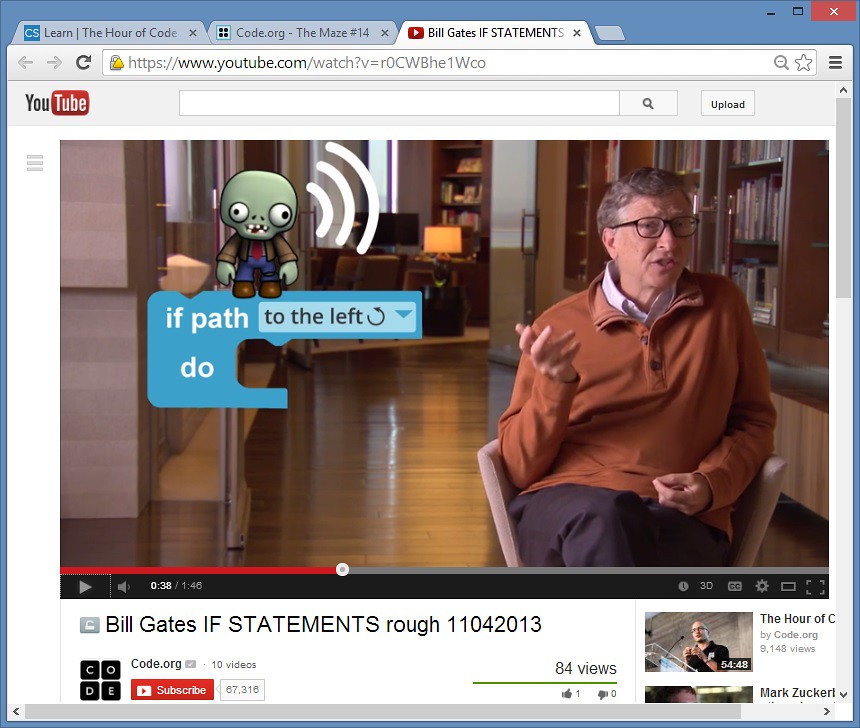
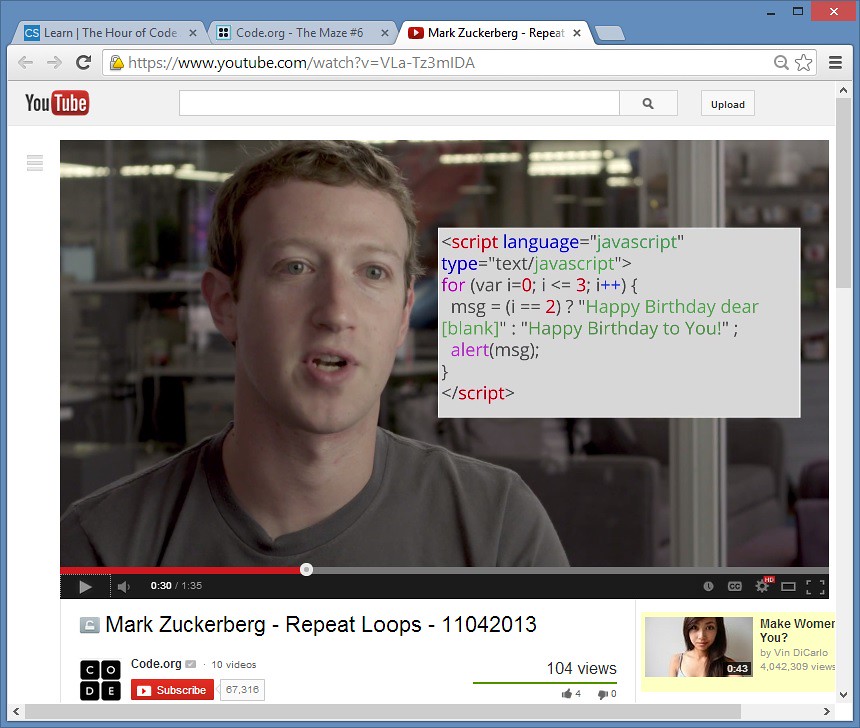
Ironically, many of the AP CS A students who struggled with the grid coding problem were likely exposed by their schools from kindergarten on to more than a decade's worth of annual Hour of Code tutorials that focused on the concepts of using code to move about in 2-D grids. The move-up-down-left-right tutorials promoted by schools came from tech-backed nonprofit Code.org and its tech giant partners and have been taught over the years by the likes of Bill Gates, Mark Zuckerberg, and President Obama, as well as characters from Star Wars, Disney Princess movies, and Microsoft Minecraft.

The news of American high school students struggling again with fairly straightforward coding problems after a year-long course of instruction comes not only as tech companies and tech-tied nonprofits lobby state lawmakers to pass bills making CS a high school graduation requirement in the US, but also as a new report from King's College urges lawmakers and educators to address a stark decline in the number of UK students studying computing at secondary school, which is blamed on the replacement of more approachable ICT (Information and Communications Technology) courses with more rigorous computer science courses in 2013 (a switch pushed by Google and Microsoft), which it notes students have perceived as too difficult and avoided taking.
Cloud

Could We Lower The Carbon Footprint of Data Centers By Launching Them Into Space? (cnbc.com) 114

The Wall Street Journal reports that a European initiative studying the feasibility data centers in space "has found that the project could be economically viable" — while reducing the data center's carbon footprint.

And they add that according to coordinator Thales Alenia Space, the project "could also generate a return on investment of several billion euros between now and 2050." The study — dubbed Ascend, short for Advanced Space Cloud for European Net zero emission and Data sovereignty — was funded by the European Union and sought to compare the environmental impacts of space-based and Earth-based data centers, the company said. Moving forward, the company plans to consolidate and optimize its results. Space data centers would be powered by solar energy outside the Earth's atmosphere, aiming to contribute to the European Union's goal of achieving carbon neutrality by 2050, the project coordinator said... Space data centers wouldn't require water to cool them, the company said.
The 16-month study came to a "very encouraging" conclusion, project manager Damien Dumestier told CNBC. With some caveats... The facilities that the study explored launching into space would orbit at an altitude of around 1,400 kilometers (869.9 miles) — about three times the altitude of the International Space Station. Dumestier explained that ASCEND would aim to deploy 13 space data center building blocks with a total capacity of 10 megawatts in 2036, in order to achieve the starting point for cloud service commercialization... The study found that, in order to significantly reduce CO2 emissions, a new type of launcher that is 10 times less emissive would need to be developed. ArianeGroup, one of the 12 companies participating in the study, is working to speed up the development of such reusable and eco-friendly launchers. The target is to have the first eco-launcher ready by 2035 and then to allow for 15 years of deployment in order to have the huge capacity required to make the project feasible, said Dumestier...

Michael Winterson, managing director of the European Data Centre Association, acknowledges that a space data center would benefit from increased efficiency from solar power without the interruption of weather patterns — but the center would require significant amounts of rocket fuel to keep it in orbit. Winterson estimates that even a small 1 megawatt center in low earth orbit would need around 280,000 kilograms of rocket fuel per year at a cost of around $140 million in 2030 — a calculation based on a significant decrease in launch costs, which has yet to take place. "There will be specialist services that will be suited to this idea, but it will in no way be a market replacement," said Winterson. "Applications that might be well served would be very specific, such as military/surveillance, broadcasting, telecommunications and financial trading services. All other services would not competitively run from space," he added in emailed comments.

[Merima Dzanic, head of strategy and operations at the Danish Data Center Industry Association] also signaled some skepticism around security risks, noting, "Space is being increasingly politicised and weaponized amongst the different countries. So obviously, there is a security implications on what type of data you send out there."

Its not the only study looking at the potential of orbital data centers, notes CNBC. "Microsoft, which has previously trialed the use of a subsea data center that was positioned 117 feet deep on the seafloor, is collaborating with companies such as Loft Orbital to explore the challenges in executing AI and computing in space."

The article also points out that the total global electricity consumption from data centers could exceed 1,000 terawatt-hours in 2026. "That's roughly equivalent to the electricity consumption of Japan, according to the International Energy Agency."
China

Launch of Chinese-French Satellite Scattered Debris Over Populated Area (spacenews.com) 45

"A Chinese launch of the joint Sino-French SVOM mission to study Gamma-ray bursts early Saturday saw toxic rocket debris fall over a populated area..." writes Space News: SVOM is a collaboration between the China National Space Administration (CNSA) and France's Centre national d'études spatiales (CNES). The mission will look for high-energy electromagnetic radiation from these events in the X-ray and gamma-ray ranges using two French and two Chinese-developed science payloads... Studying gamma-ray bursts, thought to be caused by the death of massive stars or collisions between stars, could provide answers to key questions in astrophysics. This includes the death of stars and the creation of black holes.

However the launch of SVOM also created an explosion of its own closer to home.A video posted on Chinese social media site Sina Weibo appears to show a rocket booster falling on a populated area with people running for cover. The booster fell to Earth near Guiding County, Qiandongnan Prefecture in Guizhou province, according to another post...

A number of comments on the video noted the danger posed by the hypergolic propellant from the Long March rocket... The Long March 2C uses a toxic, hypergolic mix of nitrogen tetroxide and unsymmetrical dimethylhydrazine (UDMH). Reddish-brown gas or smoke from the booster could be indicative of nitrogen tetroxide, while a yellowish gas could be caused by hydrazine fuel mixing with air. Contact with either remaining fuel or oxidizer from the rocket stage could be very harmful to individuals.

"Falling rocket debris is a common issue with China's launches from its three inland launch sites..." the article points out.

"Authorities are understood to issue warnings and evacuation notices for areas calculated to be at risk from launch debris, reducing the risk of injuries.
NASA

In Memoriam: Dr. Ed Stone, Former NASA JPL Director and Voyager Project Scientist (nasa.gov) 9

Slashdot reader hackertourist shared this announcement from NASA's Jet Propulsion Laboratory: Edward C. Stone, former director of NASA's Jet Propulsion Laboratory and project scientist of the Voyager mission for 50 years, died on June 9, 2024. He was age 88...

Stone served on nine NASA missions as either principal investigator or a science instrument lead, and on five others as a co-investigator (a key science instrument team member). These roles primarily involved studying energetic ions from the Sun and cosmic rays from the galaxy. He had the distinction of being one of the few scientists involved with both the mission that has come closest to the Sun (NASA's Parker Solar Probe) and the one that has traveled farthest from it (Voyager).

Stone is best known for his work on NASA's longest-running mission, Voyager, whose twin spacecraft launched in 1977 and are still exploring deep space today. He served as Voyager's sole project scientist from 1972 until his retirement in 2022. Under Stone's leadership, the mission took advantage of a celestial alignment that occurs just once every 176 years to visit Jupiter, Saturn, Uranus, and Neptune. During their journeys, the spacecraft revealed the first active volcanoes beyond Earth, on Jupiter's moon Io, and an atmosphere rich with organic molecules on Saturn's moon Titan. Voyager 2 remains the only spacecraft to fly by Uranus and Neptune, revealing Uranus' unusual tipped magnetic poles, and the icy geysers erupting from Neptune's moon Triton.

The mission "transformed our understanding of the solar system, and is still providing useful data today," writes hackertourist. (Watch Stone speak in this 2018 video about the Voyager 2 spacecraft.) NASA's announcement also includes stories of Stone's desire to engage the public and his thoughtfulness in considering the true boundary of interstellar space. As director of JPL, Stone was responsible for more than two dozen other missions, including landing NASA's Pathfinder mission with the first Mars rover in 1996. "Ed Stone was a trailblazer who dared mighty things in space. He was a dear friend to all who knew him, and a cherished mentor to me personally," said Nicola Fox, associate administrator for the Science Mission Directorate at NASA Headquarters in Washington.

"Ed took humanity on a planetary tour of our solar system and beyond, sending NASA where no spacecraft had gone before. His legacy has left a tremendous and profound impact on NASA, the scientific community, and the world."

Slashdot Top Deals