Science

Night Owls' Cognitive Function 'Superior' To Early Risers, Study Suggests (theguardian.com) 85

The idea that night owls who don't go to bed until the early hours struggle to get anything done during the day may have to be revised. From a report: It turns out that staying up late could be good for our brain power as research suggests that people who identify as night owls could be sharper than those who go to bed early. Researchers led by academics at Imperial College London studied data from the UK Biobank study on more than 26,000 people who had completed intelligence, reasoning, reaction time and memory tests.

They then examined how participants' sleep duration, quality, and chronotype (which determines what time of day we feel most alert and productive) affected brain performance. They found that those who stay up late and those classed as "intermediate" had "superior cognitive function," while morning larks had the lowest scores. Going to bed late is strongly associated with creative types.

Power

Lithium Ion Batteries a Growing Source of PFAS Pollution, Study Finds (phys.org) 87

"Nature recently published an open-access article (not paywalled) that studies the lifecycle of lithium-ion batteries once they are manufactured," writes Slashdot reader NoWayNoShapeNoForm. "The study is a 'cradle-to-grave' look at these batteries and certain chemicals that they contain. The University researchers that authored the study found that the electrolytes and polymers inside lithium-ion batteries contain a class of PFAS known as bis-FASI chemicals. PFAS chemicals are internationally recognized pollutants, yet they are found in consumer and industrial processes, such as non-stick coatings, surfactants, and film-forming foams. PFAS chemicals have been found in windmill coatings, semiconductors, solar collectors, and photovoltaic cells." Phys.org reports: Texas Tech University's Jennifer Guelfo was part of a research team that found the use of a novel sub-class of per- and polyfluoroalkyl (PFAS) in lithium ion batteries is a growing source of pollution in air and water. Testing by the research team further found these PFAS, called bis-perfluoroalkyl sulfonimides (bis-FASIs), demonstrate environmental persistence and ecotoxicity comparable to older notorious compounds like perfluorooctanoic acid (PFOA). The researchers sampled air, water, snow, soil and sediment near manufacturing plants in Minnesota, Kentucky, Belgium and France. The bis-FASI concentrations in these samples were commonly at very high levels. Data also suggested air emissions of bis-FASIs may facilitate long-range transport, meaning areas far from manufacturing sites may be affected as well. Analysis of several municipal landfills in the southeastern U.S. indicated these compounds can also enter the environment through disposal of products, including lithium ion batteries.

Toxicity testing demonstrated concentrations of bis-FASIs similar to those found at the sampling sites can change behavior and fundamental energy metabolic processes of aquatic organisms. Bis-FASI toxicity has not yet been studied in humans, though other, more well-studied PFAS are linked to cancer, infertility and other serious health harms. Treatability testing showed bis-FASIs did not break down during oxidation, which has also been observed for other PFAS. However, data showed concentrations of bis-FASIs in water could be reduced using granular activated carbon and ion exchange, methods already used to remove PFAS from drinking water.
"Our results reveal a dilemma associated with manufacturing, disposal, and recycling of clean energy infrastructure," said Guelfo, an associate professor of environmental engineering in the Edward E. Whitacre Jr. College of Engineering. "Slashing carbon dioxide emissions with innovations like electric cars is critical, but it shouldn't come with the side effect of increasing PFAS pollution. We need to facilitate technologies, manufacturing controls and recycling solutions that can fight the climate crisis without releasing highly recalcitrant pollutants."
Education

British Boarding School Bans Smartphones, Hands Out Nokia Phones Instead (engadget.com) 66

Eton College, Britain's elite boarding school with alumni that includes Princes William and Harry, as well as George Orwell and a long list of others, is banning incoming students from having smartphones. Instead, the school will provide students with a Nokia "brick" phone, which will only be capable of making calls and sending text messages. CBS News reports: Parents of first-year students at Eton -- where tuition exceeds $60,000 per year -- were informed of the changes in a letter, which said that incoming 13-year-old boarders should have their smart devices taken home after their SIM cards are transferred to offline Nokia phones provided by the school, which can only make calls and send simple text messages. Eton's previous rules on smartphones required first-year students to hand over their devices overnight.

"Eton routinely reviews our mobile phone and devices policy to balance the benefits and challenges that technology brings to schools," a spokesperson for the school told CBS News on Tuesday, adding that those joining in Year 9, essentially the equivalent of freshman year in high school for American students, "will receive a 'brick' phone for use outside the school day, as well as a school-issued iPad to support academic study." The spokesperson added that "age-appropriate controls remain in place for other year groups."
The ban follows a recent guidance issued by the UK government backing school principals who decide to ban smartphones during the school day. The goal is to help minimize disruption and improve classroom behavior.
Security

10 Billion Passwords Leaked in the Largest Compilation of All Time (cybernews.com) 52

An anonymous reader shares a report: Cybernews researchers discovered what appears to be the largest password compilation with a staggering 9,948,575,739 unique plaintext passwords. The file with the data, titled rockyou2024.txt, was posted on July 4th by forum user ObamaCare. While the user registered in late May 2024, they have previously shared an employee database from the law firm Simmons & Simmons, a lead from an online casino AskGamblers, and student applications for Rowan College at Burlington County.

The team cross-referenced the passwords included in the RockYou2024 leak with data from Cybernews' Leaked Password Checker, which revealed that these passwords came from a mix of old and new data breaches. "In its essence, the RockYou2024 leak is a compilation of real-world passwords used by individuals all over the world. Revealing that many passwords for threat actors substantially heightens the risk of credential stuffing attacks," researchers said.

Security

Cancer Patient Forced To Make Terrible Decision After Ransomware Attack On London Hospitals (theregister.com) 115

An anonymous reader quotes a report from The Register: The latest figures suggest that around 1,500 medical procedures have been canceled across some of London's biggest hospitals in the four weeks since Qilin's ransomware attack hit pathology services provider Synnovis. But perhaps no single person was affected as severely as Johanna Groothuizen. Hanna -- the name she goes by -- is now missing her right breast after her skin-sparing mastectomy and immediate breast reconstruction surgery was swapped out for a simple mastectomy at the last minute. The 36-year-old research culture manager at King's College London and former researcher in health sciences was diagnosed with HER2-positive breast cancer in late 2023. It's an aggressive form known for spreading faster and is more commonly recurring, which necessitates urgent treatment. Hanna soon began a course of chemotherapy following her diagnosis until she was able to have what will hopefully be the first and only major procedure to remove the disease. Between then and the operation, which was scheduled for June 7 -- four days after the ransomware attack was carried out -- she had been told repeatedly that the planned procedure was a skin-sparing mastectomy which would have allowed surgeons to cosmetically reconstruct her right breast immediately after the operation.

How the ordeal actually unraveled, however, was an entirely different story. Hanna was given less than 24 hours by doctors to make the daunting decision to either accept a simple mastectomy or delay a life-changing procedure until Synnovis's systems were back online. The decision was thrust upon her on the Thursday afternoon before her Friday surgery. This was after she was forced to chase the medical staff for updates about whether the procedure was going ahead at all. Hanna was told on the Tuesday of that week, the day after Qilin's attack, that despite everything going on, the staff at St Thomas' hospital in London were still planning to go ahead with the skin-sparing mastectomy as previously agreed. Per the updates Hanna requested on Thursday, it was strongly suggested that the operation was going to be canceled. The hospital deemed the reconstruction part of the procedure too risky because Synnovis was unable to support blood transfusions until its systems were back online.

The ransomware attack wasn't easy on hospitals. The situation was so dire that blood reserves were running low just a week after the attack, prompting an urgent appeal for O-type blood donations. For Hanna, though, this meant she had to make the unimaginably difficult choice between the surgery she wanted, or the surgery that would give her the best chance at survival. The mother of two young children, aged four and two, felt like she had no other choice but to accept the simple mastectomy, leaving her with only one breast. [...] At the time of writing, it's now nearly five weeks since Qilin's attack on Synnovis -- a pathology services partnership between Synlab, Guy's and St Thomas' NHS Foundation Trust, and King's College Hospital NHS Foundation Trust. The most recent update provided by the NHS said disruption to services was still evident across the region, although some services such as outpatient appointments are returning to near-normal levels.
Between June 24-30, there were 1,517 cute outpatient appointments and 136 electric procedures that needed to be postponed across the two NHS trusts partnered with Synlab. "The total number of postponements for the entire month since the attack took hold (June 3-30) stand at 4,913 for acute outpatient appointments and 1,391 for elective procedures," notes the report.
Earth

Earth's Core Has Slowed So Much It's Moving Backward, Scientists Confirm (cnn.com) 48

An anonymous reader quotes a report from CNN: Deep inside Earth is a solid metal ball that rotates independently of our spinning planet, like a top whirling around inside a bigger top, shrouded in mystery. This inner core has intrigued researchers since its discovery by Danish seismologist Inge Lehmann in 1936, and how it moves -- its rotation speed and direction -- has been at the center of a decades-long debate. A growing body of evidence suggests the core's spin has changed dramatically in recent years, but scientists have remained divided over what exactly is happening -- and what it means. Part of the trouble is that Earth's deep interior is impossible to observe or sample directly. Seismologists have gleaned information about the inner core's motion by examining how waves from large earthquakes that ping this area behave. Variations between waves of similar strengths that passed through the core at different times enabled scientists to measure changes in the inner core's position and calculate its spin.

"Differential rotation of the inner core was proposed as a phenomenon in the 1970s and '80s, but it wasn't until the '90s that seismological evidence was published," said Dr. Lauren Waszek, a senior lecturer of physical sciences at James Cook University in Australia. But researchers argued over how to interpret these findings, "primarily due to the challenge of making detailed observations of the inner core, due to its remoteness and limited available data," Waszek said. As a result, "studies which followed over the next years and decades disagree on the rate of rotation, and also its direction with respect to the mantle," she added. Some analyses even proposed that the core didn't rotate at all.

One promising model proposed in 2023 described an inner core that in the past had spun faster than Earth itself, but was now spinning slower. For a while, the scientists reported, the core's rotation matched Earth's spin. Then it slowed even more, until the core was moving backward relative to the fluid layers around it. At the time, some experts cautioned that more data was needed to bolster this conclusion, and now another team of scientists has delivered compelling new evidence for this hypothesis about the inner core's rotation rate. Research published June 12 in the journal Nature not only confirms the core slowdown, it supports the 2023 proposal that this core deceleration is part of a decades-long pattern of slowing down and speeding up. The new findings also confirm that the changes in rotational speed follow a 70-year cycle, said study coauthor Dr. John Vidale, Dean's Professor of Earth Sciences at the University of Southern California's Dornsife College of Letters, Arts and Sciences.

Education

Eton Replaces First-Year Student Smartphones With Nokia 'Brick' Phones (businessinsider.com) 55

An anonymous reader shares a report: Eton College, one of the world's most prestigious boarding schools, is planning to ban smartphones for its incoming first-year students and replace these with old-school Nokia phones instead, a spokesperson for the school confirmed to Business Insider. The new policy comes as the UK-based school grapples with managing student's educations alongside technological developments.

"Eton routinely reviews our mobile phone and devices policy to balance the benefits and challenges that technology brings to schools," a spokesperson told BI. "From September those joining in Year 9 will receive a 'brick' phone for use outside the school day, as well as a School-issued iPad to support academic study. Age-appropriate controls remain in place for other year groups," they added. Eton College is an exclusive boarding school located outside London, near Windsor. Prince William, Prince Harry, Tom Hiddleston, and Eddie Redmayne are among its best-known alumni.

Education

High School AP CS A Exam Takers Struggled Again With Java Array Question 159

theodp writes: As with last year," tweeted College Board's AP Program Chief Trevor Packer, "the most challenging free-response question on this year's AP Computer Science A exam was Q4 on 2D Array." While it takes six pages of the AP CS A exam document [PDF] to ask question 4 (of 4), the ask of students essentially boils down to using Java to move from the current location in a 2-D grid to either immediately below or to the right of that location based on which neighbor contains the lesser value, and adding the value at that location to a total (suggested Java solution, alternative Excel VBA solution). Much like rules of the children's game Pop-O-Matic Trouble, moves are subject to the constraint that you cannot move to the right or ahead if it takes you to an invalid position (beyond the grid dimensions).

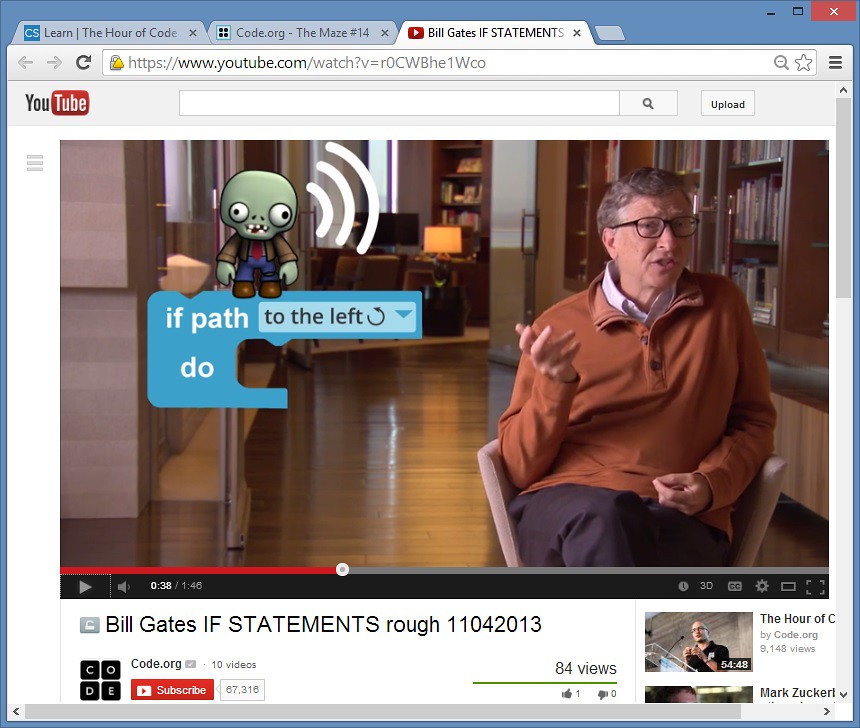
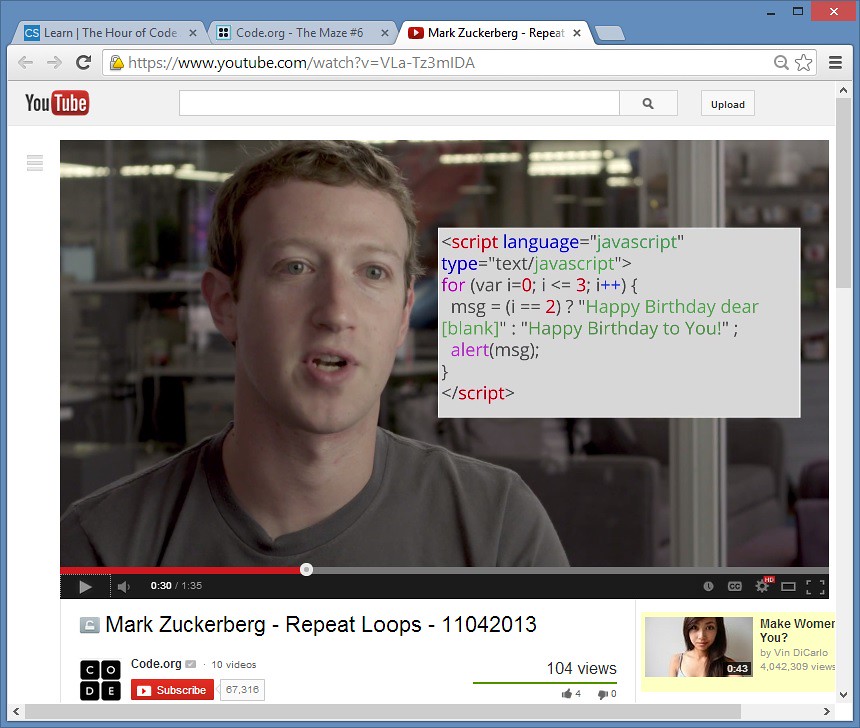
Ironically, many of the AP CS A students who struggled with the grid coding problem were likely exposed by their schools from kindergarten on to more than a decade's worth of annual Hour of Code tutorials that focused on the concepts of using code to move about in 2-D grids. The move-up-down-left-right tutorials promoted by schools came from tech-backed nonprofit Code.org and its tech giant partners and have been taught over the years by the likes of Bill Gates, Mark Zuckerberg, and President Obama, as well as characters from Star Wars, Disney Princess movies, and Microsoft Minecraft.

The news of American high school students struggling again with fairly straightforward coding problems after a year-long course of instruction comes not only as tech companies and tech-tied nonprofits lobby state lawmakers to pass bills making CS a high school graduation requirement in the US, but also as a new report from King's College urges lawmakers and educators to address a stark decline in the number of UK students studying computing at secondary school, which is blamed on the replacement of more approachable ICT (Information and Communications Technology) courses with more rigorous computer science courses in 2013 (a switch pushed by Google and Microsoft), which it notes students have perceived as too difficult and avoided taking.
Open Source

FreeDOS Founder Jim Hall: After 30 Years, What I've Learned About Open Source Community (opensource.net) 39

In 1994, college student Jim Hall created FreeDOS (in response to Microsoft's plan to gradually phase out MS-DOS). After celebrating its 30th anniversary last week, Hill wrote a new article Saturday for OpenSource.net: "What I've learned about Open Source community over 30 years."

Lessons include "every Open Source project needs a website," but also "consider other ways to raise awareness about your Open Source software project." ("In the FreeDOS Project, we've found that posting videos to our YouTube channel is an excellent way to help people learn about FreeDOS... The more information you can share about your Open Source project, the more people will find it familiar and want to try it out.")

But the larger lesson is that "Open Source projects must be grounded in community." Without open doors for new ideas and ongoing development, even the most well-intentioned project becomes a stagnant echo chamber...

Maintain open lines of communication... This can take many forms, including an email list, discussion board, or some other discussion forum. Other forums where people can ask more general "Help me" questions are okay but try to keep all discussions about project development on your official discussion channel.

The last of its seven points stresses that "An Open Source project isn't really Open Source without source code that everyone can download, study, use, modify and share" (urging careful selection for your project's licensing). But the first point emphasizes that "It's more than just code," and Hall ends his article by attributing FreeDOS's three-decade run to "the great developers and users in our community." In celebrating FreeDOS, we are celebrating everyone who has created programs, fixed bugs, added features, translated messages, written documentation, shared articles, or contributed in some other way to the FreeDOS Project... Here's looking forward to more years to come!
Jim Hall is also Slashdot reader #2,985, and back in 2000 he answered questions from Slashdot's readers — just six years after starting the project. "Jim isn't rich or famous," wrote RobLimo, "just an old-fashioned open source contributor who helped start a humble but useful project back in 1994 and still works on it as much as he can."

As the years piled up, Slashdot ran posts celebrating FreeDOS's 10th, 15th, and 20th anniversary.

And then for FreeDOS's 25th, Hall returned to Slashdot to answer more questions from Slashdot readers...
Businesses

Amazon Gets FAA Approval Allowing It To Expand Drone Deliveries For Online Orders (apnews.com) 23

Federal regulators have given Amazon key permission that will allow it to expand its drone delivery program, the company announced Thursday. From a report: In a blog post published on its website, Seattle-based Amazon said that the Federal Aviation Administration has given its Prime Air delivery service the OK to operate drones "beyond visual line of sight," removing a barrier that has prevented its drones from traveling longer distances. With the approval, Amazon pilots can now operate drones remotely without seeing it with their own eyes. An FAA spokesperson said the approval applies to College Station, Texas, where the company launched drone deliveries in late 2022.

Amazon said its planning to immediately scale its operations in that city in an effort to reach customers in more densely populated areas. It says the approval from regulators also "lays the foundation" to scale its operations to more locations around the country. Businesses have wanted simpler rules that could open neighborhood skies to new commercial applications of drones, but privacy advocates and some airplane and balloon pilots remain wary.

Education

Michigan Lawmakers Advance Bill Requiring All Public High Schools To At Least Offer CS (chalkbeat.org) 70

Michigan's House of Representatives passed a bill requiring all the state's public high schools to offer a computer science course by the start of the 2027-28 school year. (The bill now goes to the Senate, according to a report from Chalkbeat Detroit.)

Long-time Slashdot reader theodp writes: Michigan is also removing the requirement for CS teacher endorsements in 2026, paving the way for CS courses to be taught in 2027 by teachers who have "demonstrated strong computer science skills" but do not hold a CS endorsement. Michigan's easing of CS teaching requirements comes in the same year that New York State will begin requiring credentials for all CS teachers.

With lobbyist Julia Wynn from the tech giant-backed nonprofit Code.org sitting at her side, Michigan State Rep. Carol Glavnille introduced the CS bill (HB5649) to the House in May (hearing video, 16:20). "This is not a graduation requirement," Glavnille emphasized in her testimony. Code.org's Wynn called the Bill "an important first step" — after all, Code.org's goal is "to require all students to take CS to earn a HS diploma" — noting that Code.org has also been closely collaborating with Michigan's Education department "on the language and the Bill since inception." Wynn went on to inform lawmakers that "even just attending a high school that offers computer science delivers concrete employment and earnings benefits for students," citing a recent Brookings Institute article that also noted "30 states have adopted a key part of Code.org Advocacy Coalition's policy recommendations, which require all high schools to offer CS coursework, while eight states (and counting) have gone a step further in requiring all students to take CS as a high school graduation requirement."

Minutes from the hearing report other parties submitting cards in support of HB 5649 included Amazon (a $3+ million Code.org Platinum Supporter) and AWS (a Code.org In-Kind Supporter), as well as College Board (which offers the AP CS A and CSP exams) and TechNet (which notes its "teams at the federal and state levels advocate with policymakers on behalf of our member companies").

Operating Systems

30 Years of FreeDOS 76

FreeDOS, the open-source OS that is helping keep the legacy of DOS alive, will turn 30 next week. Founded in 1994 by Jim Hall, then a college student, FreeDOS was created as a response to Microsoft's plans to phase out MS-DOS. Three decades later, FreeDOS continues to thrive.

Despite the dominance of Windows and macOS, FreeDOS finds unexpected relevance in niche markets. Some laptop manufacturers in certain countries bundle FreeDOS with new machines to reduce costs, introducing a new generation to the classic command-line interface. Hall recently wrote a blog about the upcoming 30th anniversary. Some excerpts from it follows: These days, I'm really excited for all the different ways that people are using FreeDOS. For example, there's a community of enthusiasts who restore classic computers like the IBM PC 5150, PC XT, and PC AT, and put FreeDOS on them. These are great systems that can't run something like Linux, so running FreeDOS is a great way to make these classic computers useful again.

I like that FreeDOS (like any DOS) is so easy to understand. There aren't a lot of moving parts in DOS: the computer boots and starts the kernel, the kernel reads FDCONFIG.SYS (or CONFIG.SYS) which defines the shell to run (usually COMMAND.COM), and COMMAND.COM runs a batch file (usually AUTOEXEC.BAT or FDAUTO.BAT) to set up the environment. And then DOS presents you with a friendly command prompt where you can run commands and start programs.
United States

Texas A&M University Tops Nation in Engineering Research Expenditures (houstonchronicle.com) 30

An anonymous reader shares a report: Texas A&M University held the largest engineering research portfolio of any academic institution in the country last year, nearing half a billion dollars and surpassing Massachusetts Institute of Technology for the top spot, according to U.S. News & World Report. The state flagship's College of Engineering recorded $444.7 million in research expenditures in the 2023 fiscal year, university officials said.

A mix of federal, state and private grants funds those efforts, so more expenditures means more partnerships and a larger engineering footprint than ever, Texas A&M University System Chancellor John Sharp said. "An awful lot of people in Washington, a lot of people in Austin, a lot of people in the private sector now rely on Texas A&M to do their engineering research," Sharp said. "Of all the places in the country now, the No. 1 place people go to research engineering problems is Texas A&M University."

Education

87% in New Poll Say Cost an Important Reason For Halting Studies (thehill.com) 167

A new Gallup survey released Tuesday found cost and work conflicts are the top reasons Americans choose to discontinue their higher education. From a report: In the poll, 87 percent said cost was a "very" or "moderately" important reason for pursuing further institutional study, while 81 percent pointed to work conflicts. The other two leading reasons were the time it takes to complete a degree at 73 percent and lack of remote options at 70 percent. Cost tops the list among all demographic groups, including across racial and ethnic lines.

"For many of these Americans, their time enrolled in these courses represents significant opportunity costs and financial investment. Given that they lack a degree or credential to show for their time enrolled, they are often worse off than if they never enrolled to begin with," Gallup said. Colleges prices have been surging for decades, with some estimating a 180 percent increase between 1980 and 2020. The cost of Ivy League schools is nearing $90,000 a year, and the average student debt held in the U.S. sits around $30,000. "Today, approximately 41.9 million Americans have some college experience but no degree or credential. The percentage of Americans who have taken some college courses, but who have stopped out and not completed their degree or credential, has increased significantly over the past five years," Gallup found.

United Kingdom

London Underground Hosts Tests For 'Quantum Compass' That Could Replace GPS (theguardian.com) 65

An anonymous reader quotes a report from The Guardian: Dr Joseph Cotter takes some unusual pieces of luggage on his trips on the London underground. They include a stainless steel vacuum chamber, a few billion atoms of rubidium and an array of lasers that are used to cool his equipment to a temperature just above absolute zero. While not the average kit you would expect to find being dragged into carriages on the District Line, this is the gear that Cotter -- who works at Imperial College London's Centre for Cold Matter -- uses on his underground travels. Though the baggage may be bizarre, it has an ambitious purpose. It is being used to develop a quantum compass -- an instrument that will exploit the behavior of subatomic matter in order to develop devices that can accurately pinpoint their locations no matter where they are placed, paving the way for the creation of a new generation of underground and underwater sensors. The ideal place to test it is the London underground, Cotter and his team have discovered. "We are developing very precise new sensors using quantum mechanics, and these are showing great promise in the laboratory," he told the Observer last week. "However, they are less accurate in real-life settings. That is why we are taking our equipment to the London underground. It's the perfect place for smoothing out the rough edges and getting our equipment to work in real life." [...]

At the heart of the quantum compass -- which could be ready for widespread use in a few years -- is a device known as an accelerometer that can measure how an object's velocity changes over time. This information, combined with the starting point of that object, allows its future positions to be calculated. Mobile phones and laptops possess accelerometers but these versions cannot maintain their accuracy over lengthy periods. However, quantum mechanics offers scientists a way to provide new precision and accuracy by measuring properties of supercool atoms. At extremely low temperatures, atoms behave in a "quantum" way. They act like matter and like waves. "When atoms are ultra-cold, we can use quantum mechanics to describe how they move, and this allows us to make accurate measurements that tell us how our device is changing its position," said Cotter. In the devices -- which have been carried on board London underground track-testing trains and not on commuter services -- rubidium is inserted into the vacuum chamber that lies at the machine's heart. Powerful lasers are then used to cool these atoms to a fraction of a degree above absolute zero (-273.15C). In these conditions, the wave properties of the rubidium atoms are affected by the acceleration of the vehicle that is carrying the equipment, and these minute changes can be measured accurately. The system has been found to work well in a stable laboratory but needs to be tested in more extreme conditions if it is to be turned into a transportable, standalone device that can be used in remote or complex locations, added Cotter.

Space

Is There Life on This Saturn Moon? Scientists Plan a Mission to Find Out (theguardian.com) 52

It's one of Saturn's 146 moons — just 310 miles in diameter (or 498 kilometers). Yet the European Space Agency plans to send a robot on a one-billion mile trip to visit it. Why?

Because astronomers have discovered Enceladus "possesses geysers that regularly erupt from its surface and spray water into space," reports the Guardian: Even more astonishing, these plumes contain complex organic compounds, including propane and ethane. "Enceladus has three key ingredients that are considered to be essential for the appearance of life," said astronomer Professor Michele Dougherty of Imperial College London. "It has got liquid water, organic material and a source of heat. That combination makes it my favourite moon in the whole solar system."
A panel of expert scientists have now recommended the Saturn moon for an ESA mission by 2040, according to the article, "with the aim of either landing on the moon or flying through the geysers spraying water and carbon chemicals from its surface into space. Preferably, both goals would be attempted, the panel added."

It will be tricky. Dougherty warns that Enceladus "is small with weak gravity, which means you will need a lot of fuel to slow it down so that it does not whiz past its target into deep space. That is going to be a tricky issue for those designing the mission." But Dougherty has a special interest, as the principal investigator for the magnetometer flown on the Cassini mission that studied Saturn and its moons between 2004 and 2017. "At one point, Cassini passed close to Enceladus and our instrument indicated Saturn's magnetic field was being dragged round the moon in a way that suggested the little moon had an atmosphere," said Dougherty. Cassini's managers agreed to direct the probe to take a closer look and, in July 2005, the spaceship swept over the moon's surface at a height of 173km — and detected significant amounts of water vapour. "It was wonderful," recalls Dougherty.

Subsequent sweeps produced even greater wonders. Huge geysers of water were pictured erupting from geological fault lines at the south pole. The only other body in the solar system, apart from Earth, possessing liquid water on its surface had been revealed. Finally came the discovery of organics in those plumes and Enceladus went from being rated a minor, unimportant moon to a world that is now set to trigger the expenditure of billions of euros and decades of effort by European astronomers and space engineers.

Thanks to long-time Slashdot reader thephydes for sharing the article.
IBM

Lynn Conway, Leading Computer Scientist and Transgender Pioneer, Dies At 85 (latimes.com) 155

Lynn Conway, a pioneering computer scientist who made significant contributions to VLSI design and microelectronics, and a prominent advocate for transgender rights, died Sunday from a heart condition. She was 85. Pulitzer Prize-winning journalist Michael Hiltzik remembers Conway in a column for the Los Angeles Times: As I recounted in 2020, I first met Conway when I was working on my 1999 book about Xerox PARC, Dealers of Lightning, for which she was a uniquely valuable source. In 2000, when she decided to come out as transgender, she allowed me to chronicle her life in a cover story for the Los Angeles Times Magazine titled "Through the Gender Labyrinth." That article traced her journey from childhood as a male in New York's strait-laced Westchester County to her decision to transition. Years of emotional and psychological turmoil followed, even as he excelled in academic studies. [Conway earned bachelor's and master's degrees in electrical engineering from Columbia University in 1961, quickly joining a team at IBM to design the world's fastest supercomputer. Despite personal success, she faced significant emotional turmoil, leading to her decision to transition in 1968. Initially supportive, IBM ultimately fired Conway due to their inability to reconcile her transition with the company's conservative image.]

The family went on welfare for three months. Conway's wife barred her from contact with her daughters. She would not see them again for 14 years. Beyond the financial implications, the stigma of banishment from one of the world's most respected corporations felt like an excommunication. She sought jobs in the burgeoning electrical engineering community around Stanford, working her way up through start-ups, and in 1973 she was invited to join Xerox's brand new Palo Alto Research Center, or PARC. In partnership with Caltech engineering professor Carver Mead, Conway established the design rules for the new technology of "very large-scale integrated circuits" (or, in computer shorthand, VLSI). The pair laid down the rules in a 1979 textbook that a generation of computer and engineering students knew as "Mead-Conway."

VLSI fostered a revolution in computer microprocessor design that included the Pentium chip, which would power millions of PCs. Conway spread the VLSI gospel by creating a system in which students taking courses at MIT and other technical institutions could get their sample designs rendered in silicon. Conway's life journey gave her a unique perspective on the internal dynamics of Xerox's unique lab, which would invent the personal computer, the laser printer, Ethernet, and other innovations that have become fully integrated into our daily lives. She could see it from the vantage point of an insider, thanks to her experience working on IBM's supercomputer, and an outsider, thanks to her personal history.

After PARC, she was recruited to head a supercomputer program at the Defense Department's Advanced Research Projects Agency, or DARPA -- sailing through her FBI background check so easily that she became convinced that the Pentagon must have already encountered transgender people in its workforce. A figure of undisputed authority in some of the most abstruse corners of computing, Conway was elected to the National Academy of Engineering in 1989. She joined the University of Michigan as a professor and associate dean in the College of Engineering. In 2002 she married a fellow engineer, Charles Rogers, and with him lived active life -- with a shared passion for white-water canoeing, motocross racing and other adventures -- on a 24-acre homestead not far from Ann Arbor, Mich.
In 2020, Conway received a formal apology from IBM for firing her 52 years earlier. Diane Gherson, an IBM senior vice president, told her, "Thanks to your courage, your example, and all the people who followed in your footsteps, as a society we are now in a better place.... But that doesn't help you, Lynn, probably our very first employee to come out. And for that, we deeply regret what you went through -- and know I speak for all of us."
Books

Bill Gates Taking Pre-Orders For 'Source Code', a Memoir of His Early Years (gatesnotes.com) 72

Long-time Slashdot reader theodp writes: If you devoured the Childhood of Famous Americans book series as a kid and are ready for a longer read, Bill Gates has a book for you.

"I'm excited to announce my new book, Source Code, which will be published next February," Gates wrote Tuesday in a GatesNotes blog post. "It's a memoir about my early years, from childhood through my decision to leave college and start Microsoft with Paul Allen. I write about the relationships, lessons, and experiences that laid the foundation for everything in my life that followed." GeekWire explains the timing of the book release is notable: January 2025 marks the 50th anniversary of the Popular Electronics magazine issue that featured the early Altair 8800 personal computer, which inspired Gates and Allen to start the company.

Proceeds from book sales will be donated to the nonprofit United Way Worldwide, in recognition of Gates' late mother Mary's longtime work as a volunteer and board member with the organization.

"Hey, this thing is happening without us," Allen famously said to Bill Gates (who had just turned 19).

When Gates finished reading the Popular Electronics article, "he realized that Allen was right," according to one biographer. "For the next eight weeks, the two of them embarked on a frenzy of code writing that would change the nature of the computer business."
Security

Services Disrupted as London Hospitals Hit By Cyber-attack (theguardian.com) 18

jd writes: There aren't many details yet, but a private company used by the National Health Service in London was hit by a ransomware attack today, leading to cancelled operations and cancelled tests. The provider has been hit multiple times this year and is obviously not bothering with making any improvements in cybersecurity. There really should be legal requirements when it comes to maintaining what is de-facto critical infrastructure.

From the article:

"Major NHS hospitals in London have been hit by a cyber-attack, which is seriously disrupting their services, including blood tests and transfusions. The ransomware attack is having a "major impact" on the care provided by Guy's and St Thomas' NHS trust, its chief executive has told staff in a letter. The attack is understood to affect other hospitals, including King's College hospital, and has left them unable to connect to the servers of the private firm that provides their pathology services.

Synnovis, an outsourced provider of lab services to NHS trusts across south-east London, was the target of the attack, believed to be a form of ransomware, a piece of software which locks up a computer system to extort a payment for restoring access. According to one healthcare worker, the labs were still functional, but communication with them was limited to paper only, imposing a huge bottleneck and forcing cancellation or reassignment of all but the most urgent bloodwork. Direct connections with Synnovis' servers were cut to limit the risk of the infection spreading. ...
This is the third attack in the last year to hit part of the Synlab group, a German medical services provider with subsidiaries across Europe. In June 2023, ransomware gang Clop hacked and stole data from the French branch of the company just days after it hit headlines for bringing down a payroll provider for companies including BA, Boots and the BBC. Clop published the stolen data later that summer."

Security

Law Student Claims Unfair Discipline After He Reported a Data Breach (computerweekly.com) 75

An anonymous Slashdot reader shared this report from Computer Weekly: A former student at the Inns of Court College of Advocacy (ICCA) says he was hauled over the coals by the college for having acted responsibly and "with integrity" in reporting a security blunder that left sensitive information about students exposed. Bartek Wytrzyszczewski faced misconduct proceedings after alerting the college to a data breach exposing sensitive information on hundreds of past and present ICCA students...

The ICCA, which offers training to future barristers, informed data protection regulator the Information Commissioner's Office of a breach "experienced" in August 2023 after Wytrzyszczewski alerted the college that sensitive files on nearly 800 students were accessible to other college users via the ICCA's web portal. The breach saw personal data such as email addresses, phone numbers and academic information — including exam marks and previous institutions attended — accessible to students at the college. Students using the ICCA's web portal were also able to access ID photos, as well as student ID numbers and sensitive data, such as health records, visa status and information as to whether they were pregnant or had children... After the college secured a written undertaking from Wytrzyszczewski not to disclose any of the information he had discovered, it launched misconduct proceedings against him. He had stumbled across the files in error, he said, and viewed a significant number to ensure he could report their contents with accuracy.

"The panel cleared Wytrzyszczewski and found it had no jurisdiction to hear the matter," according to the article.

But he "said the experience caused him to unenroll from the ICCA's course and restart his training at another provider."

Slashdot Top Deals