AI

Siri Co-founder is Surprised By How Much Siri Still Can't Do (qz.com) 86

In an interview with Quartz, Norman Winarsky, a founder of Siri, suggests that Apple may have given Siri an overly ambitious collection of responsibilities and hasn't made the feature reliable enough. From a report: And while vastly improved from its earliest days, Siri still isn't a sparkling conversationalist. "Surprise and delight is kind of missing right now," said Winarsky, now a consultant and venture capitalist. Winarsky acknowledges that some of this disappointment stems from the sheer difficulty of predicting the pace of major technological advancement, which Bill Gates once summed up as the human tendency to "overestimate the change that will occur in the next two years and underestimate the change that will occur in the next 10."

But part of it is also likely because Apple chose to take Siri in a very different direction than the one its founders envisioned. Pre-Apple, Winarsky said, Siri was intended to launch specifically as a travel and entertainment concierge. Were you to arrive at an airport to discover a cancelled flight, for example, Siri would already be searching for an alternate route home by the time you pulled your phone from your pocket -- and if none was available, would have a hotel room ready to book. It would have a smaller remit, but it would learn it flawlessly, and then gradually extend to related areas. "These are hard problems and when you're a company dealing with up to a billion people, the problems get harder yet," Winarsky said. "They're probably looking for a level of perfection they can't get."

Businesses

Uber Spent $10.7 Billion in Nine Years. Does It Have Enough to Show for It? (bloomberg.com) 91

An anonymous reader shares a report: What makes Uber Technologies the most valuable venture-backed technology company in the world? Investors say size and growth. The business is transforming global transportation networks. On closer inspection of its financial performance, Uber also pioneered a very expensive way of establishing a market and staying on top. Uber has had little trouble finding investors eager to buy into its vision. It relishes telling backers about gross bookings, or the amount riders pay for service. That number is enormous, totaling $37 billion last year. But most of that goes to drivers. Uber's cut, or net revenue, came to $7.4 billion. Compared to public companies with similar valuations, Uber's revenue lags well behind. At the same time, Uber has worked to downplay its persistent losses. Because the company doesn't disclose financial results with much consistency, it's easy to lose sight of how much of investors' money Uber has spent. Since its founding nine years ago, Uber has burned through about $10.7 billion, according to a person familiar with the matter. Over the past decade, only one public technology company in North America lost more in a year than Uber lost in 2017. None has burned such a tremendous amount in the first stage of its life, according to data compiled by Bloomberg.
AI

Do Neural Nets Dream of Electric Sheep? (aiweirdness.com) 201

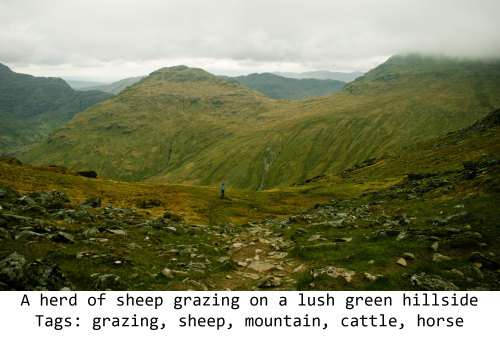
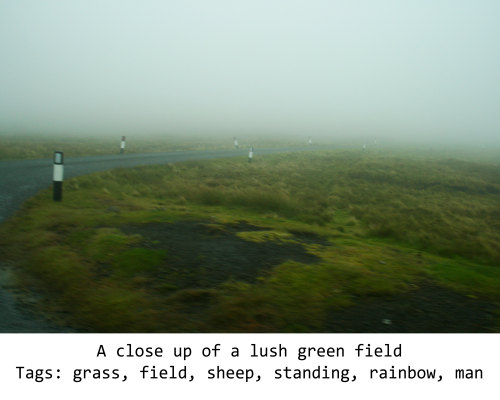
An anonymous reader shares a post: If you've been on the internet today, you've probably interacted with a neural network. They're a type of machine learning algorithm that's used for everything from language translation to finance modeling. One of their specialties is image recognition. Several companies -- including Google, Microsoft, IBM, and Facebook -- have their own algorithms for labeling photos. But image recognition algorithms can make really bizarre mistakes. Microsoft Azure's computer vision API added the above caption and tags. But there are no sheep in the image. None. I zoomed all the way in and inspected every speck. It also tagged sheep in this image. I happen to know there were sheep nearby. But none actually present. Here's one more example. In fact, the neural network hallucinated sheep every time it saw a landscape of this type. What's going on here?

Are neural networks just hyper-vigilant, finding sheep everywhere? No, as it turns out. They only see sheep where they expect to see them. They can find sheep easily in fields and mountainsides, but as soon as sheep start showing up in weird places, it becomes obvious how much the algorithms rely on guessing and probabilities. Bring sheep indoors, and they're labeled as cats. Pick up a sheep (or a goat) in your arms, and they're labeled as dogs.

Books

The Slow Demise of Barnes & Noble (techcrunch.com) 121

John Biggs via TechCrunch reports of the slow demise of Barnes & Noble, which he has been chronicling for several years now. There have been many signs of trouble for the bookseller chain over the years, but none have been more apparent than the recent layoffs made earlier this week. From the report: On Monday the company laid off 1,800 people. This offered a cost savings of $40 million. [...] In fact, what B&N did was fire all full time employees at 781 stores. Further, the company laid off many shipping receivers around the holidays, resulting in bare shelves and a customer escape to Amazon. In December 2017, usually B&N's key month, sales dropped 6 percent to $953 million. Online sales fell 4.5 percent. It is important to note that when other big box retailers, namely Circuit City, went the route of firing all highly paid employees and bringing in minimum wage cashiers, stockers, and salespeople it signaled the beginning of the end.
Open Source

How the First Open Source Software and Hardware Satellite UPSat Was Built (fosdem.org) 25

UPSat is the first open source -- both hardware and software -- satellite to have ever been launched in orbit. Pierros Papadeas, the Director of Operations for Libre Space Foundation, which helped build the UPSat, talked about the project at FOSDEM, a non-commercial, volunteer-organized European event focused on free and open-source software development. You can watch the talk here; and read an interview of him with folks at FOSDEM ahead of the talk here. Two excerpts from the interview: Q: What challenges did you encounter while designing, building, testing and eventually launching UPSat in orbit?
PP: The challenges where numerous, starting with the financial ones. Lack of appropriate funding led us to invest heavily in the project (through Libre Space Foundation funds) to ensure its successful completion. Countless volunteer participation was also key to the success. On the technical side, with minimal documentation and knowledge sharing around space projects we had to re-invent the wheel and discover many procedures and practices in a really short time-frame (6 months - unheard for a space mission). Lack of tools and equipment made our building process a creative exploration as we had to figure out ways to achieve specific tasks resorting to purpose-built projects in our local lab (hackerspace.gr). Testing and verification facilities where also a challenge mainly as we had to undergo much more extensive tests than other missions, having none of our components already "flight proven". Again creativity and countless hours of negotiations and documentation got us to the final delivery point. Launching UPSat in orbit was secured once the delivery happened, but as any typical space mission it came with long delays and timeline push-backs.

Q: What do you hope to accomplish by giving this talk? What do you expect?
Through this talk we would like to raise awareness for open source initiatives in space, and inspire open source technologists (engineers, programmers, analysts, makers) to engage in an open source project. We would also love to gather feedback and ideas on next steps and provide contribution opportunities for interested parties.

AI

'Modern AI is Good at a Few Things But Bad at Everything Else' (wired.com) 200

Jason Pontin, writing for Wired: Sundar Pichai, the chief executive of Google, has said that AI "is more profound than ... electricity or fire." Andrew Ng, who founded Google Brain and now invests in AI startups, wrote that "If a typical person can do a mental task with less than one second of thought, we can probably automate it using AI either now or in the near future." Their enthusiasm is pardonable.

[...] But there are many things that people can do quickly that smart machines cannot. Natural language is beyond deep learning; new situations baffle artificial intelligences, like cows brought up short at a cattle grid. None of these shortcomings is likely to be solved soon. Once you've seen you've seen it, you can't un-see it: deep learning, now the dominant technique in artificial intelligence, will not lead to an AI that abstractly reasons and generalizes about the world. By itself, it is unlikely to automate ordinary human activities.

To see why modern AI is good at a few things but bad at everything else, it helps to understand how deep learning works. Deep learning is math: a statistical method where computers learn to classify patterns using neural networks. [...] Deep learning's advances are the product of pattern recognition: neural networks memorize classes of things and more-or-less reliably know when they encounter them again. But almost all the interesting problems in cognition aren't classification problems at all.

Piracy

Cloudflare Is Liable For Pirate Sites and Has No Safe Harbor, Publisher Says (torrentfreak.com) 172

After dragging Cloudflare to court and accusing the web services company of various types of copyright and trademark infringement, noting that several customers used Cloudflare's servers to distribute pirated content, adult publisher ALS Scan told the California District Court this week that the company should be held liable for copyright infringements committed by its customers. According to TorrentFreak, "The company requests a partial summary judgement, claiming that the CDN provider assists pirates and doesn't qualify for safe harbor protection." From the report: "The evidence is undisputed," ALS writes. "Cloudflare materially assists website operators in reproduction, distribution and display of copyrighted works, including infringing copies of ALS works. Cloudflare also masks information about pirate sites and their hosts." ALS anticipates that Cloudflare may argue that the company or its clients are protected by the DMCA's safe harbor provision, but contests this claim. The publisher notes that none of the customers registered the required paperwork at the U.S. Copyright Office. "Cloudflare may say that the Cloudflare Customer Sites are themselves service providers entitled to DMCA protections, however, none have qualified for safe harbors by submitting the required notices to the U.S. Copyright Office. Cloudflare may say that the Cloudflare Customer Sites are themselves service providers entitled to DMCA protections, however, none have qualified for safe harbors by submitting the required notices to the U.S. Copyright Office."

Cloudflare itself has no safe harbor protection either, they argue, because it operates differently than a service provider as defined in the DMCA. It's a "smart system" which also modifies content, instead of a "dumb pipe," they claim. In addition, the CDN provider is accused of failing to implement a reasonable policy that will terminate repeat offenders. "Cloudflare has no available safe harbors. Even if any safe harbors apply, Cloudflare has lost such safe harbors for failure to adopt and reasonably implement a policy including termination of repeat infringers," ALS writes. ALS now asks the court to issue a partial summary judgment ruling that Cloudflare is liable for contributory copyright infringement. If this motion is granted, a trial would only be needed to establish the damages amount.

Patents

Amazon Patents Wristbands Designed To Track and Steer Employees' Movements (nydailynews.com) 96

New submitter hyperclocker shares a report from NY Daily News: Amazon workplace employees may soon be guided by their wrists. The tech company this week received two patents for a wristband designed to guide warehouse workers' movements with the use of vibrations. The concept relies on ultrasonic sound pulses or radio transmissions to detect the position of an employee's hand in relation to a series of inventory bins, GeekWire reported. Upon receiving product orders, warehouse workers are required to retrieve the requested item from such bins or shelves and pack it in a delivery box before moving on to the next order. If a worker's hands begin to move toward the wrong direction, the proposed "haptic feedback system" would cause the wristband to buzz and direct their hand in the correct direction. The wristbands, according to the patent documents, were designed as a means to keep track of products within Amazon warehouses as well as up day-to-day productivity. The proposed tech, however, could also provide Amazon management with a new means of workplace surveillance that would alert them to staffers who are wasting time or breaking for too long.
Science

Hoping That Sucking CO2 From the Air Will Fix the Climate? Good Luck (easac.eu) 316

From a study published on Thursday by scientists on the European Academies Science Advisory Council: Senior scientists from across Europe have evaluated the potential contribution of negative emission technologies (NETs) to allow humanity to meet the Paris Agreement's targets of avoiding dangerous climate change. They find that NETs have "limited realistic potential" to halt increases in the concentration of greenhouse gases in the atmosphere at the scale envisioned in the Intergovernmental Panel on Climate Change (IPCC) scenarios. This new report finds that none of the NETs has the potential to deliver carbon removals at the gigaton (Gt) scale and at the rate of deployment envisaged by the IPCC, including reforestation, afforestation, carbon-friendly agriculture, bioenergy with carbon capture and storage (BECCs), enhanced weathering, ocean fertilisation, or direct air capture and carbon storage (DACCs).
Communications

GDC Rescinds Award For Atari Founder Nolan Bushnell After Criticisms of Sexually Inappropriate Behavior (polygon.com) 498

The organizers of the Game Developers Choice Awards announced today that they have rescinded the Pioneer Award for Atari founder Nolan Bushnell, and announced the award will not be given this year entirely. "The decision follows a day of outcry after GDC organizers announced that Bushnell, 74, had been tapped for the GDCA's lifetime achievement honor," reports Polygon. "News accounts and histories over the past several years have documented a history of workplace misconduct and sexist behavior toward women by Bushnell, during Atari's early days." From the report: In a statement this morning, GDC said its awards committee "made the decision not to give out a Pioneer Award for this year's event, following additional feedback from the community. They believe their picks should reflect the values of today's game industry and will dedicate this year's award to honor the pioneering and unheard voices of the past." The Pioneer Award is for "individuals who developed a breakthrough technology, game concept, or gameplay design at a crucial juncture in video game history," according to its official site. Nine have been conferred since 2008, none of them women. Bushnell founded Atari in 1972 and installed the first coin-operated video game, Pong, shortly thereafter. He presided over the company's rise to dominate the early generation of home console gaming before selling it off and founding what is today the Chuck E. Cheese line of restaurants. Bushnell issued a statement on Twitter: "I applaud the GDC for ensuring that their institution reflects what is right, specifically with regards to how people should be treated in the workplace. And if that means an award is the price I have to pay personally so the whole industry may be more aware and sensitive to these issues, I applaud that, too. If my personal actions or the actions of anyone who ever worked with me offended or caused pain to anyone at our companies, then I apologize without reservation."
Chrome

Google Chrome To Feature Built-In Image Lazy Loading (bleepingcomputer.com) 131

An anonymous reader writes: Future versions of Google Chrome will feature built-in support for lazy loading, a mechanism to defer the loading of images and iframes if they are not visible on the user's screen at load time. This system will first ship with Chrome for Android and Google doesn't rule out adding it to desktop versions if tests go as planned. The feature is called Blink LazyLoad, and as the name hints, it will implement the principle of "lazy loading" inside Chrome itself.

Google engineers reported page load speed improvements varying from 18% to 35%, depending on the underlying network. Other browser makers have been notified of the Chrome team's plan, but none have provided input if they plan to implement a similar feature. Compared to most JS-based lazy loading scripts that only target images, Google implementation will also target iframes.

Android

Android Can Now Tell You How Fast Wi-Fi Networks Are Before You Join Them (theverge.com) 44

Today, Google announced that Android 8.1 Oreo will now display the speed of nearby open Wi-Fi networks to help you decide whether they're even worth the effort of connecting to. The Wi-Fi settings menu will now display one of four speed labels: Very Fast, Fast, OK, or Slow. The Verge reports: The difference between Very Fast and Fast, according to Google, is that you can stream "very high-quality videos" on the former and "most videos" on the latter. Most coffee shop dwellers should be fine with the OK level, as that's enough for web browsing, social media, and Spotify streaming. Private Wi-Fi networks that require passwords don't display any speed data since it's really none of your business and Google can't randomly test them, but they do continue to indicate signal strength. Google says network administrators can also opt out of Android's Wi-Fi Assistant showing speed info by using a "canary URL."
Open Source

'Is It Time For Open Processors?' (lwn.net) 179

Linux kernel developer (and LWN.net co-founder) Jonathan Corbet recently posted an essay with a tantalizing title: "Is it time for open processors?" He cited several "serious initiatives", including the OpenPOWER effort, OpenSPARC, and OpenRISC, adding that "much of the momentum" appears to be with the RISC-V architecture. An anonymous reader quotes LWN.net: The [RISC-V] project is primarily focused on the instruction-set architecture, rather than on specific implementations, but free hardware designs do exist. Western Digital recently announced that it will be using RISC-V processors in its storage products, a decision that could lead to the shipment of RISC-V by the billion. There is a development kit available for those who would like to play with this processor and a number of designs for cores are available... RISC-V seems to have quite a bit of commercial support behind it -- the RISC-V Foundation has a long list of members. It seems likely that this architecture will continue to progress for some time.
Here's some of the reasons that Corbet argues open souce hardware "would certainly offer some benefits, but it would be no panacea."
The Military

'Don't Fear the Robopocalypse': the Case for Autonomous Weapons (thebulletin.org) 150

Lasrick shares "Don't fear the robopocalypse," an interview from the Bulletin of the Atomic Scientists with the former Army Ranger who led the team that established the U.S. Defense Department policy on autonomous weapons (and has written the upcoming book Army of None: Autonomous Weapons and the Future of War). Paul Scharre makes the case for uninhabited vehicles, robot teammates, and maybe even an outer perimeter of robotic sentries (and, for mobile troops, "a cloud of air and ground robotic systems"). But he also argues that "In general, we should strive to keep humans involved in the lethal force decision-making process as much as is feasible. What exactly that looks like in practice, I honestly don't know."

So does that mean he thinks we'll eventually see the deployment of fully autonomous weapons in combat? I think it's very hard to imagine a world where you physically take the capacity out of the hands of rogue regimes... The technology is so ubiquitous that a reasonably competent programmer could build a crude autonomous weapon in their garage. The idea of putting some kind of nonproliferation regime in place that actually keeps the underlying technology out of the hands of people -- it just seems really naive and not very realistic. I think in that kind of world, you have to anticipate that there are, at a minimum, going to be uses by terrorists and rogue regimes. I think it's more of an open question whether we cross the threshold into a world where nation-states are using them on a large scale.

And if so, I think it's worth asking, what do we mean by"them"? What degree of autonomy? There are automated defensive systems that I would characterize as human-supervised autonomous weapons -- where a human is on the loop and supervising its operation -- in use by at least 30 countries today. They've been in use for decades and really seem to have not brought about the robopocalypse or anything. I'm not sure that those [systems] are particularly problematic. In fact, one could see them as being even more beneficial and valuable in an age when things like robot swarming and cooperative autonomy become more possible.

Electronic Frontier Foundation

Calls to Action on the Fifth Anniversary of the Death of Aaron Swartz (eff.org) 151

On the fifth anniversary of the death of Aaron Swartz, EFF activist Elliot Harmon posted a remembrance: When you look around the digital rights community, it's easy to find Aaron's fingerprints all over it. He and his organization Demand Progress worked closely with EFF to stop SOPA. Long before that, he played key roles in the development of RSS, RDF, and Creative Commons. He railed hard against the idea of government-funded scientific research being unavailable to the public, and his passion continues to motivate the open access community. Aaron inspired Lawrence Lessig to fight corruption in politics, eventually fueling Lessig's White House run... It's tempting to become pessimistic in the face of countless threats to free speech and privacy. But the story of the SOPA protests demonstrates that we can win in the face of seemingly insurmountable odds.
He shares a link to a video of Aaron's most inspiring talk, "How We Stopped SOPA," writing that "Aaron warned that SOPA wouldn't be the last time Hollywood attempted to use copyright law as an excuse to censor the Internet... 'The enemies of the freedom to connect have not disappeared... We won this fight because everyone made themselves the hero of their own story. Everyone took it as their job to save this crucial freedom. They threw themselves into it. They did whatever they could think of to do.'"

On the anniversary of Aaron's death, his brother Ben Swartz, an engineer at Twitch, wrote about his own efforts to effect change in ways that would've made Aaron proud, while Aaron's mother urged calls to Congress to continue pushing for reform to the Computer Fraud and Abuse Act.

And there were countless other remembrances on Twitter, including one fro Cory Doctorow, who tweeted a link to Lawrence Lessig's analysis of the prosecution. And Lessig himself marked the anniversary with several posts on Twitter. "None should rest," reads one, "for still, there is no peace."
Programming

Erroneous 'Spam' Flag Affected 102 npm Packages (npmjs.org) 84

There was some trouble last weekend at the world's largest package repository. An anonymous reader quotes the official npm blog: On Saturday, January 6, 2018, we incorrectly removed the user floatdrop and blocked the discovery and download of all 102 of their packages on the public npm Registry. Some of those packages were highly depended on, such as require-from-string, and removal disrupted many users' installations... Within 60 seconds, it became clear that floatdrop was not a spammer -- and that their packages were in heavy use in the npm ecosystem. The staffer notified colleagues and we re-activated the user and began restoring the packages to circulation immediately. Most of the packages were restored quickly, because the restoration was a matter of unsetting the deleted tombstones in our database, while also restoring package data tarballs and package metadata documents. However, during the time between discovery and restoration, other npm users published a number of new packages that used the names of deleted packages. We locked this down once we discovered it, but cleaning up the overpublished packages and inspecting their contents took additional time...

In cases where the npm staff accepts a user's request to delete a package, we publish a replacement package by the same name -- a security placeholder. This both alerts those who had depended on it that the original package is no longer available and prevents others from publishing new code using that package name. At the time of Saturday's incident, however, we did not have a policy to publish placeholders for packages that were deleted if they were spam. This made it possible for other users to publish new versions of eleven of the removed packages. After a thorough examination of the replacement packages' contents, we have confirmed that none was malicious or harmful. Ten were exact replacements of the code that had just been removed, while the eleventh contained strings of text from the Bible -- and its publisher immediately contacted npm to advise us of its publication.

They're now implementing a 24-hour cooldown on republication of any deleted package names -- and are also updating their review process. "As a general rule, the npm Registry is and ought to be immutable, just like other package registries such as RubyGems and crates.io... However, there are legitimate cases for removing a package once it has been published. In a typical week, most of the npm support team's work is devoted to handling user requests for package deletion, which is more common than you might expect. Many people publish test packages then ask to have them deprecated or deleted. There also is a steady flow of requests to remove packages that contain contain private code that users have published inadvertently or inappropriately."
Android

Google Pulls 60 Apps From Play Store After Malware Exposes Kids To Porn (gizmodo.com) 49

Cyberthreat intelligence firm Check Point on Friday disclosed the existence of malicious code buried inside dozens of apps that displays pornographic images to users. Many of the apps are games reportedly geared toward young children. As a result, Google quickly removed the roughly 60 apps said to be affected from its Play Store. Gizmodo reports: While they appeared as such, the pornographic images displayed were not actually Google ads. Google supposedly maintains tight controls on all ads that appear in what it calls "Designed for Family" apps. The company also maintains a white-list of advertisers deemed safe for children under the ages of 13. None of the affected apps were part of Google's "Family Link" program, which is the category of recognized kid-friendly apps available across Google's platforms. The malware, dubbed AdultSwine, is said to have displayed the highly inappropriate images while also attempting to trick users into installing a fake-security app, or "scareware." After the fake "ads" were delivered, users would've received a "Remove Virus Now" notification, or something similar, designed to provoke users into downloading the scareware. The affected gaming apps included at least one which may have had up to 5,000,000 downloads -- Five Nights Survival Craft -- as well as many others which had between 50,000 and 500,000 downloads.
Security

Hackers Could Blow Up Factories Using Smartphone Apps (technologyreview.com) 125

An anonymous reader quotes a report from MIT Technology Review: Two security researchers, Alexander Bolshev of IOActive and Ivan Yushkevich of Embedi, spent last year examining 34 apps from companies including Siemens and Schneider Electric. They found a total of 147 security holes in the apps, which were chosen at random from the Google Play Store. Bolshev declined to say which companies were the worst offenders or reveal the flaws in specific apps, but he said only two of the 34 had none at all. Some of the vulnerabilities the researchers discovered would allow hackers to interfere with data flowing between an app and the machine or process it's linked to. So an engineer could be tricked into thinking that, say, a machine is running at a safe temperature when in fact it's overheating. Another flaw would let attackers insert malicious code on a mobile device so that it issues rogue commands to servers controlling many machines. It's not hard to imagine this causing mayhem on an assembly line or explosions in an oil refinery. The researchers say they haven't looked at whether any of the flaws has actually been exploited. Before publishing their findings, they contacted the companies whose apps had flaws in them. Some have already fixed the holes; many have yet to respond.
Portables

Ask Slashdot: How Should I Replace My Netbook? 232

Long-time Slashdot reader Kevin108 needs to replace his netbook: I've used and loved my Eee 701 for many years. None of the diminutive ergonomics were ever an issue. But the low-res screen, 4 GB SSD, and 630 MHz Celeron are a useless combo for current web browsing and modern software. I'm now in the market for a new device in a similar form factor.

I need a Windows device for my preferred photo editor and some other software I use for maps. It will often be used offline for writing and watching MKVs in VLC. I'm okay with a notebook or tablet and keyboard combo, but I've not found anything in a similar size with my feature requirements.

Any suggestions? Leave your best thoughts and suggestions in the comments. What's the best way to replace a netbook?
Biotech

The Orange Goo Used In Everything From Armor To Football Helmets (cnn.com) 96

dryriver writes: CNN has a story about a slimy, gooey orange gel developed by British company D3O as far back as 1999 that is very soft and fluid-like normally, but that hardens immediately when it receives an impact: It's a gel that acts as both a liquid and a solid. When handled slowly the goo is soft and flexible but the moment it receives an impact, it hardens. It's all thanks to the gel's shock-absorbing properties... Felicity Boyce, a material developer at D3O, told CNN, "if you hit it with great force, it behaves more like a solid that's absorbing the shock and none of that impact goes through my hand."

American football has become a huge market for the British company, where the gel is incorporated in padding and helmets to absorb the impact of any hits a player receives. D3O claims it can reduce blunt impact by 53% compared to materials like foam. The material can also be put inside running shoes to improve performance and reduce the risk of foot injury. Usain Bolt ran with D3O gel insoles in his shoes at the 2016 Rio Olympics.

The material is being tested in body armor. "While we don't have a material that can stop a bullet, we do have a material that can reduce the amount of trauma that your body would experience if you got shot." There are also soft smartphone casings using the gel that harden when the phone is dropped and hits a hard surface.

Slashdot Top Deals