Facebook

Facebook Calls Links To Depression Inconclusive. These Researchers Disagree (npr.org) 100

An anonymous reader quotes a report from NPR: At a hearing this March on Capitol Hill, the Republican congresswoman [Cathy McMorris Rodgers] from Washington confronted Facebook CEO Mark Zuckerberg, Twitter CEO Jack Dorsey and Google CEO Sundar Pichai with a list of statistics: From 2011 to 2018, rates of teen depression increased by more than 60%, and from 2009 to 2015, emergency room admissions for self-harm among 10- to 14-year-old girls tripled. "It's a battle for their development. It's a battle for their mental health -- and ultimately a battle for their safety," McMorris Rodgers told the tech leaders. But when she pointed a question specifically to Zuckerberg, about whether he acknowledged a connection between children's declining mental health and social media platforms, he demurred. "I don't think that the research is conclusive on that," replied Zuckerberg.

It's a position that he and his company, which is working on expanding its offerings to even younger children, have held for years. But mental health researchers whom NPR spoke with disagree. They describe an increasingly clear correlation between poor mental health outcomes and social media use, and they worry that Facebook (which also owns Instagram and WhatsApp) in particular may be muddying the waters on that connection to protect its public image. "The correlational evidence showing that there is a link between social media use and depression is pretty definitive at this point," said Jean Twenge, a psychology professor at San Diego State University. "The largest and most well-conducted studies that we have all show that teens who spend more time on social media are more likely to be depressed or unhappy."

Correlation is not causation, and one area of further study is whether greater social media usage leads to poor mental health outcomes or whether those who are depressed and unhappy are drawn to spend more time on social media. But researchers also worry that not enough government funding is going toward getting objective data to answer these sorts of questions. Facebook also almost certainly knows more than it has publicly revealed about how its products affect people.
Zuckerberg told McMorris Rodgers that the company has specifically researched the mental health effects Facebook has on children, but when McMorris Rodgers' staff followed up the company declined to share any of its research.

"I believe that they have done the research. They're not being transparent," McMorris Rodgers told NPR in an interview. "They seem to be more concerned about their current business model, and they have become very wealthy under their current business model. But the fact of the matter is we're seeing more and more evidence ... that their current business model is harming our kids."
Medicine

FDA Clears Pfizer COVID-19 Vaccine For Kids Ages 12 To 15 (cnbc.com) 79

The Food and Drug Administration on Monday approved Pfizer and BioNTech's request to allow their Covid-19 vaccine to be given to kids ages 12 to 15 on an emergency use basis, allowing states to get middle school students vaccinated before the fall. The two-dose vaccine is already authorized for use in people 16 and older. CNBC reports: Acting FDA Commissioner Dr. Janet Woodcock said the decision brings "us closer to returning to a sense of normalcy and to ending the pandemic." She assured parents that the agency "undertook a rigorous and thorough review of all available data" before clearing it for use in the teens. The companies said in late March that the vaccine was found to be 100% effective in a clinical trial of more than 2,000 adolescents. They also said the vaccine elicited a "robust" antibody response in the children, exceeding those in an earlier trial of older teens and young adults. Side effects were generally consistent with those seen in adults, they added.

Vaccinating children is seen as crucial to ending the pandemic. The nation is unlikely to achieve herd immunity -- when enough people in a given community have antibodies against a specific disease -- until children can get vaccinated, health officials and experts say. Children make up around 20% of the total U.S. population, according to government data. Between 70% and 85% of the U.S. population needs to be vaccinated against Covid to achieve herd immunity, experts say, and some adults may refuse to get the shots. Though more experts now say herd immunity is looking increasingly unlikely as variants spread.
The report notes that the same two-dose regimen that's use for people 16 years of age and older will also be used for kids ages 12 to 15. FDA approval for kids under age 12 could come in the second half of the year.
Facebook

Facebook Should Halt Instagram Kids Plan, Attorneys General Say (bloomberg.com) 43

Forty-four attorneys general sent a letter to Mark Zuckerberg asking him to abandon plans to create a version of Instagram for children under 13. From a report: "Facebook has historically failed to protect the welfare of children on its platforms," according to the letter, signed by attorneys general from New York and Massachusetts, among others. "The attorneys general have an interest in protecting our youngest citizens, and Facebook's plans to create a platform where kids under the age of 13 are encouraged to share content online is contrary to that interest."
Earth

Millennials are Taking Governments to Court over Climate Change. And They're Starting to Win (cnnphilippines.com) 240

CNN tells the story of Luisa Neubauer, a 25-year-old woman who took the German government to court last year — and won: On April 29, the country's Supreme Court announced that some provisions of the 2019 climate change act were unconstitutional and "incompatible with fundamental rights," because they lacked a detailed plan for reducing emissions and placed the burden for future climate action on young people. The court ordered the government to come up with new provisions that "specify in greater detail how the reduction targets for greenhouse gas emissions" by the end of next year. The decision made headlines across the world...

"This case changes everything," she said. "It's not nice to have climate action, it's our fundamental right that the government protects us from the climate crisis...."

Climate lawsuits are becoming an increasingly popular and powerful tool for climate change activists. A January report released by the United Nations Environment Programme found that the number of climate litigation cases filed around the world nearly doubled between 2017 and 2020. Crucially, the governments are starting to lose. Neubauer's victory came just months after a court in Paris ruled that France was legally responsible for its failure to meet emission cutting targets. Another similar case involving six young people from Portugal was fast-tracked at the European Court of Human Rights last October...

The cases are most often centered around the idea that future generations have a right to live in a world that is not completely decimated by the climate crisis.

Long-time Slashdot reader AmiMoJo shares an Ars Technica story noting that in addition to the German suit, "A similar lawsuit in the U.S. has been winding its way through the courts." First filed in 2015 on behalf of a group of children and teenagers, the suit accused the U.S. government of violating the plaintiffs' constitutional rights to life, liberty, and property by not taking stronger action on climate change.
Android

Eddy Cue Wanted To Bring iMessage To Android In 2013 (theverge.com) 102

According to The Verge, citing a new deposition made public as part of the Epic case, Apple's senior VP of software and services, Eddy Cue, pushed to bring iMessage to Android as early as 2013. "[...] Cue wanted to devote a full team to iMessage support on Android, only to be overruled by other executives," adds The Verge. From the report: The latest deposition cites a specific email exchange between Cue and Craig Federighi, currently Apple's SVP of software engineering, beginning on April 7th and 8th, 2013. The exchange came after news circulated that Google had attempted to purchase WhatsApp for $1 billion. According to the exchange, Cue took the rumors as a sign that iMessage should expand to Android to cement Apple's hold on messaging apps:

Cue: We really need to bring iMessage to Android. I have had a couple of people investigating this but we should go full speed and make this an official project.... Do we want to lose one of the most important apps in a mobile environment to Google? They have search, mail, free video, and growing quickly in browsers. We have the best messaging app and we should make it the industry standard. I don't know what ways we can monetize it but it doesn't cost us a lot to run.

Federighi: Do you have any thoughts on how we would make switching to iMessage (from WhatsApp) compelling to masses of Android users who don't have a bunch of iOS friends? iMessage is a nice app/service, but to get users to switch social networks we'd need more than a marginally better app. (This is why Google is willing to pay $1 billion -- for the network, not for the app.)...In the absence of a strategy to become the primary messaging service for [the] bulk of cell phone users, I am concerned [that] iMessage on Android would simply serve to remove an obstacle to iPhone families giving their kids Android phones.

Elsewhere in the deposition, Cue says, "I remember the time of wanting to do an iMessage app on Android ourselves." "Would there have been cross-compatibility with the iOS platform so that users of both platforms would have been able to exchange messages?" the questioner responds. "That was certainly the discussion and the view that I had," Cue says. [...] The line of questioning is likely to play a significant role in Epic's antitrust lawsuit, which argues that iOS app store exclusivity represents an illegal use of market power. Epic has made clear in previous filings that it plans to make iMessage exclusivity part of that argument, citing a 2016 email from Phil Schiller that argues iMessage expansion "will hurt us more than help us."

Medicine

Children from Parents Exposed to Chernobyl Nuclear Disaster Show No Genetic Damage (usnews.com) 80

HealthDay reports: There's no evidence of genetic damage in the children of parents who were exposed to radiation from the 1986 Chernobyl Nuclear Power Plant disaster in Ukraine, researchers say.

Several previous studies have examined the risks across generations of radiation exposure from events such as this, but have yielded inconclusive results. In this study, the investigators analyzed the genomes of 130 children and parents from families where one or both parents were exposed to radiation due to the Chernobyl accident, and where children were conceived afterward and born between 1987 and 2002.

There was no increase in gene changes in reproductive cells of study participants, and rates of new germline mutations were similar to those in the general population, according to a team led by Meredith Yeager of the U.S. National Cancer Institute, in Rockville, Md.

Crime

Unreturned VHS Tape 21 Years Ago Leads to Surprise 'Felony Embezzlement' Charge (yahoo.com) 193

"An Oklahoma woman was recently informed that she was charged with felony embezzlement of rented property for not returning a VHS tape over 20 years ago," reports Business Insider: Caron McBride reportedly rented the "Sabrina The Teenage Witch" tape at a now closed store in Norman, Oklahoma in 1999, according to KOKH-TV. She was charged a year later, in March 2000, after it was not returned, KOKH-TV reported citing documents. McBride was notified about the charge by the Cleveland County District Attorney's Office when she was attempting to change the name of her license after she got married, the news station reported...

"I had lived with a young man, this was over 20 years ago. He had two kids, daughters that were 8, 10, or 11 years old, and I'm thinking he went and got it and didn't take it back or something. I have never watched that show in my entire life, just not my cup of tea. Meanwhile, I'm a wanted felon for a VHS tape," McBride told the news station.

"Documents show the movie was rented at movie place in Norman, Oklahoma, which closed in 2008..." reports one local news station: McBride said over the last 20 years, she's been let go from several jobs without being given a reason why, and said it now all makes sense. "This is why. Because when they ran my criminal background check, all they're seeing is those two words: felony embezzlement," McBride said.
"The DA's office says the charge was filed under a previous district attorney," reports a local Oklahoma station, "and after reviewing the case, they thought it was fit to dismiss it."

But McBride still has to get an attorney to expunge the incident from her record.
Microsoft

Microsoft Edge Adds a 'Kids Mode' Limiting Browsing to 70 Web Sites (gizmodo.com) 66

"In Microsoft's ongoing endeavor to convert people to its rebooted Edge web browser, it's launching a new Kids Mode that makes it easy for parents to control how their children surf the web," reports Gizmodo: Parents have the choice between two versions, one for ages five to eight years and one for ages nine to 12 years. Both enable the strictest level of tracking prevention in Edge and Bing SafeSearch by default to filter out adult text, images, and videos from search results. The only difference between the two age ranges is that the older one includes a newsfeed with curated articles from MSN for Kids. Don't worry though: It focuses on more kid-friendly topics like fun science and animal facts rather than breaking news and politics, Microsoft said.

Kids Mode also restricts what sites kids have access to, with roughly 70 popular kids sites allowed from the get-go (any additional allowable sites have to be added to the list individually). If a child tries to view a site that's not on that list, they're met with a cutesy block page, pictured below, that prompts them to ask an adult for permission.

Facebook

Facebook Urged To Reconsider Its Plans for an Instagram for Children (theguardian.com) 34

Instagram for kids is a terrible idea, argues a columnist for the Observer. And yet: In March, Buzzfeed reported on Facebook's plans to develop a product for those too young to sign up to Instagram officially, as the platform requires users to be at least 13... Facebook says it will allow the company to focus on privacy and safety for children.

Last week, an international coalition of children's health advocates, brought together by the Boston-based, non-profit Campaign for a Commercial-Free Childhood, disagreed and wrote an open letter to Zuckerberg urging the company to drop its plans. "While collecting valuable family data and cultivating a new generation of Instagram users may be good for Facebook's bottom line, it will likely increase the use of Instagram by young children who are particularly vulnerable to the platform's manipulative and exploitative features," it said...

Maybe it is naive of me to expect that children will have any period of freedom from wondering "but how will it/I look?", but surely we should at least try to maintain that for as long as possible.

Android

Apple Says iMessage on Android 'Will Hurt Us More Than Help Us' (theverge.com) 231

Apple knows that iMessage's blue bubbles are a big barrier to people switching to Android, which is why the service has never appeared on Google's mobile operating system. From a report: That's according to depositions and emails from Apple employees, including some high-ranking executives, revealed in a court filing from Epic Games as part of its legal dispute with the iPhone manufacturer. Epic argues that Apple consciously tries to lock customers into its ecosystem of devices, and that iMessage is one of the key services helping it to do so. It cites comments made by Apple's senior vice president of Internet Software and Services Eddie Cue, senior vice president of software engineering Craig Federighi, and Apple Fellow Phil Schiller to support its argument.

"The #1 most difficult [reason] to leave the Apple universe app is iMessage ... iMessage amounts to serious lock-in," was how one unnamed former Apple employee put it in an email in 2016, prompting Schiller to respond that, "moving iMessage to Android will hurt us more than help us, this email illustrates why." "iMessage on Android would simply serve to remove [an] obstacle to iPhone families giving their kids Android phones," was Federighi's concern according to the Epic filing. Although workarounds to using iMessage on Android have emerged over the years, none have been particularly convenient or reliable.

Youtube

YouTube Kids 'a Vapid Wasteland', Say US Lawmakers (bbc.com) 105

A US government committee has described YouTube Kids as a "wasteland of vapid, consumerist content." From a report: In a letter to YouTube chief executive Susan Wojcicki, the US sub-committee on economic and consumer policy said the platform was full of "inappropriate... highly commercial content". Google launched YouTube Kids in 2015 as a safe place for children to view appropriate content. YouTube said it had worked hard to provide "enriching content for kids."
Robotics

How Children Beating Up a Robot Inspired a New Escape Maneuver System (ieee.org) 87

Long-time Slashdot reader AmiMoJo quotes a classic article from IEEE Spectrum: A study by a team of Japanese researchers shows that, in certain situations, children are actually horrible little brats^W^W^W may not be as empathetic towards robots as we'd previously thought, with gangs of unsupervised tykes repeatedly punching, kicking, and shaking a robot in a Japanese mall...

The Japanese group didn't just document the bullying behavior, though; they wanted to find clever ways of helping the robot avoid the abusive situations. They started by developing a computer simulation and statistical model of the children's abuse towards the robot, showing that it happens primarily when the kids are in groups and no adults are nearby. Next, they designed an abuse-evading algorithm to help the robot avoid situations where tiny humans might gang up on it. Literally tiny humans: the robot is programmed to run away from people who are below a certain height and escape in the direction of taller people.

When it encounters a human, the system calculates the probability of abuse based on interaction time, pedestrian density, and the presence of people above or below 1.4 meters (4 feet 6 inches) in height. If the robot is statistically in danger, it changes its course towards a more crowded area or a taller person. This ensures that an adult is there to intervene when one of the little brats decides to pound the robot's head with a bottle (which only happened a couple times).

United States

A Case Against Making Daylight Saving Time Permanent: We've Tried this Before and It Didn't Go Over Well (washingtonpost.com) 256

Aaron Blake, writing at The Washington Post: Americans turned their clocks forward an hour earlier this week for what some hope will be the last time, as bipartisan momentum builds for making daylight saving time permanent. As The Post's Capital Weather Gang notes, a bill spearheaded by Sen. Marco Rubio (R-Fla.) has united lawmakers from opposite parties who can't agree on much of anything these days. It also builds upon legislation already passed in 16 states -- both red and blue -- and current debates in states such as Nevada. All of it reflects apparently real momentum behind the effort. But as most of us bemoan our messed-up sleep schedules on the first Monday after losing an hour, it's worth a little history lesson: We've tried this before, and it didn't go over well. Whatever momentary mental anguish you're experiencing right now, there are huge trade-offs that many or most Americans have previously decided aren't worth the switch.

The year was 1973, and the United States was experiencing an energy crisis. Among the proposals put forward by President Richard M. Nixon in a November address was making daylight saving time permanent for the next two winters. Despite scant evidence of daylight saving time's past benefit on the energy supply (dating back to DST's various introductions since World War I), Americans really liked the idea. Polling in November and December 1973 showed strong and in some cases overwhelming support -- 57 percent in a Gallup poll, 74 percent in a Louis Harris and Associates poll, and 73 percent in a poll from the Roper Organization. The policy was quickly implemented in early January 1974. But it just as quickly fell out of favor. In a Roper poll conducted in February and March, just 30 percent remained in favor of year-round daylight saving time, while a majority favored switching times again. Louis Harris polling in March showed just 19 percent of people said it had been a good idea, while about twice as many -- 43 percent -- said it was a bad one.

A big reason for the about-face? Whatever benefits might have been gleaned by giving people more sunlight in the evening during the winter, it also meant longer, darker mornings. Parents were suddenly sending their kids to school in the cold and the dark for months on end. As the Capital Weather Gang noted, such a change means the sun wouldn't rise before 8 a.m. in Washington for more than two and a half months, between late November and mid-February. The morning darkness would linger even longer farther north. Polling later that year -- after the dark mornings had waned -- was more mixed, with an Opinion Research poll in September showing 31 percent of people strongly favored the idea and 42 percent strongly opposed it. But even that wasn't good. And the idea was abandoned shortly before the next round of morning darkness would descend in the winter of 1974-1975. A Department of Transportation study at the time concluded that the change actually had minimal impact on saving energy and might have actually increased gasoline consumption.

The Internet

LA Times Investigates Sneaker Resale Industry As Amazon Promotes It To Kids (latimes.com) 40

theodp writes: Sneakerheads like to complain about the one that got away," writes the L.A. Times' Ronald D. White. "About haunting sneaker apps and websites yet failing to win shoe-drop raffles or find what they want at semiaffordable prices. About how the system must be rigged by resellers using bots and inside connections. Now, a scandal involving a Nike executive and her reseller son is roiling the sneaker world, highlighting worst suspicions about a booming market in which shoes can be traded like stocks. For serious sneaker collectors, this is more than a tempest in a shoebox."

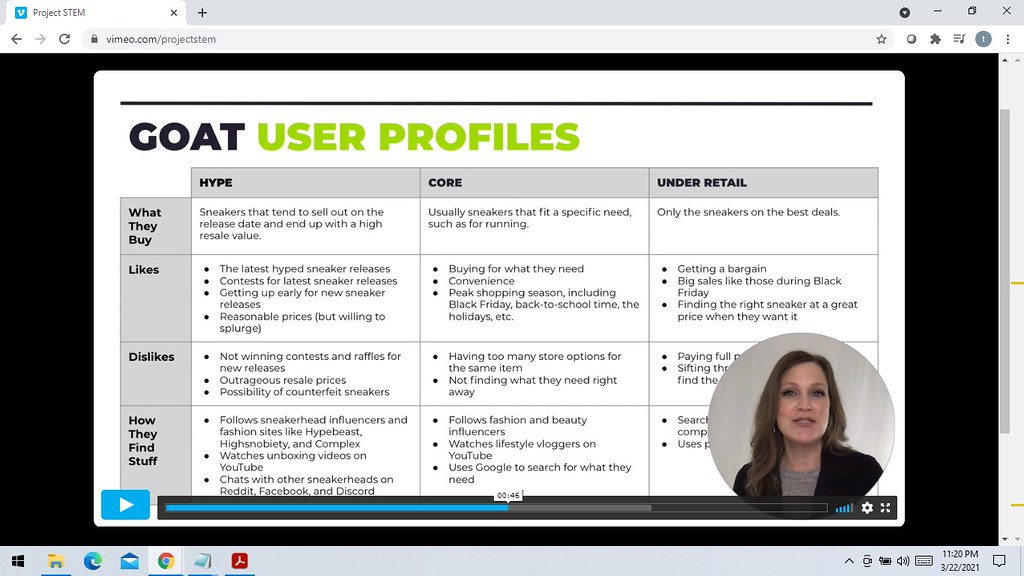
In a case of remarkably bad timing, just as the ethics of the lucrative sneaker resale industry came under scrutiny in the wake of the Nike scandal and questions were raised about exorbitant pandemic-fueled profits, Amazon launched a program for K-12 students that highlights how CS makes the sneaker resale marketplace gold rush possible. "Amazon and the AWS Services are really the backbone and foundation of how we do all of our work in Data Science," explains a GOAT Data Platform Engineer in an Amazon Future Engineer lesson that teaches kids how AI and data can be used to help flip sneakers by classifying GOAT website visitors as "Hype" ['willing to splurge'], "Core", or "Under Retail" user types.

Businesses

Startup Founders Can Now Bypass Venture Capitalists with Crowdfunding (protocol.com) 32

This week Protocol.com's "Source Code" newsletter described how startup founders could now bypass venture capitalists: Last fall, the the U.S. Securities and Exchange Commission passed a new set of rules for "exempt offerings," which allow startups to raise funds by selling securities. The SEC acknowledged that its exempt offering rules had become "overly complex" and tried to make them simpler to understand. The new rules increase the amount of money a startup can raise through regulation crowdfunding, which works like ordinary Kickstarter-style crowdfunding but involves selling equity instead of products and thus comes with many more rules attached (though not nearly as many as would apply to your average public company). Reg CF, as it's known, used to allow a company to sell a maximum of only $1.07 million in securities every year. Starting Monday, that number jumped to $5 million a year.

The rules also allow startups to "test the waters," which means they can talk much more publicly about raising money without actually raising money.

These rule changes are probably going to make VCs crazy, since now there are easy ways to loop them out of the super-early fundraising that often brings the biggest windfalls.

They also note that Sahil Lavingia, the CEO of commerce platform Gumroad, just raised $5 million in new funding. "He's also hoping that this model — start with a lead investor who negotiates and does due diligence, then offer the same terms to the general public — becomes a go-to move for startups everywhere.

"It certainly worked for Gumroad. It hit $5 million in less than a day, with the money coming from 7,513 investors."
Medicine

Alkaline 'Real Water' Linked To Liver Failure In Kids -- And Reports Are Rising (arstechnica.com) 142

couchslug shares a report from Ars Technica: At least five infants and children in Nevada have suffered acute non-viral hepatitis, resulting in liver failure, after drinking "alkalized" water by the brand "Real Water," local and federal regulators reported this week. At least six others fell ill with less severe conditions after drinking the water -- and additional reports continue to surface.

The initial five infants and children with liver failure fell ill in November 2020 and required hospitalization, but they have since recovered. They lived in four different households in southern Nevada. The other six ill people -- three adults and three children -- came from at least two of those same households and reported vomiting, nausea, loss of appetite, and fatigue, according to the Southern Nevada Health District. The health district is working to investigate the cases with the Food and Drug Administration. It's not yet clear what caused the illnesses but "to date, the consumption of 'Real Water' brand alkaline water was found to be the only common link identified between all the cases," the health district said."
The FDA advises against drinking, cooking, selling, or serving "Real Water" alkaline water until more information is known. Real Water is asking that all retailers pull the product from the shelf immediately.

"Real Water claims that its water -- which is sold throughout the Southwest -- is infused with negative ions and has a pH of 9.0," reports Ars Technica. "The company makes vague references to unproven health benefits and suggests drinking the water leads to 'increased cellular hydration.' There are no established benefits to alkaline diets and water, and the human body maintains its own healthy pH." Two lawsuits have already been filed against the company.
Facebook

Facebook Is Building An Instagram For Kids Under The Age Of 13 (buzzfeednews.com) 30

Executives at Instagram are planning to build a version of the popular photo-sharing app that can be used by children under the age of 13, BuzzFeed News reported this week, citing an internal company post. From the report: "I'm excited to announce that going forward, we have identified youth work as a priority for Instagram and have added it to our H1 priority list," Vishal Shah, Instagram's vice president of product, wrote on an employee message board on Thursday. "We will be building a new youth pillar within the Community Product Group to focus on two things: (a) accelerating our integrity and privacy work to ensure the safest possible experience for teens and (b) building a version of Instagram that allows people under the age of 13 to safely use Instagram for the first time."
Government

Utah Campaign Against Porn Marches On With Phone Filter Ban (apnews.com) 212

Conservative lawmakers in Utah have a passed a proposal this month requiring all cellphones and tablets sold in the state to automatically block pornography. It's unknown whether Gov. Spencer Cox, a Republican, will sign or veto the proposal. He has until March 25 to decide. The Associated Press reports: Supporters argue the restriction is a critical step to help parents keep explicit content away from kids -- especially as more children have their own electronic devices and have been forced to spend more time online during the pandemic. Combating porn is a perennial issue for Utah lawmakers who have previously mandated warning labels on print and online pornography and declared porn a "public health crisis."

Utah's generally conservative culture means racy mainstream magazines and lingerie catalogs can be considered risque. Leaders of the predominant Church of Jesus Christ of Latter-day Saints faith have also drawn attention to what they consider the harms of pornography. Even if Cox signs the measure, it wouldn't go into effect unless five other states also enacted similar laws, a provision added after manufacturers and retailers voiced concerns that it would be difficult to implement the filters for a single state. If Cox signs the bill, Utah appears poised to become the first state to mandate filters on devices, according to two prominent technology experts and the bill's sponsor, though federal internet restrictions aimed at preventing kids from accessing porn were passed in the late 1990s and later stuck down in the courts.

United States

Whatever Happened to Fired Covid-19 Data Manager Rebekah Jones? (cosmopolitan.com) 272

"Outside were more than half a dozen officers in tactical vests brandishing a sledgehammer and automatic weapons. Hands held high, she opened the door..."

A new article includes video of that moment — and describes not only what happened then, but what's happening now, and what's going to happen next: It was [Governor] DeSantis who brought the fight to her doorstep — figuratively, then literally... The state claims it traced the message to Jones's IP address. Jones claims they knew her IP address from when she worked from home... "If DeSantis thought pointing a gun at my face was a good way to get me to shut up, he's about to learn just how wrong he was...."

In January, she was charged with a felony for allegedly accessing the state emergency message system. If convicted, she could face five years in prison and a $5,000 fine. By then, she had moved her family to the D.C. area, in hopes of putting this chapter behind them all and starting over. She had to return to Florida to turn herself in or else risk extradition. She drove the nearly 1,000 mile, two-day journey alone, determined to keep her kids from reexperiencing the trauma of policemen pounding down their door... The morning she was supposed to leave, Jones started feeling unwell... The next day, she finished the drive — "it was a miracle I did not die or kill someone in my car," she says — and was booked into the Leon County Detention Facility, where she tested positive for COVID-19... She was isolated to keep from exposing other inmates...

[S]he's still proceeding with a whistleblower complaint against the Florida DOH, which is pending. And she's still running her own independent Florida COVID-19 dashboard, Florida COVID Action, which she started last June after being fired. She eventually raised more than $500,000 on GoFundMe to help support the site (along with her living expenses). She's also wrapping up work on The Covid Monitor, a project with the nonprofit FinMango that uses Google tools to help document COVID-19's spread at schools. The work has helped her survive the longest year of her life (and, quite frankly, many people's lives)... She's writing a book about her experience. And although she'd love to get another job working in science, she's not holding her breath. "I haven't met a whistleblower who has landed on their feet any time in the immediate aftermath of whistleblowing," she says wryly.

When asked what she hopes to get out of her lawsuit, she pauses and then says, "An apology. I want a fucking apology."

Displays

Scientists Have Invented Light-Up OLED Tattoos (gizmodo.com) 38

An anonymous reader quotes a report from Gizmodo: Tattoos are usually considered a form of personal expression, but a team of researchers in Europe have created what they're calling the world's first light-emitting tattoo based on OLED screen technology that, besides presumably looking kind of cool, could also serve as a visible warning about potential health concerns. In a recently published paper in the Advanced Electronic Materials journal, "Ultrathin, UltraConformable, and FreeStanding Tattooable Organic LightEmitting Diodes," scientists from the University College London in the UK and the Italian Institute of Technology detail how their new approach to tattoos relies on the same organic light-emitting diode technology featured in devices like more recent iPhones, as well as the recent crop of mobile devices featuring folding screens. The flexibility of an OLED display is important for this application given human skin is so pliable and flexes and folds as the body moves.

The actual electronics of the light-emitting tattoos, made from an extremely thin layer of an electroluminescent polymer that glows when a charge is applied, measure in at just 2.3-micrometers thick, which, according to the researchers, is about one-third the diameter of a red blood cell. The polymer layer is then sandwiched between a pair of electrodes and sits atop an insulating layer, which is bonded to temporary tattoo paper through a printing process that isn't prohibitively expensive. The tattoos can be easily applied to surfaces using the same wet transfer process that temporary tattoos designed for kids use, and can be easily washed off when no longer needed or wanted using soap and water.

With a current applied the OLED tattoos in their current form simply glow green, but eventually could produce any color using the same RGB approach that OLED screens use. However, while the researchers acknowledge that the potential for glowing tattoos is there, taking that art in a whole new direction, they also see even more potential for them as a medical tool. When combined with other wearable technologies the light-emitting tattoos could start flashing when an athlete needs to rehydrate, or change color when applied to foods providing obvious warnings when expiration dates have passed.
The researchers note that the OLEDs polymers can quickly degrade when exposed to the air, and "there's an even bigger issue of finding a way to power them using tiny batteries or supercapacitors, as so far in the lab they've been wired to an external power source," adds Gizmodo.

Slashdot Top Deals