Businesses

LinkedIn Rolls Out Its Freelance Marketplace To Compete With Fiverr and Upwork 7

LinkedIn is rolling out a new platform for freelancers to help it better compete against the likes of Fiverr and Upwork. TechCrunch reports: Today it is taking the wraps off its Service Marketplace, a new feature that will let people advertise themselves for short-term engagements to those looking to hire people for such roles, competing against the likes of Fiverr and Upwork for sourcing skilled knowledge workers. The launch of its freelancer platform is coming alongside a few other key updates from LinkedIn around other job-hunting tools, underscoring how the company is looking to adapt to new currents in the job market and how we work. They include new search filters to find jobs (permanent jobs, that is) that are remote, hybrid or on-site; and these can also now be indicated on your "Open to Work" indicator if you have that turned on to invite recruiters to contact you. Alongside this, you can now also check out companies' vaccination requirements as part of how you evaluate jobs (if the employer has indicated those details itself).

Service Marketplace was first leaked out as a small test in February this year. Since then LinkedIn has been running a quiet beta of the service in the U.S., which has already picked up 2 million users from among the nearly 800 million users (as of yesterday's earning report) that LinkedIn now has globally. As of today, Service Marketplace is going to be turned on for everyone globally: to set up a freelancer profile, you go to your own profile page, find the button near the top and follow the script to set it up and flag what you might be interested in working on. [...] Although Service Marketplace is not currently charging any fees, as it does for its other recruiting products, this will lay the groundwork for how over time LinkedIn can. The Service Marketplace is launching with 250 job categories, and the plan is to expand that to 500, product manager Matt Faustman told me in an interview.

"We are barely scratching the surface," he said. Marketing has been one of the stronger categories to date, he added. "Barely scratching the surface" may be the operative phrase here: For now, there is no way of negotiating a fee for work, nor for invoicing, and those looking to find people are not required to give any specific guidance on fees until they get into a deeper conversation with a candidate. When it comes to reviews, clients can review those they have engaged, but the individuals cannot leave a review for the clients. And, those listing themselves on the Marketplace have no way of finding jobs themselves: they are there to be discovered, not to search for work themselves.

Microsoft

Security Threat Analyst Accuses Microsoft of Hosting Malware on Office365's OneDrive (itwire.com) 52

Slashdot reader juul_advocate quotes ITWire: A British tech researcher, who quit working as a security threat analyst with Microsoft a few months back, has called on his former employer to act speedily to remove links to ransomware on its Office365 platform. In a tweet sent on Friday, Beaumont said: "Microsoft cannot advertise themselves as the security leader with 8,000 security employees and trillions of signals if they cannot prevent their own Office365 platform being directly used to launch Conti ransomware. OneDrive abuse has been going on for years. Fix it...."

An overwhelming majority of ransomware attacks only Windows, with an analysis by staff of the Google-owned VirusTotal database last Thursday showing that 95% of 80 million samples analysed — all the way back to January 2020 — were aimed at Windows... Beaumont, who has a well-earned reputation as a researcher who is quick to admit faults in his own industry, acknowledged that other technology companies also played a big role in hosting malware. Quoting a tweet from a Swiss researcher [given below], he said: "And yes, it's not just Microsoft. Tech companies have got to do better."

Security

Woman Allegedly Hacked Flight School, Cleared Planes With Maintenance Issues To Fly (vice.com) 67

A woman allegedly hacked into the systems of a flight training school in Florida to delete and tamper with information related to the school's airplanes. In some cases, planes that previously had maintenance issues had been "cleared" to fly, according to a police report. The hack, according to the school's CEO, could have put pilots in danger. From a report: Lauren Lide, a 26-year-old who used to work for the Melbourne Flight Training school, resigned from her position of Flight Operations Manager at the end of November of 2019, after the company fired her father. Months later, she allegedly hacked into the systems of her former company, deleting and changing records, in an apparent attempt to get back at her former employer, according to court records obtained by Motherboard. The news of her arrest was first reported by local TV station News Channel 8.

Derek Fallon, the CEO of Melbourne Flight Training called the police on January 17, 2020, and reported that five days before, he logged onto his account for Flight Circle, an app his company uses to manage and keep track of its airplanes, and found that there was missing information. Fallon found that someone had removed records related to planes with maintenance issues and reminders of inspections had all been deleted, "meaning aircraft which may have been unsafe to fly were purposely made 'airworthy,'" according to a document written by a Melbourne Airport Police officer.

Crime

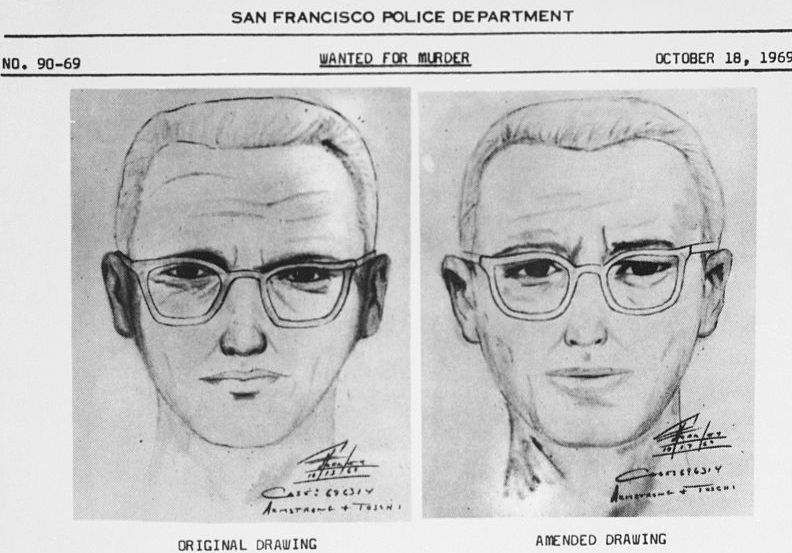
Zodiac Expert Calls 'Bullshit' On Possible ID of Zodiac Killer (rollingstone.com) 30

"Tom Voigt, a Zodiac Killer expert and author who runs ZodiacKiller.com, pulls no punches when commenting on the story picked up by FoxNews that is now being posted at various news outlets including Slashdot," writes Slashdot reader ISayWeOnlyToBePolite. Rolling Stone spoke to Voigt on Wednesday about the bombshell report and why, in his opinion, it's "bullshit." From the article: By now obviously you've seen the news about the Zodiac Killer's identification. What's your take on it? Yeah, I've got about a million people on my website right now. It's all bullshit, by the way, just to get that out of the way. This is hot garbage. I don't know why it got any coverage at all. It was basically a press release.

Are you familiar with the Case Breakers? First of all, the funny thing is, I've never heard of any of these people that are these so-called experts. I have been doing this for 25 years and I've never heard of any of them. So that there are some red flags right off the bat. And then the funny thing is, they're matching up lines on foreheads. No witness ever described lines on Zodiac's forehead. Those lines were simply added by the sketch artist to fill in the sketch. The amended sketch, which is supposed to look more like Zodiac, according to witnesses, doesn't really even have any lines. So they got rid of them. So because the witnesses were like, "We're not really happy with that sketch that we gave you a few days ago," they got changed. The lines went away. No witness ever described that.

What about their claim that Poste's name unlocks one of the Zodiac's ciphers? A lot of what they're typing and talking about is nonsense. These people, what I've seen, they don't really have any kind of a command of the basics of the Zodiac case. From what I've read, they've gotten their Zodiac information from the comments section at Facebook. They'd skip the main article and they went right to the comments and they think they know everything about this. Maybe they've saw the Fincher movie, but probably not. Or, they turned it off after the two-hour mark or so.

If you had to put your money on one suspect, who would it be? Richard Gaikowski is my best bet. If I was if I was an employer looking to hire the Zodiac, he'd probably have the most impressive resume in my eyes. But the reality is that Allen is the suspect you just can't quit. I just can't quit that "Big Al," especially now I'm going over all these old emails and tips and leads going back 25 years. And some of the stuff that was that was said to me about about how it is just mind boggling. Yeah. If he wasn't, if he wasn't the Zodiac, he might be responsible for some other murders.

United States

US Lawmakers Demand Facebook Probes; Whistleblower Says Children Harmed (reuters.com) 100

U.S. lawmakers pounded Facebook on Tuesday, accusing CEO Mark Zuckerberg of pushing for higher profits while being cavalier about user safety and they demanded regulators investigate whistleblower accusations that the social media company harms children and stokes divisions. Reuters: Coming a day after Facebook and its units including Instagram suffered a major outage, whistleblower Frances Haugen testified in a congressional hearing that "for more than five hours Facebook wasn't used to deepen divides, destabilize democracies and make young girls and women feel bad about their bodies." In an era when bipartisanship is rare on Capitol Hill, lawmakers from both parties excoriated the nearly $1 trillion company in a hearing that exemplified the rising anger in Congress with Facebook amid numerous demands for legislative reforms.

As lawmakers criticized Facebook and Zuckerberg, the company's spokespeople fought back on Twitter, arguing Haugen did not work directly on some of the issues she was being questioned on. Senate Commerce subcommittee chair Senator Richard Blumenthal, a Democrat, said Facebook knew that its products were addictive, like cigarettes. "Tech now faces that big tobacco jawdropping moment of truth," he said. He called for Zuckerberg to testify before the committee, and for the Securities and Exchange Commission and Federal Trade Commission to investigate the company. "Our children are the ones who are victims. Teens today looking in the mirror feel doubt and insecurity. Mark Zuckerberg ought to be looking at himself in the mirror," Blumenthal said, adding that Zuckerberg instead was going sailing.

Haugen, a former product manager on Facebook's civic misinformation team who has turned whistleblower, said Facebook has sought to keep its operations confidential. "Today, no regulator has a menu of solutions for how to fix Facebook, because Facebook didn't want them to know enough about what's causing the problems. Otherwise, there wouldn't have been need for a whistleblower," she said. The top Republican on the subcommittee, Marsha Blackburn, said that Facebook turned a blind eye to children below age 13 on its sites. "It is clear that Facebook prioritizes profit over the well-being of children and all users."

United States

More Vaccinations, Less Pushback: America's Vaccine Mandates Are Working, Says Public Health Professor (seattletimes.com) 308

Last month U.S. President Biden issued "a mandate that all companies with more than 100 workers require vaccination or weekly testing," remembers the New York Times, and "also moved to mandate shots for health care workers, federal contractors and a vast majority of federal workers, who could face disciplinary measures if they refuse."

So what happened next? Until now, the biggest unknown about mandating COVID-19 vaccines in workplaces has been whether such requirements would lead to compliance or to significant departures by workers unwilling to get shots — at a time when many places were already facing staffing shortages. So far, a number of early mandates show few indications of large-scale resistance. "Mandates are working," said John Swartzberg, a physician and professor at the School of Public Health at the University of California, Berkeley. "If you define 'working' by the percentage of people getting vaccinated and not leaving their jobs in droves."

Unlike other incentives — "prizes, perks, doughnuts, beer, we've seen just about everything offered to get people vaccinated" — mandates are among the few levers that historically have been effective in increasing compliance, said Swartzberg, who has tracked national efforts to increase rates of inoculation...

[T]he pushback has been less dramatic than initially feared. At Houston Methodist Hospital, which mandated vaccines this summer for 25,000 employees, for example, only about 0.6% of employees quit or were fired. Dorit Reiss, a professor at the University of California Hastings College of the Law in San Francisco who is tracking employer mandates, said that, despite their propensity for backlash and litigation, mandates generally increase vaccine compliance because the knowledge that an order is coming has often been enough to prompt workers to seek inoculation before courts even can weigh in. Mandates are becoming more commonplace as several other states have imposed requirements for workers. In New York, Rhode Island, Maine, Oregon and the District of Columbia, health care workers must get vaccinated to remain employed.

The Times's article (original URL here) provides statistics from specific examples:
  • "When Tyson Foods announced Aug. 3 that it would require coronavirus vaccines for all 120,000 of its U.S. employees, less than half of its workforce was inoculated. Nearly two months later, 91% of the company's U.S. workforce is fully vaccinated, said Dr. Claudia Coplein, Tyson's chief medical officer."
  • "In New York, where some 650,000 employees at hospitals and nursing homes were to have received at least one vaccine dose by the start of this week, 92% were in compliance, state officials said. That was up significantly from a week ago, when 82% of the state's nursing home workers and at least 84% of its hospital workers had received at least one dose."
  • "As California's requirement that all health care workers be vaccinated against the coronavirus took effect Thursday, major health systems reported that the mandate had helped boost their vaccination rates to 90% or higher."

The Almighty Buck

Coinbase To Let You Deposit Part of Your Paycheck Into Your Coinbase Account 51

Cryptocurrency company Coinbase is announcing a handful of new features. While the company is better known for its exchange that lets you convert USD into various cryptocurrencies, Coinbase wants to expand its consumer services so that you use the platform for different use cases with more financial services. From a report: First, the company will soon launch direct deposit in the U.S. This way, customers will be able to deposit a portion of their paycheck into Coinbase. Coinbase app users can find their current payroll company or employer and update paycheck allocation from there. The most extreme users will probably choose to deposit 100% of their paycheck into their Coinbase account. Once the money hits your Coinbase account, you can choose what the company is supposed to do with your dollars. You can just keep everything in USD or you can choose to convert everything to a cryptocurrency.

Users can choose any of the crypto assets available on the platform. This feature alone is particularly useful if you want to set up recurring buys without even having to think about it. But direct deposit makes more sense when you realize that Coinbase also has its own debit card powered by Marqeta. It's a Visa debit card that works with Apple Pay and Google Pay. It's all about getting money in and out of your Coinbase account. From the Coinbase app, you can choose the source wallet for your card transactions. Every time you make a purchase, Coinbase converts your crypto assets to USD with a 2.49% transaction fee.
Google

How Google Spies on Its Employees (theinformation.com) 32

At Google, a seemingly innocuous action can earn an employee the attention of the company's corporate security department. The Information: For example, when Google wants to find out who has been accessing or leaking sensitive corporate information, the company often homes in on employees who are thinking about leaving it. In the past, its security teams have flagged employees who search an internal website listing the cost of COBRA health insurance -- which gives workers a way to continue their coverage after leaving their employer -- for further investigation, according to a person with direct knowledge of its tactics. Employees who draft resignation letters or seek out internal checklists that help workers plan their departures from Google have also faced similar scrutiny, the person said. It has even looked at who has taken screenshots on work devices while running encrypted messaging services at the same time, according to current and former employees with knowledge of the practices. Bulk transfers of data onto USB storage devices and use of third-party online storage services can also raise eyebrows among Google's security staff.
Microsoft

Amazon Loss of Executive To Microsoft Sets Up Potential Clash (bloomberg.com) 19

Microsoft said it has hired a former Amazon cloud executive to run its cybersecurity operations, potentially setting in motion a legal battle between the two tech giants. From a report: Charlie Bell, who long reported to former Amazon Web Services chief Andy Jassy and oversaw the engineering teams working on AWS's main software services, will become an executive vice president reporting to Microsoft Chief Executive Officer Satya Nadella. "Cybersecurity is one of the most challenging issues of our time -- for every person and organization on the planet -- and it is core to our mission," Nadella wrote in an email to employees obtained by Bloomberg. Securing customers' digital technology platforms, devices, and clouds "is a bold ambition we are going after and is what attracted Charlie to Microsoft."

[...] Bell's departure to a direct rival is a major blow for Amazon, and Microsoft said it's committed to continuing "constructive discussions" with the cloud leader about Bell's role. "We're sensitive to the importance of working through these issues together, as we've done when five recent Microsoft executives moved across town to work for Amazon," Microsoft said in a statement. Amazon, which has a history of seeking to enforce non-compete agreements vigorously, didn't immediately comment on the move. Bell will officially start his role once "a resolution is reached with his former employer," Nadella wrote in the email.

Businesses

Apple Faces Probe From US Labor Board Over Complaints of Hostile Working Conditions (engadget.com) 32

The US National Labor Relations Board is looking into cases filed against the tech giant by two of the main voices accusing the company of permitting a hostile work environment. Engadget reports: The first complaint was filed by Ashley Gjovik, the senior engineering program manager who said she spent months talking with the company about unsafe working conditions and sexism in the workplace. In a tweet, she said that after raising her concerns, she was put on indefinite paid administrative leave while Apple looks into them. Further, she said Apple implied that the company didn't want her to use Slack, where she'd been vocal about her criticisms. Gjovik filed a "Charge against Employer" complaint, The Times says, alleging 13 instances of alleged retaliation against her. Those instances include workplace harassment, reassigning her supervisory responsibilities to colleagues and giving her undesirable tasks

The second complaint the labor board is investigation was filed by Cher Scarlett, on behalf of herself and other employees, on September 1st. Scarlett is a security engineer at the company and is the face of the #AppleToo movement made up of current and former employees aiming to shine a light on the tech giant's workplace culture. The group said it collected over 500 stories of incidents involving discrimination, harassment and retaliation, and it recently started sharing them five stories at a time. Her case accuses Apple of suppressing workers' organizing efforts, specifically when they involve pay surveys and gender pay equity.
Apple said in a statement: "We are and have always been deeply committed to creating and maintaining a positive and inclusive workplace. We take all concerns seriously and we thoroughly investigate whenever a concern is raised and, out of respect for the privacy of any individuals involved, we do not discuss specific employee matters."
Data Storage

Fired NY Credit Union Employee Nukes 21GB of Data In Revenge (bleepingcomputer.com) 123

Juliana Barile, the former employee of a New York credit union, pleaded guilty to accessing the financial institution's computer systems without authorization and destroying over 21 gigabytes of data in revenge after being fired. BleepingComputer reports: According to court documents, the defendant worked remotely as a part-time employee for the credit union until May 19, 2021, when she was fired. Even though a credit union employee asked the bank's information technology support firm to disable Barile's remote access credentials, that access was not removed. Two days later, on May 21, Barile logged on for roughly 40 minutes. The defendant deleted over 20,000 files and around 3,500 directories during that time, totaling roughly 21.3 gigabytes of data stored on the bank's share drive. The wiped included files related to customers' mortgage loan applications and the financial institution's anti-ransomware protection software.

Besides deleting documents with customer and company data, Barile also opened various confidential Word documents, including files containing board minutes for the credit union. Five days later, on May 26, she also told a friend via text messages how she was able to destroy thousands of documents on her former employer's servers, saying, "They didn't revoke my access so I deleted p drift lol. [..] I deleted their shared network documents." Although the New York credit union had backups of some of the data deleted by the defendant, it still had to spend more than $10,000 to restore the destroyed data following Barile's unauthorized intrusion.

Google

Google Says Staff Have No Right To Protest Its Choice of Clients (bloomberg.com) 358

An anonymous reader quotes a report from Bloomberg: Google employees have no legal right to protest the company's choice of clients, the internet giant told a judge weighing the U.S. government's allegations that its firings of activists violated the National Labor Relations Act. "Even if Google had, for the sake of argument, terminated the employees for their protest activities -- for protesting their choice of customers -- this would not violate the Act," Google's attorney Al Latham said in his opening statement Tuesday at a labor board trial. National Labor Relations Board prosecutors have accused the Alphabet Inc. unit of violating federal law by illegally firing five employees for their activism. Three of those workers' claims had originally been dismissed under President Donald Trump, because agency prosecutors concluded that their opposition to the company collaborating with immigration enforcement wasn't legally protected, according to their lawyer. But that decision was reversed after President Joe Biden fired and replaced the labor board's general counsel.

Google has been roiled over the past four years by a wave of activism by employees challenging management over issues including treatment of sub-contracted staff, handling of sexual harassment, and a contract with the U.S. Customs and Border Protection agency, which some of the fired workers accessed internal information about and circulated a petition against. Google has denied wrongdoing, saying in a Monday statement that it encourages "open discussion and debate" but terminated staff in response to violations of its data security policies. "Google terminated these employees not because of their protest as such, but because in the pursuit of their protest, they accessed highly confidential information that they had no right to access," its attorney told the judge Tuesday.

Federal labor law prohibits retaliating against employees for collective action related to their working conditions, but the exact scope of that protection has been debated for decades. Biden's appointees have signaled they interpret the scope of what that covers much more broadly than their Trump-era predecessors. Latham said he isn't aware of any case in the labor board's eight decades of existence in which it has held "an employer's choice of customer" to be an issue workers have a right to protest. "What we have here is a protest that does not seek to improve employees' terms and conditions of employment," but rather "a purely political protest that sought to use Google's government contracts, or potential government contracts, as leverage," he said.

Privacy

Is Big Tech Pressuring Its Call-Center Workers to Install Cameras in Their Homes? (nbcnews.com) 95

NBC News reports: Colombia-based call center workers who provide outsourced customer service to some of the nation's largest companies are being pressured to sign a contract that lets their employer install cameras in their homes to monitor work performance, an NBC News investigation has found. Six workers based in Colombia for Teleperformance, one of the world's largest call center companies, which counts Apple, Amazon and Uber among its clients, said that they are concerned about the new contract, first issued in March. The contract allows monitoring by AI-powered cameras in workers' homes, voice analytics and storage of data collected from the worker's family members, including minors.

Teleperformance employs more than 380,000 workers globally, including 39,000 workers in Colombia. "The contract allows constant monitoring of what we are doing, but also our family," said a Bogota-based worker on the Apple account who was not authorized to speak to the news media. "I think it's really bad. We don't work in an office. I work in my bedroom. I don't want to have a camera in my bedroom." The worker said that she signed the contract, a copy of which NBC News has reviewed, because she feared losing her job. She said that she was told by her supervisor that she would be moved off the Apple account if she refused to sign the document. She said the additional surveillance technology has not yet been installed.

The concerns of the workers, who all spoke on the condition of anonymity because they were not authorized to speak to the media, highlight a pandemic-related trend that has alarmed privacy and labor experts: As many workers have shifted to performing their duties at home, some companies are pushing for increasing levels of digital monitoring of their staff in an effort to recreate the oversight of the office at home... "Surveillance at home has really been normalized in the context of the pandemic," said Veena Dubal, a labor law professor at the University of California, Hastings. "Companies see a lot of benefit in putting in software to do all kinds of monitoring they would have otherwise expected their human managers to do, but the reality is that it's much more intrusive than surveillance conducted by a boss."

An Uber spokesperson confirmed to NBC News that it Uber actually requested the monitoring of its workers, the article reports. Interviewed by NBC News, an Uber spokespreson "said that its customer service agents have access to private and sensitive user information, including credit card details and trip data, and that protecting that information is a priority for Uber.

"As a result, Uber requested Teleperformance to monitor staff working on its accounts to verify that only a hired employee is accessing the data; that outsourced staff weren't recording screen data on another device such as a phone; and that no unauthorized person was near the computer."
Transportation

What if Highways Were Electric? Germany Is Testing the Idea. (nytimes.com) 185

An electrified highway is theoretically the most efficient way to eliminate truck emissions. But the political obstacles are daunting. From a report: Traton is among the backers of the so-called eHighway south of Frankfurt, a group that also includes Siemens and Autobahn GmbH, the government agency that oversees German highways. There are also short segments of electrified road in the states of Schleswig-Holstein and Baden-Wurttemberg. The technology has been tried in Sweden and, in 2017, on a one-mile stretch near the Port of Los Angeles.

So far the sections of highway equipped with overhead cable in Germany are short -- about three miles long in both directions near Frankfurt. Their purpose is to test how the system performs in everyday use by real trucking companies hauling real goods. By the end of the year more than 20 trucks will be using the systems in Germany. Enter Mr. Schmieder, who learned to drive a truck in the German army, and his employer, a trucking firm called Schanz Spedition in the small town of Ober-Ramstadt, in a hilly, thickly forested region about a 35-mile drive from Frankfurt.

If the eHighway is ever going to be rolled out on a large scale, it has to work for companies like Schanz, a family-owned firm managed by Christine Hemmel and Kerstin Seibert, sisters who are great-granddaughters of the founder. Their father, Hans Adam Schanz, though technically retired, was at the wheel of a forklift maneuvering pallets into the back of a truck recently as Mr. Schmieder climbed into the cab for his second run of the day hauling paint to a distribution center in Frankfurt.

Businesses

The Rise of Never-Ending Job Interviews (bbc.com) 205

An anonymous reader quotes a report from the BBC: Every jobseeker welcomes an invitation to a second interview, because it signals a company's interest. A third interview might feel even more positive, or even be the precursor to an offer. But what happens when the process drags on to a fourth, fifth or sixth round -- and it's not even clear how close you are to the 'final' interview? That's a question Mike Conley, 49, grappled with earlier this year. The software engineering manager, based in Indiana, US, had been seeking a new role after losing his job during the pandemic. Five companies told him they had to delay hiring because of Covid-19 -- but only after he'd done the final round of interviews. Another three invited him for several rounds of interviews until it was time to make an offer, at which point they decided to promote internally. Then, he made it through three rounds of interviews for a director-level position at a company he really liked, only to receive an email to co-ordinate six more rounds. "When I responded to the internal HR, I even asked, 'Are these the final rounds?,'" he says. "The answer I got back was: 'We don't know yet.'"

That's when Conley made the tough decision to pull out. He shared his experience in a LinkedIn post that's touched a nerve with fellow job-seekers, who've viewed it 2.6 million times as of this writing. Conley says he's received about 4,000 public comments of support, and "four times that in private comments" from those who feared being tracked by current or prospective employers. [...] In fact, the internet is awash with similar stories jobseekers who've become frustrated with companies -- particularly in the tech, finance and energy sectors -- turning the interview process into a marathon. That poses the question: how many rounds of interviews should it take for an employer to reasonably assess a candidate before the process veers into excess? And how long should candidates stick it out if there's no clear information on exactly how many hoops they'll have to jump through to stay in the running for a role?
Google recently determined that four interviews was enough to make a hiring decision with 86% confidence, noting that there was a diminishing return on interviewer feedback thereafter.

"John Sullivan, a Silicon Valley-based HR thought leader, says companies should nail down a hire-by date from the start of the recruitment process, because the best candidates only transition the job market briefly," reports the BBC. "According to a survey from global staffing firm Robert Half, 62% of US professionals say they lose interest in a job if they don't hear back from the employer within two weeks -- or 10 business days -- after the initial interview. That number jumps to 77% if there is no status update within three weeks. "
Businesses

Amazon Now Employs Almost 1 Million People in the US - or 1 in Every 169 Workers (nbcnews.com) 99

"Amazon now employs almost 1 million people in the U.S. — or 1 in every 169 workers," reports NBC News: Amazon has revealed for the first time the number of people it employs in the U.S., putting the figure at 950,000, according to the e-commerce giant's quarterly earnings call on Thursday. While the headcount was boosted by an additional 64,000 people hired in the second quarter, it does not include the thousands of contractors such as drivers whom Amazon depends on to run its Amazon Prime delivery operations...

Globally, the company employs 1.3 million people. It is the second largest employer in the U.S., behind Walmart, which currently employees nearly 1.6 million people in the U.S. As of June, the national private sector workforce is roughly 161 million people, according to the Bureau of Labor Statistics. That means about 1 out of every 169 people in the country's workforce works for Amazon, while about 1 out of every 100 people in the U.S. workforce is employed by Walmart.

The article also notes that since 2018 Amazon has been paying a $15-an-hour minimum for all employees — more than double the current U.S. minimum wage of $7.25 an hour
United States

Tech Companies Praised for 'Pandemic Leadership', Vaccine Mandates (indiatimes.com) 178

"America reported 122,000 new COVID-19 cases on Friday, the highest single-day spike since February," reports Business Insider. But when it comes to anti-Covid measures like vaccine mandates, America's technology companies have been "decisive trend setters," according to the New York Times' On Tech newsletter. (Alternate URL) Last year, some high-profile tech companies were relatively early to close their corporate offices as coronavirus outbreaks started in the United States, and they continued to pay many hourly workers who couldn't do their jobs remotely. Those actions from companies including Microsoft, Salesforce, Facebook, Google, Apple and Twitter probably helped save lives in the Bay Area and perhaps beyond. Now many of the same tech companies — along with schools and universities, health care institutions and some government employers in the United States — have started to announce vaccine mandates for staff, the resumption of requirements to wear masks, delayed reopenings of offices or on-site workplace vaccinations to help slow the latest wave of infections.

America's tech companies, which deserve criticism for misusing their power, also should get credit for using their power to take decisive action in response to virus risks. Those steps helped make it palatable for other organizations to follow. And in some cases, tech companies have acted more quickly in response to health threats and communicated about them more effectively than federal or local government leaders.

Disney, the world's largest entertainment company, is also requiring all salaried and nonunion hourly employees in the U.S. to be fully vaccinated, according to the Washington Post. Walmart, the nation's largest private employer at almost 1.6 million employees, announced all of its corporate staff members and regional managers would need to be fully vaccinated by Oct. 4. Though the mandate does not apply to store and warehouse staffers, which make up the bulk of the company's workforce, Walmart is offering a $150 bonus as incentive for those unvaccinated employees to get inoculated... While companies are pushing for vaccinations, they must contend with employees who are seeking exceptions for medical or religious reasons. Walmart said in a statement that while a "small percentage" of employees are unable to be vaccinated due to such reasons, those workers "must follow all social distancing standards, wear a mask while working, and receive weekly Covid-19 testing provided by Walmart...."

The news comes after corporate giants Google, Facebook and Uber announced their own vaccine mandates for employees this week. Companies such as Apple, Twitter, Lyft and the New York Times said they are delaying their return to the office due to the rising cases.

More examples from CNN:
  • BlackRock the world's largest asset manager, is currently allowing only vaccinated employees to return to the office
  • Morgan Stanley's New York office is banning all unvaccinated staff and clients from entering its headquarters.
  • Luxury department store chain Saks Fifth Avenue is requiring that all employees be vaccinated.
  • All new hires and current employees of the Washington Post will be required to demonstrate proof of full Covid-19 vaccinations.
  • As of August 2, all employees working in Lyft's offices are required to be vaccinated
  • If Uber employees want to come back to the office, they must be fully vaccinated

Businesses

Apple Closing Down Internal Slack Channels Where Employees Debate Remote Work (cultofmac.com) 116

An anonymous reader quotes a report from Cult of Mac: Apple is closing down internal Slack channels to stop employees discussing remote working options, reports Zoe Schiffer from The Verge. Many Cupertino employees are currently engaged in a Cold War of sorts with their employer over the remote working arrangement coming out of the coronavirus pandemic. As the arguments flare up among staff, Apple has taken the step of shuttering the Slack channels where these are taking place. "Apple recently began cracking down on Slack channels that aren't directly related to work," Schiffer wrote on Twitter. "The company bans channels 'for activities and hobbies' that aren't directly related to projects or part of official employee groups -- but this wasn't always enforced, employees say."

Two public letters from Apple employees have requested more flexible working conditions. A recent petition this month was shared on Apple's internal Slack channel, with more than 6,000 members discussing remote work. It noted that: "We continue to be concerned that this one-size-fits-all solution is causing many of our colleagues to question their future at Apple. With COVID-19 numbers rising again around the world, vaccines proving less effective against the delta variant, and the long-term effects of infection not well understood, it is too early to force those with concerns to come back to the office." According to Schiffer, "internally, [many] people feel like [Apple] isn't listening to their demands." She continues that: "Since Friday, three Apple employees have resigned specifically because of the remote work policies. One had been at the company for nearly 13 years. I've seen a bunch of these resignation notes and they're pretty heart wrenching."

Businesses

Uber and Lyft Can't Find Drivers Because Gig Work Sucks (vice.com) 136

An anonymous reader quotes a report from Motherboard: You may have noticed recently that an Uber ride is more expensive than it used to be. As ride-hail companies Uber and Lyft hike prices to record heights during the COVID-19 pandemic, much commentary has settled on explaining this as a consequence of a "labor shortage" largely motivated by a lack of proper financial incentives. Drivers, the story goes, saw the new cash bonuses offered by companies to lure workers back as insufficient. Some, perhaps, decided they were not worth the risk of getting infected with COVID-19 or one of its budding variants, while other analyses suggested drivers were content with living on stimulus funds rather than money from driving. At the same time, the firms began curtailing subsidies that kept prices low enough to attract riders and work towards monopoly. Together, this has left us with a sudden and massive spike in ride-hail prices; Gridwise, a ride-hail driver assistance app, estimated that Uber has increased its prices by 79 percent since the second quarter of 2019.

While Uber and Lyft are reportedly thinking about offering new perks such as education, career, and expense programs, analysts admit these don't strike at core problems with the gig economy that were driving workers away before COVID-19 hit and are making it difficult to attract them now. In conversations with Motherboard, former and current ride-hail drivers pointed to a major factor for not returning: how horrible it is to work for Uber and Lyft. For some workers, this realization came long before the pandemic reared its head, and for others, the crisis hammered it home. Motherboard has changed some drivers' names or granted them anonymity out of their fear of retaliation.
"If I kept driving, something was going to break," said Maurice, a former driver in New York who spent four years working for Uber and Lyft before the pandemic. "I already go nights without eating or sleeping. My back hurt, my joints hurt, my neck hurt, I felt like a donkey. Like a slave driving all the time."

"I've been driving for six years. Uber has taken at least 10,000 pounds in commission from me each year! They take 20 percent of my earnings, then offer me 200 pounds," Ramana Prai, a London-based Uber driver, told Motherboard. "I don't understand how they can take 60,000 pounds from me, then offer nothing when I'm in need. How can I provide for my partner and two kids with this? My employer has let me down."

"I woke up every day asking how long I could keep it up, I just didn't feel like a person," Yona, who worked for Lyft in California for the past six years until the pandemic, told Motherboard. "I got two kids, my mother, my sister, I couldn't see them. And I was doing all this for them but I could barely support them, barely supported myself."

"I was making even less than my sister and I was probably less safe too," Yona's sister, Destiny, told Motherboard. "She got out back in the spring, I hopped on and was coming back negative some days. I tried UberEats and DoorDash to see if that was any better, but stopped after a friend was almost robbed on a delivery. Okay, so the options are get covid or get robbed, then guess what: I'm doing none of them."

Motherboard argues that the degrading working conditions, as well as the poor pay, "are structurally necessary for ride-hail companies. They were necessary to attract and retain customers with artificially low prices, to burn through drivers at high rates that frustrate labor organizing, and bolster the narrative of gig work as temporary, transient, and convenient. It's no wonder, then, that drivers aren't coming back."
Privacy

Why Email Providers Scan Your Emails (consumerreports.org) 98

An anonymous reader shares a report: If you receive emails flagged as spam or see a warning that a message might be a phishing attempt, it's a sign that your email provider is scanning your emails. The company may do that just to protect you from danger, but in some situations it can delve into your communications for other purposes, as well. Google announced that it would stop scanning Gmail users' email messages for ad targeting in 2017 -- but that doesn't mean it stopped scanning them altogether. Verizon didn't respond to requests for comments about Yahoo and AOL's current practices, but in 2018 the Wall Street Journal reported that both email providers were scanning emails for advertising. And Microsoft scans its Outlook users' emails for malicious content. Here's what major email providers say about why they currently scan users' messages.

Email providers can scan for spam and malicious links and attachments, often looking for patterns. [...] You may see lots of ads in your email inbox, but that doesn't necessarily mean your email provider is using the content of your messages to target you with marketing messages. For instance, like Google, Microsoft says that it refrains from using your email content for ad targeting. But it does target ads to consumers in Outlook, along with MSN, and other websites and apps. The data to do that come from partnering with third-party providers, plus your browsing activity and search history on Bing and Microsoft Edge, as well as information you've given the company, such as your gender, country, and date of birth.

[...] If you're using an email account provided by your employer, an administrator with qualifying credentials can typically access all your incoming and outgoing emails on that account, as well as any documents you create using your work account or that you receive in your work account. This allows companies to review emails as part of internal investigations and access their materials after an employee leaves the company. [...] Law enforcement can request access to emails, though warrants, court orders, or subpoenas may be required. Email providers may reject requests that don't satisfy applicable laws, and may narrow requests that ask for too much information. They may also object to producing information altogether.

Slashdot Top Deals