Advertising

Tim Cook Says Ads That Follow You Online Are 'Creepy' (cnet.com) 181

In a wide-ranging interview with MSNBC and Recode, Apple CEO Tim Cook said that everyone should know how much data they're sharing and what can be inferred about us from that information. He added that privacy "is a human right" and said he's worried about how advertisers and others can abuse access to our data. "To me it's creepy when I look at something and all of a sudden it's chasing me all the way across the web," Cook said. "I don't like that." CNET reports: The comments came as part of a wide-ranging interview between Cook, MSNBC's Chris Hayes and Recode's Kara Swisher. MSNBC broadcast the special, named "Revolution: Apple changing the world" at 5 p.m. PT on Friday. The interview was taped the day after Apple's education event in Chicago, where the company introduced a new 9.7-inch iPad and tools for teachers. The two publications released some early clips and comments from Cook over the past couple of weeks. That included remarks he made about Facebook and its CEO, Mark Zuckerberg in the wake of the Cambridge Analytica scandal. Cook noted that Apple purposely chose not to make "a ton of money" off its customers' data and that Facebook failed to effectively regulate itself, prompting a need for government intervention. Along with Facebook and its privacy issues, Cook talked up DACA and immigration, tax reform, the changing job landscape and the need for everyone to learn coding, among other topics.
Windows

Is Microsoft Trying To Make Windows 10 Mail Worse? (venturebeat.com) 232

Emil Protalinski via VentureBeat argues that "Windows Mail is unusable, and instead of improving it, Microsoft is looking to drive users away": Microsoft started forcing Mail to use Edge for email links in Windows 10 build 17623 last month. This week, the company started including Office 365 ads right at the bottom of the app. But even these poor decisions are just extra nails in the coffin. Windows Mail has difficulty sending and receiving email. No, I'm not exaggerating for effect. If you have an email open and Windows Mail detects that a new email has hit your inbox, you'll get a notification. Standard stuff. If, however, you then click on said notification, Windows Mail will take you to the open email message, rather than the one that you just clicked on. That's half of the time. The other half of the time this happens, Windows Mail will crash altogether. Apparently having one email open and trying to open another one that just came in is overwhelming for Windows Mail. But that's not the end of it.

Windows Mail is also notorious for not sending emails. Multiple times a week, I open an email, hit reply, type out a quick message, hit send, and alt-tab back to Chrome or Word. Any normal email client will send the message despite the app not being the active window. With Windows Mail, countless times I have wondered why I never got heard back to a specific reply, only to discover hours later, and completely by accident, that the message is still a draft. It's not even sitting in my outbox -- it's just a fucking draft. I end up debating whether to send the email hours late, or if it doesn't make sense to send it anymore. That's not a decision I should have to make. There are of course small features I would like to see added to Windows Mail, like being able to set formatted signatures (as opposed to just plain text), but that's hardly a priority. Windows Mail is unusable, which means Windows 10 doesn't come with an email client. That's incredibly sad.

Education

Berkeley Offers Its Data Science Course Online For Free (berkeley.edu) 33

In a news bulletin, University of California, Berkeley announces that its "Foundations of Data Science" course is "being offered free online this spring for the first time through the campus's online education hub, edX." From the report: The course -- Data 8X (Foundations of Data Science) -- covers everything from testing hypotheses, applying statistical inferences, visualizing distributions and drawing conclusions, all while coding in Python and using real-world data sets. One lesson might take economic data from different countries over the years to track global economic growth. The next might use a data set of cell samples to create a classification algorithm that can diagnose breast cancer. (Learn more from a video on the Berkeley data science website.) The online program is based on the Foundations of Data Science course that Berkeley launched on campus in 2015 and now has more than 1,000 students enrolling every semester. The Foundations of Data Science edX Professional Certificate program is a sequence of three five-week courses taught by three winners of Berkeley's top teaching honor, the Distinguished Teaching Award: DeNero, statistics professor Ani Adhikari and computer science professor David Wagner. The first of the three parts has already started (9 a.m. on April 2), but enrollment will remain open after the course begins. Furthermore, anyone in the world can enroll for free but those who want to earn the certificate will need to pay.
Privacy

'Big Brother' In India Requires Fingerprint Scans For Food, Phones, Finances (nytimes.com) 132

The New York Times reports of the Indian government's intent to build an identification system of unprecedented scope. The country is reportedly "scanning the fingerprints, eyes and faces of its 1.3 billion residents (alternative source) and connecting the data to everything from welfare benefits to mobile phones." Here's an excerpt from the report: Civil libertarians are horrified, viewing the program, called Aadhaar, as Orwell's Big Brother brought to life. To the government, it's more like "big brother," a term of endearment used by many Indians to address a stranger when asking for help. For other countries, the technology could provide a model for how to track their residents. And for India's top court, the ID system presents unique legal issues that will define what the constitutional right to privacy means in the digital age. The government has made registration mandatory for hundreds of public services and many private ones, from taking school exams to opening bank accounts.

Technology has given governments around the world new tools to monitor their citizens. In China, the government is rolling out ways to use facial recognition and big data to track people, aiming to inject itself further into everyday life. Many countries, including Britain, deploy closed-circuit cameras to monitor their populations. But India's program is in a league of its own, both in the mass collection of biometric data and in the attempt to link it to everything -- traffic tickets, bank accounts, pensions, even meals for undernourished schoolchildren.

Operating Systems

Ask Slashdot: Do You Miss Windows Phone? (theverge.com) 284

An anonymous reader writes: After recently switching on an old Windows Phone to create a silly April Fools' joke, The Verge's Tom Warren discovered just how much he missed Microsoft's mobile OS. Two of the biggest features that are hard to find/replicate on iOS and Android are the Metro design and Live Tiles. "Android and iOS still don't have system-wide dark modes, nearly 8 years after Windows Phone first introduced it," notes Warren. "Live Tiles were one of Windows Phone's most unique features. They enabled apps to show information on the home screen, similar to the widgets found on Android and iOS. You could almost pin anything useful to the home screen, and Live Tiles animated beautifully to flip over and provide tiny nuggets of information that made your phone feel far more personal and alive."

Some other neat features include the software keyboard, which Warren argues "is still far better than the defaults on iOS and Android," especially with the recently-added tracing feature that lets you swipe to write words. "Microsoft also experimented with features that were different to other mobile platforms, and some of the concepts still haven't really made their way to iOS or Android: Kid's Corner; Dedicated search button; Browser address bar; People hub; Unified messaging..." Aside from the competition aspect with Google and Apple, do you miss Windows Phone? What are some specific features you miss about the old mobile operating system?

Transportation

California May Soon Allow Passengers In Driverless Cars (reuters.com) 165

According to Reuters, California's public utility regulator on Friday signaled it would allow passengers to ride in self-driving cars without a backup driver in the vehicle. It is a big step forward for autonomous car developers, especially as the industry faces heightened scrutiny over safety concerns. From the report: The California Public Utilities Commission, the body that regulates utilities including transportation companies such as ride-hailing apps, issued a proposal that could clear the way for companies such as Alphabet's Waymo and General Motors to give members of the public a ride in a self-driving car without any backup driver present, which has been the practice of most companies so far. The California Department of Motor Vehicles had already issued rules allowing for autonomous vehicle testing without drivers, which took effect this week. The commission said its proposed rules complement the existing DMV rules but provide additional protections for passengers. The proposal, which is set to be voted on at the commission's meeting next month, would clear the way for autonomous vehicle companies to do more testing and get the public more closely acquainted with driverless cars in a state that has closely regulated the industry. It also comes as regulators across the country are taking a harder look at self-driving cars in the aftermath of a crash in Arizona that killed a pedestrian.
Facebook

Facebook Donated To 46 of 55 Members On Committee That Will Question Zuckerberg (usatoday.com) 160

Facebook CEO Mark Zuckerberg will be questioned about user privacy protections next week by members of the House and Senate committees, but as USA Today notes, many of these members were also "some of the biggest recipients of campaign contributions from Facebook employees directly and the political action committee funded by employees." An anonymous reader shares the report: The congressional panel that got the most Facebook contributions is the House Energy and Commerce Committee, which announced Wednesday morning it would question Zuckerberg on April 11. Members of the committee, whose jurisdiction gives it regulatory power over Internet companies, received nearly $381,000 in contributions tied to Facebook since 2007, according to the Center for Responsive Politics. The center is a non-partisan, non-profit group that compiles and analyzes disclosures made to the Federal Election Commission.

The second-highest total, $369,000, went to members of the Senate Commerce, Science and Transportation Committee, which announced later that it would have a joint hearing with the Senate Judiciary Committee to question Zuckerberg on Tuesday. Judiciary Committee members have received $235,000 in Facebook contributions. On the House committee, Republicans got roughly twice as much as Democrats, counter to the broader trend in Facebook campaign gifts. Of the $7 million in contributions to all federal candidates tied to the Menlo Park, Calif.-based social network, Democrats got 65% to Republicans' 33%. Of the 55 members on the Energy and Commerce Committee this year, all but nine have received Facebook contributions in the past decade. The average Republican got $6,800, while the average Democrat got $6,750.

Security

'Vigilante Hackers' Strike Routers In Russia and Iran, Reports Motherboard (vice.com) 121

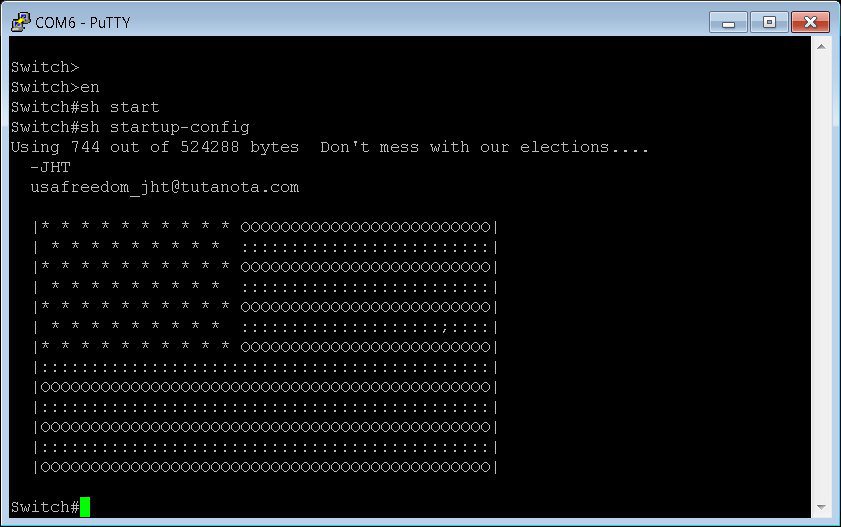
An anonymous reader quotes Motherboard: On Friday, a group of hackers targeted computer infrastructure in Russia and Iran, impacting internet service providers, data centres, and in turn some websites. "We were tired of attacks from government-backed hackers on the United States and other countries," someone in control of an email address left in the note told Motherboard Saturday... "We simply wanted to send a message...." In addition to disabling the equipment, the hackers left a note on affected machines, according to screenshots and photographs shared on social media: "Don't mess with our elections," along with an image of an American flag...

In a blog post Friday, cybersecurity firm Kaspersky said the attack was exploiting a vulnerability in a piece of software called Cisco Smart Install Client. Using computer search engine Shodan, Talos (which is part of Cisco) said in its own blog post on Thursday it found 168,000 systems potentially exposed by the software. Talos also wrote it observed hackers exploiting the vulnerability to target critical infrastructure, and that some of the attacks are believed to be from nation-state actors...

Reuters reported that Iran's IT Minister Mohammad Javad Azari-Jahromi said the attack mainly impacted Europe, India, and the U.S.... The hackers said they did scan many countries for the vulnerable systems, including the U.K., U.S., and Canada, but only "attacked" Russia and Iran, perhaps referring to the post of an American flag and their message. They claimed to have fixed the Cisco issue on exposed devices in the US and UK "to prevent further attacks... As a result of our efforts, there are almost no vulnerable devices left in many major countries," they claimed in an email.

Their image of the American flag was a black-and-white drawing done with ASCII art.
Bitcoin

GPU Prices Soar as Bitcoin Miners Buy Up Hardware To Build Rigs (computerworld.com) 157

"Bitcoin and other cryptocurrency miners have created a dearth of mid-range and high-end GPU cards that are selling for twice as much as suggested retail," reports Computerworld. "The reason: miners are setting up server farms with the cards." Lucas123 writes: GPU prices have more than doubled in some cases... Some of the most popular GPUs can't even be found anymore as they've sold out due to demand. Meanwhile, some retailers are pushing back against bitcoin miners by showing favoritism to their traditional gamer customers, allowing them to purchase GPUs at manufacturer's suggested retail price. Earlier this year, NVIDIA asked retailers of its hardware to prioritize sales to gamers over cryptocurrency miners.
Transportation

California Police Ticket A Self-Driving Car (cbslocal.com) 344

Long-time Slashdot reader Ichijo writes: A self-driving car was slapped with a ticket after police said it got too close to a pedestrian on a San Francisco street.

The self-driving car owned by San Francisco-based Cruise was pulled over for not yielding to a pedestrian in a crosswalk. Cruise says its data shows the person was far away enough from the vehicle and the car did nothing wrong.... According to data collected by Cruise, the pedestrian was 10.8 feet away from the car when, while the car was in self-driving mode, it began to continue down Harrison at 14th St."

The person in the crosswalk was not injured.

Microsoft

Microsoft Open Source Tool Lets You 'Bring Your Own Linux' To Windows (microsoft.com) 135

Long-time Slashdot reader Billly Gates writes: Debian is now available in the Windows app store. It joins Ubuntu, Suse Leap, SuSe enterprise, and Kali Linux for those who cannot or do not want to bother with a virtual machine or a full install of the OS. However, it included stable 9.3. 9.4 is available from the repository if you run apt-get update and apt-get upgrade.
"Fedora is not yet available, although Microsoft has stated openly that it is working to make it so," reports Computer Weekly. And there's more: Microsoft has also provided an open source tool called Microsoft WSL/DistroLauncher for users who want to build their own Linux package where a particular distribution is either a) not available yet or b) is available, but the user wants to apply a greater degree of customisation to it than comes as standard.
Graphics

Programmer Unveils OpenGL Bindings for Bash (opensource.com) 47

Slashdot reader silverdirk writes: Compiled languages have long provided access to the OpenGL API, and even most scripting languages have had OpenGL bindings for a decade or more. But, one significant language missing from the list is our old friend/nemesis Bash. But worry no longer! Now you can create your dazzling 3D visuals right from the comfort of your command line!
"You'll need a system with both Bash and OpenGL support to experience it firsthand," explains software engineer Michael Conrad, who created the first version 13 years ago as "the sixth in a series of 'Abuse of Technology' projects," after "having my technical sensibilities offended that someone had written a real-time video game in Perl.

"Back then, my primary language was C++, and I was studying OpenGL for video game purposes. I declared to my friends that the only thing worse would be if it had been 3D and written in Bash. Having said the idea out loud, it kept prodding me, and I eventually decided to give it a try to one-up the 'awfulness'..."
Software

Number of Apps In App Store Declined For the First Time Last Year (fortune.com) 63

According to new data from the analytics company Appfigures, the total number of apps in the App Store declined for the first time last year. "Appfigures notes that just 755,000 apps were released for iOS last year, a 29% drop from 2016," reports Fortune. "In contrast, 1.5 million apps were released for Android last year, marking a 17% year-over-year increase." From the report: Over the course of the year, the number of apps in the store declined from 2.2 million to 2.1 million, marking the first time the store had fewer apps at the end of the year than it did in the beginning. The reason for that change is likely Apple's decision to remove older apps from the store that were not being updated regularly, The Verge notes. Last year, Apple removed apps that were not built on 64-bit architecture, something necessary for them to work on newer iPhone models.
Google

Google Seeks To Limit 'Right To Be Forgotten' By Claiming It's Journalistic (cjr.org) 203

"In the first 'right to be forgotten' case to reach England's High Court, two men are fighting to keep their past crimes out of Google's search results, and the tech giant is fighting back by claiming it's 'journalistic.'" Chava Gourarie reports via Columbia Journalism Review: The case, which is actually two nearly identical cases, involves two businessmen who were both convicted of white-collar crimes in the '90s, and requested that Google delist several URLs referencing their convictions, including news articles. When Google denied their requests, they sued under a 2014 European Union ruling which established the right of individuals to have information delisted from search indexes under certain conditions. In its defense, Google has argued that it should be protected under an exception for journalism because it provides access to journalistic content. Even as a legal sleight of hand, the argument is quite a departure from Google's customary efforts to present itself as a disinterested arbiter of information, a position that has become more untenable with time.

Gareth Corfield, a reporter for The Register who covered the cases from the courtroom, said it's disingenuous of Google to put on the mantle of journalism only when it suits them. "They've gone through great lengths to say they don't make any editorial judgement in processing results," Corfield said, but "it now wants you to believe it is on a par with journalism." As the first case to test the "right to be forgotten" in England's High Court, its outcome will likely set some ground rules in the roiling debate between personal privacy and freedom of expression on the internet. Google's sudden identification with journalism may be a legal gambit, but it could have far-reaching effects across the landscape of data protection laws.

Twitter

Twitter Bans 270,000 Accounts For 'Promoting Terrorism' (theguardian.com) 95

According to Twitter's latest transparency report, the social media company removed more than 270,000 accounts around the world for promoting terrorism in the second half of 2017. The number of accounts permanently suspended for sharing what the firm called extremist content between July and December represents a drop for the second period in a row. The Guardian reports: The social network puts this down to "years of hard work making our site an undesirable place for those seeking to promote terrorism." Nick Pickles, Twitter UK's head of public policy, said: "The overwhelming majority of these accounts were detected by our own technology, with just 0.2% of the accounts we suspended in 2017 being flagged by the police." Almost 75% of accounts were suspended before they sent their first tweet, according to the report, and 93% were discovered by tools that Twitter engineers had built. Twitter is understood to also use a combination of US and EU lists of terrorist organizations as well as research from academics and experts to identify terrorists on its network. The number of reports of abusive behavior submitted by government representatives also dropped amid a marked change in the type of abusive behavior reported. Two-thirds of the 10,000 reports concerned violated rules over impersonation, with only 16% of the reports for harassment and 12% for hateful conduct. Harassment and hateful conduct each accounted for a third of reported accounts in the first half of 2017. Only a quarter of reports of abusive behavior submitted by government representatives were acted upon by Twitter, compared with 98% of reports relating to the "promotion of terrorism."
Security

T-Mobile Stores Part of Customers' Passwords In Plaintext, Says It Has 'Amazingly Good' Security (vice.com) 71

T-Mobile Austria admitted on Twitter that it stores at least part of their customer's passwords in plaintext. What this means is that "if anyone breaches T-Mobile (it's only a matter of time), they could likely guess or brute-force every user's password," reports Motherboard. "If the passwords were fully encrypted or hashed, it wouldn't be that easy. But having a portion of the credential in plaintext reduces the difficulty of decoding the hashed part and obtaining the whole password." From the report: "Based on what we know about how people choose their passwords," Per Thorsheim, the founder of the first-ever conference dedicated to passwords, told me via Twitter direct message, "knowing the first 4 characters of your password can make it DEAD EASY for an attacker to figure out the rest." T-Mobile doesn't see that as a problem because it has "amazingly good security." On Thursday, a T-Mobile Austria customer support employee made that stunning revelation in an incredibly nonchalant tweet. Twitter user Claudia Pellegrino was quick to point out that storing passwords in plaintext is wrong, but another T-Mobile customer rep didn't see it that way. "I really do not get why this is a problem. You have so many passwords for every app, for every mail-account and so on. We secure all data very carefully, so there is not a thing to fear," the rep wrote back.
Privacy

Comcast, AT&T, Verizon Pose a Greater Surveillance Risk Than Facebook (theguardian.com) 65

An anonymous reader writes: "Comcast, AT&T and Verizon pose a greater surveillance risk than Facebook -- but their surveillance is much harder to avoid," writes Salome Viljoen in an opinion piece for The Guardian. From the report: "Facebook isn't the only company that amasses troves of data about people and leaves it vulnerable to exploitation and misuse. As of last year, Congress extended the same data-gathering practices of tech companies like Google and Facebook to internet providers like Comcast, AT&T and Verizon. Because service providers serve as gatekeepers to the entire internet, they can collect far more information about us, and leave us with far less power to opt out of that process. This means that the risks of allowing our internet providers to collect and monetize the same type of user data that Facebook collects -- and the potential that such data will therefore be misused -- are much, much worse. Your internet provider doesn't just know what you do on Facebook -- it sees all the sites you visit and how much time you spend there. Your provider can see where you shop, what you watch on TV, where you choose to eat dinner, what medical symptoms you search, where you apply for work, school, a mortgage. Everything that is unencrypted is fair game. But internet providers don't just pose a greater surveillance risk than Facebook -- their surveillance is also far harder to avoid. 'Choosing' not to use an internet provider to avoid surveillance is not really a choice at all. As of 2016, only about half of Americans have more than one option for broadband internet. In rural areas, this number drops to just 13%.
Security

Best Buy Warns of Data Breach (usatoday.com) 25

Best Buy, along with Delta Air Lines and Sears, says that [24]7.ai, a company that provides the technology backing its chat services, was hacked between September 27 and October 12, potentially jeopardizing the personal payment details of "a number of Best Buy customers." The electronics company said in a statement that "as best we can tell, only a small fraction of our overall online customer population could have been caught up in this... incident whether or not they used the chat function." They will reach out to customers who were impacted.
Advertising

Facebook Demands ID Verifications For Big Pages, 'Issue' Ad Buyers (techcrunch.com) 20

An anonymous reader quotes a report from TechCrunch: Facebook is looking to self-police by implementing parts of the proposed Honest Ads Act before the government tries to regulate it. To fight fake news and election interference, Facebook will require the admins of popular Facebook Pages and advertisers buying political or "issue" ads on "debated topics of national legislative importance" like education or abortion to verify their identity and location. Those that refuse, are found to be fraudulent or are trying to influence foreign elections will have their Pages prevented from posting to the News Feed or their ads blocked. Meanwhile, Facebook plans to use this information to append a "Political Ad" label and "Paid for by" information to all election, politics and issue ads. Users can report any ads they think are missing the label, and Facebook will show if a Page has changed its name to thwart deception. Facebook started the verification process this week; users in the U.S. will start seeing the labels and buyer info later this spring, and Facebook will expand the effort to ads around the world in the coming months.
The Internet

FBI Seizes Backpage.com, a Site Criticized For Sex-Related Ads (reuters.com) 163

The FBI has reportedly seized the sex marketplace website Backpage.com, according to a posting on its website on Friday. "The posting said the U.S. Justice Department would provide more information at 6 p.m. EDT," reports Reuters. "It said U.S. attorneys in Arizona and California, as well as the Justice Department's section on child exploitation and obscenity and the California and Texas attorneys general had supported the work in shutting down the website." From the report: Lawmakers and enforcement officials have been working to crack down on the site, the second largest classified ad service in the country after Craigslist that is used primarily to sell sex. The U.S. Senate passed legislation last month making it easier for state prosecutors and sex-trafficking victims to sue social media networks, advertisers and others that fail to keep sex trafficking and other exploitative materials off their platforms. The Supreme Court in January 2017 refused to consider reviving a lawsuit against backpage.com filed by three young women alleging the site facilitated their forced prostitution. But the site has since then faced a slew of other lawsuits alleging child sex trafficking. According to AZCentral, local FBI officials have confirmed "law enforcement activity" Friday morning at the Sedona-area home of Michael Lacey, a co-founder of Backpage.com. The raid comes amid what appears to be a shut-down of the website.

Slashdot Top Deals