Comment Re:Poor article about a poor study (Score 1) 67
Clear link was in the article
https://www.edelman.com/trust/...
Clear link was in the article
https://www.edelman.com/trust/...
I don't want new features like "pockets"
Pocket was introduced 12 years ago.
OPEC+'s power has waned, and Angola just left it. There is much disagreement within the cartel, with members not following in-step. Mexico doesn't follow quotas. Iran and Venezuela don't follow limits because of sanctions.
The US produces 50% more than Saudi Arabia or Russia, OPEC+'s leaders. And the US is become much more efficient at oil extracting, decreasing the extraction price by 1/3 over the last 10 years.
FINRA doesn't cover mortgage lending. They cover brokers and broker dealers.
Firefox removed the old-style extensions in 2015, 8 years ago. Do you have a more recent concern?
Firefox 36 was released in 2015, 8 years ago.
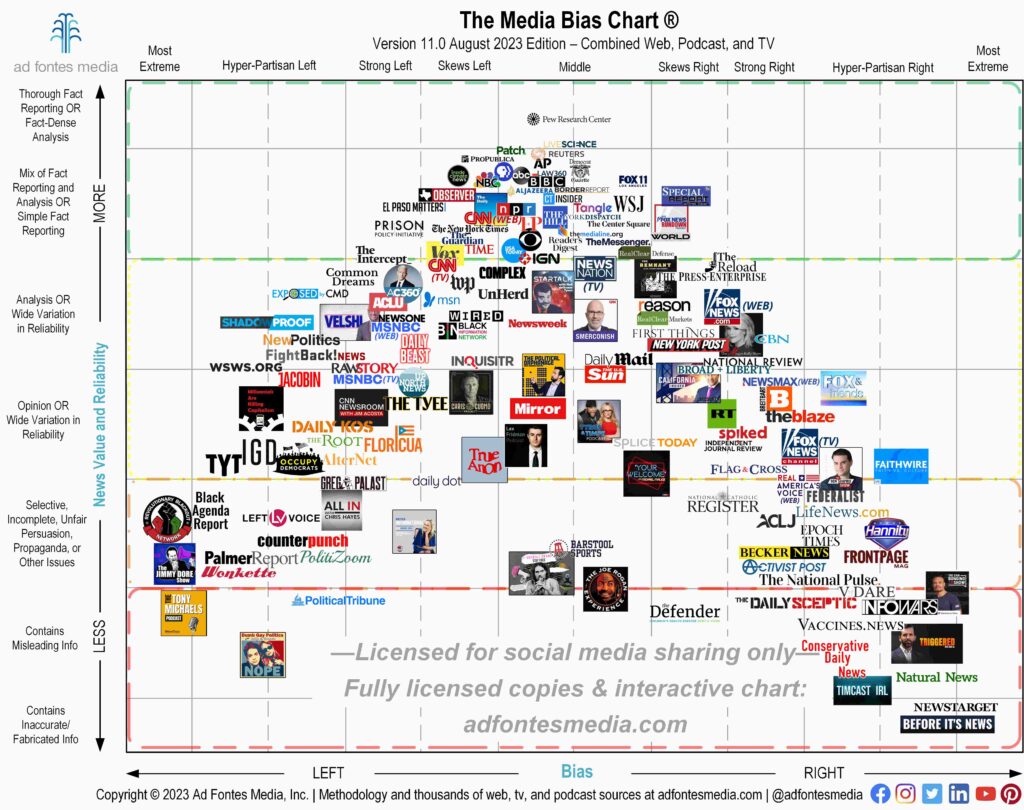
I second this. People can get very cynical about new sites, but there are multiple places that do analyses of the stories on many news sites. It's how I found news sources I have leaned on successfully.
Two sites I can recommend:
AdFontesMedia
Static chart: https://adfontesmedia.com/wp-c...
Interactive: https://adfontesmedia.com/inte...
Savings bonds would be a sliver of the bond market, and are not tradable.
I suspect the article is more about how the general public has more direct access to bonds now, and banks are barely the main investors nowadays.
Why should taxes necessarily be a linear function of income? I could just as easily argue everyone pays the same 'flat amount', $20k. Obviously we recognize this is unworkable.
Super-linear functions are likely the most sustainable long-term. Progressive tax brackets are just ways of making it easier to grasp.
Such a system was already proposed, called ReadyReturn. However, supporting such a system would violate the famous Norquist Pledge
VANEK SMITH: Grover Norquist is a famous anti-tax crusader. He heard about ReadyReturn and sprang into action.
NORQUIST: So it is a way to raise taxes, a way to send people a bill for more taxes than they owe. And they're unlikely to contest it. People don't fight the IRS.
VANEK SMITH: Norquist thought ReadyReturn is tantamount to a tax hike because once the government has taxpayers on autopilot, just sort of signing and sending, they'll start sneaking things in, like how cell phone companies sneak in little charges. And you look at them and sort of wonder about them. But in the end, you just pay because it's easier.
MAYYASI: And Norquist has this famous pledge. Republicans all across the country take it. And the pledge basically says I will not support any plan that raises taxes. And that was a problem.
VANEK SMITH: What happens if people break the pledge?
NORQUIST: When somebody breaks the pledge, their opponents in the next election tend to remind voters that they lied their way into office. And the press tends to focus on it.
MAYYASI: Norquist put out the word to California Republicans - if you back ReadyReturn, you have broken the pledge.
The Grover Norquist pledge also prevents Republicans from supporting easier taxes.
VANEK SMITH: Grover Norquist is a famous anti-tax crusader. He heard about ReadyReturn and sprang into action.
NORQUIST: So it is a way to raise taxes, a way to send people a bill for more taxes than they owe. And they're unlikely to contest it. People don't fight the IRS.
VANEK SMITH: Norquist thought ReadyReturn is tantamount to a tax hike because once the government has taxpayers on autopilot, just sort of signing and sending, they'll start sneaking things in, like how cell phone companies sneak in little charges. And you look at them and sort of wonder about them. But in the end, you just pay because it's easier.
MAYYASI: And Norquist has this famous pledge. Republicans all across the country take it. And the pledge basically says I will not support any plan that raises taxes. And that was a problem.
VANEK SMITH: What happens if people break the pledge?
NORQUIST: When somebody breaks the pledge, their opponents in the next election tend to remind voters that they lied their way into office. And the press tends to focus on it.
MAYYASI: Norquist put out the word to California Republicans - if you back ReadyReturn, you have broken the pledge.
Experienced players should always be helping newer players with their setup.
Great point about Seafarers. Fog Island is excellent for neutralizing map advantage.
Traders and Barbarians has an excellent mod, Barbarians Attack, which encourages players working together. Great for adding a human element that can also help mitigate experienced player advantages.
How are you accounting for the CS shareholders actually getting virtually wiped out? Small and large. CS management was definitely not happy with the buyout pricing.
What does "take ownership of the contact list" even mean? I don't think iOS or the Android API allows this.
Whatsapp is actually probably one of the best-behaved apps of all that I have on my system in terms of power consumption. Right now it has taken 0.2% of the battery running in the background without interaction, and I haven't even tightly restricted it.
Plenty of real journalism exists. Much if it is not "free", though -- you have to pay the journalists. Consider AP, The Economist, Reuters, and BBC. There are places that rigorously measure the originality of reporting. Note the AP, Reuters, and BBC at the top-middle (original, unbiased reporting).
Media Bias Chart 9.0: https://adfontesmedia.com/stat...
"I've finally learned what `upward compatible' means. It means we get to keep all our old mistakes." -- Dennie van Tassel