Forgot your password?
typodupeerror

Submission + - GarageJam 8.0.1 released -- Norwegians writes GNOME Music Recording Software (garagejam.org)

ole writes: GarageJam is the Free, Norwegian open-source music recording studio for GNOME, allowing musicians to compose, record, and share original music seamlessly on the Internet, while GarageJam Studio is a commercial music and audio recording app for the World Wide Web written by Aamot Innovation from Norway.

The latest release, GarageJam 8.0.1, is available in C and Python. It records audio immediately to Ogg Vorbis (.ogg) files in the current working directory and lets you edit metadata in .gjxml XML files from a GTK/GNOME wizard — all built on the Gingerblue Recording Studio API.

The latest IETF GarageJam XML draft is available at https://www.garagejam.org/rfc/... and the latest C and Python implementation is available from https://www.garagejam.org/src/... (C) and https://www.garagejam.org/src/... (Python).

Source available from https://github.uio.no/olekaa/g... at University of Oslo, Norway.

Submission + - GNOME Media 0.1.0 released (gnomeradio.org)

ole writes: GNOME Media puts internet radio and your photographs on one OpenStreetMap. It’s built from GNOME Radio 85.0.1 (https://www.gnomeradio.org/src/gnome-radio-85.0.1.tar.xz) and gPhoto 3.0.1 (https://www.gnomephoto.org/src/gphoto-3.0.1.tar.xz).

Click a station on the map to listen. Cities with several stations show a count and a menu.

Open a folder of pictures or import from a camera. Photos with a GPS position in their EXIF data appear on the map. Double-click a thumbnail to open it.

The search box filters the station list and the map together.

Download: https://www.gnomeradio.org/src...
SHA-256: 54a5e455b5aef3a7834673808630100de4520f00099c8f1d69000f5255f459bc

Requires GTK+ 3, libchamplain 0.12, clutter-gtk, GStreamer 1.14 and libgphoto2 2.5. Build with meson setup build && meson compile -C build.

First release: the core library (EXIF reader, station parser, place grouping) is unit-tested. The GTK window, the audio player and the Meson build have not been compiled yet, so expect fixes on the first real build. Bug reports are welcome.

Submission + - GNOME Voice Releases Voicegram Source for Android, iOS and Windows (gnomevoice.org)

ole writes: GNOME Voice, free software for recording short voice messages (“voicegrams”) and placing them on an OpenStreetMap map where they were recorded, has published source code for Voicegram on Android, iOS and Windows, alongside the GNOME desktop app gnome-voice 51.0, Voice Server 1.0.0 and the GTK 4 Voicegram 0.1.0 map app. All six programs speak the same format, so a recording made on one can be heard on the others, and all are released under the GPL v3 or later.

A voicegram is two files: an Ogg Vorbis recording and a small XML .voice descriptor naming the speaker, the location and the stream address. The new Voicegram Recording 1.0 Specification defines the format precisely, with a RELAX NG schema, a simple HTTP interface for servers, conformance rules, and privacy and security requirements, such as showing the position and name before anything is shared and rejecting descriptors with DOCTYPE declarations. The project grew out of Ole Kristian Aamot's 2025 NTNU bachelor’s thesis, Public Voice Communication.

Submission + - Skolelinux 13.6.0 released (aamot.io)

ole writes: Skolelinux 13.6.0 is now available. Built on Debian 13 “trixie”, Skolelinux (Debian Edu) is a complete, ready-to-use Free Software operating system for schools, classrooms and home computers.

With Skolelinux you can install and run Free Software on your computer: an office suite, web browser, educational programs and network services for an entire school, all set up out of the box.

What’s in this release

Based on the latest Debian 13 “trixie” point release
Updated packages with the latest security and bug fixes
Refreshed installation images

Get it

Website: https://www.aamot.io/software/...
Download (Debian “trixie” ISO): https://www.aamot.io/software/...
Source tree: https://www.aamot.io/software/...

Skolelinux is Free Software. Feedback, bug reports and contributions are welcome.

Submission + - GNU Photo 3.0.1 released, supports 2,500+ camera models via libgphoto2 2.5.34 (sourceforge.net)

ole writes: After 25 years, libgphoto2 2.5.34 now supports more than 2,500 camera models, and GPhoto 3.0.1 is built on it.

GPhoto 3.0.1 is now available for download:

    http://www.gnomephoto.org/src/...

SHA256: f76d347cd013062ee1fdfcc86f9dee4890e89854d95e975ac92a883bba2ca449

This is a stable release for the 3.0 series.

Changes since 3.0.0:

    * Fix segmentation fault

Note for testers: on GNOME desktops, gvfs may claim the camera before
GPhoto can access it. If GPhoto cannot open your camera, stop the gvfs
processes first:

    pkill gvfs

This matches gvfsd, gvfsd-fuse, gvfs-gphoto2-volume-monitor and the
other gvfs daemons. To stop only the main daemon:

    pkill -x gvfsd

To stop only the gphoto2 backend:

    pkill -f gvfs-gphoto2-volume-monitor
    pkill -f gvfsd-gphoto2

If a process does not exit, force it with:

    pkill -9 gvfs

The gvfs daemons are D-Bus activated and will respawn when another
application (e.g. Nautilus) needs them, so re-run the command if the
camera is claimed again. If a stale mount remains afterwards, unmount it
with:

    fusermount -u /run/user/$UID/gvfs

Please give it a try and report any problems on this list or on the bug tracker.

Thanks to everyone who contributed patches, testing and translations.

Downloads

        libgphoto2 2.5.34: https://sourceforge.net/projec...
        GPhoto 3.0.1: https://www.gnomephoto.org/gph...

More information

        GPhoto: http://www.gnomephoto.org/
        gPhoto: http://gphoto.org/

Best regards,
Ole Kristian Aamot
https://www.aamot.org/ole/ole....

Submission + - GNOME Radio 49.0 Released: Real-Time Freedom on the Airwaves (gnomeradio.org)

ole writes: GNOME Radio 49.0 has officially launched, bringing a powerful and privacy-respecting radio experience to GNU/Linux users on Fedora Core 42 and beyond.

Developed by Ole Aamot, GNOME Radio is a GTK-based radio application that combines freedom-focused software design with the simplicity of the GNOME desktop. Whether you're tuning in for news, music, or research, this release promises zero-buffered audio streaming, a refreshed UI, and improved station discovery via GeoClue2.

  What’s New in GNOME Radio 49.0?

        GTK4 Modernization: A fully updated user interface with better accessibility and integration into GNOME Shell environments.

        Zerobuffer Streaming Engine: Eliminates lag for near-instant audio, useful for live commentary and urgent broadcasts.

        Station Search Rewritten: Faster browsing, cleaner lists, and fewer UI hiccups when loading large radio databases.

        Geo-Aware Tuning: Uses your location (with permission) to suggest local radio stations — a major step for fieldwork and mobile users.

        Cross-Distro Compatibility: Runs on Debian 12, Ubuntu GNOME 24.04, and Fedora Core 40+ with minimal setup.

        “GNOME Radio is for journalists, researchers, and anyone who wants to listen without being listened to,” says developer Ole Aamot.

With source code on GitLab, the project invites developers and tinkerers to contribute — especially those interested in real-time media, GStreamer pipelines, and accessible audio UX.

  How to Install

git clone https://gitlab.stud.idi.ntnu.n...
cd radio ./configure --prefix=$HOME/.local
make
make install
$HOME/.local/bin/gnome-radio

No Snap, no telemetry, no fluff — just free software under the GNU GPLv3+.

As broadcast technologies become increasingly proprietary and centralized, GNOME Radio 49.0 offers a timely reminder: the airwaves still belong to everyone.

Homepage: olekaa.wordpress.com
License: GNU GPLv3+
Project Status: Actively maintained and ready for patches.

  Discussion:
Would you use a desktop radio app in 2025? Are decentralized and FOSS audio tools making a comeback, or is this just a nostalgic nod to the past? Let us know in the comments.

Submission + - GNOME Audio Locator 4.0.0 Released — Open-Source Geo-Tagged Audio Recordin (www.gnome.audio)

ole writes: GNOME Audio Locator 4.0.0 is now officially released — a major step forward in the evolution of free, open-source tools for geolocated audio recording under GNU/Linux. Built with journalists, archivists, researchers, and sound artists in mind, this version introduces real-time geotagging and support for standardized metadata export to public archives.

  What’s New in GNOME Audio Locator 4.0.0?

          Multiple Location Audio Recording (MLAR) support

          GEO-MLAR-2025 metadata for precise archival geolocation

          Real-time GPS positioning via GeoClue2

          Modern GTK4-based interface for GNOME environments

          Noark5-compatible XML export, ready for use in public sector archives

  Academic Roots

This release is based on ongoing academic work at NTNU:

          “Multiple Location Audio Recording og GEO-MLAR-2025: Spesifikasjon og Implementasjon i GNOME Audio Locator 2.0.0”
        by Ole Kristian Aamot, Aamot Research

  Project Resources

          Git: gitlab.stud.idi.ntnu.no/olekaam/gnome-audio-locator.git

          Website: gnome.audio

  How to Build and Install

git clone https://gitlab.stud.idi.ntnu.n...

cd gnome-audio-locator ./configure --prefix=$HOME/.local

make install

$HOME/.local/bin/gnome-audio-locator

  About the Project

GNOME Audio Locator is part of a broader initiative by Aamot Research to empower audio documentation through digital freedom and open standards. From documenting soundscapes and endangered dialects to archiving interviews and protest recordings — this tool is built for anyone working at the intersection of sound and society.

Patents

IBM's Teri-is-a-Girl-and-Terry-is-a-Boy Patent 277

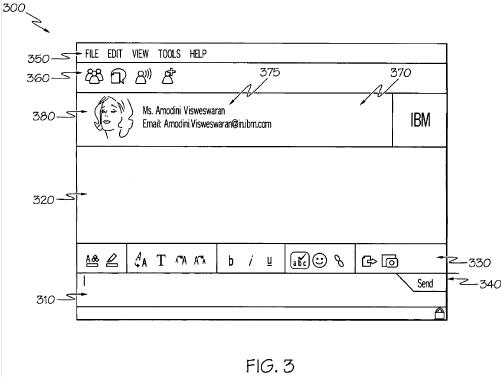
theodp writes "The USPTO has granted IBM a patent for utilizing naming conventions to assign gender-based avatars for instant messaging. A user named Teri, IBM explains, would be given a girl avatar, while a user named Terry would be provided with a boy avatar. The three IBM 'inventors' were stymied by users named Pat, who as a result will be assigned a 'generic, genderless human figure image as his or her avatar.' Way to honor that significant-technical-content patent pledge, Big Blue!"
GNU is Not Unix

Submission + - Suit Claims Diebold Voting Machines Violate GPL (informationweek.com)

An anonymous reader writes: Diebold Inc. and its subsidiary, Premier Election Solutions, is using Ghostscript in its electronic election systems even though Diebold and PES "have not been granted a license to modify, copy or distribute any of Artifex's copyrighted works," Artifex claims in court papers filed late last month in U.S. District Court for Northern California. See the gs-devel list for details.

Comment If you value Linux' freedom, please mention GNU (Score 1) 619


Even if you don't find yourself sympatizing with the Free Software Foundation, please mention the GNU project, http://www.gnu.org/ when you talk about the whole system, not just the Linux kernel, http://www.kernel.org/.

Linus Torvalds licensed the Linux kernel under the GNU General Public License (GPL). http://www.gnu.org/copyleft/gpl, and used free GNU tools, when he wrote it.

The C library (libc) is part of the GNU project.

Microsoft can't destroy our platform, because of the pragmatic idealistic development work, and the GPL license that is the essential effect and part of the GNU Project.

I value freedom, so I call the free system GNU/Linux, because it gives shared credit, to those whom credit is due.

Slashdot Top Deals

Imitation is the sincerest form of plagarism.

Working...