Please create an account to participate in the Slashdot moderation system


Forgot your password?
typodupeerror

Comment Re:No! Lasers don't blind pilots (Score 1) 546

Perhaps you should have the experience of being lased at night while flying. The effect is not momentary. Reflected sunlight is not coherent and happens in bright ambient lighting conditions, when your iris is already contracted, so the overall effect is vastly mitigated. Most laser illuminations happen at night, when the eye is wide open, and the desensitization of the eye happens before either the blink or iris reflex can limit exposure.

Lightning can do the same thing- it will completely overload your retina and makes seeing anything hard until your eye re-adapts.

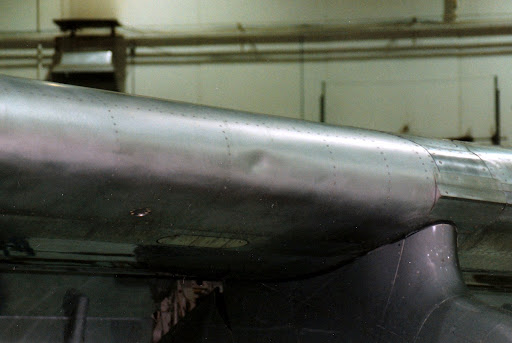
Compared to that, most bird strikes are non-events- you only find out when you find a dent or find a few feathers stuck in a seam.

Comment Re:No! Lasers don't blind pilots (Score 0) 546

Yes, well, we'll just make sure everyone who's going to break the law by pointing lasers at a plane will follow the rule that they do it from a safe distance. Frankly, I find your first sentence ignorant, insulting, and ludicrous Why would someone lie and risk losing their medical certification, ending their flying career?

Question about the 'safe distance'- is that oblique exposure or direct, focused exposure? Do they test on a real human eye? What was the ambient lighting conditions? Does Wicked Lasers have a vested interest in selling their product as safe? In short, I doubt the testing replicated or was designed to mimic the conditions experienced by pilots.The natural reaction when flying (and I speak from experience) is to look at an unexpected flash of light- it might be a strobe from another aircraft. If you're looking directly at the point from which the laser originated and a second beam hits you, your eye will be focusing that light on one point in your retina rather than being exposed through peripheral vision.

You use a convenient example of a distant exposure with plenty of distance for the beam to scatter and be attenuated. Note that the helicopter pilots in Naples were hit at low altitude (500 ft or less) and they were taken off flight duty. If you're not a pilot, you may not be aware of the nature of the FAA. There is no right to a pilot's license- the FAA is authorized by an act of Congress and all certifcates are considered privileges, not something you have a right to. The FAA can revoke your pilot or medical certification at will and there is very little recourse. On the medical side, the FAA can demand exhaustive medical testing prior to approving a medical certificate, and often those will be subject to limitations that effectively end a pilot's career.

All that being said, I agree that the primary danger is not permanent injury or disability but temporary blindness or disorientation. However, I speak from the perspective of someone who flies for a living. Electricians like to lock out power panels prior to working on wiring so that an accidental flip of a switch won't electrocute them; professional pilots also don't like to gamble with their livelihoods.

Comment Re:sad thing is ... (Score 1) 546

Second, I said "can very nearly land themselves", not "can land themselves". By that standard, it covers nearly every large plane that is still in the air.

The problem is, getting 99% of the way to landing is not the same as landing. UAL232 made it 99% of the way to a successful landing through the extrarodinary efforts of the crew, but it was still a tragic event.

Comment Re:Says the guy with no flying experience... (Score 1) 546

The watt however is a measure of power. ... This is basic physics.

Great. How many watts, exactly, does it take to bind all the rhodopsin in your rods to arrestin?

When talking pilots, physiology is what's important, not physics. Calculate all you want, but it's the effect on the perceptions of a living organism that are really important, not raw data about energy transfer.

Comment Re:No! Lasers don't blind pilots (Score 5, Informative) 546

No, they don't. There has not been a single case of a pilot blinded by lasers, nor is it likely there ever will be.

Strawman argument. The issue is not permanent blindness, but disorientation, temporary blindness, or injury. There are multiple reports of pilots being injured by lasers:

Burned retina: http://www.washingtontimes.com/news/2004/sep/28/20040928-111356-3924r/

Ruptured blood vessels: http://www.marconews.com/news/2011/jan/03/collier-sheriff-helicopter-pilots-injured-laser/?partner=yahoo_feeds

Unspecified possible injury: http://www.flightglobal.com/articles/2008/11/25/319357/pilot-injured-in-american-md-82-laser-incident.html

You might not be impressed because there's no blood, but an eye injury can be a career-ender for a pilot. Disorientation is the most common result of lasing incidents, with some cases of temporary blindness. Reduced vision, even temporarily, is a Big Deal when flying.

Comment Use the Force, Luke! (Score 1) 546

I still challenge that lost eyesight is the least of a pilot's worries, but this is the argument that is put forward. The pussies comment was a generalization based upon my opinion of a particular event in the news, because a flight crew came across as especially whiny and were threatening to sue the whole world because of this.

How do you think we read the instruments- by Braille? Instrument lighting has a rheostat so you can turn it down at night. I keep them dim so that it's easier to spot traffic- one bright light in the cockpit will drown out faint lights outside.

How about this: I'll put you on a dark road and break your headlamps: Now you only have your parking lights to see the road markings by; enough under normal circumstances if there are no other lights out there.

Now I'm going to shine a laser in your eyes. Don't worry, it's only a Class II, so it won't actually burn your retina, just overload your rods. Now you can't see. Please drive at 75mph. Don't want to? Oops, I put some epoxy under the accelerator pedal. ("This is glue. Strong stuff.")

This is what it's like when you get hit. You can't really see and you can't stop or slow down. You revert to basics and stare at the attitude indicator while blinking like mad, trying to see through the spots and ignore 'the leans'.

Before you opine about the tendencies of professional pilots, try flying five days (nights) a week for a few years. Oh, my credentials: Airline Transport Pilot and Multi-engine Instructor certificates, Beech 1900 type rating, 135 Check Airman, 4500+ hours total time, 1500+ night, 700+ instrument.

Comment Re:Only pilots who are pussies (Score 2) 546

How about me? I'm a commercial pilot at a 135 operator. I fly a 'large' aircraft (over 12500lbs) and operate single pilot. I have been lased from several miles away with a green laser and the effect was unnerving and painful. Yes, painful. When your pupils are dilated at night, it's much, much easier for lasers to deliver 'blinding' amounts of energy to your retina- that being enough to make it impossible to correctly interpret instrument indications or visual cues from outside the aircraft. I do not know the reason it caused the pain, but I assume it's that laser light delivers a lot more energy to the retina due to it's coherent nature. All I know is that my left eye hurt for hours afterward.

The real issue is not actual 'blinding' but the disorientation and distraction. Laser light hitting a cockpit tends to cause a stroboscopic effect- pits and surface imperfections in the window refract the light and bounce it all over the cockpit. The first sweep lit up the entire cockpit and the left window looked like a strobe was right outside. I instinctively glanced left and that's when the laser swept over the cockpit a second time, hitting my left eye before I could blink. My right eye was not hit directly, but I had to turn the cockpit lighting up to full to be able to read the AI and the HSI. The aircraft was not equipped with an autopilot, so simply sitting back and letting the plane maintain heading and altitude was not an option. I was lased in cruise flight, at about 10,000 feet, and estimate that the lasing came from five to seven miles away, so a slant range of at least six miles is not unreasonable. If this had happened at low altitude, on approach, the safety margins would have been greatly reduced. Having a second crewmember does no good if both are disoriented by refracted light.

Let me head you off at the pass before you trot out autoland or some imaginary BS. One, not all airports have the equipment. Two, not all planes have the equipment. Three, if the approach is not briefed, loaded, and being flown, you can't just switch modes and sit back. In visual conditions (when most lasing events occur), a lot of approaches are flown by hand. To even engage the autopilot on a precision approach would likely require a mode select change on the autopilot, which is an unusual task- it's not something you have a flow and checklist for, so it takes some extra consideration.

What if this happens at a critical time, say just before landing? At low altitude, the range is minimized, atmospheric interference is negligible, aiming is easier, and pilots are looking outside the cockpit. At 1000 feet and 135 knots, a standard 3 degree glideslope requires a descent rate of 715fpm. That's under a second and a half to impact. If you've got a TOGA mode, great. If not, you're gonna be busy. Did you ever wonder why aviation focuses on worst-case scenarios so much? It's because the consequences of failure are pretty damn high. You can't just pull over and pop the hood or call AAA.

So you can go and do all the trig you want, but until you've experienced the event and have to consider the risks and your obligations to maintaining saftey of flight, don't talk. Your math doesn't alter the physiological responses of the human body. Your math doesn't counteract spatial disorientation. I may only have boxes in the back, but I fly over some pretty densely packed urban areas, so there's a lot more at risk than my ass and your Cheesecurls of the Month package.

Slashdot Top Deals

In every hierarchy the cream rises until it sours. -- Dr. Laurence J. Peter

Working...