Comment Re:Suprised (Score 3, Informative) 25
I'm excited to give it a try, but honestly the existing solutions are so good that it will be tough to beat them.
is there some kind of monitoring system that can be installed, and portably carried that could detect such kind of devices in operation?
Well it depends on what we're looking for. If this was sound at frequencies outside the realm of human hearing we have two options:
1) Below 20 Hz
2) Above ~14 kHz (22 kHz for young children)
According to this table the sound level for continuous exposure ear damage would be ~85 dB SPL (at the ear). At those volume levels, option 1 would likely be 'felt' even if they could not be heard. I think that means we can reasonably surmise that it was option 2, high volume at high frequency.
When we're looking for high frequency signals, we have to remember our friend Nyquist. Therefore we need at least double the sampling rate in order to recover the signal.
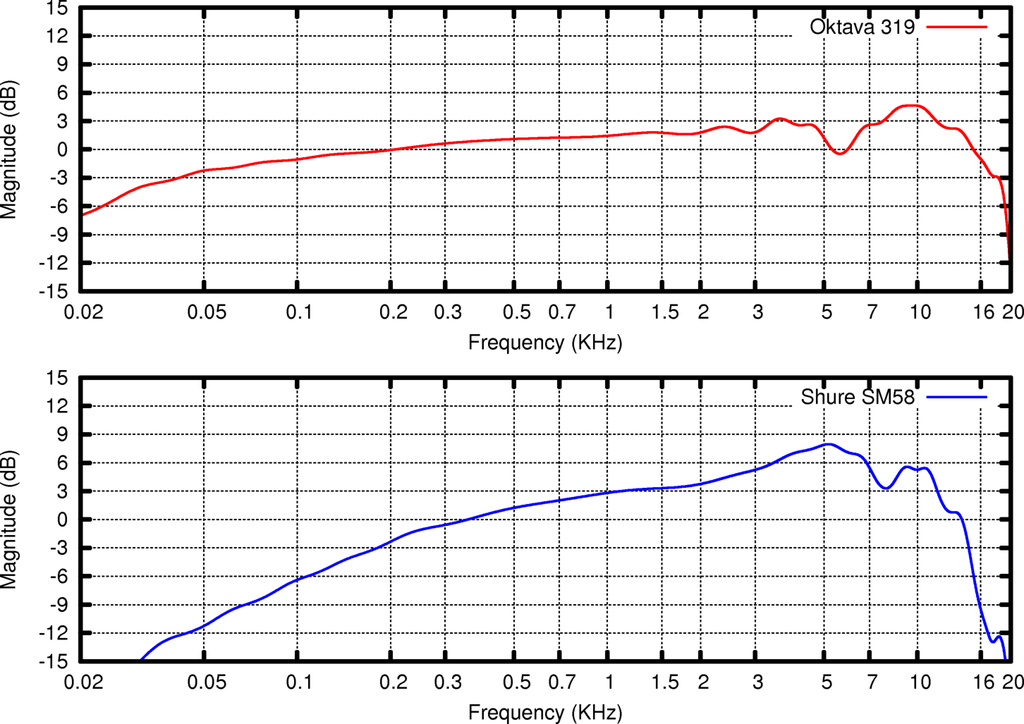
In the 'pro' audio world, there are a number of portable recorders with a sample rate at 192 kHz. For example. This would give a theoretical recordable frequency as high as 96 kHz. The problem with actually using a hand held device like this is that despite the fact that the sample rate is high enough to capture the signal, the microphones commonly used in the 'pro' audio world are designed for use in the band of human hearing. Their sensitivity at or above 20 kHz is generally very poor with a precipitous drop-off at 20 kHz.
That means we would need to find special purpose microphones. A quick look around yielded some microphones designed for wildlife that might work.
All of the above hardware is based on the assumption that we are looking for signals 96 kHz. If it is even higher, we would need even more specialized equipment to record/detect it.
If you store the data encrypted and something happens to you, the files are worthless to someone else, maybe a family member, who might enjoy/benefit from their availability. Have you put the encryption key in your will / living will, or already given it to people close to you so they will be able to access your stuff when you're gone or incapacitated? Or are the files only for your own eyes?
That's a very good point. I am currently young and arrogant so I have yet to create a will. There is a 'live' copy of my shared data which is accessible to the appropriate people, but they would be unable to access my backups. That means disasters that strike both myself and my live storage location are still a threat to that data.
I think having multiple encryption volumes on the drives might be the answer here. Potentially a 'personal' volume which only I know the key to, and a 'shared' volume which I share the key across will / lawyer / loved ones. To make that more useful, storing a clear-text list of who should know the shared key with the data seems like a reasonable precaution.
I think the next time I rotate through my archives I will implement that type of multi-volume solution.
You'd think they'd have just put polarized glass in the cockpit by now if it were that big of a deal. Oh wait... that's right, it's not that big of a deal.
If it were as simple as polarized glass they might actually go that route. Unfortunately for everyone, it is much more complicated than that. You need specific lenses to protect from specific wavelengths (of which there are many).
[...] hold a laser on a cockpit window for more than a tenth of a second. If a pilot is unable to land a plane after a flash of light that brief, we'd better start making lightening illegal because it's a hell of a lot brighter [...]
With high powered lasers (that are surprisingly easy to come by) a fraction of a second is all it takes to cause serious and often permanent eye injury.
Anyone have recommendations for learning math starting from, say, Algebra I or II level (high school) that will actually teach in a way that will be useful rather than taking a test? Stuff that will carry over into future classes as the proper building blocks, etc?
Khan Academy is quite good in my experience. You can pick and choose if you want or follow their 'knowledge map'.
As much as I like to blame Oracle, the state may have added serious requirements at the last minute that complicated everything. These articles doesn't say anything about it. Same seems to go for all the troubled exchanges - so what's the problem?
It's basically a waterfall design where you have a group of non-technical people (state and federal government) writing the requirements document. That seems like a recipe for disaster to me.
Er, Windows PCs don't come much cheaper than that. Is the complaint here "I need to buy a computer in order to develop software"?
No, the complaint here is "I need to buy another computer unrelated to the one for which I want to develop software". When developing for mobile devices you're cross-compiling anyway, so why shouldn't we be able to work in an environment we prefer (linux or windows)?
"Conversion, fastidious Goddess, loves blood better than brick, and feasts most subtly on the human will." -- Virginia Woolf, "Mrs. Dalloway"