Operating Systems

Linux 4.17 Released (betanews.com) 28

Mark Wycislik-Wilson, writing for BetaNews: In his weekly message to the Linux community on Sunday, Linus Torvalds announced the release of Linux 4.17. The release comes a couple of months after the first release candidate, and in his message Torvalds also talks about version 5.0 of the Linux kernel. Having previously said that Linux kernel v5.0 "should be meaningless," he said that this next major numerical milestone will come around "in the not too distance future." For now, though, it's version 4.17 -- or Merciless Moray, if you prefer -- that's of interest. Linux kernel 4.17 is not a major release, and Torvalds announced it without much fanfare. "So this last week was pretty calm, even if the pattern of most of the stuff coming in on a Friday made it feel less so as the weekend approached. And while I would have liked even less changes, I really didn't get the feeling that another week would help the release in any way, so here we are, with 4.17 released."
Microsoft

Microsoft Acquires GitHub For $7.5B (microsoft.com) 493

As rumored, Microsoft said Monday that it has acquired code repository website GitHub for a whopping sum of $7.5B in Microsoft stock. Microsoft Corporate Vice President Nat Friedman, founder of Xamarin and an open source veteran, will assume the role of GitHub CEO. GitHub's current CEO, Chris Wanstrath, will become a Microsoft technical fellow, reporting to Executive Vice President Scott Guthrie, to work on strategic software initiatives. From the blog post: "Microsoft is a developer-first company, and by joining forces with GitHub we strengthen our commitment to developer freedom, openness and innovation," said Satya Nadella, CEO, Microsoft. "We recognize the community responsibility we take on with this agreement and will do our best work to empower every developer to build, innovate and solve the world's most pressing challenges." Under the terms of the agreement, Microsoft will acquire GitHub for $7.5 billion in Microsoft stock. Subject to customary closing conditions and completion of regulatory review, the acquisition is expected to close by the end of the calendar year. GitHub will retain its developer-first ethos and will operate independently to provide an open platform for all developers in all industries. Developers will continue to be able to use the programming languages, tools and operating systems of their choice for their projects -- and will still be able to deploy their code to any operating system, any cloud and any device. The two companies, together, will "empower developers to achieve more at every stage of the development lifecycle, accelerate enterprise use of GitHub, and bring Microsoft's developer tools and services to new audiences," Microsoft said. A portion of the developer community has opposed the move, with some already leaving the platform for alternative services.

Update: In a conference call with reporters, Mr. Nadella said today the company is "all in with open source," and requested people to judge the company's commitment to the open source community with its actions in the recent past, today, and in the coming future. GitHub will remain open and independent, Mr. Nadella said.
Facebook

Facebook Gave Device Makers Deep Access To Data On Users and Friends (nytimes.com) 32

According to a report from The New York Times, Facebook formed data-sharing partnerships with Apple, Samsung, and dozens of other device makers, allowing them to access vast amounts of its users' personal information (Warning: source may be paywalled; alternative source). From the report: Facebook has reached data-sharing partnerships with at least 60 device makers -- including Apple, Amazon, BlackBerry, Microsoft and Samsung -- over the last decade, starting before Facebook apps were widely available on smartphones, company officials said. The deals allowed Facebook to expand its reach and let device makers offer customers popular features of the social network, such as messaging, "like" buttons and address books.

But the partnerships, whose scope has not previously been reported, raise concerns about the company's privacy protections and compliance with a 2011 consent decree with the Federal Trade Commission. Facebook allowed the device companies access to the data of users' friends without their explicit consent, even after declaring that it would no longer share such information with outsiders. Some device makers could retrieve personal information even from users' friends who believed they had barred any sharing, The New York Times found. Most of the partnerships remain in effect, though Facebook began winding them down in April.

Businesses

American Tech Giants Are Making Life Tough For Startups (economist.com) 142

An anonymous reader quotes a report from The Economist: Venture capitalists, such as Albert Wenger of Union Square Ventures, who was an early investor in Twitter, now talk of a "kill-zone" around the giants. Once a young firm enters, it can be extremely difficult to survive. Tech giants try to squash startups by copying them, or they pay to scoop them up early to eliminate a threat. The idea of a kill-zone may bring to mind Microsoft's long reign in the 1990s, as it embraced a strategy of "embrace, extend and extinguish" and tried to intimidate startups from entering its domain. But entrepreneurs' and venture capitalists' concerns are striking because for a long while afterwards, startups had free rein. [...] Venture capitalists are wary of backing startups in online search, social media, mobile and e-commerce. It has become harder for startups to secure a first financing round. According to Pitchbook, a research company, in 2017 the number of these rounds were down by around 22% from 2012 (see chart).

The wariness comes from seeing what happens to startups when they enter the kill-zone, either deliberately or accidentally. Snap is the most prominent example; after Snap rebuffed Facebook's attempts to buy the firm in 2013, for $3 billion, Facebook cloned many of its successful features and has put a damper on its growth. A less known example is Life on Air, which launched Meerkat, a live video-streaming app, in 2015. It was obliterated when Twitter acquired and promoted a competing app, Periscope. Life on Air shut Meerkat down and launched a different app, called Houseparty, which offered group video chats. This briefly gained prominence, but was then copied by Facebook, seizing users and attention away from the startup.
The Economist goes on to state three reasons why the kill-zone is likely to stay: "First, the giants have tons of data to identify emerging rivals faster than ever before. Recruiting is a second tool the giants will use to enforce their kill zones. A third reason that startups may struggle to break through is that there is no sign of a new platform emerging which could disrupt the incumbents, even more than a decade after the rise of mobile."
Businesses

Microsoft's Interest In Buying GitHub Draws Backlash From Developers 256

The supposed acquisition of popular code repository GitHub by Microsoft has drawn an unprecedented backlash from the developer community. Over the weekend, after Bloomberg reported that the two companies could make the announcement as soon as Monday, hundreds of developers took to forums and social media to express their disappointment, with many saying that they would be leaving the platform if the deal goes through.

So why so much outrage? In a conversation with Slashdot, software developer and student Sean said that he believes a deal of such capacity would be bad for the open source community. "They've shown time and time again that they can't be trusted," he said. Sean and many other believe that Microsoft would eventually start telemetry program on the code repository. "Aside from Microsoft not being trustworthy to the open source community, I'm sure they'll add tracking and possibly even ads to all the sites within GitHub. As well as possibly use it to push LinkedIn (which they own)," he said. Ryan Hoover, the founder of ProductHunt, wrote on Sunday, "Anecdotally, the developer community is very unapproving of this move. I'm curious how Microsoft manages this and how GitHub changes (or doesn't change)." Even as Microsoft has "embraced" the open source community in the recent years (under the leadership of Mr. Nadella), for many developers, it will take time -- if at all -- to forget the company's past closed-ecosystem approach. Just this weekend, a developer accused Microsoft of stealing his code.

A petition that seeks to "stop Microsoft from buying Github" had garnered support from more than 400 developers. Prominent developer Andre Staltz said, "If you're still optimistic about the Microsoft-GitHub acquisition, consider this: They didn't ask your opinion not even a single bit, even though it was primarily your commits, stars, and repositories which made GH become a valuable platform." More importantly, if the comments left on Slashdot, Reddit, and HackerNews, places that overwhelmingly count developers and other IT industry experts among their audience, are anything to go by, Microsoft better has a good plan on how it intends to operate GitHub after the buyout. Security reporter Catalin Cimpanu said, "LinkedIn has turned into a slow-loading junk after the Microsoft acquisition. I can only imagine what awaits GitHub." On his part, Mat Velloso, who is technical advisor to CTO at Microsoft, said, "I don't think people understand how many of us at Microsoft love GitHub to the bottom of our hearts. If anybody decided to mess with that community, there would be a riot to say the least."

Jacques Mattheij: Companies that are too big to fail and that lose money are a dangerous combination, people have warned about GitHub becoming as large as it did as problematic because it concentrates too much of the power to make or break the open source world in a single entity, moreso because there were valid questions about GitHubs financial viability. The model that GitHub has -- sell their services to closed source companies but provide the service for free for open source groups -- is only a good one if the closed source companies bring in enough funds to sustain the model. Some sort of solution should have been found -- preferably in collaboration with the community -- not an 'exit' to one of the biggest sharks in the tank. So, here is what is wrong with this deal and why anybody active in the open source community should be upset that Microsoft is going to be the steward of this large body of code. For starters, Microsoft has a very long history of abusing its position vis-a-vis open source and other companies. I'm sure you'll be able to tell I'm a cranky old guy by looking up the dates to some of these references, but 'new boss, same as the old boss' applies as far as I'm concerned. Yes, the new boss is a nicer guy but it's the same corporate entity. Update: It's official. Microsoft has acquired GitHub for a whopping sum of $7.5B.
Programming

Programmer Creates Bee Counter Using a Raspberry Pi 60

Programmer Mat Kelsey created a bee counter to see exactly how many bees are hanging out in his hives. "His system, which uses a Raspberry Pi and a machine learning algorithm that recognizes the number of individual bees entering a hive, is used to see bee trends over time and see just how the bees are faring," reports TechCrunch. From the report: The system looks at sets of pictures of the hive door taken every 10 seconds. It then extrapolates out the background, assesses the objects that have moved in the frame, and then counts the things that are likely to be bees. It's a fascinating problem to solve since the bees are constantly moving and because it can also ignore bees that are coming out of the hive. You can download the source on Github and check out his detailed blog post here. Given the need for bee protection as we enter an era of colony collapses, tools like this one are wildly important. Plus it's cool to see a Raspberry Pi do something so complex.
Power

Russian Scientists Upgrade Nuclear Battery Design To Increase Power Output (sciencealert.com) 150

schwit1 shares a report from ScienceAlert: A team of Russian researchers have put a new spin on technology that uses the beta decay of a radioactive element to create differences in voltage. The devices are made of stacks of isotope of nickel-63 sandwiched between a pair of special semiconducting diodes called a Schottky barrier. This barrier keeps a current headed one way, a feature often used to turn alternating currents into direct ones. Finding that the optimal thickness of each layer was just 2 micrometers, the researchers were able to maximize the voltage produced by every gram of isotope.

Nickel-63 has a half-life of just over 100 years, which in an optimized system like this adds up to 3,300 milliwatt-hours of energy per gram: ten times the specific energy of your typical electrochemical cell. It's a significant step up from previous nickel-63 betavoltaic devices, and while it isn't quite enough to power your smart phone, it does bring it into a realm of being useful for a wide variety of tasks.

Music

Dolby Looking To Monopolize Consumer Audio By Restricting Its Codec (audioholics.com) 158

Audiofan writes from a report via Audioholics, written by Gene DellaSala: Variety is said to be the spice of life. Why only eat cherry Starbursts when you can sample orange, watermelon, lemon, etc? The same applies to multi-channel surround sound upmixers. But the folks at Dolby apparently want you to eat only one flavor. Their flavor. Dolby recently issued a mandate to all of their Atmos licensee partners to restrict usage of third-party upmixers with any Dolby signals including 5.1/7.1 DD, DD+, TrueHD and Atmos. That means if you're running a DTS Soundbar, it won't process a Dolby signal, or no dice if you want to use the Auro-Matic Upmixer for a native Dolby signal. Is Dolby doing this to protect their IP or to monopolize consumer audio like they tried to do with their patented Atmos-enabled speaker? The copy of the mandate that was sent to all of Dolby's licensee partners has the following guidelines: Native Dolby Atmos content shall NOT be up-mixed, surround or height virtualized by any 3rd party competitor upmixer (ie. DTS or Auro-3D); Channel-Based DD/DD+, Dolby TrueHD 5.1 and 7.1 codecs shall not be height virtualized by any 3rd party upmixer (ie. DTS). (This implies height virtualization without height speakers. DTS has this capability but Auro-3D does not).

Audioholics notes the company will however "permit third party upmixing and/or surround virtualization of channel-based codecs that support Dolby Atmos rendering as long as the third party doesn't license their own upmixing technologies to third parties."

As for why Dolby is issuing this mandate to its licensees, it may come down to two reasons: control quality of content so that their upmixer is only used with their software; put an end to Auro-3D and strike a blow to DTS.
Transportation

Uber Facing Ban In Turkey After Erdogan Backs Taxis (sbs.com.au) 107

An anonymous reader quotes a report from SBS: Uber faces being banned in Turkey after President Recep Tayyip Erdogan said the ride-hailing app was "finished" on Saturday following an intense lobbying campaign from Istanbul taxi drivers. Erdogan's comments, in a late-night speech Friday in Istanbul, came after the government agreed new rules that are expected to severely complicate Uber's operations in Turkey. Drivers of Istanbul's yellow taxis have over the last months waged an intense campaign to have Uber banned, saying the company is eating into their business without having a proper legal basis for work. "This thing emerged called Uber or Muber or whatever," said Erdogan. "But this issue is now finished. It's over now. Our Prime Minister (Minali Yildirim) made the announcement. We have our system of taxis," he said.

"Yildirim's government last month issue a directive sharply hiking fines and threatened to blacklist companies whose vehicles illegally work as taxis," reports SBS.
XBox (Games)

Amazon Alexa and Google Assistant Are Coming To Xbox One (windowscentral.com) 29

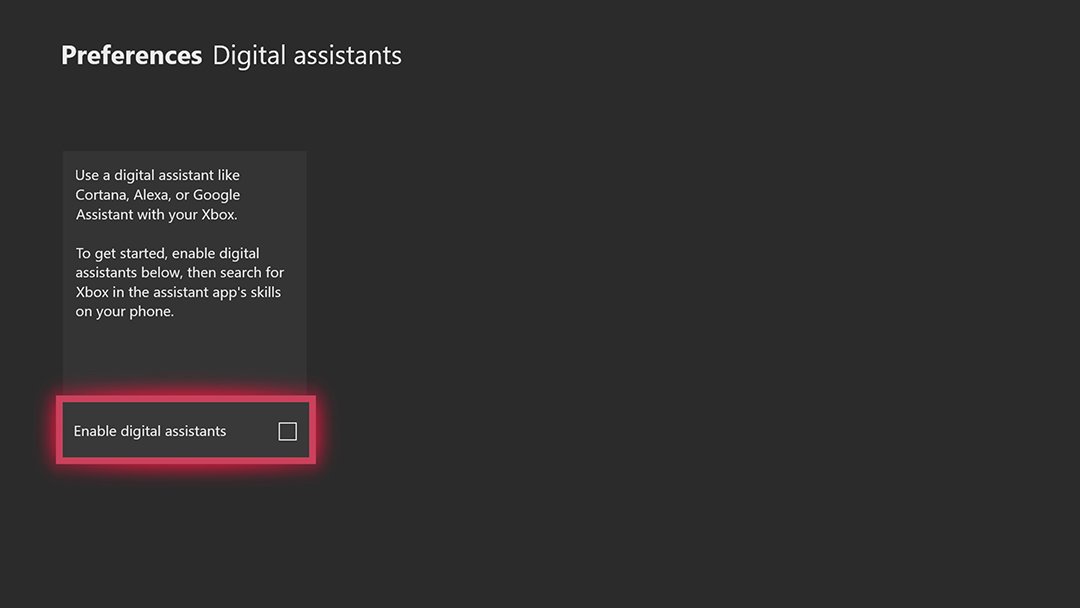
According to Windows Central, the Xbox One will soon support Amazon Alexa and Google Assistant, which should provide a decent alternative to Kinect for controlling your console via voice commands. Microsoft stopped manufacturing the Kinect in October of last year. From the report: This picture comes to us from a reliable source who is familiar with Amazon and Microsoft's efforts to link Alexa and Cortana. In upcoming Xbox One builds, the Kinect & Devices menu should have a new "Digital Assistants" section, which lets you enable Alexa, Google Assistant, and Cortana, for use on your Xbox One. It then directs you to install the Xbox skills app for those respective platforms to get connected. The full range of features for those assistants remains unknown, but it could bring back many of the voice-assisted features abandoned Kinect users are yearning for.
Cellphones

Smartphone Shipments Declined For the First Time In 2017 (theverge.com) 144

2017 was the first year that smartphone unit shipments didn't grow, according to a new Internet Trends report. "Shipments actually declined by 0.5 percent, as IDC noted in February," reports The Verge. "In 2016, shipments were lukewarm at 2 percent yearly growth, but this downturn is significant." From the report: Among smartphone shipments, Android and iOS have all but completely pushed out every other mobile operating system. And despite the growing price of today's top flagship devices, the average selling price of a smartphone has steadily fallen over the years. As more of the world now owns smartphones, growth has basically stalled. Similarly, internet user growth has only grown 7 percent in 2017, compared to 12 percent in 2016. More people are accessing the internet than ever, on an average of 5.9 hours a day. And they're browsing on mobile, indicating that they're just holding onto older models of phones instead of buying new ones.
Microsoft

Microsoft Is Said to Have Agreed to Acquire Coding Site GitHub (bloomberg.com) 323

Bloomberg reports:
Microsoft Corp. has agreed to acquire GitHub Inc., the code repository company popular with many software developers, and could announce the deal as soon as Monday, according to people familiar with the matter. GitHub preferred selling the company to going public and chose Microsoft partially because it was impressed by Chief Executive Officer Satya Nadella, said one of the people, who asked not to be identified discussing private information. Terms of the agreement weren't known on Sunday. GitHub was last valued at $2 billion in 2015.

GitHub is an essential tool for coders. Many corporations, including Microsoft and Alphabet Inc.'s Google, use GitHub to store their corporate code and to collaborate. It's also a social network of sorts for developers. While GitHub's losses have been significant -- it lost $66 million over three quarters in 2016 -- it had revenue of $98 million in nine months of that year.

On Friday, it was reported that Microsoft was in talks with GitHub about an acquisition. Now it seems like it's actually happening.

Update: Our sister site, SourceForge, has weighed in. Here is a tool that will import your GitHub project to SourceForge.
Update #2: Already, we are seeing plenty of backlash over this news. One user has started a petition to stop Microsoft from buying GitHub.
Update #3: It's official. Microsoft has acquired GitHub for a whopping sum of $7.5B.

Space

How Microbes Survive Clean Rooms and Contaminate Spacecraft (phys.org) 24

An anonymous reader quotes a report from Phys.Org: Rakesh Mogul, a Cal Poly Pomona professor of biological chemistry, was the lead author of an article in the journal Astrobiology that offers the first biochemical evidence explaining the reason the contamination persists. To figure out how the spacecraft microbiome survives in the cleanroom facilities, the research team analyzed several Acinetobacter strains that were originally isolated from the Mars Odyssey and Phoenix spacecraft facilities. They found that under very nutrient-restricted conditions, most of the tested strains grew on and biodegraded the cleaning agents used during spacecraft assembly. The work showed that cultures grew on ethyl alcohol as a sole carbon source while displaying reasonable tolerances towards oxidative stress. This is important since oxidative stress is associated with desiccating and high radiation environments similar to Mars. The tested strains were also able to biodegrade isopropyl alcohol and Kleenol 30, two other cleaning agents commonly used, with these products potentially serving as energy sources for the microbiome.
Microsoft

Microsoft Sticks With Controversial 'GVFS' Name Despite Backlash (medium.com) 203

New submitter DuroSoft writes: It has been over a year since Microsoft unveiled its open source GVFS (Git Virtual File System) project, designed to make terabyte-scale repositories, like it's own 270GB Windows source code, manageable using Git. The problem is that the GNOME project already has a virtual file system by the name of GVfs that has been in use for years, with hundreds of threads on Stack Overflow, etc. Yet Microsoft's GVFS has already surpassed GVfs in Google and is causing confusion. To make matters worse, Microsoft has officially refused to change the name, despite a large public backlash on GitHub and social media, and despite pull requests providing scripts that can change the name to anything Microsoft wants. Is this mere arrogance on Microsoft's part, laziness to do a quick Google search before using a name, or is it something more sinister?
AI

Meet Norman, the Psychopathic AI (bbc.com) 109

A team of researchers at the Massachusetts Institute of Technology created a psychopathic algorithm named Norman, as part of an experiment to see what training artificial intelligence on data from "the dark corners of the net" would do to its world view. Unlike most "normal" algorithms by AI, Norman does not have an optimistic view of the world. BBC reports: The software was shown images of people dying in gruesome circumstances, culled from a group on the website Reddit. Then the AI, which can interpret pictures and describe what it sees in text form, was shown inkblot drawings and asked what it saw in them. These abstract images are traditionally used by psychologists to help assess the state of a patient's mind, in particular whether they perceive the world in a negative or positive light. Norman's view was unremittingly bleak -- it saw dead bodies, blood and destruction in every image. Alongside Norman, another AI was trained on more normal images of cats, birds and people. It saw far more cheerful images in the same abstract blots.

The fact that Norman's responses were so much darker illustrates a harsh reality in the new world of machine learning, said Prof Iyad Rahwan, part of the three-person team from MIT's Media Lab which developed Norman. "Data matters more than the algorithm. "It highlights the idea that the data we use to train AI is reflected in the way the AI perceives the world and how it behaves."

Slashdot Top Deals