The Internet

In World First, Danish Court Rules Stream-Ripping Site Illegal 88

An anonymous reader shares a report: Convert2MP3 is a site that allows users to download audio from platforms including YouTube. Following legal action carried out by Rights Alliance on behalf of music industry group IFPI, Convert2MP3 has been declared unlawful by a Danish court which has now ordered ISPs to block it. It's the first time worldwide that a so-called stream-ripping site has been declared illegal.
Youtube

YouTube Is Fighting Conspiracy Theories With 'Authoritative' Context and Outside Links (theverge.com) 311

In an effort to reduce misinformation on YouTube, the video-sharing website will be adding "authoritative" context to search results about conspiracy-prone topics, as well as putting $25 million toward news outlets producing videos. YouTube made the announcement today as part of a new step in its Google News Initiative, a journalism-focused program that aims to help publishers earn revenue and combat fake news. The Verge reports: This update includes new features for breaking news updates and long-standing conspiracy theories. YouTube is implementing a change it announced in March, annotating conspiracy-related pages with text from "trusted sources like Wikipedia and Encyclopedia Britannica." And in the hours after a major news event, YouTube will supplement search results with links to news articles, reasoning that rigorous outlets often publish text before producing video.

YouTube is also funding a number of partnerships. It's establishing a working group that will provide input on how it handles news, and it's providing money for "sustainable" video operations across 20 markets across the world, in addition to expanding an internal support team for publishers.

China

China Internet Report 2018 (abacusnews.com) 78

At Rise Conference in Hong Kong on Tuesday, Abacus executive producer Ravi Hiranand, South China Morning Post technology editor Chua Kong Ho, and 500 Startups partner Edith Yeung presented China Internet Report 2018, highlighting the big names and wider trends shaping China's technology. The takeaway: China has nearly 3 times the number of internet users as the United States, and the gap will only widen: China has 772 million internet users, vastly more than the 292 million in the US. And there's still plenty of room to grow -- internet penetration is only at 55% in China, while in the US, it's 89%.

Beijing is China's unicorn capital: Some of China's biggest tech giants may have started in Shenzhen, but Beijing leads the way with 31 tech unicorns. (Shenzhen has just 11!)

China's internet giants are doing everything: From streaming video to self-driving cars, the big three (Baidu, Alibaba and Tencent) are present in almost every tech sector, either by investing in startups or by building it themselves.

Government policy continue to actively shape China's tech industry.

China's online shopping giants are going offline.

China loves short videos.

WeChat's mini-programs are cementing its place as China's virtual mobile operating system: Mini-programs, which are no bigger than 10 megabytes and running in the WeChat app are gaining ground -- WeChat now hosts 1 million mini-apps, and the number of people who use them daily is expected to reach 400 million.

China lags behind the US in AI, but the government wants to catch up -- soon.

China is making smart speakers but Chinese users aren't buying them: There are now over 100 smart speaker developers in the country (including all of the tech giants), but demand isn't there yet -- in 2017, only 350,000 smart speakers were sold in China, compared to 25 million in the US.

China is now the world's biggest gaming market: It accounts for more than aquarter of the world's total gaming revenue (the US is close behind in second). And it's dominated by two players: Tencent and NetEase, who jointly have over 60% market share in China.

Bitcoin

Half of ICOs Die Within Four Months After Token Sales Finalized (bloomberg.com) 101

An anonymous reader quotes a report from Bloomberg: About 56 percent of crypto startups that raise money through token sales die within four months of their initial coin offerings. That's the finding of a Boston College study that analyzed the intensity of tweets from the startups' Twitter accounts to infer signs of life. The researchers determined that only 44.2 percent of startups survive after 120 days from the end of their ICOs. The researchers, Hugo Benedetti and Leonard Kostovetsky, examined 2,390 ICOs that were completed before May.

Acquiring coins in an ICO and selling them on the first day is the safest investment strategy, Kostovetsky said in a phone interview. But many individual investors can't participate in ICOs, so this option isn't open to them. Still, all investors should probably sell their coins within the first six months, the study found. "What we find is that once you go beyond three months, at most six months, they don't outperform other cryptocurrencies," Kostovetsky said. "The strongest return is actually in the first month."
The Boston College study also found that ICO returns are declining, as startups have becoming savvier about pricing coin offerings and more people have jumped into ICO investing. According to Bloomberg, "Returns of people who sold tokens on the first day they were listed on an exchange have been declining by four percentage points a month, Kostovetsky said."
Earth

Scientists Discover the World's Oldest Colors (phys.org) 79

1.1 billion-year-old bright pink pigments extracted from rocks deep beneath the Sahara desert in Africa are the oldest colors on record. They were discovered by scientists from The Australian National University (ANU), with support from Geoscience Australia and researchers in the United States and Japan. Phys.Org reports: Dr. Nur Gueneli from ANU said the pigments taken from marine black shales of the Taoudeni Basin in Mauritania, West Africa, were more than half a billion years older than previous pigment discoveries. The fossils range from blood red to deep purple in their concentrated form, and bright pink when diluted. The researchers crushed the billion-year-old rocks to powder, before extracting and analyzing molecules of ancient organisms from them.

"The precise analysis of the ancient pigments confirmed that tiny cyanobacteria dominated the base of the food chain in the oceans a billion years ago, which helps to explain why animals did not exist at the time," Dr. Gueneli said. Senior lead researcher Associate Professor Jochen Brocks from ANU said that the emergence of large, active organisms was likely to have been restrained by a limited supply of larger food particles, such as algae. "Algae, although still microscopic, are a thousand times larger in volume than cyanobacteria, and are a much richer food source," said.
The study has been published in the journal PNAS.
Earth

Nitrogen Is In Liquid Metal Form Inside Earth's Core (eurekalert.org) 70

hackingbear writes: A team of scientists from China, the U.S., and U.K. successfully turned nitrogen, the dominant gas in Earth's atmosphere, into a metallic fluid by subjecting it to the extreme pressure and temperature conditions found deep inside the Earth and other planets. Their findings have been published in the journal Nature Communications .

"Our findings could inform the efforts to create forms of energetic nitrogen polymers as well as superconducting, metallic states of a sister diatomic molecule, hydrogen or H2, which could revolutionize the energy sector if reliably synthesized," according to team member Nicholas Holtgrewe. The project was funded by by the (U.S.) National Science Foundation, the (U.S.) Army Research Office, the National Natural Science Foundation of China, the Chinese Academy of Science, the British Council Researcher Links Program, and other sources.
According to EurekAlert, "The researchers found that the temperature at which nitrogen transitions from insulating to metallic decreases as the pressure increases -- starting at about 1,180,000 times normal atmospheric pressure (120 gigapascals) and 2,720 degrees Celsius (3,000 kelvin)." "This means that, theoretically, nitrogen would remain in its diatomic state in the Earth's mantle but would disassociate into a fluid metal in or just above the core, which potentially has implications for our understanding of the planet's deep nitrogen cycle," said team member Sergey Lobanov.
Facebook

How Fracking Companies Use Facebook Surveillance To Ban Protest (vice.com) 141

An anonymous reader quotes a report from Motherboard: Facebook is being used by oil and gas companies to clamp-down on protest. Three companies are currently seeking injunctions against protesters: British chemical giant INEOS, which has the largest number of shale gas drilling licenses in the UK; and small UK outfits UK Oil and Gas (UKOG), and Europa Oil and Gas. Among the thousands of pages of documents submitted to British courts by these companies are hundreds of Facebook and Twitter posts from anti-fracking protesters and campaign groups, uncovered by Motherboard in partnership with investigative journalists at DeSmog UK. They show how fracking companies are using social media surveillance carried out by a private firm to strengthen their cases in court by discrediting activists using personal information to justify banning their protests.

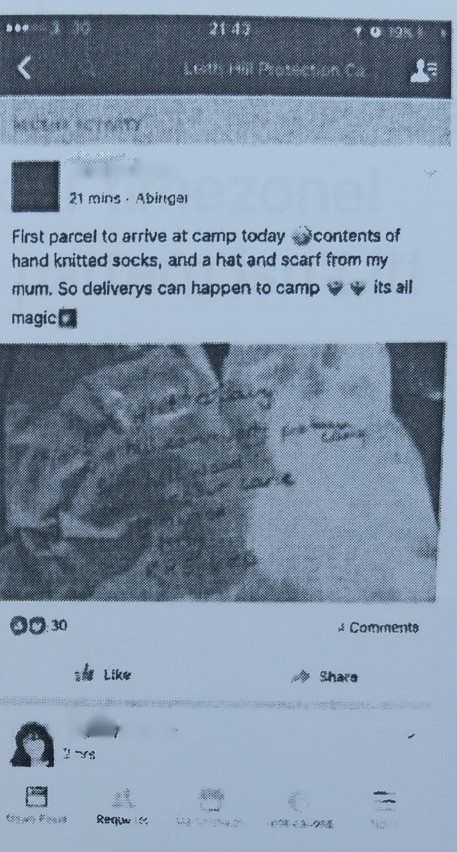
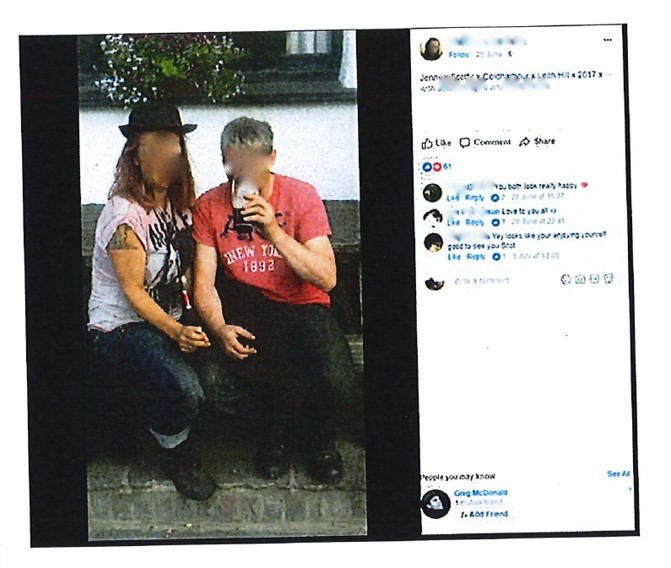
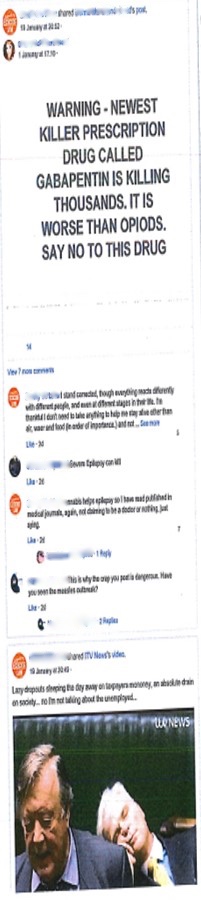
Included in the evidence supplied by the oil and gas companies to the courts are many personal or seemingly irrelevant campaigner posts. Some are from conversations on Facebook groups dedicated to particular protests or camps, while others have been captured from individuals' own profile pages. For instance, a picture of a mother with her baby at a protest was submitted as part of the Europa Oil and Gas case. Another screenshot of a post in the Europa bundle shows a hand-written note from one of the protesters' mothers accompanying a care package with hand-knitted socks that was sent to an anti-fracking camp. One post included in the UKOG hearing bundle shows two protesters sharing a pint in the sun -- not at a protest camp, nor shared on any of the campaign pages' Facebook groups. A screenshot from INEOS's hearing bundle shows posts from a protester to his own Facebook wall regarding completely unrelated issues such as prescription drugs, and a generic moan about his manager.

Power

UK Wants An Electric-Vehicle Charger In Every New Home (thedrive.com) 254

A new government proposal included in Road to Zero, a report on climate-change related policies, would require all new homes to be fitted with electric car charging points. It follows a commitment made last year by the UK to end sales of new gasoline and diesel cars by 2040. The Drive reports: "It is our intention that all new homes, where appropriate, should have a charge point available," a government statement said. "We plan to consult as soon as possible on introducing a requirement for charge point infrastructure for new dwellings in England."

To help achieve that goal, the U.K. will reportedly establish a 400-million-pound ($531 million) fund for companies that manufacture and install charging stations. The government is also reportedly looking at integrating charging stations with newly-installed streetlights, as well as wireless-charging technology. A new Automated and Electric Vehicles bill will also give the government power to mandate installation of charging infrastructure at highway service stations.

Windows

New Microsoft Surface Hardware Is Arriving Tomorrow (techcrunch.com) 73

Microsoft is teasing a new Surface device announcement for tomorrow. The company tweeted out the leading question "Where will Surface go next?" along with an image of the full lineup -- the Pro, Laptop, Book 2 and swiveling all-in-one Studio. Each computer in the image displays 6:00 on Tuesday, July 10. TechCrunch reports: The big news will probably drop tomorrow, most likely in the A.M. So, what's on deck for the Surface line? Given that all of the key players are present and accounted for here, an entirely new entry seems like a pretty reasonable guess. Rumors of a new, low-end device have been making the rounds for a few months now. Back in May, talk surfaced of a new, low-cost entry, aimed at competing more directly with the iPad. That certainly makes sense from a Portfolio standpoint. Other rumors include the loss of the proprietary Surface connector, in favor of USB-C and "rounded edges." UPDATE: Microsoft jumped the gun and announced "the newest member of the Surface Family," the Surface Go. It starts at $399 and features a 10-inch display, integrated kickstand, and Windows 10. It is available starting July 10th and will ship in August.
Transportation

Uber Adds Electric Scooters To Its App (cnet.com) 33

Uber is planning to partner with the bike-sharing company Lime to start renting scooters through its app. The announcement was made in Lime's new $335 million funding round. CNET reports: Uber didn't disclose how much it's investing in Lime, but Lime said it's "sizable." With Uber and Lime as strategic partners, the scooters will be co-branded and available in the Uber app. Uber launched a similar partnership with Jump bicycles in January and eventually acquired the dockless bike rental in April.

Scooters have become a controversial topic as they take over more and more cities across the U.S. As regulators hurry to write laws around the new form of transportation, lots of people say they love being able to scoot block-to-block around congested cities. Other residents complain that riders don't follow the laws of the road and endanger pedestrians by riding on sidewalks and leaving the scooters wherever they feel like it -- blocking parking spots, bike racks and wheelchair accesses.
Here's what Uber's head of new modalities, Rachel Holt, had to say about the partnership: "Our investment and partnership in Lime is another step towards our vision of becoming a one stop shop for all your transportation needs. Lime already has an expansive footprint, and we're excited to incorporate their scooters into the Uber app so consumers have another fast, affordable option to get around their city, especially to and from public transit."
IOS

Apple Releases iOS 11.4.1, Blocks Passcode Cracking Tools Used By Police (theverge.com) 129

An anonymous reader quotes a report from The Verge: Apple today released iOS 11.4.1, and while most of us are already looking ahead to all the new stuff coming in iOS 12, this small update contains an important new security feature: USB Restricted Mode. Apple has added protections against the USB devices being used by law enforcement and private companies that connect over Lightning to crack an iPhone's passcode and evade Apple's usual encryption safeguards.

If you go to Settings and check under Face ID (or Touch ID) & Passcode, you'll see a new toggle for USB Accessories. By default, the switch is off. This means that once your iPhone or iPad has been locked for over an hour straight, iOS will no longer allow USB accessories to connect to the device -- shutting out cracking tools like GrayKey as a result. If you've got accessories that you want to continue working after your iPhone has been sitting locked for awhile, you can toggle the option on to remove the hour limit. Apple's wording is a bit confusing. You should leave the toggle disabled if you want your iPhone to be most secure.

AT&T

AT&T Wants To Overhaul HBO, Says It Isn't Profitable Enough (arstechnica.com) 290

AT&T recently acquired HBO, as part of the Time Warner acquisition, "and it is already considering an overhaul that would see HBO produce more video that can compete for the attention of smartphone users," reports Ars Technica. "AT&T wants to boost revenue both in advertising and subscriptions, even if that means upending HBO's longtime strategy of producing a relatively small number of high-quality shows."

At a recent corporate town hall meeting, John Stankey, the longtime AT&T executive and new head of Warner Media, laid out the challenges and opportunities he saw for the network to around 150 employees. He said, in part: "It's going to be a tough year. It's going to be a lot of work to alter and change direction a little bit. [...] You will work very hard, and this next year will -- my wife hates it when I say this -- feel like childbirth... You'll look back on it and be very fond of it, but it's not going to feel great while you're in the middle of it. She says, 'What do you know about this?' I just observe, 'Honey. We love our kids.'" Audio of the meeting was obtained by The New York Times. From the report: The talk, held at HBO headquarters in New York City, was hosted by HBO CEO Richard Plepler. HBO must compete with smartphones for people's attention, Stankey said in this exchange with Plepler: "We need hours a day," Mr. Stankey said, referring to the time viewers spend watching HBO programs. "It's not hours a week, and it's not hours a month. We need hours a day. You are competing with devices that sit in people's hands that capture their attention every 15 minutes." Continuing the theme, he added: "I want more hours of engagement. Why are more hours of engagement important? Because you get more data and information about a customer that then allows you to do things like monetize through alternate models of advertising as well as subscriptions, which I think is very important to play in tomorrow's world."
Cellphones

Samsung Opens World's Largest Phone Factory In India (bloomberg.com) 48

According to Bloomberg, Samsung opened the world's largest mobile phone factory today in Noida, a satellite city of the Indian capital Delhi. The factory will reportedly "double Samsung's Noida unit capacity for mobile phones to 120 million units a year from 68 million units a year." From the report: "The opportunity is just massive," said Faisal Kawoosa, who heads new initiatives at researcher CMR Pvt. "Such a large facility will help Samsung cater to the huge demand in a country of 1.3 billion people where there are only 425 million smartphone users. The Samsung factory will make everything from low-end smartphones that cost under $100 to its flagship S9 model, according to the company. Earlier this year, China's Xiaomi displaced Samsung from the No. 1 smartphone spot in the country, breaking its long-held dominance.
Japan

Nissan Workers In Japan Falsified Emissions Tests, Review Says (nytimes.com) 88

An anonymous reader quotes a report from The New York Times: Nissan Motor has become the latest Japanese automaker to admit to falsifying product-quality data (Warning: source may be paywalled; alternative source), dealing a further blow to Japan Inc.'s reputation for dependable quality. An internal review of emissions and fuel economy tests at Nissan's production plants in Japan showed that company inspectors used "altered measurement values" on emissions inspection reports, the company said in a statement on Monday. The tests also "deviated from the prescribed testing environment," it said.

The review found that all models complied with Japanese safety and emissions standards, it said. The exception was the Nissan GT-R, a two-door sports car, which the company produces too few of to comprehensively review its record, said Nick Maxfield, a Nissan spokesman, in an email. The company said the falsification problems ultimately did not affect fuel-economy findings. Nissan said that it had already started investigating the falsifications and that it had retained a Japanese law firm, Nishimura & Asahi, to lead the effort. The investigation is likely to take one month, Mr. Maxfield said. "Nissan understands and regrets the concern and inconvenience caused to stakeholders," the company said in a statement.

Security

Hackers Steal Personal Information of 21 Million Timehop Users (fortune.com) 25

21 million users of Timehop, an app that reminds people about their social media posts on that day, are at risk after hackers breached the company servers on July 4. From a report: The company, in a blog post, says the security breach not only resulted in personal data (including names, addresses and, for some accounts, phone numbers) being stolen, but the hackers were also able to secure tokens allowing them to view people's posts on Facebook, Twitter, Instagram, and Foursquare. Timehop says it quickly deactivated the tokens, which would have shut down access to the accounts. No private/direct messages, financial data, or social media content was affected, the company stressed. Attackers were apparently able to access the system's cloud servers because the company had not turned on multi-factor authentication. Timehop says the system was compromised for roughly two hours.

Slashdot Top Deals