Earth

The Arctic Is in Dire Straits, 20 Years of Reporting Show 57

A new Arctic Report Card recap shows how the Arctic has transformed in just 20 years, warming about twice as fast as the global average and losing most of its oldest sea ice. It's also triggering cascading impacts from "Atlantification" to permafrost-driven "rusting rivers" and more destructive storms. Scientific American reports: The first Arctic Report Card was released by the National Oceanic and Atmospheric Administration in 2006. Since then the region has warmed twice as fast as the global average. About 95 percent of the oldest, thickest sea ice is gone -- "the sliver that remains is collected in an area north of Greenland. Even the central Arctic Ocean is becoming warmer and saltier, causing more ice melt and changing how much heat is released into the atmosphere in a way that affects weather patterns around the world. Those are just some of the stark changes 20 years have wrought. The findings were highlighted in the 2025 Arctic Report Card, released on Tuesday.

The Arctic Ocean is undergoing what scientists are calling "Atlantification" -- a process where warm, salty water from the Atlantic flows north, changing how waters of different temperatures and densities are layered in the Arctic, disrupting ecosystems and altering how heat moves from the water to the air. [...] The Arctic is simply becoming wetter, with more precipitation falling as rain instead of snow. June snow cover over the entire Arctic is half of what it was 60 years ago, the report found. Permafrost also continues to thaw, releasing once trapped carbon into the atmosphere and disgorging iron and other elements that have turned rivers and streams orange. These "rusting rivers," found in more than 200 watersheds, are more acidic than normal and have elevated levels of toxic metals that endanger local ecosystems. And as the permafrost thaws, the tundra of the Arctic biome is shrinking, and the boreal forest biome is creeping northward, disrupting ecosystems.
Transportation

EU Moves To Ease 2035 Ban On Internal Combustion Cars (apnews.com) 152

The EU is moving to soften its planned 2035 ban on internal combustion cars by allowing a small share of low-emission engines. "The less stringent limit would leave room for automakers to continue selling some plug-in hybrids, which have both electric and internal combustion engines and can use the combustion engine to recharge the battery without the need to find a charging station," reports the Associated Press. From the report: The proposal from the EU's executive commission would change provisions of 2023 legislation requiring average emissions in new cars to equal zero, or a 100% reduction from 2021 levels. The new proposal would require a 90% emissions reduction. That means in practical terms that most cars would be battery-only but would leave room for some cars with internal combustion engines.

Automakers would have to compensate for the added emissions by using European steel produced by methods that emit less carbon, and through use of climate neutral e-fuels made from renewable electricity and captured carbon dioxide and biofuels made from plants. EU officials say changing the limit will not affect progress toward making the 27-country bloc's economy climate neutral by 2050. That means producing only as much carbon dioxide as can be absorbed by forests and oceans or by abatement methods such as storing it underground. CO2 is the primary greenhouse gas blamed by scientists for climate change.

Education

The Entry-Level Hiring Process Is Breaking Down (theatlantic.com) 113

The traditional signals that employers used to evaluate entry-level job candidates -- college GPAs, cover letters, and interview performance -- have lost much of their value as grade inflation and widespread AI use render these metrics nearly meaningless, writes The Atlantic.

The recent-graduate unemployment rate now sits slightly higher than the overall workforce's, a reversal from historical norms where new college graduates were more likely to be employed than the average worker. Job postings on Handshake, a career-services platform for students and recent graduates, have fallen by more than 16 percent in the past year. At Harvard, 60% of undergraduate grades are now A's, up from fewer than a quarter two decades ago. Seven years ago, 70% of new graduates' resumes were screened by GPA; that figure has dropped to 40%.

Two working papers examining Freelancer.com found that cover-letter quality once strongly predicted who would get hired and how well they would perform -- until ChatGPT became available. "We basically find the collapse of this entire signaling mechanism," researcher Jesse Silbert said. The average number of applications per open job has increased by 26% in the past year. Students at UC Berkeley are now applying to 150 internships just to land one or two interviews.
Earth

Why Floods Threaten One of the Driest Places in the World (washingtonpost.com) 35

One of the most water-scarce regions on Earth is now experiencing a dramatic atmospheric shift that's pushing moisture onto Oman's northern coast at rates more than 1.5 times the global average, according to a Washington Post investigation of global atmospheric data [non-paywalled source]. The change has turned extreme rainfall into a recurrent source of catastrophe across the Arabian Peninsula. In the 126 years between 1881 and 2007, just six hurricane-strength storms hit Oman or came within 60 miles of the country. At least four more have made landfall in the past 15 years alone.

Research from Sultan Qaboos University analyzing 8,000 storms across 69 rainfall stations found that half of all rain in Oman falls within the first 90 minutes of a 24-hour storm. These intense bursts quickly overwhelm the desert's ability to absorb water and send flash floods racing through wadis -- normally dry riverbeds where many communities are built. In response, Dubai is constructing an $8 billion underground stormwater network spanning more than 120 miles. Oman has agreements to build 58 new dams and is studying 14 major wadis that funnel to its al-Batinah coastline.
Power

Electricity Is Now Holding Back Growth Across the Global Economy (bloomberg.com) 75

Grid constraints that were once a hallmark of developing economies are now plaguing the world's richest nations, and new research from Bloomberg Economics finds that rising electricity system stress is directly hurting investment. The analysis examined all G20 countries and found that a one-standard-deviation increase in grid stress relative to a country's historical average lowers the investment share of GDP by around 0.33 percentage points -- a 1.5% to 2% hit to capital outlays.

The Netherlands is a case in point: 12,000 businesses are waiting for grid connections, congestion issues are expected to persist for a decade despite $9.4 billion in annual investments, and the country is already consuming as much electricity as was projected for 2030. ASML, the chip equipment maker whose fortunes can sway the Dutch economy, has no guarantee it will secure power for a new campus planned to employ 20,000 people.

Data centers are particularly affected. Google canceled plans near Berlin, a Frankfurt facility cannot expand until 2033, Microsoft has shifted investments from Ireland and the UK to the Nordics, and a Digital Realty Trust data center in Santa Clara that was applied for in 2019 may sit empty for years.
Education

The Immediate Post-College Transition and its Role in Socioeconomic Earnings Gaps 33

A new study of roughly 80,000 bachelor's degree recipients from a large urban public college system finds that characteristics of a graduate's first job can explain nearly two-thirds of the otherwise-unexplained earnings gap between students from low-income and high-income families five years after graduation.

The research [PDF], published as an NBER working paper by economists at Columbia University, tracked graduates from 2010 to 2017 using administrative education data linked to state unemployment insurance records. Low-income students -- defined as those receiving Pell grants throughout their undergraduate enrollment -- earned about 12% less than their high-income peers at the five-year mark. A substantial gap of roughly $4,900 persisted even after the researchers controlled for GPA, college attended, major, and other pre-graduation characteristics. That residual gap fell to about $1,700 once first-job variables entered the equation.

Graduates from lower-income families tended to start at employers paying lower average wages and were less likely to have their first job secured before graduation. Just 34% of low-income graduates continued at a pre-graduation employer compared to 40% of their higher-income peers. The firms employing low-income graduates paid average wages that were 18% lower than those employing high-income graduates. The researchers say that while the study cannot establish causation, the patterns suggest that supporting low-income students during their transition from college to the labor market may be a fruitful area for policy intervention.
Security

AI Hackers Are Coming Dangerously Close to Beating Humans (msn.com) 30

Stanford researchers spent much of the past year building an AI bot called Artemis that scans networks for software vulnerabilities, and when they pitted it against ten professional penetration testers on the university's own engineering network, the bot outperformed nine of them. The experiment offers a window into how rapidly AI hacking tools have improved after years of underwhelming performance.

"We thought it would probably be below average," said Justin Lin, a Stanford cybersecurity researcher. Artemis found bugs at a fraction of human cost -- just under $60 per hour compared to the $2,000 to $2,500 per day that professional pen testers typically charge. But its performance wasn't flawless. About 18% of its bug reports were false positives, and it completely missed an obvious vulnerability on a webpage that most human testers caught. In one case, Artemis found a bug on an outdated page that didn't render in standard browsers; it used a command-line tool called Curl instead of Chrome or Firefox.

Dan Boneh, a Stanford computer science professor who advised the researchers, noted that vast amounts of software shipped without being vetted by LLMs could now be at risk. "We're in this moment of time where many actors can increase their productivity to find bugs at an extreme scale," said Jacob Klein, head of threat intelligence at Anthropic.
Earth

2025 Will Be World's Second or Third-Hottest Year on Record, EU Scientists Say (reuters.com) 43

This year is set to be the world's second or third-warmest on record, potentially surpassed only by 2024'S record-breaking heat, the European Union's Copernicus Climate Change Service (C3S) said on Tuesday. From a report: The data is the latest from C3S following last month's COP30 climate summit, where governments failed to agree to substantial new measures to reduce greenhouse gas emissions, reflecting strained geopolitics as the U.S. rolls back its efforts, and some countries seek to weaken CO2-cutting measures.

This year will also likely round out the first three-year period in which the average global temperature exceeded 1.5 degrees Celsius (2.7 degrees Fahrenheit) above the 1850-1900 pre-industrial period, when humans began burning fossil fuels on an industrial scale, C3S said in a monthly bulletin. "These milestones are not abstract -- they reflect the accelerating pace of climate change," said Samantha Burgess, strategic lead for climate at C3S.

EU

Meta Pledge To Use Less Personal Data For Ads Gets EU Nod, Avoids Daily Fines (reuters.com) 17

An anonymous reader quotes a report from Reuters: Meta's proposal to use less personal data for targeted advertising in its pay-or-consent model that will be rolled out next month won the approval of EU antitrust regulators on Monday, signaling the company will not face daily fines after all. [...] The U.S. tech giant has been locked in discussions with the European Commission after getting hit with a $233 million fine in April for breaching the Digital Markets Act aimed at reining in the power of Big Tech. The violation covered Facebook and Instagram in the period from November 2023 to November 2024, after which Meta tweaked its pay-or-consent model to use less personal data for targeted advertising.

The EU executive has been examining the changes to see if they comply with the DMA, with Meta risking daily fines of as much as 5% of its average daily worldwide turnover if found to be still in breach of the law. The tweaks are in wording, design and transparency to remind users of the two options. Meta did not plan on any substantial changes to its November proposal despite the risk of EU fines, people with direct knowledge of the matter had told Reuters. The Commission, which acts as the EU competition enforcer, acknowledged Meta's November proposal, saying that it will monitor the new ad model and seek feedback, with no more talk of periodic fines. "Meta will give users the effective choice between consenting to share all their data and seeing fully personalized advertising, and opting to share less personal data for an experience with more limited personalized advertising," the Commission said in a statement.

IT

Why Meetings Can Harm Employee Well-Being (phys.org) 72

Phys.org republishes this article from The Conversation: On average, managers spend 23 hours a week in meetings. Much of what happens in them is considered to be of low value, or even entirely counterproductive. The paradox is that bad meetings generate even more meetings... in an attempt to repair the damage caused by previous ones...

A 2015 handbook laid the groundwork for the nascent field of "Meeting Science". Among other things, the research revealed that the real issue may not be the number of meetings, but rather how they are designed, the lack of clarity about their purpose, and the inequalities they (often unconsciously) reinforce... Faced with what we call meeting madness, the solution is not to eliminate meetings altogether, but to design them better. It begins with a simple but often forgotten question: why are we meeting...?

The goal should not be to have fewer meetings, but better ones. Meetings that respect everyone's time and energy. Meetings that give a voice to all. Meetings that build connection.

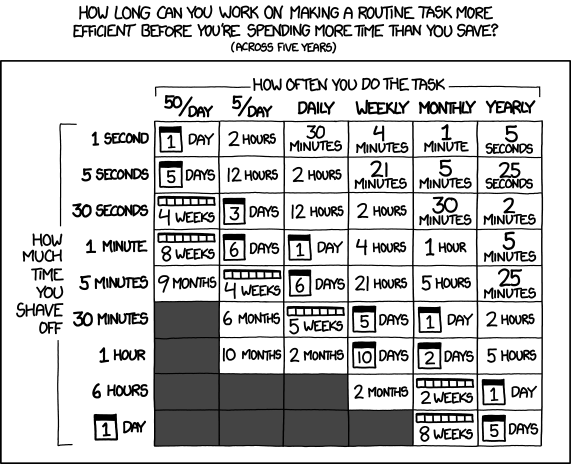
Slashdot reader ShimoNoSeki shares an obligatory XKCD comic...
Cellphones

The AI Boom Could Increase Prices for Phones and Tablets Next Year (cnn.com) 45

CNN's prediction for 2026? "Any device that uses memory, from phones to tablets and smartwatches, could get pricier." But will it be a little or a lot?

The article cites an analysis from multinational strategy/management consulting firm McKinsey & Company which found America's data center demand could continue growing by 20 to 25 percent per year" through 2030. "That's prompted memory manufacturers like Micron and Samsung to shift their focus to data centers, which use a different type of memory, meaning fewer resources for consumer products. (Jaejune Kim, executive VP for memory at Samsung, said in October that their third quarter saw strong demand for memory for AI and data centers, and that they expected the supply shortage for mobile and PC memory to "intensify further.") Memory prices are rising for consumer products because major manufacturers are instead ramping up production for AI data centers as artificial intelligence companies boom. "It's pretty much brutal and crunched across the board," said Yang Wang, a senior analyst at Counterpoint Research.

The International Data Corporation, a global market research firm, reported earlier this week that the smartphone market is expected to decline by 0.9% in 2026 in part because of memory shortages. Memory prices are expected to surge by 30% in the fourth quarter of 2025 and may climb an additional 20% early next year, Counterpoint Research said last month... TrendForce, a research firm that follows the semiconductor industry, estimates memory price hikes have made smartphones 8% to 10% more expensive to produce in 2025 (higher production costs don't always translate into higher consumer prices for a variety of reasons).

Some smartphones could cost more as soon as early next year, said Nabila Popal, a senior research director for the International Data Corporation. Cheap Android phones may see the biggest impact, since less expensive products usually have thinner margins. "It's going to be almost impossible for them to not raise prices" of cheaper Android phones, said Popal. Companies may also postpone phone launches to focus on expensive models that may be more profitable. The average selling price for smartphones is expected to climb to $465 in 2026, compared to $457 in 2025, according to Popal, putting the smartphone market at a record high value of $578.9 billion.

But the pendulum is expected to swing back in the other direction late next year as the supply chain adjusts, according to Popal and Wang, potentially bringing prices back down or at least capping increases.

Transportation

White House Rolls Back Fuel Economy Standards (caranddriver.com) 254

Longtime Slashdot reader sinij shares a report from Car and Driver: [T]he Trump administration announced less stringent Corporate Average Fuel Economy (CAFE) standards in an effort to bring down the price of new vehicles. The administration says that rules put in place by the Biden administration broke the law by going beyond the requirements mandated by Congress when the CAFE program was started. The new regulations will require automakers to meet an average fuel-economy figure of 34.5 mpg across 2031-model-year vehicles, instead of the 50.4 mpg that would have been required under the previous regulations. sinij comments: "This is a much-needed move as they also recently closed a number of loopholes, such as the assumed fuel-savings credit for engine start-stop technology, that made it more difficult to meet these goals. More so, a recent string of engine and transmission failures from multiple manufacturers shows that meeting fleet standards came at a very significant cost of reduced reliability."
Crime

'Crime Rings Enlist Hackers To Hijack Trucks' (msn.com) 41

It's "a complex mix of internet access and physical execution," says the chief informance security officer at Cequence Security.

Long-time Slashdot reader schwit1 summarizes this article from The Wall Street Journal: By breaking into carriers' online systems, cyber-powered criminals are making off with truckloads of electronics, beverages and other goods

In the most recent tactics identified by cybersecurity firm Proofpoint, hackers posed as freight middlemen, posting fake loads to the boards. They slipped links with malicious software into email exchanges with bidders such as trucking companies. By clicking on the links, trucking companies unwittingly downloaded remote-access software that lets the hackers take control of their online systems.

Once inside, the hackers used the truckers' accounts to bid on real shipments, such as electronics and energy drinks, said Selena Larson, a threat researcher at Proofpoint. "They know the business," she said. "It's a very convincing full-scale identity takeover."

"The goods are likely sold to retailers or to consumers in online marketplaces," the article explains. (Though according to Proofpoint "In some cases, products are shipped overseas and sold in local markets, where proceeds are used to fund paramilitaries and global terrorists.")

"The average value of cargo thefts is increasing as organized crime groups become more discerning, preferring high-value targets such as enterprise servers and cryptocurrency mining hardware, according to risk-assessment firm Verisk CargoNet."
Businesses

AI Helps Drive Record $11.8B in Black Friday Online Spending (reuters.com) 52

Earlier this month MasterCard noted that even Walmart now allows its customers to make purchases through ChatGPT. And after polling more than 4,000 consumers in the U.S., Canada, U.K., and UAE, they found "more than four in 10 consumers already use AI tools to help them shop, including 61% of Gen Z and 57% of millennials." Many (50% of Gen Z and 49% of millennials) say they'd even let AI handle all their gift-buying if it meant avoiding stress. Younger shoppers trust AI's taste, with 51% of Gen Z and 55% of millennials relying on it to deliver unique and thoughtful recommendations (sometimes even more than they trust themselves). The most popular uses include getting personalized product recommendations, confirming the best deal before purchasing, and summarizing thousands of reviews instantly. The bottom line: Shoppers are embracing AI as their new personal assistant — one that knows their budget, style, and patience level...

If the 2025 holiday shopper could be summed up in one word, it's intentional. They're planning earlier, spending wiser and using technology to make every dollar and every gift count.

The first figures are now in for the traditional "Black Friday" shopping day after Thanksgiving, and U.S. shoppers "spent a record $11.8 billion online," reports Reuters, "up 9.1% from 2024 on the year's biggest shopping day, according to Adobe Analytics, which tracks 1 trillion visits that shoppers make to online retail websites..."

And sure enough, this year shoppers were helped by AI: AI-powered shopping tools helped drive a surge in U.S. online spending on Black Friday, as shoppers bypassed crowded stores and turned to chatbots to compare prices and secure discounts amid concerns about tariff-driven price hikes... The AI-driven traffic to U.S. retail sites soared 805% compared to last year, Adobe said, when artificial intelligence tools such as Walmart's Sparky or Amazon's Rufus had not yet been launched. "Consumers are using new tools to get to what they need faster," said Suzy Davidkhanian, an analyst at eMarketer. "Gift giving can be stressful, and LLMs (large language models) make the discovery process feel quicker and more guided..." Globally, AI and agents influenced $14.2 billion in online sales on Black Friday, of which $3 billion came from the U.S. alone, according to software firm Salesforce.
There's another reason shoppers turned to AI. 2025's Black Friday arrived "amid tighter budgets, unemployment nearing a four-year high, U.S. consumer confidence sagging to a seven-month low and price tags that have shoppers watching every dollar," according to the article: Discount rates also remained flat when compared to 2024, with AI helping shoppers discover the best deals, and an increase in the price tags made deeper discounts difficult for retailers... Order volumes fell 1% as average selling prices rose 7%. Consumers also purchased fewer items at checkout, with units per transaction falling 2% on a year-over-year basis, Salesforce said.

The spending surge sets the stage for an even bigger Cyber Monday, projected to drive $14.2 billion in sales, up 6.3% on a year-over-year basis and the largest online shopping day of the year, Adobe said. Electronics are expected to see the deepest discounts on Cyber Monday, reaching 30% off list prices, along with strong deals on apparel and computers, Adobe said.

Earth

The Mysterious Black Fungus From Chernobyl That May Eat Radiation (bbc.com) 47

Black fungus found growing inside Chernobyl's destroyed reactor may be feeding on radiation, and researchers have tested samples of the same species aboard the International Space Station to explore whether it could eventually shield astronauts from cosmic rays. Ukrainian scientist Nelli Zhdanova first discovered the melanin-rich mould colonizing the walls and ceilings of the exploded reactor building during a May 1997 survey. Her research indicated that the fungal hyphae were actually growing toward sources of ionizing radiation rather than merely tolerating it.

In 2007, nuclear scientist Ekaterina Dadachova at the Albert Einstein College of Medicine found that melanised fungi grew 10% faster when exposed to radioactive caesium compared to control samples, leading her to propose "radiosynthesis" -- a process where organisms convert radiation into metabolic energy. The same strain, Cladosporium sphaerospermum, traveled to the ISS in December 2018 and grew an average of 1.21 times faster over 26 days compared to Earth-based controls. Nils Averesch, a biochemist at the University of Florida and co-author of that study, remains cautious about attributing the growth boost to radiation harvesting since zero gravity could also be responsible.
Education

Major AI Conference Flooded With Peer Reviews Written Fully By AI (nature.com) 34

An analysis of submissions to next year's International Conference on Learning Representations has found that roughly one in five peer reviews were fully generated by AI, a discovery that came after researchers including Carnegie Mellon's Graham Neubig grew suspicious of feedback on their manuscripts that seemed unusually verbose and requested non-standard statistical analyses.

Neubig posted on X offering a reward for anyone who could scan the conference's submissions for AI-generated text, and Max Spero, CEO of detection tool developer Pangram Labs, responded the next day. Pangram screened all 19,490 studies and 75,800 peer reviews submitted to ICLR 2026, finding that 21% of reviews were fully AI-generated and more than half showed signs of AI use. The conference had permitted AI tools for polishing text but prohibited falsified content. Each reviewer was assigned five papers to review in two weeks on average -- a load that senior programme chair Bharath Hariharan described as "much higher than what has been done in the past."
United Kingdom

UK To Tax Electric Cars by the Mile Starting 2028 (bbc.com) 195

The UK government will levy a pay-per-mile tax on electric and plug-in hybrid vehicles starting April 2028, UK's finance minister Rachel Reeves announced, a measure designed to offset some of the fuel duty revenue that will disappear as drivers shift away from petrol and diesel cars. Electric vehicles will be charged 3 pence per mile and plug-in hybrids 1.5 pence per mile, payable annually alongside car tax. An average driver covering 8,000 miles a year would pay around $320, roughly half what a petrol or diesel driver pays in fuel duty.

The Office for Budget Responsibility expects the tax to generate $1.45 billion in its first year and $2.51 billion by 2030-31, offsetting about a quarter of the revenue losses projected from the EV transition by 2050. The Society of Motor Manufacturers and Traders warned the new charge would "suppress demand" and make sales targets harder to achieve. New Zealand and Iceland have already introduced road pricing for EVs; demand dropped in the former but held steady in the latter.
United Kingdom

Britain Plots Atomic Reboot As Datacenter Demand Surges (theregister.com) 54

The UK is seeking to fast-track new atomic development to meet soaring energy demands driven by AI and electrification. According to a new report published by the government's Nuclear Regulatory Taskforce, excessive regulation has made Britain the most expensive place in the world to build nuclear projects. The report is calling for a sweeping overhaul to accelerate reactor construction -- everything from "streamlining regulation" to relaxing environmental and safety constraints. The Register reports: The document outlines 47 recommendations for the government, which come under five general areas: providing clearer leadership and direction for the nuclear sector; simplifying the regulatory approval process for atomic projects; reducing risk aversion; addressing incentives to delay progress; and working with the nuclear sector to speed delivery and boost innovation. Among the recommendations is that a Commission for Nuclear Regulation should be established, becoming a "unified decision maker" across all other regulators, planners, and approval bodies. The report also talks of reforming environmental and planning regimes to speed approvals, echoing the government's earlier decisions to streamline the planning process to make it easier for datacenter projects to get built.

It recommends amending the cost cap for judicial reviews and limiting legal challenges to Nationally Strategic Infrastructure Projects (NSIPs), while indemnifying nuclear developers against any damages they might incur as a result of proceeding with their project while a judicial review is still being decided. Another recommendation that may be cause for concern is that the government should modify the Habitats Regulations to reduce costs. These are rules created to protect the most important and vulnerable natural sites and wildlife species across the UK. The report also states that radiation limits for workers are overly conservative and well below what could be appropriately considered "broadly acceptable," claiming that they are many times less than what the average person in the UK normally receives in a year.

Businesses

Americans Are Holding Onto Devices Longer Than Ever (cnbc.com) 166

An anonymous reader shares a report: The average American now holds onto their smartphone for 29 months, according to a recent survey by Reviews.org, and that cycle is getting longer. The average was around 22 months in 2016.

[...] Research released by the Federal Reserve last month concludes that each additional year companies delay upgrading equipment results in a productivity decline of about one-third of a percent, with investment patterns accounting for approximately 55% of productivity gaps between advanced economies.

The good news: businesses in the U.S. are generally quicker to reinvest in replacing aging equipment. The Federal Reserve report shows that if European productivity had matched U.S. investment patterns starting in 2000, the productivity gap between the U.S and European economic heavyweights would have been reduced by 29 percent for the U.K., 35 percent for France, and 101% for Germany.

United States

Could High-Speed Trains Shorten US Travel Times While Reducing Emissions? (cnn.com) 222

With some animated graphics, CNN "reimagined" what three of America's busiest air and road travel routes would look like with high-speed trains, for "a glimpse into a faster, more connected future." The journey from New York City to Chicago could take just over six hours by high-speed train at an average speed of 160 mph, cutting travel time by more than 13 hours compared with the current Amtrak route... The journey from San Francisco to Los Angeles could be completed in under three hours by high-speed train... The journey from Atlanta to Orlando could be completed in under three hours by high-speed train that reaches 160 mph, cutting travel time by over half compared with driving...

While high-speed rail remains a fantasy in the United States, it is already hugely successful across the globe. Passengers take 3 billion trips annually on more than 40,000 miles of modern high-speed railway across the globe, according to the International Union of Railways. China is home to the world's largest high-speed rail network. The 809-mile train journey from Beijing to Shanghai takes just four and a half hours... In Europe, France's Train a Grand Vitesse (TGV) is recognized as a pioneer of high-speed rail technology. Spain soon followed France's success and now hosts Europe's most extensive high-speed rail network...

[T]rain travel contributes relatively less pollution of every type, said Jacob Mason of the Institute for Transportation and Development Policy, from burning less gasoline to making less noise than cars and taking up less space than freeways. The reduction in greenhouse gas emissions is staggering: Per kilometer traveled, the average car or a short-haul flight each emit more than 30 times the CO2 equivalent than Eurostar high-speed trains, according to data from the UK government.

Slashdot Top Deals