Communications

5G Not Enough? Telecom Companies Look to 5.5G (wsj.com) 64

5G technology has brought faster connections, better gadgets -- and a measure of disappointment from people with expectations of something closer to world-changing technology. But just wait, mobile companies are saying: The next upgrade will gin up enthusiasm for advances still to come. From a report: This next iteration of 5G, which the mobile companies are calling "5G Advanced" or "5.5G," is expected to be rolled out by around 2025. For consumers, the upgrades may bring faster connection speeds -- something that many parts of the world need. But everyday users may not see many more applications than that, say experts and industry officials. The real advance is that the technology will finally help facilitate more of the far-fetched business applications that 5G initially promised, like self-driving cars, autonomous drones and self-operating factories.

The forthcoming upgrades underscore a reality for many 5G users so far: Beyond faster connection speeds, it hasn't made a huge difference in their day-to-day lives. 5.5G may not either. With 5.5G, "for you or me using their phone, you won't necessarily notice a huge difference," says Patrick Filkins, a research manager at International Data Corp. who tracks the internet-of-things and telecommunications-infrastructure markets.

AI

Frozen Driverless Cars are Delaying San Francisco's Buses (wired.com) 188

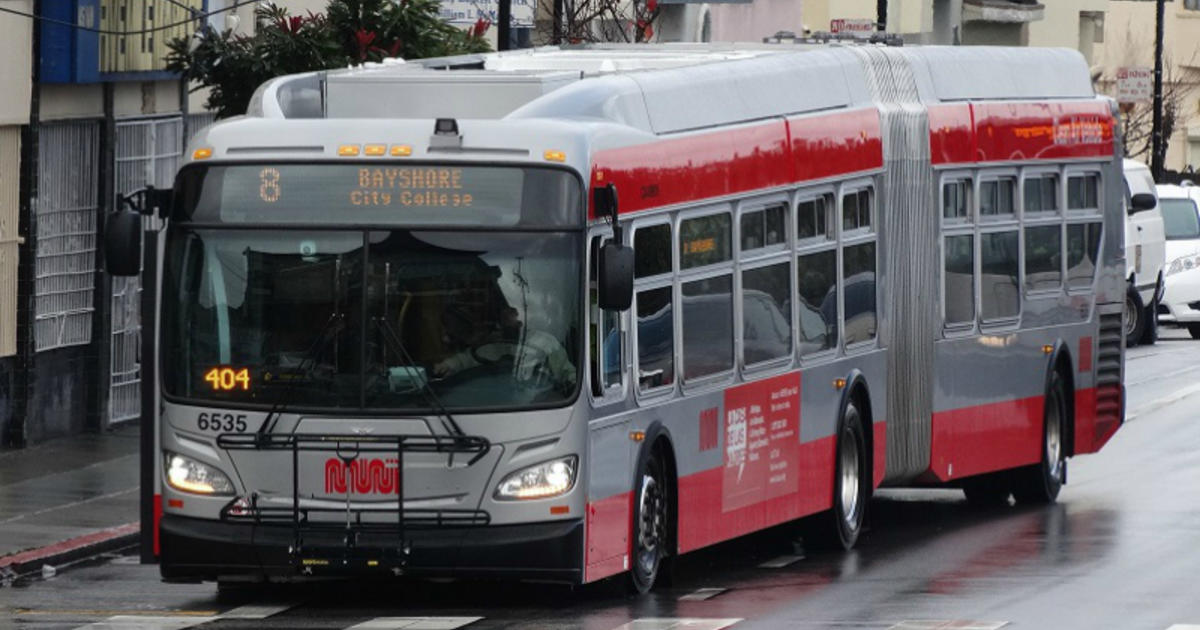
There's a new problem with driverless test vehicles. Wired obtain records from San Francisco's public transit agency for about six months showing that driverless cars testing on city streets "resulted in at least 83 minutes of direct delays" for the city's "Muni" buses. And "that data likely doesn't reflect the true scale of the problem," Wired argues, since "a single delay can slow other lines, worsening the blow."

Some examples from the article: - On January 22, a Cruise at a green light wouldn't budge, preventing a San Francisco light-rail train from moving for nearly 16 minutes. As the train driver headed out to investigate, a passenger said, "Nobody in there, huh?" Over a span of 10 minutes, the driver chatted with passengers, checked with managers over the radio, and walked around the motionless Cruise vehicle. Someone wearing a reflective vest and holding a tablet eventually got into the Cruise and drove it away...

- On September 30, 2022, a Muni light-rail train, or streetcar, that was full of celebrating baseball fans began driving from a station into an intersection. An empty Cruise robotaxi at a stop sign to the train's left then also drove forward... It was seven minutes before the driverless car cleared the track and the train started again, drawing cheers from riders...

- On January 21, a Muni bus with a couple of riders aboard had lost six minutes because a Cruise was lingering across an intersection crowded by police and fire vehicles, video shows. While other cars maneuvered past, the Cruise did not. "I have one of those autonomous cars in front of me, so I'm stuck," the driver radioed. "I could make this turn on Sixth Avenue if this car wasn't in front of me...."

- In November, one light-rail passenger called it quits after waiting nearly six minutes for a Cruise driverless car in front to move. "There's nobody in the car," the driver told the person as they stepped off the train.

- [After a white Waymo SUV stopped in the middle of the road, Waymo spokesperson Sandy Karp] says one of the company's roadside assistance crews arrived within 11 minutes of being dispatched to drive the SUV, clearing the blockage about 15 minutes after it began. Karp declined to elaborate on why the remote responder's guidance failed but said engineers have since introduced an unspecified change that allows addressing "these rare situations faster and with more flexibility...."

Transportation

After Low-Speed Bus Crash, Cruise Recalled Software for Its Self-Driving Taxis in March (sfchronicle.com) 89

San Francisco autonomous vehicle company Cruise recalled and updated the software of its fleet of 300 cars, reports the San Francisco Chronicle, " after a Cruise taxi rear-ended a local bus "when the car's software got confused by the articulated vehicle, according to a federal safety report and the company."

The voluntary report notes that Cruise updated its software on March 25th. Since last month's low-speed crash, which resulted in no injuries, Cruise CEO Kyle Vogt said the company chose to conduct a voluntary recall, and the software update assured such a rare incident "would not recur...." As for the March bus collision, Vogt said the software fix was uploaded to Cruise's entire fleet of 300 cars within two days. He said the company's probe found the crash scenario "exceptionally rare" with no other similar collisions.

"Although we determined that the issue was rare, we felt the performance of this version of software in this situation was not good enough," Vogt wrote in a blog post. "We took the proactive step of notifying NHTSA that we would be filing a voluntary recall of previous versions of our software that were impacted by the issue." The CEO said such voluntary recalls will probably become "commonplace."

"We believe this is one of the great benefits of autonomous vehicles compared to human drivers; our entire fleet of AVs is able to rapidly improve, and we are able to carefully monitor that progress over time," he said.

The Cruise car was traveling about 10 miles per hour, and the collision caused only minor damage to its front fender, Vogt's blog post explained. San Francisco's buses have front and back coaches connected by articulated rubber, and when the Cruise taxi lost sight of the front half, it made the assumption that it was still moving (rather than recognizing that the back coach had stopped). Or, as Cruise told the National Highway Traffic Safety Administration, their vehicle ""inaccurately predicted the movement" of the bus. It was not the first San Francisco incident involving Cruise since June, when it became the first company in a major city to win the right to taxi passengers in driverless vehicles — in this case Chevrolet Bolts. The city's Municipal Transportation Agency and County Transportation Authority recorded at least 92 incidents from May to December 2022 in which autonomous ride-hailing vehicles caused problems on city streets, disrupting traffic, Muni transit and emergency responders, according to letters sent to the California Public Utilities Commission....

Just two days before the Cruise crash in March, the company had more problems with Muni during one of San Francisco's intense spring storms. A falling tree brought down a Muni line near Clay and Jones streets on March 21, and a witness reported on social media that two Cruise cars drove through caution tape into the downed wire. A company representative said neither car had passengers and teams were immediately dispatched to remove the vehicles.

On Jan. 22, a driverless Cruise car entered an active firefighting scene and nearly ran over hoses. Fire crews broke a car window to try to stop it.

AI

Driverless Cars Face Hit-and-Run Collisions from Human Drivers (nbcnews.com) 58

Around 4 in the morning one Tuesday night in San Francisco, an autonomously-driven Cruise vehicle stopped at a red light — and was rear-ended by a Honda. But then "the Honda driver reversed backward several feet, stopped and drove forward again, making contact with the Cruise vehicle a second time," reports NBC News. After damaging the car and injuring its two test drivers, according to a collision report the Honda then "left the scene without exchanging information."

It's just part of "a pattern bedeviling tech companies that are trying to make driverless cars a reality," reports NBC News, after reviewing collision reports from the California Department of Motor Vehicles: The reports, which were written by employees of the tech companies, describe 36 instances in 2022 in which a person driving a car or truck left the scene of a crash involving their vehicle and an autonomous vehicle. The problem has continued at a similar pace this year, with seven examples as of early March....

"My best guess is that the drivers think they can't be held liable," said Anderson Franco, a personal injury attorney in the city. "If you are operating your own vehicle and you crash into an autonomous vehicle, the correct thing to do is take photographs, call the police and have it documented," he said. But it's not always clear from the outside of a Cruise or other autonomous vehicle what to do if there's a problem. Cruise said in a statement to NBC News that it was in the process of making its phone number more prominently displayed on the outside of vehicles, so drivers in a crash know who to call....

The human drivers who have hit autonomous vehicles appear to be getting away with little accountability. Autonomous vehicles are usually equipped with a variety of external cameras that could record the license plate numbers of hit-and-run drivers but it's not clear how often the companies have gone down that road.... Cruise said in a statement that the hit-and-runs are usually minor. It said it works with San Francisco police "when necessary" and searches its videos for the license plate numbers of other cars "if needed." Cruise declined to comment on specific cases. Waymo said it has kept its options open about how to respond to hit-and-runs.

California's Department of Motor Vehicles pointed out that because of the limited data available, "it's unclear if the rate of hit-and-run incidents involving autonomous vehicles is higher or lower than the rate involving conventional vehicles."
Transportation

Hyundai Promises To Keep Buttons In Cars Because Touchscreen Controls Are Dangerous (thedrive.com) 145

An anonymous reader quotes a report from The Drive: Sang Yup Lee, Hyundai's head of design, reiterated the company's commitment to buttons at the introduction of the new Hyundai Kona. As reported by CarsGuide, for the Korean automaker, it's a decision rooted in safety concerns. "We have used the physical buttons quite significantly the last few years. For me, the safety-related buttons have to be a hard key," said Lee. It's a design call that makes a lot of sense. In some modern vehicles, adjusting things like the volume or climate control settings can require diving into menus on a touch screen, or using your eyes to find a touch control on the dash. In comparison, the tactile feedback of real buttons, dials, and switches lets drivers keep their eyes on the road instead.

"When you're driving, it's hard to control it. This is why when it's a hard key it's easy to sense and feel it," said Lee. As far as he is concerned, physical controls are a necessity for anything that could impact safety. Hence the physical buttons and dials for items like the HVAC system and volume control. Lee hinted that while this is a priority for Hyundai today, things may change in future. In particular, the company will likely look at using touch controls more heavily when autonomous driving becomes mainstream. "When it comes to Level 4 autonomous driving, then we'll have everything soft key," said Lee.

AI

Blocked Traffic, Disrupted Firefighters: Why San Francisco Wants to Slow Robotaxi Rollout (nbcnews.com) 93

"San Francisco is trying to slow the expansion of robotaxis," reports NBC News, "after repeated incidents in which cars without drivers stopped and idled in the middle of the street for no obvious reason, delaying bus riders and disrupting the work of firefighters." The city's transportation officials sent letters this week to California regulators asking them to halt or scale back the expansion plans of two companies, Cruise and Waymo, which are competing head-to-head to be the first to offer 24-hour robotaxi service in the country's best-known tech hub.

The outcome will determine how quickly San Francisco and possibly other cities forge ahead with driverless technology that could remake the world's cities and potentially save some of the 40,000 people killed each year in American traffic crashes.... Neither vehicles from Cruise or Waymo have killed anyone on the streets of San Francisco, but the companies need to overcome their sometimes comical errors, including one episode last year in which a Cruise car with nobody in it slowly tried to flee from a police officer.

In one recent instance documented on social media and noted by city officials, five disabled Cruise vehicles in San Francisco's Mission District blocked a street so completely that a city bus with 45 riders couldn't get through and was delayed for at least 13 minutes. Cruise's autonomous cars have also interfered with active firefighting, and firefighters once shattered a car's window to prevent it from driving over their firehoses, the city said....

"A series of limited deployments with incremental expansions — rather than unlimited authorizations — offer the best path toward public confidence in driving automation and industry success in San Francisco and beyond," three city officials wrote Thursday in a letter to the utilities commission, the state agency that decides if a company gets a robotaxi license. A second letter expressed concerns about Waymo....

Cruise has argued that its service is safer than the status quo.

A Cruise spokesperson also provided letters of support "written by local San Francisco merchants associations, disability advocates and community groups." And U.S. Transportation Secretary Pete Buttigieg told Quartz last year that "it would be hard to do worse than human drivers when it comes to what we could get to theoretically with the right kind of safe autonomous driving."

But in 2021 CBS reported that dozens and dozens of Waymo's robo-taxis kept mistakenly driving down the same dead-end street. And in 2018 a self-driving Uber test vehicle struck and killed a woman in Arizona.

More stories from the Verge: In July, a group of driverless Cruise vehicles blocked traffic for hours after the cars inexplicably stopped working, and a similar incident occurred in September. Meanwhile, a driverless Waymo vehicle created a traffic jam in San Francisco after it stopped in the middle of an intersection earlier this month. The National Highway Traffic Safety Administration opened an investigation into Cruise last December over concerns about the vehicles blocking traffic and causing rear-end collisions with hard braking... [San Francisco] city officials also express concern over the way driverless vehicles deal with emergency vehicles. Last April, officials say an autonomous Cruise vehicle stopped in a travel lane and "created an obstruction for a San Francisco Fire Department vehicle on its way to a 3 alarm fire...."

Other incidents involve Cruise calling 911 about "unresponsive" passengers on three separate occasions, only for emergency services to arrive and find that the rider just fell asleep.... Officials say companies should be required to collect more data about the performance of the vehicles, including how often and how long their driverless vehicles block traffic.

AI

Baidu Starts Offering Nighttime Driverless Taxis in China (techcrunch.com) 28

Baidu, the Chinese internet giant that became known for its search engines, is making some big strides in autonomous driving. From a report: Starting this week, the public can ride its robotaxis in Wuhan between 7 am and 11 pm without safety drivers behind the wheel. Previously, its unmanned vehicles could only operate from 9 am to 5 pm in the city. The updated scheme is expected to cover one million customers in certain areas of Wuhan, a city of more than 10 million people.

Like most autonomous vehicle startups, Baidu combines a mix of third-party cameras, radars, and lidars to help its cars see better in low-visibility conditions, in contrast to Tesla's vision-based solution. In August, Baidu started offering fully driverless robotaxi rides, charging passengers at taxi rates. In Q3, Apollo Go, the firm's robotaxi hailing app, completed more than 474,000 rides, up 311% year over year. Accumulatively, Apollo Go had exceeded 1.4 million orders as of Q3. That sounds like a potentially substantial revenue stream for Baidu, but one should take such figures with a grain of salt and ask: how many of these trips are subsidized by discounts? How many of them are repeatable, daily routes rather than one-off novelty rides taken by early adopters? To juice up performance numbers, it's not uncommon to see Chinese robotaxi operators enticing the public to ride in their vehicles with perks.

AI

Waymo's Driverless Robotaxis Are Now Doing Airport Trips in Phoenix (theverge.com) 12

Waymo is sending its fully driverless cars to handle some of the trickiest types of passenger pickups you can muster: airport trips. From a report: The company announced that customers flying in and out of Phoenix's Sky Harbor Airport will now be able to hail one of the company's "rider only" vehicles, a sign that the Alphabet company is willing to take on more risk as it seeks to bolster the case for a fully autonomous taxi service. Waymo is also expanding the size of its service area in both Phoenix and San Francisco as it seeks to send the message that despite all the recent dour headlines about the future of autonomous vehicles, its robotaxi business is still going strong.

"No waitlist, no NDAs, no hours restriction, 24/7 service," said Waymo product chief Saswat Panigrahi in a briefing with reporters. (Panigrahi's references to hours restrictions is a subtle swipe at rival robotaxi service Cruise, which is restricted to operating its fully driverless cars in San Francisco only at night.) Of course, Waymo is not without its own restrictions. The company is still waiting to get the final approval from the California Public Utilities Commission before it can begin to charge for rides in its rider-only vehicles in San Francisco. As such, Waymo is only offering unpaid rides to certain members of the public, as well as employees and their guests, in its driverless vehicles.

China

After US Sanctions, Huawei Seeks New Revenue By Licensing Its 5G Patents to Rival (cnbc.com) 15

CNBC reports: Chinese technology giant Huawei said Friday it will license its 5G technology to rival handset maker Oppo as it looks to unlock a new revenue stream after its smartphone business was crushed by U.S. sanctions....

Huawei has a massive portfolio of over 100,000 patents globally. It is one of the top patent holders in 5G technology, which is next-generation ultra-fast mobile internet seen as key to underpinning future industries such as artificial intelligence and autonomous cars.... The company previously stated that it expected to earn revenue of $1.2 billion to $1.3 billion from licensing its intellectual property between 2019 to 2021. Huawei said that it met its intellectual property revenue expectations for 2021, but did not provide a figure.

AI

Chinese Joint Venture Will Begin Mass-Producing an Autonomous Electric Car (ieee.org) 60

IEEE Spectrum reports: In October, a startup called Jidu Automotive, backed by Chinese AI giant Baidu and Chinese carmaker Geely, officially released an autonomous electric car, the Robo-01 Lunar Edition. In 2023, the car will go on sale.

At roughly US $55,000, the Robo-01 Lunar Edition is a limited edition, cobranded with China's Lunar Exploration Project. It has two lidars, a 5-millimeter-range radar, 12 ultrasonic sensors, and 12 high-definition cameras. It is the first vehicle to offer on-board, AI-assisted voice recognition, with voice response speeds within 700 milliseconds, thanks to the Qualcomm Snapdragon 8295 chip. "It's a car, and, even more so, a robot," said Jidu CEO Joe Xia, during the live-streamed unveiling of the car (as translated from the Mandarin by CNBC). He added that it "can become the standard for self-driving cars."

But just how autonomous the car is remains to be seen: In January 2022 Baidu and Jidu said the car would have Level 4 autonomous driving capability, which does not require a human driver to control the vehicle. But the press release at the car's launch made no mention of Level 4, saying only that the car offered "high-level autonomous driving...." In September 2022, Baidu cofounder and CEO Robin Li noted that lower levels of autonomy shield car companies from liability in the event of a crash, because the driver is expected to be in control. With Level 4, the manufacturer of the car or the operator of the "robotaxi" service using the car would be to blame....

Regardless of the car's official autonomy designation, Baidu has billed its self-driving package, Apollo, as having Level 4 capabilities. That includes what the company calls a Point-to-Point Autopilot, designed to handle highway, city street, and parking scenarios. Jidu is conducting further tests in Beijing and Shanghai to ensure that its Point-to-Point Autopilot will cover all major cities in China. Chinese regulations do allow Level 4 in robotaxis that operate within designated geofenced areas, and Apollo has already shown what it can do in Baidu's Apollo Go robotaxis, which have delivered more than 1 million rides in at least 10 cities across China.

Baidu recently unveiled its latest autonomous robotaxi, the Level-4 Apollo RT6, which has a detachable steering wheel. The absence of a steering wheel is a statement in itself, and it frees up cabin space for extra seating or even desktops, gaming consoles, and vending machines.

Meanwhile CNBC notes that the four-seat Robo-01 "has replaced the dashboard with a long screen extending across the front of the car and removed cockpit buttons — since the driver can use voice control instead, said Jidu CEO Joe Xia.

"Theoretically, the half-moon of a steering wheel can fold up, paving the way for a cockpit seat with no window obstructions, once full self-driving is allowed on China's roads...." Xia claimed Jidu "can become the standard for self-driving cars...."

Co-investor Geely has pushed into the electric car industry with its own vehicles, and announced in November a multi-year plan to build up the software component of the cars. The automaker said it aimed to commercialize full self-driving under specific conditions, called "Level Four" autonomous driving in a classification system, by 2025.

Transportation

Apple Supplier Foxconn Partners With Saudi Wealth Fund To Build EVs (reuters.com) 16

Saudi Arabia's sovereign wealth said on Thursday it will make electric cars in the kingdom under a joint venture with Apple supplier Foxconn as part of a push to build new industries and lessen dependence on oil. Reuters reports: Ceer "is the first Saudi automotive brand to produce electric vehicles in Saudi Arabia, and will design, manufacture and sell a range of vehicles for consumers in Saudi Arabia and the MENA (Middle East and North Africa) region, including sedans and sports utility vehicles," PIF said in a statement. PIF said its cars would be available in 2025, adding Ceer would draw more than $150 million in foreign direct investment, create up to 30,000 direct and indirect jobs and is projected to contribute $8 billion to the kingdom's GDP by 2034.

The joint venture "will license component technology from BMW for use in the vehicle development process," PIF said in a statement. "Foxconn will develop the electrical architecture of the vehicles, resulting in a portfolio of products that will lead in the areas of infotainment, connectivity and autonomous driving technologies," it added.

Transportation

Honda and Sony To Build an EV That Entertains While It Takes the Wheel (techcrunch.com) 44

"Sony and Honda have officially launched their joint mobility venture that aims to start delivering premium electric vehicles with automated driving capabilities in the United States in the spring of 2026, followed by Japan in the second half of 2026," reports TechCrunch. Details are scarce but the partnership appears to produce what the companies promise to be a wildly smart vehicle that's heavily focused on keeping its passengers entertained. Slashdot reader SouthSeb shares the news with us, writing: Since cars are expected to fully drive themselves in a near future, how to maintain their occupants entertained seems to be the next big question. It makes one wonder if cars are going to radically change and become more and more like living rooms or office spaces on wheels. "The new EV, which will be initially manufactured at Honda's North America factory, will be developed with Level 3 automated driving capabilities under limited conditions, and with Level 2 advanced driver assistance systems that can handle situations as complex as urban driving," reports TechCrunch. "Sony will provide the sensors and tech for the autonomous capabilities, as well as all of the other software, from cloud-based services to entertainment, that drivers will hopefully be able to enjoy all the better for not having to actually drive the car all the time. The companies didn't share too much about what the infotainment system would look like, but they did say the metaverse would be involved."

"[Sony Honda Mobility] aims to evolve mobility space into entertainment and emotional space, by seamlessly integrating real and virtual worlds, and exploring new entertainment possibilities through digital innovations such as the metaverse," according to SHM.
Power

Why Toyota Isn't All-In On EVs (cnbc.com) 373

During Toyota's annual dealer meeting in Las Vegas last week, which was called "Playing to Win," CEO Akio Toyoda explained why the company isn't all-in on electric vehicles. CNBC reports: Toyoda last week simply stated what he would like his legacy to be: "I love cars." Despite criticism from some investors and environmental groups, Toyoda this past week doubled down on his strategy to continue investing in a range of electrified vehicles as opposed to competitors such as Volkswagen and General Motors, which have said they are going all-in on all-electric vehicles. The plans could arguably cement Toyoda's "I love cars" legacy or tarnish it, depending on how quickly drivers adopt electric vehicles. "For me, playing to win also means doing things differently. Doing things that others may question, but that we believe will put us in the winner's circle the longest," he said [...]. Toyoda, who described Toyota as a large department store, said the company's goal "remains the same, pleasing the widest possible range of customers with the widest possible range of powertrains." Those powertrains will include hybrids and plug-in hybrids like the Prius, hydrogen fuel cell vehicles like the Mirai and 15 all-electric battery models by 2025.

Toyoda reiterated that he does not believe all-electric vehicles will be adopted as quickly as policy regulators and competitors think, due to a variety of reasons. He cited lack of infrastructure, pricing and how customers' choices vary region to region as examples of possible roadblocks. He believes it will be "difficult" to fulfill recent regulations that call for banning traditional vehicles with internal combustion engines by 2035, like California and New York have said they will adopt. "Just like the free autonomous cars that we are all supposed to be driving by now, EVs are just going to take longer to become mainstream than media would like us to believe," Toyoda said in a recording of the remarks to dealers shown to reporters. "In the meantime, you have many options for customers." Toyoda also believes there will be "tremendous shortages" of lithium and battery grade nickel in the next five to 10 years, leading to production and supply chain problems.

Toyota's goal is carbon neutrality by 2050, and not just through all-electric vehicles. Some have questioned the environmental impact of EVs when factoring in raw material mining and overall vehicle production. Since the Prius launched in 1997, Toyota says it has sold more than 20 million electrified vehicles worldwide. The company says those sales have avoided 160 million tons of CO2 emissions, which is the equivalent to the impact of 5.5 million all-electric battery vehicles. "Toyota can produce eight 40-mile plug-in hybrids for every one 320-mile battery electric vehicle and save up to eight times the carbon emitted into the atmosphere," according to prepared remarks for Toyoda provided to media.
Toyoda also said the company has no plans to overhaul its franchised dealership network as it invests in electrified vehicles, like some competitors have announced.

"I know you are anxious about the future. I know you are worried about how this business will change. While I can't predict the future, I can promise you this: You, me, us, this business, this franchised model is not going anywhere. It's staying just as it is," he told dealers to resounding applause.
Transportation

SF To Feds: Cruise Driverless Cars Keep Blocking Our Roads (sfexaminer.com) 70

After years of lobbying the state to increase regulations on autonomous vehicles, San Francisco officials are taking their case to the feds. San Francisco Examiner reports: The directors of The City's two main transportation agencies outlined their concerns about Cruise's driverless cars in a letter to the National Highway Traffic Safety Administration regarding Cruise's application to deploy a custom-built autonomous vehicle. In it, San Francisco Metropolitan Transportation Authority Director Jeffrey Tumlin and San Francisco County Transportation Authority Director Tilly Chang provide a comprehensive overview of disruptive and unsafe incidents that they say Cruise cars precipitated. The letter, sent on Sept. 21, comes as Cruise's driverless cars continue to stop in the middle of San Francisco's streets for extended periods of time, often in groups, blocking traffic until they can be remotely restarted or manually retrieved by Cruise staff. Over the past week, there were at least four such incidents, including one that delayed a couple of KRON4 reporters.

The City's letter to NHTSA provides specific data on these incidents. Between May 29 and Sept. 5 of this year, 28 incidents of stopped Cruise cars blocking traffic were reported to 911. The City identified an additional 20 such incidents reported on social media over that time period, which does not include the events of the past week. The City estimates that these figures represent "a fraction of actual travel lane road failures," since most of these events take place late at night, when Cruise offers its driverless ride-hailing service, and when few other people are on the streets. In light of these concerns, The City requests several new regulations on autonomous vehicles from NHTSA.

San Francisco's letter is in response to a petition by General Motors, Cruise's parent company, to manufacture and commercially deploy a custom-built autonomous vehicle called the Cruise Origin. It would be roughly the size of an SUV, but with no obvious front and back and no driver's seat or steering wheel. In their letter on behalf of the entire city government, Tumlin and Chang stress that they "neither support nor oppose the Petition, but document safety hazards and street capacity issues raised by the operation of the Cruise AV on San Francisco streets." They go on to call for several specific regulations they would like to see imposed on Cruise and Ford's Argo AI, another company seeking to build and deploy a fully autonomous vehicle. Those recommendations include stringent data reporting requirements and incident reports, limiting the geographic area and the number of vehicles that can be deployed in San Francisco, and enabling first responders to manually turn off the vehicles.
"Safety is the guiding principle of everything we do," Cruise said in a statement regarding these incidents. "That means if our cars encounter a situation where they aren't able to safely proceed they turn on their hazard lights and we either get them operating again or pick them up as quickly as possible. This could be because of a mechanical issue like a flat tire, a road condition, or a technical problem. We're working to minimize how often this happens, and apologize to any other impacted drivers."
Transportation

Former Apple Design Boss Jony Ive: Car Buyers Will Demand The Return of Physical Buttons (drive.com.au) 180

The Drive reports; Sir Jony Ive — the man designed the original iMac, iPod, iPhone, and iPad during his 22 years as Apple design chief — has claimed new-car buyers will drive demand for physical buttons to return in automotive entertainment systems.

In recent years, car companies such as Tesla and Volkswagen have progressively moved to remove physical switches from their vehicle's interiors, replacing them with 'haptic' touch-sensitive buttons, or moving a majority of the controls into a central touchscreen. Speaking at a panel session at a conference in the US — alongside Apple CEO Tim Cook and Laurene Powell Jobs (widow of Apple co-founder Steve Jobs) — Ive said there are merits to the design of multi-touch screens, but car buyers will demand for physical controls to return.

"I do think there are fabulous affordances with interfaces like, for example, multi-touch [the technology allowing for pinching and zooming on phone screens]," Ive said. "But we do remain physical beings. I think, potentially, the pendulum may swing a little to have interfaces and products that will take more time and are more engaged physically."

When the panel's moderator — journalist Kara Swisher — asked if Ive was referring to cars, the former Apple design boss responded, "for example".

The article also reports that "Apple's secretive autonomous car project is believed to be continuing behind closed doors, with the tech giant reportedly employing 5000 staff members to work on a new electric car."
Transportation

Lincoln's Concept Car Replaces Steering Wheel with Mouse-Like 'Controller' (thedrive.com) 63

Engadget reports that the annual "Monterey Car Week "has been a hotbed of EV debuts this year with unveilings from Dodge, Acura, DeLorean and a host of other automakers." But then on Thursday, Lincoln unveiled its Model L100, paying homage to the opulence of Lincoln's original 1922 luxury car by "redefining" vehicle controls.

A video on CNN explains that "the fully autonomous vehicle has no steering wheel or pedals," emphasizing that it's a "concept car" — a show piece. ("It's not set for production and won't be sold to customers.") But yes, it's an electric car that replaces the steering wheel with what Lincoln is calling a "chess piece controller," a hand-held, car-shaped piece of crystal that sits on a table in the center of the car. Drivers "grab it and move it around and move the actual vehicle," Kemal Curic, Global Design Director for Lincoln Motor Company, tells the Drive. (The table-top surface apparently functions like a kind of map, with the hand-held piece acting as an avatar.) Or as the Drive puts it, "Remember being a kid and pushing a toy car around on a city rug? Lincoln designers do."

The site ultimately concludes that the designs "really speak to one's natural instinct of movement. As humans, whenever we want to move something we just pick it up and move it; so why should our cars be any different...? [C]oncept cars don't have to make sense. They just need to be a cool representation of our wildest ideas."

In addition, CNN explains, "Because the car drives itself, the front row seats can be turned to face the rear passengers."

There's other futuristic features. CNN's video shows what Lincoln is calling "smart wheel covers" which fully encase the tires while offering a decorative electric light show (which doubles as a battery indicator). Even the floor is a massive digital screen, and there's also a full-length hinged glass roof — an upper canopy which according to Engadget "can project realistic animated scenes onto the floor and ceiling."

"Unfortunately many of the ideas presented here will inevitably be cut, going the way of Mercedes' awesome, Avatar-inspired trunk hatch wigglers."
Transportation

Baidu Has China's First Permits For Fully Driverless Robotaxi Services (newatlas.com) 32

China's first fully autonomous, commercial robotaxi rides -- with no safety drivers -- are about to open for public passengers in Wuhan and Chongqing, marking an inflection point for one of the key technological revolutions of the 21st century. New Atlas reports: The two newly-issued permits allow Baidu to charge for driverless rides within a 13-sq-km (5-sq-mi) area in Wuhan, between 9 am and 5 pm, and within a larger 30-sq-km (11.6-sq-mi) zone in Chonqing's Yongchuan district between 9.30 am and 5.30 pm -- so while they're currently set to avoid peak hours, they'll be mixing it up with plenty of daytime traffic. Each zone will run five 5th-generation Apollo cars, with remote drivers ready to assume control if the vehicles get themselves into any sticky situations. Home base will be watching closely through the cars' camera systems, particularly in these early days.

Baidu's Apollo Go is already the world's biggest robotaxi company, with operations already live in all tier-one Chinese cities using the same 5th-gen car, with backup drivers on board. The company recently revealed its 6th-gen design, its first ground-up fully autonomous car for mass production. The Apollo RT6 will cost just RMB 250,000 (US$37,000) to manufacture, says Baidu, and its optional, removable steering wheel and generous, configurable cabin space will make it one of the first proper mobility pod-type services when it hits the streets commercially in 2023.

AI

GM's Cruise so Far: A Crash, and 60 RoboTaxis 'Disabled' After Losing Server Contact (thedrive.com) 146

On June 2nd California approved General Motors' Cruise robotaxi service. The Drive describes an accident that happened the next day: The autonomous car made an unprotected left turn and was hit by a Toyota Prius on June 3, though the accident wasn't reported until Wednesday. When reached for comment by The Drive, the San Francisco Police Department explained that the Cruise vehicle had three passengers, all in the backseat, while the Prius had two occupants in total.... According to the incident report Cruise filed with the California DMV, the Cruise taxi was making a green light left turn from Geary Boulevard onto Spruce Street in downtown San Francisco. It began the turn and stopped in the middle of the intersection, presumably noticing the Toyota headed for it. The Prius then hit the right rear of the Chevy Bolt.

Cruise explained that afterward, "occupants of both vehicles received medical treatment for allegedly minor injuries." GM's incident report points out the Prius was speeding at the time of the accident, and was in the right turn lane before heading straight and hitting the Bolt. SFPD told The Drive that "no arrest or citation was issued at the time of the initial investigation," which is still ongoing. The National Highway Traffic Safety Administration has opened up a special crash investigation into the accident, but there are no public results yet.

Wired reports: In response to that crash, Cruise temporarily reprogrammed its vehicles to make fewer unprotected left turns, according to internal messages seen by WIRED. At an internal meeting Jeff Bleich, Cruise's chief legal officer, said the company was investigating the incident, according to a recording reviewed by WIRED. He also warned employees not working on that investigation to try and tune out crashes or related news reports, saying they were unavoidable and would increase in frequency as the company scaled up its operations. "We just have to understand that at some point this is now going to be a part of the work that we do, and that means staying focused on the work ahead," he said.
Wikipedia's entry for Cruise notes a few other incidents: In April 2022, the San Francisco Police Department stopped an empty (operating without any human safety attendants) Cruise AV for driving at night without its headlights on.... Also in April 2022, an empty Cruise AV blocked the path of a San Francisco Fire Department truck responding to a fire.
But Wired also reports on a more troubling incident that happened "around midnight" on June 28th: Internal messages seen by WIRED show that nearly 60 vehicles were disabled across the city over a 90-minute period after they lost touch with a Cruise server. As many as 20 cars, some of them halted in crosswalks, created a jam in the city's downtown in an incident first reported by the San Francisco Examiner and detailed in photos posted to Reddit....

The June 28 outage wasn't Cruise's first. On the evening of May 18, the company lost touch with its entire fleet for 20 minutes as its cars sat stopped in the street, according to internal documentation viewed by WIRED. Company staff were unable to see where the vehicles were located or communicate with riders inside. Worst of all, the company was unable to access its system which allows remote operators to safely steer stopped vehicles to the side of the road.

A letter sent anonymously by a Cruise employee to the California Public Utilities Commission that month, which was reviewed by WIRED, alleged that the company loses contact with its driverless vehicles "with regularity," blocking traffic and potentially hindering emergency vehicles. The vehicles can sometimes only be recovered by tow truck, the letter said. Images and video posted on social media in May and June show Cruise vehicles stopped in San Francisco traffic lanes seemingly inexplicably, as the city's pedestrians and motorists navigate around them.

China

US Sanctions Help China Supercharge Its Chipmaking Industry (bloomberg.com) 45

China's chip industry is growing faster than anywhere else in the world, after US sanctions on local champions from Huawei to Hikvision spurred appetite for home-grown components. From a report: Nineteen of the world's 20 fastest-growing chip industry firms over the past four quarters, on average, hail from the world's No. 2 economy, according to data compiled by Bloomberg. That compared with just 8 at the same point last year. Those China-based suppliers of design software, processors and gear vital to chipmaking are expanding revenue at several times the likes of global leaders Taiwan Semiconductor Manufacturing Co. or ASML Holding NV.

That supercharged growth underscores how tensions between Washington and Beijing are transforming the global $550 billion semiconductor industry -- a sector that plays an outsized role in everything from defense to the advent of future technologies like AI and autonomous cars. In 2020, the US began restricting sales of American technology to companies like Semiconductor Manufacturing International Corp. and Hangzhou Hikvision Digital Technology, successfully containing their growth -- but also fueling a boom in Chinese chip-making and supply.

Transportation

Driverless Cars Could Force Other Road Users To Drive More Efficiently (newscientist.com) 221

MattSparkes shares a report from New Scientist: The idea that autonomous cars, even in small numbers, can increase fuel efficiency, travel times and safety for all cars on the road will be put to the test on routes around Nashville, Tennessee, later this year. Benedetto Piccoli at Rutgers University, New Jersey, and his colleagues previously used a computer model of a simple circular road with just one lane in each direction, and found that autonomous cars could decrease overall fuel consumption of all traffic by 40 percent, even once adoption of these vehicles had only reached 5 per cent.

The best-case scenarios from these new models "rarely happen" in the real world, he says, but his team still hopes to reduce fuel consumption of all vehicles on the road during the trial -- not just the driverless cars -- by as much as 10 percent. "If you take just the overall cost of the traffic system in any country, and you reduce that by even 5 percent we are talking about billions of dollars," he says.
The researchers have shared their findings in a paper via arXiv.org.

Slashdot Top Deals