Comment Re:Overheard (Score 1) 13
the vehicles start looking more like a wingless airplane than a car.
And what does the company's name mean?
the vehicles start looking more like a wingless airplane than a car.
And what does the company's name mean?
It adds up to 40 miles per day, not 5. 5 would be a cloudy day.
I used to be anti-solar-panels-on-cars back when solar panels were expensive, and ones of reasonable efficiency were even more expensive - the argument was, "put it on your roof where it belongs". But that's just not the case any more. Adding solar is just not that much of a cost to the car. It adds some complexities, but mainly in the design / early manufacturing phase.
Also:
The average American drives 37 miles per day.
1) So if you're in a sunny climate, it covers all of said average-driver's driving. Otherwise, said average-driver has to plug in occasionally, but not nearly as often.
2) Most people drive less than the average (the average is skewed by a long-tail - small numbers of people who drive very far every year). What you actually should be meaning is the median US driver; the median drives 23 miles per day. Most Europeans, even less.
3) Even for said "average american", their daily average is skewed by long drives (e.g. road trips and similar). Wheren of course you're plugging in, you'd be plugging in even if the car was adding 80 miles a day. But when not on road trips, their daily average is lower.
4) Surely you can see the appeal of the tangential benefits, such as being unstrandable - where even if you run out in the middle of the desert 20 miles from the nearest town, you're still going to get there, just delayed (remember that EV ranges, if you drive very slowly, increase like 2x, so 40 miles a day becomes 80, so a 20 mile shortfall is only a ~4h delay on a sunny day).
5) Nobody is saying, "One car for everybody". Of course appeal varies by person and by location. Here in Iceland for example we have three problems. One, very little sun at all for a good chunk of the year. Two, even in the summer, when the days are long, the sun is mainly low and circles around you. Solar power just kinda sucks here in general. And three, the three-wheel config would mean that the centre wheel wouldn't align with tracks in the snow from other cars (although there is a slight advantage, in that it also wouldn't align with road ruts from studded tyres, which often fill with water in the rain and become hazardous).
But somewhere in the southern US, it's a great option.
For those who didn't follow it, it's not that it's a contact binary that is so neat in and of itself, it's that when they modeled it, they determined that, the collision that formed it was less than 5 meters per second (less than 11 mph / 18 kph). Like a parking lot fender bender, but with the cars being ~750 billion tonnes.
Yeah, there's two main problems:
1) People entering the wrong fields. For example, medicine really needs workers, at all levels, but not enough people are going into it.
2) Certain manual labour fields, like field work and home construction, because... well, I think we all know why there's a shortage of workers in those fields.
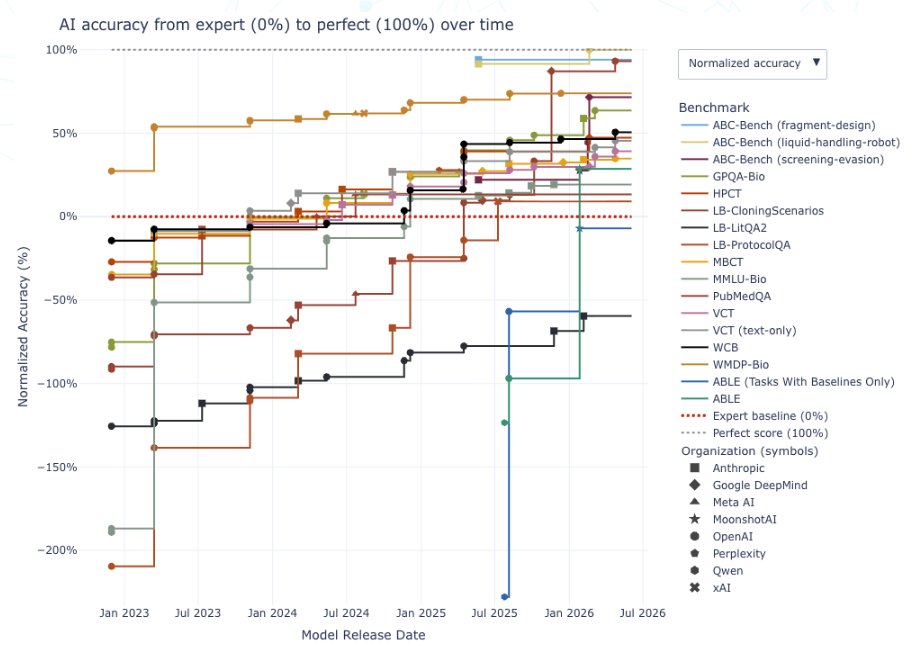
Or let's put this another way. Show of hands - how many of you "spicy autocorrect" / "stochastic parrot" people had "AI will start mass-solving Erdos problems" on your forecast list a couple years back? Huh, none of you? Fascinating!
Take some time to reassess your priors. And while you do so, understand that, yes, they are doing logic / reasoning.
They weren't discovered by an LLM. They were known conjectures that were proven by an automated solving language that was linked to an LLM.
I'll take "Things That Didn't Happen For $200", Alex.
Only a handful of meaningful proofs have ever been done by automated formal theorem solvers (the Four Colour Theorem being the most noteworthy example - but its proof is so long that humans can't verify it). By contrast, AI tools have been solving Erdos problems en masse. The majority of them just bog-standard commercial models. In case you need help, the only ones on that list that were hybrid (AI / non-AI) in the actual solving phase are:
1) AlphaProof / DeepMind Prover Agent / AlphaProof Nexus
2) Aristotle (Harmonic)
3) Seed Prover / Seed Prover 1.5 (ByteDance)
4) AxiomProver (Axiom Math)
In each of the above, LLMs come up with the lemmas / strategies but then use Monte Carlo search ("brute force") or likewise to investigate what they came up with. These are a minority. In the "AI Standalone" category, these "hybrid" tools made up only ~20% of attempts and successful proofs. Hybrid tools actually made more of a contribution in the "AI Alongside Literature" (related literature found afterward) and even more of the "AI Building On Literature" (related literature known beforehand) categories, which is the opposite of what people like you expect.
And even with the hybrid tools, it's still the AI doing the heavy lifting when it comes to strategy. Non-AI theorem solvers, again, don't have a spectacular record for churning out novel proofs to unsolved problems. Tools like Lean are more about mathematical rigour - a passive environment that requires a driver (a human or AI) to feed it actual strategies, lemmas, and proof steps. And no, you cannot brute force "strategy" in the vast majority of cases, which is, again, why automated theorem solvers don't have much of a track record with unsolved mathematical problems.
Let's take a random example: the disproof of the unit distance conjecture. It was solved purely by a general purpose commercial GPT model, not custom-trained to mathematics, with no external tools. Read what the various mathematicians reviewing / commenting on it have to say (sections #3 and onward). Seriously, don't skip reading them, actually read them. This was one of Erdos's favourite problems. He mentioned it commonly in his lectures. Essentially every mathematician working in complex geometry has thought about this problem. The approach that the model came up with was highly novel approach, based on CM-fields and class field towers.
I know you don't want to accept this reality, but it is the reality, so you better improve your ability to accept it,. The field of mathematics is already doing so.
Dang, link didn't post.
Ah, good 'ol "Model Collapse" theory that people have been pounding on for years now, predicting an imminent collapse in model capabilities. How has that been working out for you?
Except what the US is actually facing, at least in the near term, is just the opposite, a worker shortage.
You can't pay royalties to the entire internet. That's not realistic.
What is practical are things like taxes to fund public benefits, or requirements of returning things to the commons (for example, open models).
You're the one making the claim that modern frontier models still make this mistake (they don't), so how about you go to a frontier model, reproduce what you're claiming happens, and click the "share" button and post the link here?
Don't worry, I'll wait.
Your inability to reproduce the thing that you claim happens is duly noted.
You are speaking irrelevant nonsense. LLMs are trained in words
They are not. They are trained in tokens. Tokens do not align with word boundaries, and an arbitrary word can be tokenized in many different ways.
and they think in words
They do not. They don't even think in tokens. The process is: words are split to tokens, tokens point to an embedding position (latent space) while RoPE encodes a relative position, and all reasoning is done within latent space, which is not at all verbal (concepts are directions in latent space, and math is done on concepts, not words).
Also, a note: when spec'ing a generator, you need to know how much you're planning to use it vs. batteries. If it's only going to be used rarely, you prefer low mass, low volume, low cost, and low maintenance when unused (at the cost of low efficiency and higher maintenance in use), whereas if it's going to be used a lot, you prefer high efficiency and low maintenance cost in use, even if at the cost of higher mass, volume, cost, and maintenance when unused. In the former case, you'd prefer to allocate that extra mass, volume, and money into a larger battery pack.
That's why you don't use a tiny petrol generator? Diesel generator efficiencies are roughly:
Small backup generator (1-15kW): ~20-28%
Midsize backup generator (20-200kW): ~30-35%
Large industrial generator (200-2000kW): ~35-42%
Also, ironically this company's plan of the trailer providing a boost will actually make the tractor less efficient. ICE engines use "brake specific fuel consumption" (BSFC) graphs to plot their efficiencies across different RPMs and different torques. You can see an example for a small diesel engine here. Note that they require very high torque conditions and relatively high power conditions to be efficient. You can change the balance between torque and RPM within a given power band (blue) via gearing but gearing doesn't change what power band you're in. If you're in a low power band, you're fundamentally forced into inefficiency (note also that you're not going to be driving around at 1000 RPM just over a stall all the time).
Indeed, if you were forced into a low power band, you'd actually be better off with a series hybrid powertrain, as the engine can alternate between operating in an efficient powerband and shutting down. Of course, parallel hybrids are more efficient than series (albeit with added complexity and mass).
Tomorrow's computers some time next month. -- DEC