Social Networks

Everyone Can Now Access Their Instagram DMs On the Web 42

Instagram announced Friday that it's rolling out access to DMs on the web to everyone globally. The Verge reports: Web DMs are especially convenient for people who use Instagram all the time, like reporters, influencers, and social media managers. It's the easiest way to communicate privately on the platform, especially if someone is trying to respond to possibly hundreds of messages a day. Even for non-power users, typing on a laptop keyboard is easier than typing on their phone screen, so they might be more incentivized to chat over Instagram DM if they can access their inbox through a browser.
Medicine

A Smart Toilet Could Identify You By Your 'Analprint' and Detect Diseases (theverge.com) 102

A prototype smart toilet that can identify you by your "analprint" and monitor your trip to the loo has been created by researchers at Stanford University. It's equipped with cameras and sensors that collect information on your bodily waste, and it uses that data to look for any health issues you might have. The Verge reports: The "analprint" is the toilet's primary way of identifying each user. Much to the authors' dismay, it's also the aspect of the toilet that's gotten the most attention since the paper describing the proto-toilet was published in a press release and the journal Nature Biomedical Engineering on Monday.

The idea for an analprint was sparked by Salvador Dali, who discovered that "the anus has 35 or 37 creases, which are as unique as fingerprints," Park wrote in a blog post. The prototype device -- which is modular and can be attached to most standard toilets -- uses a Raspberry Pi paired with a camera to capture each person's unique analprint as they sit down to use the toilet, ensuring the data it captures is associated with the correct person. The real action happens after the person sits down, according to Park. Inside the toilet, there are cameras to capture images of the person and their waste, motion sensors to detect urine streams, and medical sensors to analyze what's inside the excrement. To further distinguish an individual, the smart toilet also includes a fingerprint scanner on the lever.
The smart toilet uses an algorithm to determine "urodynamics," which analyzes the flow rate, magnitude, and stream time of each participant's urine to determine their general health and if they have a bladder infection. Participants' stool was also classified using the "Bristol Stool Form Scale." The first prototype smart toilet can detect constipation and infections, "but the eventual goal is to spot any severe health problems like colon cancer," the report says. It notes that the data and images that are collected "are stored in an encrypted cloud server, which is supposed to keep the information private."
Television

Why You're Still Paying For Sports On Cable When There's No Live Sports (arstechnica.com) 57

An anonymous reader quotes a report from Ars Technica: Cable-TV companies are still charging customers for sports channels even as the coronavirus pandemic forces the suspension of all major sports leagues. The continued charges include Regional Sports Network (RSN) fees, which often add almost $10 to customer bills in exchange for access to local professional and college live-sports broadcasts. But RSN fees are just one piece of the puzzle, as national sports broadcasts on channels like ESPN, NBC, ABC, and Fox account for some percentage of the bundle charges paid by TV customers. Complicating matters is the sheer number of parties involved in live-sports contracts. Individual teams in the NBA, NHL, and MLB sell the rights to their games to regional sports networks, which in turn sell the rights to carry their channels to cable, satellite, and streaming TV providers. In addition to individual teams, the major sports leagues have big contracts with programmers for games that are broadcast nationally instead of just in the regions where the participating teams are located.

Another wrinkle is that cable companies often own the broadcasters that air live sports. Comcast owns NBC, including regional sports networks, so other cable-TV companies have to pay Comcast for the right to broadcast many national and local sporting events. AT&T owns Turner Sports and RSNs, while Charter owns or operates several Spectrum-branded sports channels. We've asked these companies about how they're handling the contracts they have with other TV providers but haven't gotten any substantial information. Charter said, "We are in constant touch with the teams and our network distributors on this issue. We will, of course, abide by our contractual obligations."
"There probably won't be definitive answers about refunds for TV customers in the U.S. any time soon," the report adds. "Customers might eventually get refunds even if they make no changes to their service plans, but the size of those refunds could end up being disappointing. People who subscribe to cable TV mostly for live sports may want to downgrade or cancel their TV packages until sports leagues come back, but they'll have to be careful in cases where they are subject to cable contracts and early termination fees."

If this were Europe, "it's easier to buy sports channels. separately instead of the traditional cable bundle," reports the Inquirer. Europe's Sky Sports, for example, is allowing customers to pause their subscriptions until the action resumes.
Network

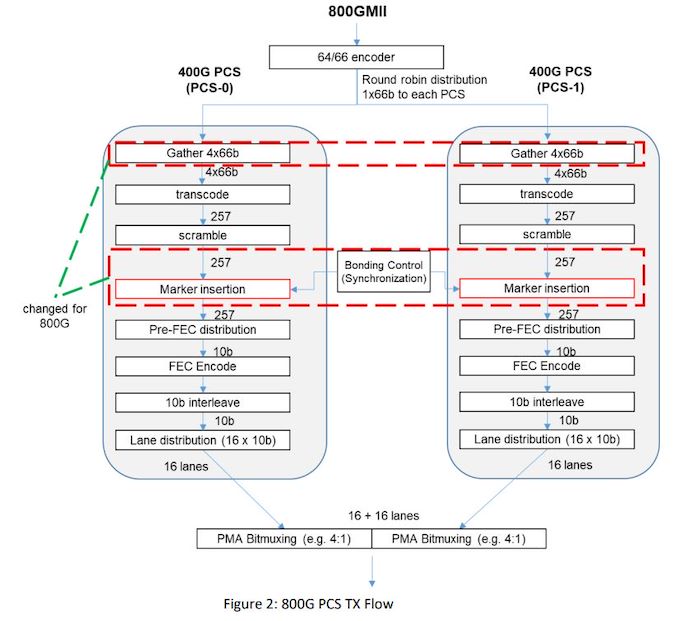
Rebranded Ethernet Technology Consortium Unveils 800 Gigabit Ethernet (anandtech.com) 29

The Ethernet Technology Consortium, the non-IEEE, tech industry-backed consortium formerly known as the 25 Gigabit Ethernet Consortium, has announced a new 800 Gigabit Ethernet technology. AnandTech reports: As for their new 800 Gigabit Ethernet standard, at a high level 800GbE can be thought of as essentially a wider version of 400GbE. The standard is primarily based around using existing 106.25G lanes, which were pioneered for 400GbE, but doubling the number of total lanes from 4 to 8. And while this is a conceptually simple change, there is a significant amount of work involved in bonding together additional lanes in this fashion, which is what the new 800GbE standard has to sort out.

Diving in, the new 800GBASE-R specification defines a new Media Access Control (MAC) and a Physical Coding Sublayer (PCS), which in turn is built on top of two 400 GbE 2xClause PCS's to create a single MAC which operates at a combined 800 Gb/s. Each 400 GbE PCS uses 4 x 106.25 GbE lanes, which when doubled brings the total to eight lanes, which has been used to create the new 800 GbE standard. And while the focus is on 106.25G lanes, it's not a hard requirement; the ETC states that this architecture could also allow for larger groupings of slower lanes, such as 16x53.125G, if manufacturers decided to pursue the matter. Focusing on the MAC itself, the ETC claims that 800 Gb Ethernet will inherit all of the previous attributes of the 400 GbE standard, with full-duplex support between two terminals, and with a minimum interpacket gap of 8-bit times. The above diagram depicts each 400 GbE with 16 x 10 b lanes, with each 400 GbE data stream transcoding and scrambling packet data separately, with a bonding control which synchronizes and muxes both PCS's together.

Businesses

Postal Service Warns of $22 Billion Hole From Coronavirus (wsj.com) 94

The U.S. Postal Service is facing a precipitous decline in mail volume and billions of dollars in additional losses as it operates during the pandemic, where hundreds of its workers have fallen sick and a dozen have died from the coronavirus. The Wall Street Journal reports: The quasigovernmental agency, which operates as part of the executive branch, is asking Congress for financial support, even after the Treasury Department extended it a $10 billion loan and increased its annual borrowing limit under the Cares Act last month. The agency's Board of Governors has asked Congress to provide $25 billion in emergency funding, a $25 billion grant for modernization projects and access to $25 billion in Treasury loans.

"We are at a critical juncture in the life of the Postal Service," Postmaster General Megan Brennan said in a statement Thursday. "At a time when America needs the Postal Service more than ever, the reason we are so needed is having a devastating effect on our business." The Postal Service projects the pandemic to add $22 billion to the agency's continuing operating losses over the next 18 months, Ms. Brennan said. Mail volumes and purchases of the agency's services have plummeted with the mandated closures of businesses around the country. She said losses could hit $54 billion over the longer term and threaten the agency's ability to operate. Ms. Brennan delayed her retirement earlier this year during a search for a successor.
In other postal service-related news, Amazon announced earlier this week that it will halt its delivery service for non-Amazon packages. "Under the program, Amazon drivers would pick up packages from businesses and deliver them to consumers, rather than ship orders from Amazon warehouses," reports The Wall Street Journal.

The pausing of operations will let Amazon handle a surge in its own customers' orders, which may help the USPS as many of the orders get handed off to the company for shipping.
Social Networks

Turkey To Require Social Media Giants To Appoint Local Representatives (reuters.com) 49

Turkey will require foreign social media companies with high internet traffic to appoint a representative in the country to address concerns raised by authorities over content on their platforms, a draft law seen by Reuters showed. From the report: Companies that do not comply with the new measure could face having their bandwith halved after 30 days by court order, and then slashed by 95% if they hold out another 30 days, it said. The law will apply to social media networks accessed by more than 1 million people daily from Turkey, the draft law said. Ankara strictly polices social media content, especially during periods such as military operations and the current coronavirus pandemic. In the three weeks to April 6, more than 3,500 social media accounts were reviewed, 616 suspects were identified and 229 were detained for "provocative" social media posts, according to the Interior Ministry.
Google

Apple and Google Are Launching a Joint COVID-19 Tracing Tool (techcrunch.com) 80

Engineering teams at Apple and Google have banded together to create a decentralized contact tracing tool that will help individuals determine whether they have been exposed to someone with COVID-19. From a report: Contact tracing is a useful tool that helps public health authorities track the spread of the disease and inform the potentially exposed so that they can get tested. It does this by identifying and 'following up with' people who have come into contact with a COVID-19 affected person. The first phase of the project is an API that public health agencies can integrate into their own apps. The next phase is a system level contact tracing system that will work across iOS and Android devices on an opt-in basis. The system uses on-board radios on your device to transmit an anonymous ID over short ranges -- using Bluetooth beaconing. Servers relay your last 14 days of rotating IDs to other devices which search for a match. A match is determined based on a threshold of time spent and distance maintained between two devices.
Businesses

The Pandemic is Playing To Almost Every One of Amazon's Strengths (cnn.com) 57

An anonymous reader shares a report: As the coronavirus pandemic has forced people to stay inside, few companies have proven themselves as essential as Amazon. From groceries to cleaning supplies, shipments from Amazon have become lifelines for many who are steering clear of supermarkets and other physical retail stores. Company executives have likened the surge in demand to the annual holiday shopping crush. But e-commerce isn't the only sector where Amazon is booming. Analysts say its cloud business, Amazon Web Services, faces higher demand as people turn to some of its biggest clients -- from Zoom to Netflix -- for work and play. Amazon sells access to audiobooks and original television programs that are helping to entertain reluctant shut-ins. And with more people staying home, that's more time they have to engage with Amazon's AI-powered smart speakers.

The breadth of Amazon's sprawling business interests, and its increasingly central place in America's fragile supply chain, underscores the company's hold on consumers -- and its potential to solidify its dominance in the coming months. The longer this crisis goes on, the more formidable Amazon will become, according to James Bailey, a management professor at George Washington University's business school. "Every crisis creates a void," said Bailey. "And whatever force fills that void, inherits power." Amazon isn't the only company that could benefit. The crisis appears to be lifting the entire e-commerce industry, according to Bank of America research, which showed the sector grew 16% in March compared to a year ago. Those consumer habits could persist even after the crisis passes, marking a potential tidal wave of change benefiting Amazon's bottom line for years to come. But thanks to its existing advantages in scale and efficiency, Amazon stands to emerge from the pandemic stronger than many of its competitors, experts say. In light of the pandemic, Amazon could pull in as much as an additional $4 billion in revenue this year, though added costs of managing the pandemic may cut into Amazon's profits, said Bank of America in an investor note last week.

Open Source

People Are Open-Sourcing Their Patents and Research To Fight Coronavirus (vice.com) 17

An anonymous reader quotes a report from Motherboard: A global group of scientists and lawyers announced their efforts to make their intellectual property free for use by others working on coronavirus pandemic relief efforts -- and urged others to do the same -- as part of the "Open Covid Pledge." Mozilla, Creative Commons, and Intel are among the founding members of this effort; Intel contributed to the pledge by opening up its portfolio of over 72,000 patents, according to a press release. Participants are asked to publicly take the pledge by announcing it on their own websites and issuing a press release.

"Immediate action is required to halt the COVID-19 Pandemic and treat those it has affected," the pledge states. "It is a practical and moral imperative that every tool we have at our disposal be applied to develop and deploy technologies on a massive scale without impediment. We therefore pledge to make our intellectual property available free of charge for use in ending the COVID-19 pandemic and minimizing the impact of the disease." From there, people and companies are asked to adopt a license detailing the terms and conditions their intellectual property will be available; while pledgers are permitted to write their own license based on their needs, the organizers wrote "Open COVID License 1.0" as a template for immediate use, which grants usage rights to anyone working toward "minimizing the impact of the disease, including without limitation the diagnosis, prevention, containment, and treatment of the COVID-19 Pandemic." The license is effective until one year after the World Health Organization declares the pandemic to be over.
Other participants include Berkeley and UCSF's Innovative Genomics Institute, Fabricatorz Foundation, and United Patents.
Google

France Rules Google Must Pay News Firms For Content (reuters.com) 183

France's competition authority ruled on Thursday that Google must pay French publishing companies and news agencies for re-using their content. Reuters reports: The U.S. tech firm said it would comply with the French competition authority verdict, which followed a complaint by unions representing French press publishers. "Google's practices caused a serious and immediate harm to the press sector, while the economic situation of publishers and news agencies is otherwise fragile," France's 'Autorite de la Concurrence' said in a statement.
Open Source

The Sandboxie Windows Sandbox Isolation Tool Is Now Open-Source (bleepingcomputer.com) 22

Cybersecurity firm Sophos announced today that it has open-sourced the Sandboxie Windows sandbox-based isolation utility 15 years after it was released. Bleeping Computer reports: Sandboxie was initially developed by Ronen Tzur and released on June 26, 2004, as a simple utility to help run Internet Explorer within a secure and isolated sandbox environment. Later, Tzur upgraded Sandboxie to also support sandboxing any other Windows applications that required a secure virtual sandbox for while running. Invincea acquired Sandboxie from Tzur in December 2013 and the app eventually moved under Sophos' software umbrella after the cybersecurity firm announced Invincea's acquisition in February 2017.

"We are thrilled to give the code to the community," Sophos Director of Product Marketing Seth Geftic said. "The Sandboxie tool has been built on many years of highly-skilled developer work and is an example of how to integrate with Windows at a very low level. The Sandboxie user base represents some of the most passionate, forward-thinking, and knowledgeable members of the security community, and we hope this announcement will spawn a fresh wave of ideas and use cases."
You can download Sandboxie and its source code here.
Encryption

Signal Threatens To Dump US Market If EARN IT Act Passes (pcmag.com) 82

Signal is warning that an anti-encryption bill circulating in Congress could force the private messaging app to pull out of the U.S. market. PC Magazine reports: Since the start of the coronavirus pandemic, the free app, which offers end-to-end encryption, has seen a surge in traffic. But on Wednesday, the nonprofit behind the app published a blog post, raising the alarm around the EARN IT Act. "At a time when more people than ever are benefiting from these (encryption) protections, the EARN IT bill proposed by the Senate Judiciary Committee threatens to put them at risk," Signal developer Joshua Lund wrote in the post. Although the goal of the legislation, which has bipartisan support, is to stamp out online child exploitation, it does so by letting the U..S government regulate how internet companies should combat the problem -- even if it means undermining the end-to-end encryption protecting your messages from snoops.

If the companies fail to do so, they risk losing legal immunity under Section 230 of the Communications Decency Act, which can shield them from lawsuits concerning objectionable or illegal content posted on their websites or apps. "Some large tech behemoths could hypothetically shoulder the enormous financial burden of handling hundreds of new lawsuits if they suddenly became responsible for the random things their users say, but it would not be possible for a small nonprofit like Signal to continue to operate within the United States," Lund wrote in the blog post.

Network

5G Virus Conspiracy Theory Fueled By Coordinated Effort (bloomberg.com) 109

An anonymous reader quotes a report from Bloomberg: A conspiracy theory linking 5G technology to the outbreak of the coronavirus is quickly gaining momentum, with celebrities including actor Woody Harrelson promoting the idea. But the theory is also getting a boost from what some researchers say is a coordinated disinformation campaign. Marc Owen Jones, a researcher at Hamad bin Khalifa University in Qatar, who specializes in online disinformation networks, analyzed 22,000 recent interactions on Twitter mentioning "5G" and "corona," and said he found a large number of accounts displaying what he termed "inauthentic activity." He said the effort bears some hallmarks of a state-backed campaign. "There are very strong indications that some of these accounts are a disinformation operation," Jones said.

Jones said the campaign uses a strategy similar to Russia's Internet Research Agency, which was behind a disinformation campaign during the 2016 U.S. presidential campaign. But he said he hasn't yet concluded that Russia, or any other government or organization, is behind the effort. Blackbird.AI, a New York-based company that monitors online disinformation campaigns, said it had in recent weeks identified a surge in the number of social media posts promoting the 5G conspiracy theory. In the previous 24 hours, there had been more than 50,000 posts about the topic on Twitter and Reddit, Naushad UzZaman, the company's chief technology officer and co-founder, said on Wednesday. There has been a "significant uptick in inauthentic amplification" of posts on social media linking 5G to the coronavirus, UzZaman said, indicating that there could be a coordinated campaign and bot accounts involved.

AI

DARPA is Pouring Millions Into a New AI Defense Program (protocol.com) 16

The Pentagon is teaming up with some of the biggest names in tech to combat hacks designed to mess with the automated systems we'll rely on in the near future. From a report: In February, DARPA issued a call for proposals for a new program. Like most DARPA projects, it had a fantastic acronym: Guaranteeing Artificial Intelligence (AI) Robustness against Deception (GARD). It's a multimillion-dollar, four-year initiative that's aiming to create defenses for sensor-based artificial intelligence -- think facial recognition programs, voice recognition tools, self-driving cars, weapon-detection software and more. Today, Protocol can report that DARPA has selected 17 organizations to work on the GARD project, including Johns Hopkins University, Intel, Georgia Tech, MIT, Carnegie Mellon University, SRI International and IBM's Almaden Research Center. Intel will be leading one part of the project with Georgia Tech, focusing on defending against physical adversarial attacks. Sensors that use AI computer vision algorithms can be fooled by what researchers refer to as adversarial attacks. These are basically any hack to the physical world that tricks a system into seeing something other than what's there.
Android

Google Launches Braille Keyboard for Android Devices (venturebeat.com) 4

Google today announced the launch of a virtual braille keyboard for Android that's designed to enable those with low vision or blindness to type on their phones without additional hardware. From a report: The tech giant says it collaborated with braille developers and users to create it, and to ensure it can be used anywhere a user would normally type -- including social media, text messaging, and email apps. According to the World Health Organization, at least 2.2 billion people globally have a vision impairment or blindness. To address their needs, Google previously developed and released BrailleBack, an accessibility service for Android that helps users make use of braille devices, but BrailleBack didn't offer on-screen typing.
Social Networks

New Emoji Are Being Delayed Because of the Coronavirus Pandemic (mashable.com) 61

One unexpected effect of the coronavirus pandemic has to do with the colorful little pictograms we use on our phones and computers to express, well, pretty much everything: emoji. From a report: According to the Unicode Consortium, a non-profit which takes care of the Unicode Standard -- a widely-used standard for character encoding on computers and phones -- the release of Unicode 14.0 has been postponed by six months. "Under the current circumstances we've heard that our contributors have a lot on their plates at the moment and decided it was in the best interests of our volunteers and the organizations that depend on the standard to push out our release date," Mark Davis, President of the Unicode Consortium, said in a statement. Unicode 14.0 was supposed to be released in March 2021, but that has been moved six months into the future, to September 2021. Since it takes a while for developers to incorporate new emoji into phones -- typically eight months or so, according to the Consortium -- this means we won't get any new emoji until well into 2022.
IOS

Apple is Developing 'Clips' Feature For Using Apps Without Requiring Full Downloads (9to5mac.com) 32

Apple is working on a new way to offer specific parts of third-party apps across the system without needing to have them installed, 9to5Mac has learned based on an early build of iOS 14. From a report: The feature would allow users to experience parts of an app's functionality by scanning a QR Code. If you open a link or scan a QR code today from an app that you haven't installed on your iPhone or iPad, it will open that link in Safari. Apps can provide universal links, which open the app instead of Safari when the app is installed. But that could change in the near future with a new API internally referred to as "Clips" found on iOS 14 code. As 9to5Mac has analyzed this new API, we can say that it allows developers to offer interactive and dynamic content from their apps even if you haven't installed them. The Clips API is directly related to the QR Code reader in the build we have access to, so the user can scan a code linked to an app and then interact with it directly from a card that will appear on the screen.
The Internet

Cloudflare Dumps reCAPTCHA as Google Intends To Charge For Its Use (zdnet.com) 81

Internet web infrastructure company Cloudflare announced plans to drop support for Google's reCAPTCHA service and move to a new bot detection provider named hCaptcha. From a report: Cloudflare co-founder and CEO Matthew Prince said the move was motivated by Google's future plans to charge for the use of the reCAPTCHA service, which would have "added millions of dollars in annual costs" for his company, costs that Cloudflare would have undoubtedly had to unload on its customers. "That is entirely within their right," Prince said yesterday. "Cloudflare, given our volume, no doubt imposed significant costs on the reCAPTCHA service, even for Google." "If the value of the image classification training did not exceed those costs, it makes perfect sense for Google to ask for payment for the service they provide," he added.
China

Chinese Cybercriminals Target High-Value Linux Servers With Weak Defenses: BlackBerry (techrepublic.com) 41

Linux malware is real and Advanced Persistent Threat (APT) groups have been infiltrating critical servers with these tools for at least eight years, according to a new report from BlackBerry. From a report: In "Decade of the RATs: Cross-Platform APT Espionage Attacks Targeting Linux, Windows and Android," security researchers found that these groups have attacked companies around the world and across all industries with goals ranging from simple cybercrime to full-blown economic espionage. The RATs report describes how five APT groups are working with the Chinese government and the remote access trojans (RATs) the cybercriminals are using to get and maintain access to Linux servers.

According to the report, the groups appeared to be using WINNTI-style tooling to take aim at Linux servers and remain relatively undetected for almost a decade. These groups are targeting Red Hat Enterprise, CentOS, and Ubuntu Linux environments for espionage and intellectual property theft. The APT groups examined include the original WINNTI GROUP, PASSCV, BRONZE UNION, CASPER (LEAD), and a newly identified group BlackBerry researchers are tracking as WLNXSPLINTER. The BlackBerry researchers think all five groups are working together, given the distinct similarities in their preferred tools, tactics, and procedures.

Windows

Don't Expect Any Windows 10X Devices This Calendar Year, Says Microsoft (zdnet.com) 22

Microsoft is setting internal expectations that it won't deliver any Windows 10X devices in calendar 2020, ZDNet reports. From a report: This isn't really surprising, given what's going on externally with the COVID-19 coronavirus pandemic. But for enthusiasts who were looking forward to dual-screen Surface Neo devices this holiday season, the reality is taking root. My contacts say that Chief Product Officer Panos Panay informed some of his team internally today, April 8, that Microsoft wouldn't be delivering its own Surface Neo dual-screen 10X devices this calendar year. In addition, Microsoft also won't be enabling third-party dual-screen Windows devices to ship with 10X in calendar 2020, I hear.

Slashdot Top Deals