AI

Microsoft's Project Turing is Building AI to Rival Google and Open AI (businessinsider.com) 11

An anonymous reader shares a report: Since 2017, Microsoft has pursued this goal under the name Project Turing, a team that's tasked with building these large language models and figuring out how they can be used in the company's vast suite of products. Project Turing might not be a visible name outside the company, its AI can already be found generating text inside Microsoft Office products and powering much of the curated information provided when searching with Bing. If Turing succeeds, the strategy could amplify the research dollars that Microsoft has poured into AI research over previous decades. Notably, Microsoft isn't only using Turing-NLG, the project's flagship model, internally: It's already begun selling the tech to select partners, hinting at the cloud giant's ambitions for the AI market. Insider spoke with AvePoint and Volume.ai, both of whom are using Turing in their own products.

"Our job is to further the frontier of AI innovation as much as possible," Ali Alvi, group program manager of Project Turing, told Insider. Alvi tells Insider that the Turing team was assembled from within the company by Microsoft chief technology officer Kevin Scott, in recognition of the ongoing deep learning boom. Scott encouraged the team to think bigger and work with the Azure infrastructure team to make the models exponentially larger. When CEO Satya Nadella saw the team's progress, he decided to get it into the hands of customers, Alvi says. AvePoint, a Microsoft partner that resells and builds applications on top of Microsoft products, has launched two products so far using the Turing model: An education platform for teachers that will automatically create quiz questions using material that's been uploaded for a specific course, and a corporate training platform that uses Turing to test employees on internal material.

Technology

Magic Leap Somehow Raised $500 Million To Make Another AR Headset (theverge.com) 19

Magic Leap has raised $500 million in funding and is preparing to release a new AR headset, the Magic Leap 2, next year, the company announced Monday. From a report: The headset will be generally available next year, the company said, and "select customers" are using it as part of an early access program. CEO Peggy Johnson said in a statement that with the new funding "Magic Leap will have greater financial flexibility and the resources needed to continue our growth trajectory as we expand on our industry-leading AR technology." She revealed the new device in an Monday appearance on CNBC.

Magic Leap, of course, is the company that began its existence as a mysterious AR startup, received almost $3 billion to fund its consumer-friendly AR headset, before changing its headset's name from Magic Leap 1 to The Magic Leap One Creator Edition in an attempt to attract professional customers. The company laid off 1,000 employees -- roughly half its workforce -- in 2020, and was reportedly abandoning its consumer business. Cofounder and CEO Rony Abovitz left the company in July 2020, and was replaced by Johnson.
Magic Leap, which has previously raised $3.5 billion (according to Pitchbook), is now valued at $2 billion, down from $6 billion in 2018.
IT

Coinbase is Launching a Marketplace for NFTs (cnbc.com) 18

Coinbase is getting into NFTs. The cryptocurrency exchange said Tuesday it plans to launch a marketplace that lets users mint, collect and trade NFTs, or non-fungible tokens. From a report: Users can sign up to a waitlist for early access to the feature, the company said. NFTs are one-of-a-kind digital assets designed to represent ownership of online items like rare art or collectible trading cards. They aren't fungible, meaning you can't exchange one NFT for another like you could with bitcoin and other cryptocurrencies. Sales of such tokens have boomed this year. The NFT market topped $10 billion in transaction volume in the third quarter of 2021, according to DappRadar, a company that tracks data on crypto-based applications.
Businesses

Spectrum Threatens Former Customers In Renewal Shakedown (latimes.com) 197

An anonymous reader writes: Spectrum has been sending former customers strange letters threatening to report them to the credit agencies unless they renew services, in attempt to win back their business. The letters say that "as a one-time courtesy," the company will cancel debt it claims they owe and stop reporting them to credit agencies -- if they agree to resume cable service. The threat continues by stating that "You have worked hard to build a great future for yourself and your family" "We look forward to welcoming you back."
Google

Google Unveils Cybersecurity Programs and Action Team (venturebeat.com) 21

An anonymous reader shares a report: By the end of 2021, cybercrime is expected to cost the world $6 trillion. And by 2025, this figure will climb to $10.5 trillion, according to Cybersecurity Ventures. There's been a rash of recent high-profile cyberattacks, including Colonial Pipeline, the SolarWinds breach, and JBS USA. That's perhaps why 80% of senior IT employees believe that their companies lack sufficient protection against cyberattacks, despite increased security investments made in 2020.

To address the challenges, Google today at Google Cloud Next 2021 debuted Work Safer, a program to help organizations, employees, and partners collaborate in hybrid work environments. It also unveiled a new security-focused task force --- the Cybersecurity Action Team -- and a security and resilience framework, in addition to enhanced security capabilities in Workspace. The announcements come after research showing that companies want cloud providers to increase their security efforts. According to a a recent Tripwire survey, while the majority of enterprises believe that public cloud providers are doing enough to ensure security for users, it's "just barely adequate."

China

China's Noisy 'Dancing Grannies' Silenced By Device That Disables Speakers (theguardian.com) 117

An anonymous reader quotes a report from The Guardian: Across China's public parks and squares, in the early hours of the morning or late in the afternoon, the grannies gather. The gangs, made up mostly of middle-aged and older women who went through the Cultural Revolution, take to a corner of a local park or sporting ground and dance in unison to Chinese music. Loud music. The tradition has led to alarming standoffs, with the blaring music frequently blamed for disturbing the peace in often high-density residential areas. But many are too scared to confront the women. The dilemma of the dancing grannies has prompted some to seek out tech solutions. One went viral online this week: a remote stun gun-style device that claims to be able to disable a speaker from 50 meters away.

Reviews of the item were positive. "Downstairs is finally quiet. For two days the grannies thought their speaker is not working!", said one on Taobao, China's version of eBay. "Great invention, with this tool I will be the boss in the neighborhood now," said another. "This is not just a regular product, it is social justice!" China is home to an estimated 100 million dancing grannies. Square dancing allows older women, many of whom live alone or with younger family members who they accompanied on a move to the cities, to socialize. They form strong bonds, often shopping or doing other activities, including group investments, together, the South China Morning Post reported.

State media has described the square dancing, which has its roots in the Cultural Revolution of the 1960s, as a "positive and effective way to reduce the medical and financial burden as well as increase the life quality of older people." "Many participants are retired, their children are no longer around. Square dancing becomes a place for them to have a social life." But neighbors complain it has gotten out of control, with competing groups blasting their music over each other in small areas, and bullying those who try to intervene. Viral videos and reports have shown the groups arguing and fighting with basketball players to take over their court, or, in one case, breaking into a football field and stopping the game to dance in the space, prompting a police response and arrests.

Google

Google's Fuchsia Is Expanding To 'Additional Smart Devices and Other Form Factors' (9to5google.com) 32

According to new job listings, Google is looking to expand the Fuchsia operating system from its current home on the Nest Hub to âoeadditional smart devices and other form factors." 9to5Google reports: The first listing, for "Staff Software Engineer, Fuchsia Devices," celebrates Fuchsia's recent milestone and points clearly to Google wanting Fuchsia to run on more "real world products" than just smart displays: "In 2021 we shipped Fuchsia to millions of Google smart displays, now it's time to expand to additional smart devices and other form factors. Come join us and work on the next-generation Google operating system! Although the first uses of Fuchsia are smart displays, we are working on expanding to additional form factors and use cases. The Fuchsia Devices team is responsible for making sure we can successfully apply the Fuchsia platform to real world products that make a difference to Google and our users."

So what types of devices should we expect Fuchsia to come to next? Well for one, we may look at the plural phrasing of "first uses of Fuchsia are smart displays," which suggests the Nest Hub Max and Nest Hub (2nd Gen) may be getting their chance to switch to Fuchsia soon. Of course, Google has made it abundantly clear here that smart displays are just the beginning. In another listing, for "Engineering Manager, Fuchsia Devices," the company explains that the Fuchsia Devices team is aiming to "[expand] the reach of Nest/Assistant to new form factors" through "real consumer devices." [From the listing:] "The Fuchsia Devices Smart Products team is part of the larger Fuchsia organization and is responsible for productionizing various types of Fuchsia Devices. Our team delivers real consumer devices to end users and enables you to have a large impact at Google by expanding the reach of Nest/Assistant to new form factors."

This could suggest entirely new device categories for Google's Nest lineup, powered by Fuchsia. In another section, we get some hints at what those proposed devices would be capable of: "Chromecast, Video Conferencing and Machine Learning are core parts of many of the upcoming smart products." It's important to note that "Chromecast" here is probably not referring to the lineup of Chromecast hardware for TVs switching to Fuchsia. Instead, it's more likely referring to how Google's speakers and displays can receive a "Cast" from your phone. This is somewhat clarified in the job listing's responsibilities section, which lists a handful of features that squarely line up with features of the camera-equipped Nest Hub Max, including "Face Match." The Nest Hub Max's store listing also references "Chromecast built-in" as a feature: "Plan, scope, and execute of features like Video Casting, Actions on Google, Video Calling, Face Match, and on device ML."

It also looks like Made by Google devices may soon not be the only ones shipping with Fuchsia. According to another listing, Google is looking for someone on Fuchsia's "platform graphics and media" team to, among other things, "influence hardware decisions made by partners." [From the listing:] "As a Staff Software Engineer on the Fuchsia team, you'll drive the technical direction for Graphics and Media and ensure that Fuchsia is bringing maximum value to partners and Fuchsia-based products. You also will influence hardware decisions made by partners to improve Fuchsia and Google's ability to deliver efficient software solutions for critical Graphics and Media workloads."
Fuchsia debuted on the first-generation Nest Hub earlier this year.
Transportation

Germany Unveils First Self-Driving Train (techxplore.com) 60

German rail operator Deutsche Bahn and industrial group Siemens on Monday unveiled the world's first automated, driverless train in the city of Hamburg, billing it as more punctual and energy efficient than traditional trains. TechExplore reports: Four such trains will join the northern city's S-Bahn rapid urban rail network and start carrying passengers from December, using the existing rail infrastructure. Other cities like Paris have driverless metros while airports often have automated monorail trains plying terminals, but those run on exclusive single tracks while the Hamburg train will be sharing tracks with other regular trains. The project, which Siemens and Deutsche Bahn called a "world first," is part of a 60 million euro ($70 million) modernization of Hamburg's rapid urban rail system. Although the train is controlled through digital technology and fully automated, a driver will still be present to supervise journeys whenever there are passengers on board, the companies said in a statement.
Microsoft

Microsoft Warns of New Windows 11 Problems With Apps Using Unusual Registry Keys (betanews.com) 76

Microsoft has shared details of a new known issue with Windows 11. The company has confirmed that a problem exists with apps that use certain characters in registry keys. From a report: As a result of the discovery, Microsoft has put a compatibility hold in place that means people with problematic apps installed will not be offered Windows 11 via Windows Update. The issue is under investigation. It seems that the issue is related to, or is an extension of, one of the three initial known issues with Windows 11.
Google

Google Pulls 'Stalkerware' Ads That Promoted Phone Spying Apps (techcrunch.com) 9

Google has pulled several "stalkerware" ads that violated its policies by promoting apps that encouraged prospective users to spy on their spouses' phone. From a report: These consumer-grade spyware apps are often marketed to parents wishing to monitor their child's calls, messages, apps, photos and location, often under the guise of protecting against predators. But these apps, which are often designed to be installed surreptitiously and without the device owner's consent, have been repurposed by abusers to spy on the phones of their spouses.

[...] Last August, Google banned ads in users' search results that promoted apps that are designed "with the express purpose of tracking or monitoring another person or their activities without their authorization." But TechCrunch found five app makers were still advertising their stalkerware apps as recently as last week. "We do not allow ads promoting spyware for partner surveillance. We immediately removed the ads that violated this policy and will continue to track emerging behaviors to prevent bad actors from trying to evade our detection systems," a Google spokesperson told TechCrunch.

Businesses

Amazon Will Allow Many Employees To Work Remotely Indefinitely (seattletimes.com) 33

Amazon will allow many tech and corporate workers to continue working remotely indefinitely, as long as they are able to commute to the office when necessary, according to a blog posted Monday. From a report: The new policy is a change from Amazon's previous expectation that most employees would need to be in the office at least three days a week once offices reopen in January. Monday's message, signed by Amazon CEO Andy Jassy, explains that Amazon directors -- at Amazon, a title signifying an executive who oversees a handful of teams -- will have the discretion to allow teams under their purview to stay remote. "We expect that there will be teams that continue working mostly remotely, others that will work some combination of remotely and in the office, and still others that will decide customers are best served having the team work mostly in the office," Jassy wrote. "We're intentionally not prescribing how many days or which days -- this is for Directors to determine with their senior leaders and teams."

In the blog post, Jassy thanked Amazon employees who have been unable to work remotely during the pandemic "for their passion. It is highly appreciated." Those workers include the vast majority of Amazon's more than 1 million employees worldwide, who work in the company's fulfillment and transportation division, as well as its AWS data center and physical retail employees. Amazon's update to its return-to-work policy follows similar moves from other tech giants. Microsoft announced last month that it had postponed reopening its offices indefinitely; Google has said it anticipates roughly 20% of its workforce will continue to telecommute full-time.

Science

Can Nuclear Fusion Put the Brakes on Climate Change? (newyorker.com) 293

Amid an escalating crisis, the power source offers a dream -- or a pipe dream -- of limitless clean energy. From a report: Let's say that you've devoted your entire adult life to developing a carbon-free way to power a household for a year on the fuel of a single glass of water, and that you've had moments, even years, when you were pretty sure you would succeed. Let's say also that you're not crazy. This is a reasonable description of many of the physicists working in the field of nuclear fusion. In order to reach this goal, they had to find a way to heat matter to temperatures hotter than the center of the sun, so hot that atoms essentially melt into a cloud of charged particles known as plasma; they did that. They had to conceive of and build containers that could hold those plasmas; they did that, too, by making "bottles" out of strong magnetic fields. When those magnetic bottles leaked -- because, as one scientist explained, trying to contain plasma in a magnetic bottle is like trying to wrap a jelly in twine -- they had to devise further ingenious solutions, and, again and again, they did. Over decades, in the pursuit of nuclear fusion, scientists and engineers built giant metal doughnuts and Gehryesque twisted coils, they "pinched" plasmas with lasers, and they constructed fusion devices in garages. For thirty-six years, they have been planning and building an experimental fusion device in Provence. And yet commercially viable nuclear-fusion energy has always remained just a bit farther on.

As the White Queen, in "Through the Looking Glass," said to Alice, it is never jam today, it is always jam tomorrow. The accelerating climate crisis makes fusion's elusiveness more than cutely maddening. Solar energy gets more efficient and affordable each year, but it's not continuously available, and it still relies on gas power plants for distribution. The same is true for wind power. Conventional nuclear power has extremely well-known disadvantages. Carbon capture, which is like a toothbrush for the sky, is compelling, but after you capture a teraton or two of carbon there's nowhere to put it. All these tools figure extensively in decarbonization plans laid out by groups like the Intergovernmental Panel on Climate Change, but, according to those plans, even when combined with one another the tools are insufficient. Fusion remains the great clean-energy dream -- or, depending on whom you ask, pipe dream. Fusion, theoretically, has no scarcity issues; our planet has enough of fusion's primary fuels, heavy hydrogen and lithium, which are found in seawater, to last thirty million years.

Fusion requires no major advances in batteries, it would be available on demand, it wouldn't cause the next Fukushima, and it wouldn't be too pricey -- if only we could figure out all the "details." (A joke I heard is that fusion operates according to the law of the "conservation of difficulty": when one problem is solved, a new one of equal difficulty emerges to take its place.) The details are tremendously complex, and the people who work to figure them out have for years been dealing with their own scarcities -- scarcities of funding and scarcities of faith. Fusion, as of now, has no place in the Green New Deal. In 1976, the U.S. Energy Research and Development Administration published a study predicting how quickly nuclear fusion could become a reality, depending on how much money was invested in the field. For around nine billion a year in today's dollars -- described as the "Maximum Effective Effort" -- it projected reaching fusion energy by 1990. The scale descended to about a billion dollars a year, which the study projected would lead to "Fusion Never." "And that's about what's been spent," the British physicist Steven Cowley told me. "Pretty close to the maximum amount you could spend in order to never get there."

Businesses

'We're in a Hurry.' Qualcomm New CEO Scrambles To Cope With a Global Chip Crisis. (wsj.com) 28

Cristiano Amon is the new boss of Qualcomm, a U.S. tech giant that designs semiconductors. His first task: Convince companies to make more chips for him -- and fast. From a report: Months before Cristiano Amon started as CEO of Qualcomm, he already was at work on his first crisis. To solve it, he sat in a mostly empty meeting room in Taipei and pleaded with executives from one of the world's biggest semiconductor makers for more chips. He needed the help so that Qualcomm, a designer of circuits that go into hundreds of millions of electronic devices every year, could chase new markets and meet demand from big customers such as Apple, Samsung Electronics and China's top handset-makers. In fact, he needed the assistance so much that he got permission from the Taiwanese government to arrive in March and then waited through a three-day quarantine. Once he and his team got to the meeting place in a Taipei hotel, they negotiated with counterparts across a large room outfitted with microphones and speakers to communicate.

"I'm a very big believer that sometimes you have to meet folks in person," said Mr. Amon, who was named CEO in January and officially took over in June. Many new CEOs across the business world had to adjust to their roles amid unprecedented pandemic-era restrictions, getting to know key employees without ever meeting them in person and managing offices and business relationships from far away. Few can say they had a more tumultuous transition than Mr. Amon, a gregarious Brazilian who revels in person-to-person contact. He is juggling a cluster of major challenges -- a global chip shortage, a sudden shift in a key market, and an unexpected acquisition opportunity -- while trying to put his own stamp on a company after working there for more than two decades. He wants to focus on an expansion beyond Qualcomm's core mobile-phone chip business, a shift that began before he took over. "I've been doing many things in parallel and I want to succeed in them all," he said in an interview. "I can't afford not to do them because we're in a hurry."

Facebook

Facebook To Act on Illegal Sale of Amazon Rainforest (bbc.com) 22

Facebook says it will begin clamping down on the illegal sale of protected areas of the Amazon rainforest on its site. From a report: The social media giant changed its policy following a BBC investigation into the practice. The new measures will apply only to conservation areas and not to publicly owned forest. And the move will be limited to the Amazon, not other rainforests and wildlife habitats across the world. According to a recent study from the think tank Ipam (Instituto de Pesquisa Ambental da Amazonia), a third of all deforestation happens in publicly-owned forests in the Amazon. Facebook said it would not reveal how it planned to find the illegal ads but said it would "seek to identify and block new listings" in protected areas of the Amazon rainforest. In February, the BBC Our World documentary Selling the Amazon revealed that plots of rainforest as large as 1,000 football pitches were being listed on Facebook's classified ads service.
Communications

Telkom Says Netflix No Longer Available on South Africa Provider (bloomberg.com) 10

Telkom SA said Netflix will no longer be available on the South African phone and internet company's set-top box from October. From a report: A deal between the parties has come to an end and will not be renewed, Content Executive Wanda Mkhize said in a statement, without giving a specific reason. Other content partnerships will be announced in due course, she said. The move comes after MultiChoice, Africa's largest pay-TV provider, signed deals with Netflix and Amazon.com to offer their streaming services through its new decoder. The continent is a small market for paid streaming video, with just a few million subscribers out of a population of more than 1 billion, and the U.S. giants have targeted it for future growth.
United Kingdom

Ex-minister Predicts 'Huge Battleground' Over UK's Plan To Set Internet Content Rules (techcrunch.com) 46

The former UK minster of state for what is now the digital and culture department, DCMS, has warned of the looming battle in parliament over the exact shape of incoming online safety legislation. From a report: In an interview with TechCrunch, Ed Vaizey -- a former Conservative Party MP, now Lord Vaizey of Didcot, who was head of the culture, comms and creative industries department, as it was then, between 2010 and 2016 -- predicted a huge tug-of-war to influence the scope of the Online Safety Bill, warning that parliamentarians everywhere will try to hang their own "hobby horse" on it. The risk of over regulation or creating a disproportionate burden for startups vs tech giants is also real, Vaizey suggested, setting out several areas that he said would require a cautious approach.

"In theory it's just going to be the big platforms that will be regulated," he said of the scope of the Internet Safety Bill, which was published in draft form back in May -- and which critics are warning will be catastrophic for free speech. "Some platforms that should be regulated could potentially not be be regulated. But you're right that people are concerned that, in effect, there's a paradox -- that it could help the Facebooks of this world because the regulatory hurdles that get going might be too big. And if anyone is capable of being regulated it's Facebook, as opposed to a startup. So I think that's something we have to be very careful of. "Secondly, although I support the principle of legal but harmful content being regulated I have no doubt at all that that is going to be the big battle in parliament. The balance between legal but harmful free speech is going to be a huge battleground. And it will be interesting to see in what form it survives. And thirdly -- I think, paradoxically -- everyone is going to try and hang their own particular hobby horse on this piece of legislation."

Facebook

Facebook's Success Was Built on Algorithms. Can They Also Fix It? (cnn.com) 70

Experts tell CNN that Facebook's algorithms could be improved. "It will, however, require something Facebook has so far appeared reluctant to offer (despite executive talking points): more transparency and control for users." Margaret Mitchell, who leads artificial intelligence ethics for AI model builder Hugging Face and formerly co-led Google's ethical AI team, thinks this could be done by allowing you to view details about why you're seeing what you're seeing on a social network, such as in response to the posts, ads, and other things you look at and interact with. "You can even imagine having some say in it. You might be able to select preferences for the kinds of things you want to be optimized for you," she said, such as how often you want to see content from your immediate family, high school friends, or baby pictures. All of those things may change over time. Why not let users control them? Transparency is key, she said, because it incentivizes good behavior from the social networks.

Another way social networks could be pushed in the direction of increased transparency is by increasing independent auditing of their algorithmic practices, according to Sasha Costanza-Chock, director of research and design at the Algorithmic Justice League. They envision this as including fully independent researchers, investigative journalists, or people inside regulatory bodies — not social media companies themselves, or companies they hire — who have the knowledge, skills, and legal authority to demand access to algorithmic systems in order to ensure laws aren't violated and best practices are followed.

James Mickens, a computer science professor at Harvard and co-director of the Berkman Klein Center's Institute for Rebooting Social Media, suggests looking to the ways elections can be audited without revealing private information about voters (such as who each person voted for) for insights about how algorithms may be audited and reformed. He thinks that could give some insights for building an audit system that would allow people outside of Facebook to provide oversight while protecting sensitive data. A big hurdle, experts say, to making meaningful improvements is social networks' current focus on the importance of engagement, or the amount of time users spend scrolling, clicking, and otherwise interacting with social media posts and ads... Changing this is tricky, experts said, though several agreed that it may involve considering the feelings users have when using social media and not just the amount of time they spend using it.

"Engagement is not a synonym for good mental health," said Mickens.

Social Networks

Snapchat is Boosting Its Efforts To Root Out Drug Dealers (nbcnews.com) 45

Deadly counterfeit versions of prescription medications are "widely available on social media platforms," reports NBC News, and "2 in 5 of those seized and tested in the United States contain enough fentanyl to kill, according to a warning issued by the Drug Enforcement Administration last month."

So now Snapchat "said it has improved the automated systems it uses to detect the sale of illegal drugs on the app, hired more people to respond to law enforcement requests for data during criminal investigations and developed an in-app education portal called Heads Up focused on the dangers of fentanyl and counterfeit pills." "We have heard devastating stories from families impacted by this crisis, including cases where fentanyl-laced counterfeit pills were purchased from drug dealers on Snapchat," said Snapchat's parent company, Snap, in a blog post. "We are determined to remove illegal drug sales from our platform."

The announcement comes less than one week after NBC News profiled eight parents whose children had died after taking a single fentanyl-laced pill purchased on Snapchat.

On Sept. 27, DEA Administrator Anne Milgram said social media companies were not doing enough to stop the sale of counterfeit pills on their platforms...

Snap said improvements to its proactive detection tools — which use artificial intelligence to identify pictures, words and emojis related to drug sales — have allowed the company to increase the number of accounts removed by 112% during the first half of 2021. For the last six months, it has also been using intelligence from public health data company S-3, which scours the internet for drug sellers, to identify Snapchat accounts that are potentially violating the rules. S-3 does not search directly on Snapchat, but instead looks for dealers elsewhere — on other social media sites or the dark web — who reference a Snapchat account in their advertisements.

Facebook

Facebook VP Suggests a Fix: a Prompt Urging Teen Instagram Users to 'Take a Break' (engadget.com) 40

"Facebook is trying to mend its reputation in the wake of whisleblower Frances Haugen's testimony," reports Engadget, "and that includes promises of features lessening the potential harm for teens." CNN and Reuters report that Facebook Global Affairs VP Nick Clegg promised Instagram would introduce a "take a break" feature that encouraged teens to simply stop using the social network for a while.

Clegg didn't say when it would be ready, but this was clearly meant to reduce addiction and other unhealthy behavior.

The social media exec also said Facebook would "nudge" teens away from material in its apps that "may not be conducive to their well-being." He didn't provide specifics for this new approach. He did, however, suggest that Facebook's algorithms should be "held to account," including by regulation if needed, to be sure real-world results matched intentions... Breaks and nudges may reduce exposure to harmful content, but they won't remove the content in question. Clegg's statements also reflect a familiar strategy at Facebook. It likes to invite regulation, but only the regulation it's comfortable with. While the proposed changes could help, politicians may demand more — in part to prevent Facebook from dictating its own regulation.

According to Reuters, Clegg also "said he could not answer the question whether its algorithms amplified the voices of people who had attacked the U.S. Capitol on January 6th."
The Internet

All Linux and Mac Computers Get Their Time Zones From the Same Database (medium.com) 128

"All Linux and Mac-based computers pull their time zones from a massively important database — the time zone database," explains Medium's tech site OneZero. And this vastly crucial project is ultimately overseen by one man who Medium calls "The Time Zone King." The process of defining time zones is centralized. This is actually quite a big deal in its own right because people tend to grossly underestimate how pivotal Linux is to ... the entire internet and technology as we know it...

The time zone database — which is sometimes called the Olson data or zoneinfo database — has a fascinating history... Not only are time zones apparently a longstanding menace for computer developers, but the time zone maintenance community is currently, it seems, mired among some procedural dispute regarding how this essential database should best be maintained. Of course that's an interesting fact in its own right: there is a world time zone data community. In fact, The Register recently described them as being no less than " up in arms " about the direction the project was proceeding down... A difference of vision among time zone enthusiasts might be the neatest summary anybody can advance....

Not only can't the time zone titans currently agree on the best way to carry the timezone database forward, it seems. But the entire process of codifying and standardizing time zones is also decidedly contentious political business with a long and tumultuous history to go with it. Those who enter the fray need to be therefore not only technical heavyweights but also prepared to have the occasional audacity to stand up to countries like the Hashemite Republic of Jordan and tell them that their attempt to prematurely end DST is unacceptable and will not be promulgated in the database... Weary time zone mavericks are bursting to the seams with horror stories of African states who made rash time zone decisions on only four days' notice... Time zone data insiders say that every single one of these high stakes deliberations represents a near Y2K disaster that must be averted...

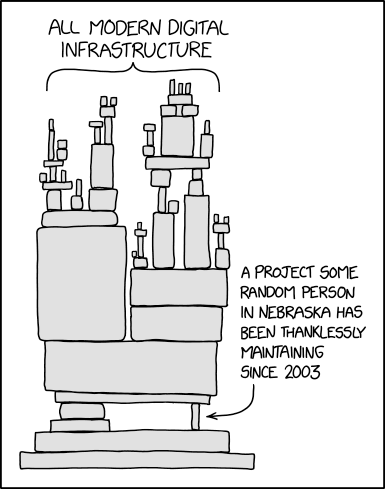
At the helm of this project is one individual. One guy. Paul Eggert, a computer scientist who teaches at the Department of Computer Science at the University of California's LA Campus... This is a man, after all, whose codebase helps hundreds of millions of users know what time zone they're in and who — for the past ten years — has gone to bed knowing that hundreds of millions of computers are using his code to know what time zone they're in. He's lived under that pressure for over a decade. And by all accounts thrived... Untold millions have been made by startups announcing dubious advents upon existing technologies heralded with the breathless fanaticism of companies announcing that they have found a way to turn air water into oil. Many of these will vanish into oblivion within a few short years. The time zone database won't. Because it can't. And those at the very bottom of the tech stack — those tirelessly and thanklessly maintaining open source projects upon which so much of the world's computing derives — languish in comparable obscurity...

In recent years, the project has fallen under the purview of ICANN [through its Internet Assigned Numbers Authority]. Its code reads like a cross between a JSON file and a historical novel. And while I'm sure the project has many noteworthy contributors, there's ultimately one guy who's responsible for maintaining it.

The Time Zone King. His name is Paul Eggert. And he's a computer scientist based out of UCLA. We probably all owe him a 'thank you'.

Slashdot Top Deals