Operating Systems

Linux 4.17 Released (betanews.com) 28

Mark Wycislik-Wilson, writing for BetaNews: In his weekly message to the Linux community on Sunday, Linus Torvalds announced the release of Linux 4.17. The release comes a couple of months after the first release candidate, and in his message Torvalds also talks about version 5.0 of the Linux kernel. Having previously said that Linux kernel v5.0 "should be meaningless," he said that this next major numerical milestone will come around "in the not too distance future." For now, though, it's version 4.17 -- or Merciless Moray, if you prefer -- that's of interest. Linux kernel 4.17 is not a major release, and Torvalds announced it without much fanfare. "So this last week was pretty calm, even if the pattern of most of the stuff coming in on a Friday made it feel less so as the weekend approached. And while I would have liked even less changes, I really didn't get the feeling that another week would help the release in any way, so here we are, with 4.17 released."
Facebook

Facebook Gave Device Makers Deep Access To Data On Users and Friends (nytimes.com) 32

According to a report from The New York Times, Facebook formed data-sharing partnerships with Apple, Samsung, and dozens of other device makers, allowing them to access vast amounts of its users' personal information (Warning: source may be paywalled; alternative source). From the report: Facebook has reached data-sharing partnerships with at least 60 device makers -- including Apple, Amazon, BlackBerry, Microsoft and Samsung -- over the last decade, starting before Facebook apps were widely available on smartphones, company officials said. The deals allowed Facebook to expand its reach and let device makers offer customers popular features of the social network, such as messaging, "like" buttons and address books.

But the partnerships, whose scope has not previously been reported, raise concerns about the company's privacy protections and compliance with a 2011 consent decree with the Federal Trade Commission. Facebook allowed the device companies access to the data of users' friends without their explicit consent, even after declaring that it would no longer share such information with outsiders. Some device makers could retrieve personal information even from users' friends who believed they had barred any sharing, The New York Times found. Most of the partnerships remain in effect, though Facebook began winding them down in April.

Businesses

American Tech Giants Are Making Life Tough For Startups (economist.com) 142

An anonymous reader quotes a report from The Economist: Venture capitalists, such as Albert Wenger of Union Square Ventures, who was an early investor in Twitter, now talk of a "kill-zone" around the giants. Once a young firm enters, it can be extremely difficult to survive. Tech giants try to squash startups by copying them, or they pay to scoop them up early to eliminate a threat. The idea of a kill-zone may bring to mind Microsoft's long reign in the 1990s, as it embraced a strategy of "embrace, extend and extinguish" and tried to intimidate startups from entering its domain. But entrepreneurs' and venture capitalists' concerns are striking because for a long while afterwards, startups had free rein. [...] Venture capitalists are wary of backing startups in online search, social media, mobile and e-commerce. It has become harder for startups to secure a first financing round. According to Pitchbook, a research company, in 2017 the number of these rounds were down by around 22% from 2012 (see chart).

The wariness comes from seeing what happens to startups when they enter the kill-zone, either deliberately or accidentally. Snap is the most prominent example; after Snap rebuffed Facebook's attempts to buy the firm in 2013, for $3 billion, Facebook cloned many of its successful features and has put a damper on its growth. A less known example is Life on Air, which launched Meerkat, a live video-streaming app, in 2015. It was obliterated when Twitter acquired and promoted a competing app, Periscope. Life on Air shut Meerkat down and launched a different app, called Houseparty, which offered group video chats. This briefly gained prominence, but was then copied by Facebook, seizing users and attention away from the startup.
The Economist goes on to state three reasons why the kill-zone is likely to stay: "First, the giants have tons of data to identify emerging rivals faster than ever before. Recruiting is a second tool the giants will use to enforce their kill zones. A third reason that startups may struggle to break through is that there is no sign of a new platform emerging which could disrupt the incumbents, even more than a decade after the rise of mobile."
Programming

Programmer Creates Bee Counter Using a Raspberry Pi 60

Programmer Mat Kelsey created a bee counter to see exactly how many bees are hanging out in his hives. "His system, which uses a Raspberry Pi and a machine learning algorithm that recognizes the number of individual bees entering a hive, is used to see bee trends over time and see just how the bees are faring," reports TechCrunch. From the report: The system looks at sets of pictures of the hive door taken every 10 seconds. It then extrapolates out the background, assesses the objects that have moved in the frame, and then counts the things that are likely to be bees. It's a fascinating problem to solve since the bees are constantly moving and because it can also ignore bees that are coming out of the hive. You can download the source on Github and check out his detailed blog post here. Given the need for bee protection as we enter an era of colony collapses, tools like this one are wildly important. Plus it's cool to see a Raspberry Pi do something so complex.
Music

Dolby Looking To Monopolize Consumer Audio By Restricting Its Codec (audioholics.com) 158

Audiofan writes from a report via Audioholics, written by Gene DellaSala: Variety is said to be the spice of life. Why only eat cherry Starbursts when you can sample orange, watermelon, lemon, etc? The same applies to multi-channel surround sound upmixers. But the folks at Dolby apparently want you to eat only one flavor. Their flavor. Dolby recently issued a mandate to all of their Atmos licensee partners to restrict usage of third-party upmixers with any Dolby signals including 5.1/7.1 DD, DD+, TrueHD and Atmos. That means if you're running a DTS Soundbar, it won't process a Dolby signal, or no dice if you want to use the Auro-Matic Upmixer for a native Dolby signal. Is Dolby doing this to protect their IP or to monopolize consumer audio like they tried to do with their patented Atmos-enabled speaker? The copy of the mandate that was sent to all of Dolby's licensee partners has the following guidelines: Native Dolby Atmos content shall NOT be up-mixed, surround or height virtualized by any 3rd party competitor upmixer (ie. DTS or Auro-3D); Channel-Based DD/DD+, Dolby TrueHD 5.1 and 7.1 codecs shall not be height virtualized by any 3rd party upmixer (ie. DTS). (This implies height virtualization without height speakers. DTS has this capability but Auro-3D does not).

Audioholics notes the company will however "permit third party upmixing and/or surround virtualization of channel-based codecs that support Dolby Atmos rendering as long as the third party doesn't license their own upmixing technologies to third parties."

As for why Dolby is issuing this mandate to its licensees, it may come down to two reasons: control quality of content so that their upmixer is only used with their software; put an end to Auro-3D and strike a blow to DTS.
Transportation

Uber Facing Ban In Turkey After Erdogan Backs Taxis (sbs.com.au) 107

An anonymous reader quotes a report from SBS: Uber faces being banned in Turkey after President Recep Tayyip Erdogan said the ride-hailing app was "finished" on Saturday following an intense lobbying campaign from Istanbul taxi drivers. Erdogan's comments, in a late-night speech Friday in Istanbul, came after the government agreed new rules that are expected to severely complicate Uber's operations in Turkey. Drivers of Istanbul's yellow taxis have over the last months waged an intense campaign to have Uber banned, saying the company is eating into their business without having a proper legal basis for work. "This thing emerged called Uber or Muber or whatever," said Erdogan. "But this issue is now finished. It's over now. Our Prime Minister (Minali Yildirim) made the announcement. We have our system of taxis," he said.

"Yildirim's government last month issue a directive sharply hiking fines and threatened to blacklist companies whose vehicles illegally work as taxis," reports SBS.
XBox (Games)

Amazon Alexa and Google Assistant Are Coming To Xbox One (windowscentral.com) 29

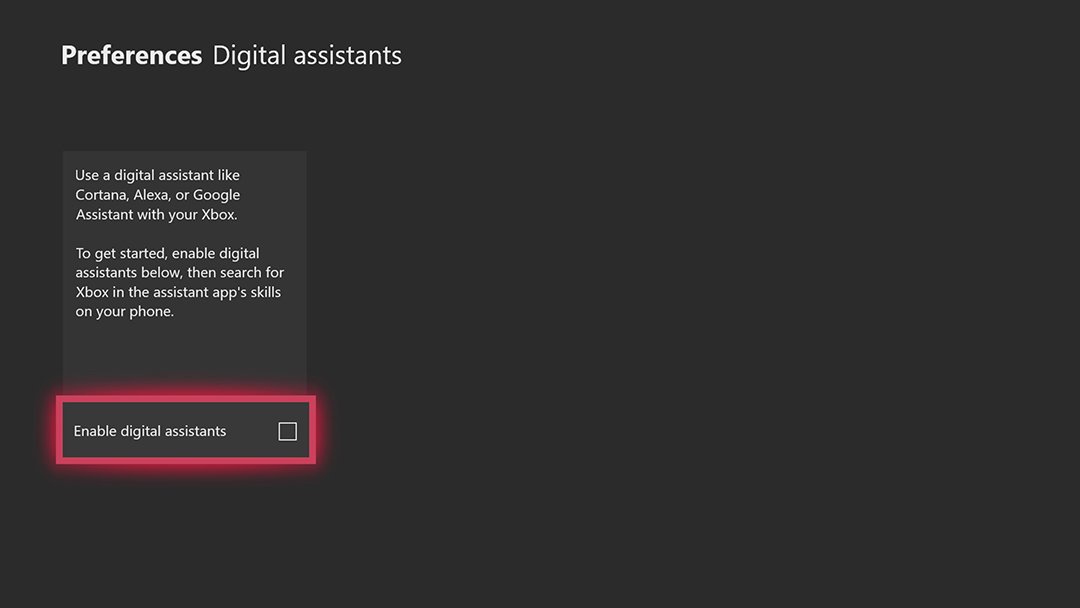
According to Windows Central, the Xbox One will soon support Amazon Alexa and Google Assistant, which should provide a decent alternative to Kinect for controlling your console via voice commands. Microsoft stopped manufacturing the Kinect in October of last year. From the report: This picture comes to us from a reliable source who is familiar with Amazon and Microsoft's efforts to link Alexa and Cortana. In upcoming Xbox One builds, the Kinect & Devices menu should have a new "Digital Assistants" section, which lets you enable Alexa, Google Assistant, and Cortana, for use on your Xbox One. It then directs you to install the Xbox skills app for those respective platforms to get connected. The full range of features for those assistants remains unknown, but it could bring back many of the voice-assisted features abandoned Kinect users are yearning for.
Cellphones

Smartphone Shipments Declined For the First Time In 2017 (theverge.com) 144

2017 was the first year that smartphone unit shipments didn't grow, according to a new Internet Trends report. "Shipments actually declined by 0.5 percent, as IDC noted in February," reports The Verge. "In 2016, shipments were lukewarm at 2 percent yearly growth, but this downturn is significant." From the report: Among smartphone shipments, Android and iOS have all but completely pushed out every other mobile operating system. And despite the growing price of today's top flagship devices, the average selling price of a smartphone has steadily fallen over the years. As more of the world now owns smartphones, growth has basically stalled. Similarly, internet user growth has only grown 7 percent in 2017, compared to 12 percent in 2016. More people are accessing the internet than ever, on an average of 5.9 hours a day. And they're browsing on mobile, indicating that they're just holding onto older models of phones instead of buying new ones.
Microsoft

Microsoft Is Said to Have Agreed to Acquire Coding Site GitHub (bloomberg.com) 323

Bloomberg reports:
Microsoft Corp. has agreed to acquire GitHub Inc., the code repository company popular with many software developers, and could announce the deal as soon as Monday, according to people familiar with the matter. GitHub preferred selling the company to going public and chose Microsoft partially because it was impressed by Chief Executive Officer Satya Nadella, said one of the people, who asked not to be identified discussing private information. Terms of the agreement weren't known on Sunday. GitHub was last valued at $2 billion in 2015.

GitHub is an essential tool for coders. Many corporations, including Microsoft and Alphabet Inc.'s Google, use GitHub to store their corporate code and to collaborate. It's also a social network of sorts for developers. While GitHub's losses have been significant -- it lost $66 million over three quarters in 2016 -- it had revenue of $98 million in nine months of that year.

On Friday, it was reported that Microsoft was in talks with GitHub about an acquisition. Now it seems like it's actually happening.

Update: Our sister site, SourceForge, has weighed in. Here is a tool that will import your GitHub project to SourceForge.
Update #2: Already, we are seeing plenty of backlash over this news. One user has started a petition to stop Microsoft from buying GitHub.
Update #3: It's official. Microsoft has acquired GitHub for a whopping sum of $7.5B.
Microsoft

Microsoft Sticks With Controversial 'GVFS' Name Despite Backlash (medium.com) 203

New submitter DuroSoft writes: It has been over a year since Microsoft unveiled its open source GVFS (Git Virtual File System) project, designed to make terabyte-scale repositories, like it's own 270GB Windows source code, manageable using Git. The problem is that the GNOME project already has a virtual file system by the name of GVfs that has been in use for years, with hundreds of threads on Stack Overflow, etc. Yet Microsoft's GVFS has already surpassed GVfs in Google and is causing confusion. To make matters worse, Microsoft has officially refused to change the name, despite a large public backlash on GitHub and social media, and despite pull requests providing scripts that can change the name to anything Microsoft wants. Is this mere arrogance on Microsoft's part, laziness to do a quick Google search before using a name, or is it something more sinister?
AI

Meet Norman, the Psychopathic AI (bbc.com) 109

A team of researchers at the Massachusetts Institute of Technology created a psychopathic algorithm named Norman, as part of an experiment to see what training artificial intelligence on data from "the dark corners of the net" would do to its world view. Unlike most "normal" algorithms by AI, Norman does not have an optimistic view of the world. BBC reports: The software was shown images of people dying in gruesome circumstances, culled from a group on the website Reddit. Then the AI, which can interpret pictures and describe what it sees in text form, was shown inkblot drawings and asked what it saw in them. These abstract images are traditionally used by psychologists to help assess the state of a patient's mind, in particular whether they perceive the world in a negative or positive light. Norman's view was unremittingly bleak -- it saw dead bodies, blood and destruction in every image. Alongside Norman, another AI was trained on more normal images of cats, birds and people. It saw far more cheerful images in the same abstract blots.

The fact that Norman's responses were so much darker illustrates a harsh reality in the new world of machine learning, said Prof Iyad Rahwan, part of the three-person team from MIT's Media Lab which developed Norman. "Data matters more than the algorithm. "It highlights the idea that the data we use to train AI is reflected in the way the AI perceives the world and how it behaves."

Communications

Snapchat's CEO On Facebook's Long History of Copying His Company's Products (theverge.com) 17

Earlier this week, Snap's CEO Evan Spiegel publicly addressed Facebook's long-standing practice of copying his company's products, joking that Facebook should model Snap's approach to collecting less information about its users. "We would really appreciate it if they copied our data protection practices also," Spiegel said on Tuesday night at the Code Conference in Southern California. The Verge reports: Interviewer Kara Swisher asked Spiegel how he felt about Facebook's decision to copy key Snapchat innovations including ephemeral 24-hour stories and augmented reality lenses. Spiegel first said that his wife, Miranda Kerr, cared more about it than he did. Snap collects less data on users than Facebook does, though it does still allow advertisers to target ads based on demographic criteria that the company gathers. It has never offered a full-featured API that allows users to give away their friends' information, as Facebook once did.

Spiegel went on to say that he looked at Facebook's copying as a designer. "If you design something that is so simple and so elegant, that the only thing other people can do is copy it exactly [...] that as a designer is really is the most fantastic thing in the world," Spiegel said.

The Courts

Judge Rules Amazon Isn't Liable For Damages Caused By a Hoverboard It Sold (cnbc.com) 176

Earlier this week, a judge in Tennessee ruled that Amazon isn't liable for damages caused by a hoverboard that spontaneously exploded and burned down a family's house, even though they bought it on Amazon's website. "The plaintiff claimed that Amazon didn't properly warn her about the dangers they knew existed with the product, but the judge didn't agree," reports CNBC. At the time, hoverboards were all the rage; Amazon sold almost 250,000 of them over a 30-day period. The plaintiff claims the company had an obligation to warn customers properly about the dangers it knew existed. "[The plaintiff] bought the hoverboard on Amazon, the receipt came from Amazon, the box had an Amazon label and all the money was in Amazon's hands," adds CNBC. "[The plaintiff] has been unable to find the Chinese manufacturer of the device." From the report: It's the latest legal victory for Amazon, which has for years fended off litigation related to product quality and safety by arguing that, for a big and growing part of its business, it's just a marketplace. There are buyers on one end and sellers on the other -- the argument goes -- and Amazon connects them through a popular portal, facilitating the transaction with a sophisticated logistics system. The courts are reinforcing the power of Amazon's business model as the ultimate middleman. But for American consumers, there's growing cause for concern. [...] But if Amazon isn't liable when faulty products sold through its website cause personal injuries and property damage, customers are often left with no recourse. That's because it's frequently impossible for consumers to figure out who manufactured the defective product and hold that party responsible.
Government

California's Efforts To Restrict Elon Musk's Flamethrowers Go Down In Flames (arstechnica.com) 153

An anonymous reader quotes a report from Ars Technica: A California state bill that would have more heavily regulated the use of flamethrowers has now effectively fizzled out in a legislative committee. In light of this development, there's nothing to stop Boring Company customers in California from receiving the company's sold-out flamethrowers. On May 26, the day after the bill died in committee, CEO Elon Musk tweeted: "About to ship. @BoringCompany holding flamethrower pickup parties in a week or so, then deliveries begin. Check https://www.boringcompany.com/... for details." After Musk said he would be selling a flamethrower dubbed "Not a Flamethrower" to get around customs, Assemblyman Miguel Santiago (D-Los Angeles) authored a bill that would have imposed more restrictions on their acquisition and use.

"I honestly thought it was a joke when I saw the news about this," the assemblyman said in a statement at the time. "This product, in the wake of California's deadliest wildfire year in state history, is incredibly insensitive, dangerous, and most definitely not funny." He added: "There are many times in which technology and inventions benefit society but are not made available to the public. We don't allow people to walk in off the street and purchase military grade tanks or armor-piercing ammunition... I cannot even begin to imagine the problems a flamethrower would cause firefighters and police officers alike."
Facebook

Zuckerberg Grilled At Angry Facebook Shareholder's Meeting (mercurynews.com) 165

An anonymous reader quotes the Mercury News' report on Facebook's annual shareholder's meeting: On Thursday in Menlo Park, one investor compared the social network's poor stewardship of user data to a human rights violation. Another warned that scandal is not good for Facebook's bottom line. And one advised Chief Executive Officer Mark Zuckerberg to emulate George Washington, not Vladimir Putin, and avoid turning Facebook into a "corporate dictatorship." Facebook struggled to keep order, kicking one woman out of the meeting within the first few minutes for repeated interruptions. A plane zipped overhead pulling a banner that read "YOU BROKE DEMOCRACY" and advertising Freedom From Facebook, a group of privacy and anti-monopoly activists that are pressing the U.S. Federal Trade Commission to break up the company...

Zuckerberg repeated the same reassurances he used in front of U.S. and European lawmakers earlier this year: The company hasn't taken a broad enough view of its responsibility... "We're also very focused on being more transparent," Zuckerberg said, touting the fact that the company had just posted its policies on content moderation for the first time. Minutes earlier, the company announced that shareholder proposals for more transparency and oversight had failed, surprising no one. Zuckerberg controls the company through special stock that gives him more votes than other shareholders.

"Facebook said that just because the proposals were blocked, that didn't mean the company doesn't care about these issues."
Transportation

A Tesla on Autopilot Crashed Into a Parked Police Car (fortune.com) 265

An anonymous reader quotes Fortune: A Tesla vehicle in Autopilot mode collided with a parked police cruiser in California, authorities said. The Tesla sedan was driving outbound when it struck a parked Laguna Beach police car, the Laguna Beach police department said Tuesday. According to police, the driver in the Tesla sustained minor injuries. The police cruiser was empty of officers at the time of the crash. Laguna Polic1e Sgt. Jim Cota told the Los Angeles Times the police car "is totaled."
The police sergeant also told the Times that it was the same area where a Tesla crashed into a semi-truck last year, adding "Why do these vehicles keep doing that? We're just lucky that people aren't getting injured."

"Tesla has always been clear that Autopilot doesn't make the car impervious to all accidents," Tesla responded in a statement, "and before a driver can use Autopilot, they must accept a dialogue box which states that 'Autopilot is designed for use on highways that have a center divider and clear lane markings.'"

Record producer Zedd also responded to the news by sharing on Twitter what he calls "the other side": I once fell asleep driving home late at night on the highway (w/ autopilot on) and got woken up by it beeping + turning off music to wake me up. Would have prob been dead without it... I didn't touch the steering wheel for a couple minutes and then it turned off the music and started beeping. Elon Musk responded to the tweet, "Glad you're ok!"
The Internet

CSS Is Now So Overpowered It Can Deanonymize Facebook Users (bleepingcomputer.com) 92

An anonymous reader writes: Some of the recent additions to the Cascading Style Sheets (CSS) web standard are so powerful that a security researcher has abused them to deanonymize visitors to a demo site and reveal their Facebook usernames, avatars, and if they liked a particular web page of Facebook. Information leaked via this attack could aid some advertisers linking IP addresses or advertising profiles to real-life persons, posing a serious threat to a user's online privacy. The leak isn't specific to Facebook but affects all sites which allow their content to be embedded on other web pages via iframes.

The actual vulnerability resides in the browser implementation of a CSS feature named "mix-blend-mode," added in 2016 in the CSS3 web standard. Security researchers have proven that by overlaying multiple layers of 1x1px-sized DIV layers on top of iframes, each layer with a different blend mode, they could determine what's displayed inside it and recover the data, to which parent websites cannot regularly access. This attack works in Chrome and Firefox, but has been fixed in recent versions.

Firefox

'Why I'm Switching From Chrome To Firefox and You Should Too' (fastcodesign.com) 337

An anonymous reader quotes an associate technology editor at Fast Company's Co.Design: While the amount of data about me may not have caused harm in my life yet -- as far as I know -- I don't want to be the victim of monopolistic internet oligarchs as they continue to cash in on surveillance-based business models. What's a concerned citizen of the internet to do? Here's one no-brainer: Stop using Chrome and switch to Firefox... [W]hy should I continue to use the company's browser, which acts as literally the window through which I experience much of the internet, when its incentives -- to learn a lot about me so it can sell advertisements -- don't align with mine....?

Unlike Chrome, Firefox is run by Mozilla, a nonprofit organization that advocates for a "healthy" internet. Its mission is to help build an internet in an open-source manner that's accessible to everyone -- and where privacy and security are built in. Contrast that to Chrome's privacy policy, which states that it stores your browsing data locally unless you are signed in to your Google account, which enables the browser to send that information back to Google. The policy also states that Chrome allows third-party websites to access your IP address and any information that site has tracked using cookies. If you care about privacy at all, you should ditch the browser that supports a company using data to sell advertisements and enabling other companies to track your online movements for one that does not use your data at all.... Firefox protects you from being tracked by advertising networks across websites, which has the lovely side effect of making sites load faster...

Ultimately, Firefox's designers have the leeway to make these privacy-first decisions because Mozilla's motivations are fundamentally different from Google's. Mozilla is a nonprofit with a mission, and Google is a for-profit corporation with an advertising-based business model.. While Firefox and Chrome ultimately perform the same service, the browsers' developers approached their design in a radically different way because one organization has to serve a bottom line, and the other doesn't.

The article points out that ironically, Mozilla supports its developers partly with revenue from Google, which (along with other search engines) pays to be listed as one of the search engines available in Firefox's search bar.

"But because it relies on these agreements rather than gathering user data so it can sell advertisements, the Mozilla Corporation has a fundamentally different business model than Google."
GNU is Not Unix

Emacs 26.1 Released With New Features (lwn.net) 116

There's a new version of the 42-year-old libre text editor with over 2,000 built-in commands, reports LWN.net: Highlights include a built-in Lisp threading mechanism that provides some concurrency, double buffering when running under X, a redesigned flymake mode, 24-bit color support in text mode, and a systemd [user] unit file.
The Free Software Foundation has released a 10,653-word description of all the new features in Emacs 26.1. Here's a couple more:
  • The Emacs server now has socket-launching support. This allows socket based activation, where an external process like systemd can invoke the Emacs server process upon a socket connection event and hand the socket over to Emacs... This new functionality can be disabled with the configure option '--disable-libsystemd'.
  • The new function 'call-shell-region' executes a command in an inferior shell with the buffer region as input.
  • Intercepting hotkeys on Windows 7 and later now works better.
  • The new user variable 'electric-quote-chars' provides a list of curved quotes for 'electric-quote-mode', allowing user to choose the types of quotes to be used.

Cellphones

Why No One Answers Their Phone Anymore (theatlantic.com) 429

An anonymous reader shares an excerpt from a report via The Atlantic, written by Alexis C. Madrigal: No one picks up the phone anymore. Even many businesses do everything they can to avoid picking up the phone. Of the 50 or so calls I received in the last month, I might have picked up four or five times. The reflex of answering -- built so deeply into people who grew up in 20th-century telephonic culture -- is gone. There are many reasons for the slow erosion of this commons. The most important aspect is structural: There are simply more communication options. Text messaging and its associated multimedia variations are rich and wonderful: words mixed with emoji, Bitmoji, reaction gifs, regular old photos, video, links. Texting is fun, lightly asynchronous, and possible to do with many people simultaneously. It's almost as immediate as a phone call, but not quite. You've got your Twitter, your Facebook, your work Slack, your email, FaceTimes incoming from family members. So many little dings have begun to make the rings obsolete.

But in the last couple years, there is a more specific reason for eyeing my phone's ring warily. Perhaps 80 or even 90 percent of the calls coming into my phone are spam of one kind or another. [...] There are unsolicited telemarketing calls. There are straight-up robocalls that merely deliver recorded messages. There are the cyborg telemarketers, who sit in call centers playing prerecorded bits of audio to simulate a conversation. There are the spam phone calls, whose sole purpose seems to be verifying that your phone number is real and working.

Slashdot Top Deals